





Before you even think about tasting cakes or touring venues, the real work of planning a killer corporate event happens right at your desk. Let's be honest: a great event isn't just a fun get-together. It's a strategic move designed to hit a specific, measurable goal. If you skip this foundational step, you risk throwing a party that’s nice, but ultimately, doesn't deliver any real value.
Building Your Event’s Strategic Foundation
The first, most crucial step is to get brutally honest about why you're hosting this event. Forget vague concepts like "team building" or "brand awareness" for a moment. We need to dig deeper and define concrete objectives that will steer every single decision you make from here on out.
Define Your Primary Event Objective
What is the number one thing you need this event to accomplish? Answering this question will shape the entire experience, from the guest list to the agenda.
Is your main goal to flood the sales pipeline with qualified leads? Then your event needs built-in networking sessions and a seamless way to capture contact information. Or maybe you're celebrating a huge company milestone. In that case, the vibe shifts completely—your focus is on creating a memorable, high-energy atmosphere that makes every employee feel like a rockstar.
Here are a few common goals I see all the time:
- Lead Generation: Connecting with potential clients to fill the sales funnel.
- Employee Engagement: Boosting morale, sparking collaboration, and keeping your best people around.
- Brand Amplification: Launching a new product or cementing your company as a thought leader.
- Client Retention: Showing your key customers some love and strengthening those crucial relationships.
"Your goals can be about building loyalty through good human experiences. You want to be the company that has the event guests will never forget."
Zeroing in on one primary objective is key. It keeps your event sharp and focused. For instance, an employee retreat designed to forge genuine connections will look and feel totally different from a high-stakes product launch. If team cohesion is your main objective, you might want to explore some of the best corporate retreat locations to find a setting that truly inspires connection.
Develop a Deep Understanding of Your Audience
Once you've nailed down your "why," it's time to get crystal clear on your "who." And I mean really know them, beyond just their job titles. What do they actually want out of an event? What are their biggest challenges? What would make this a day they're genuinely glad they didn't miss?
Think about it: a sales prospect coming for a product demo has entirely different motivations than an engineer attending a technical workshop. I always recommend creating detailed attendee personas. This simple exercise helps you tailor everything—the content, the tone, even the snacks—to make your guests feel like the event was designed just for them.
Aligning Strategy with Reality
With your objectives and audience locked in, you can start building the event's framework. This is the strategic blueprint you'll use to get everyone on board internally.
Budget constraints are always a hot topic, with 22% of planners naming budget and buy-in as their biggest hurdles. But there's good news: the industry is bouncing back. A solid 59% of professionals are leaning into in-person events, and even better, 66% expect their budgets to grow. When you walk into a meeting with a clear, goal-driven plan, you're not just asking for money—you're presenting a smart investment.
To make sure you've covered all your bases from the get-go, it’s a great idea to use a comprehensive ultimate corporate event checklist. This will help you turn your big-picture strategy into a concrete, actionable plan, ensuring nothing falls through the cracks as you move into the nitty-gritty of budgeting, vendor sourcing, and logistics.
Before jumping into the tactical details, it's incredibly helpful to summarize your core strategy. This simple checklist ensures everyone on your team is aligned on the foundational elements before any contracts are signed or deposits are paid.
Essential Corporate Event Planning Kickoff Checklist
| Planning Element | Key Question to Answer | Example Goal |
|---|---|---|
| Primary Objective | What is the single most important outcome we need? | Generate 50 qualified MQLs for the sales team. |
| Target Audience | Who are we trying to reach and what motivates them? | C-level executives in the fintech industry looking for innovative security solutions. |
| Key Performance Indicators (KPIs) | How will we measure success? | Track post-event demo requests and measure lead-to-conversion rate within 90 days. |
| Core Message | What is the one key takeaway for our attendees? | Our new platform is the most secure and efficient solution on the market. |
| Budget Alignment | Does our initial budget support our primary objective? | Allocate more funds to the keynote speaker and networking tech, less on swag. |
Using a clear framework like this from the very beginning is the difference between an event that just happens and an event that makes a real, lasting impact on your business goals.
Mastering Your Event Budget and Timeline
Once you've nailed down your strategic vision, it's time to bring your corporate event into the real world. This happens with two of the most critical documents you'll ever create: the budget and the master timeline. Think of them less like spreadsheets and more like your command center and roadmap—they'll guide every single decision from here on out.
These foundational steps are what turn your great ideas into a workable plan.
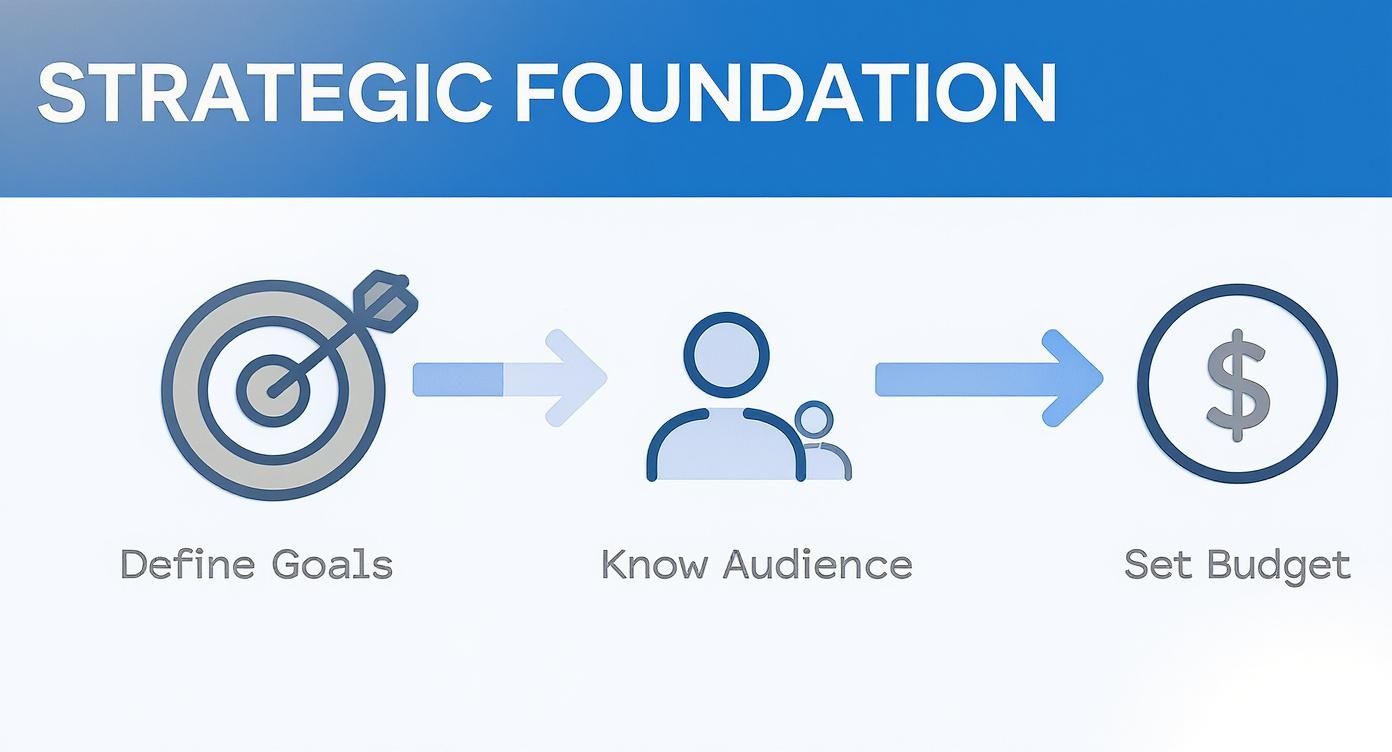
Defining your goals, knowing who's coming, and then setting a realistic budget is a sequence that just plain works. Following it prevents costly backtracking and makes sure every dollar spent supports your key objectives.
Building a Bulletproof Event Budget
A truly effective budget is so much more than a list of big-ticket items like the venue and catering. It’s a detailed forecast that anticipates every possible expense, heading off those last-minute financial surprises that can derail even the best-laid plans.
The corporate event industry is booming, and attendee expectations are rising right along with it. In fact, 74% of event marketers are planning to increase their event budgets, and 66% of organizers expect to host more events this year than last. This growth makes meticulous financial planning more important than ever to deliver high-impact experiences that justify the investment. You can read the full research on event industry trends to get a better sense of the shifting landscape.
To get started, create line items for everything you can possibly think of. Dig deeper than the obvious stuff.
- Venue Rental Fees: This is the room hire, sure, but what about extra charges for setup, breakdown, and security? Ask about those.
- Catering and Beverage Costs: Don't forget to budget for service charges and gratuities. They can easily add 20-25% to your final F&B bill.
- AV and Technology: This covers mics and projectors, but also Wi-Fi access, live-streaming services, and the crucial on-site tech support you'll need.
- Marketing and Promotion: Factor in digital ad spend, invitation design, and any printed materials.
- Staffing: Account for wages for temp staff, security personnel, and any potential overtime.
Always—and I mean always—allocate 10-15% of your total budget to a contingency fund. This isn’t just a slush fund; it’s a strategic tool. It lets you handle unexpected challenges (like a sudden equipment rental) or seize opportunities (like a last-minute speaker upgrade) without panicking.
Uncovering the Hidden Costs
The real mark of an experienced planner is the ability to sniff out hidden costs. These are the small, sneaky expenses that can add up and blow a hole in your bottom line if you're not careful.
Here are a few common culprits I always watch for:
- Payment Processing Fees: If you're selling tickets online, the credit card companies are going to take their cut from every transaction.
- Permits and Insurance: Depending on your venue and event type, you might need special permits or extra liability insurance.
- Vendor Travel and Meals: Some of your vendors, like photographers or keynote speakers, will likely require you to cover their travel, lodging, and meals.
- Gratuities and Tips: Beyond catering, it’s good practice to budget for tips for the AV techs, helpful venue staff, and even delivery drivers.
By tracking every single expense in a shared document, your whole team can see where the money is going in real-time. This allows for smart, agile decisions. If the AV costs start to creep up, you can collectively decide to swap printed banners for digital signage and reallocate those funds to the networking reception. It's about making trade-offs without sacrificing the core attendee experience.
Creating a Reverse-Engineered Timeline
Just as the budget grounds your finances, the timeline organizes your actions. In my experience, the only way to build a functional timeline is to work backward from the event date. This "reverse-engineered" approach ensures every task and deadline is logically sequenced so nothing critical falls through the cracks.
Start with the big day and map out your milestones in reverse.
- 1 Week Out: Finalize registration lists, send out "know before you go" reminders to attendees, and confirm all vendor arrival times.
- 1 Month Out: Launch your main promotional push, finalize menus with the caterer, and order any branded swag or materials.
- 3-6 Months Out: Lock in your key vendors (catering, AV), book your speakers or entertainment, and send out "save the date" notices.
- 6-12 Months Out: Define event goals, sign the venue contract, and get the initial budget approved.
This timeline becomes a living document—your project's single source of truth. Using a shared project management tool is a game-changer here. It helps you assign tasks, set deadlines, and see how different pieces are connected. When the marketing team knows the keynote speaker isn't confirmed until a certain date, they won't waste resources creating promotional materials prematurely. This kind of synchronization keeps the entire team aligned, proactive, and confidently ahead of schedule.
Assembling Your Dream Team: Venues and Vendors
This is where your event starts to feel real. The physical space and the partners you bring on board are the literal building blocks of the entire experience. Choosing the right venue and vendors isn’t just about checking boxes; it’s a strategic move that defines the atmosphere, the flow, and ultimately, whether your event is a hit or a miss.
Think of your venue as an extension of your brand and the event's core purpose. A sleek, modern hotel ballroom might be the perfect backdrop for a high-tech product launch, while a rustic retreat center could set just the right tone for a team-building off-site.
Scouting the Perfect Venue
When you start your venue search, put yourself in your attendees' shoes. How easy is it to get there? Is there ample parking, or is it close to public transit? For anyone flying in, proximity to the airport and hotels is a huge deal.
Once you’ve narrowed it down to a shortlist, a site inspection is non-negotiable. This is your chance to get past the glossy brochures and see the space for what it is. While you’re there, you need to ask the questions that seasoned planners never forget.
- What’s really included? Get granular on the rental fee. Does it cover tables, chairs, basic linens, and a projector, or is everything an à la carte add-on?
- Are there restrictions? Ask about noise curfews, any limitations on decorations, and—this is a big one—exclusive vendor lists that could lock you into their pricier partners.
- What’s the staffing situation? Find out who your point person will be on the day of the event and what level of support you can expect from their on-site team.
A great venue does more than just provide four walls. They become a partner in your event's success. Look for a team that's responsive, flexible, and genuinely seems to care about helping you create a fantastic experience.
During your walkthrough, pay attention to the little things—the cleanliness of the restrooms, the condition of the carpet, the overall ambiance. These details add up and have a huge impact on the guest experience.
Sourcing and Vetting Your Vendors
With your venue locked in, it's time to build out your team of experts. From the caterer and AV specialists to photographers and entertainers, these are the people who will bring your vision to life on the ground.
The best place to start is by creating a clear Request for Proposal (RFP) for each service you need. A good RFP does more than just ask for a price; it lays out your event goals, target audience, and specific requirements. This gives vendors the info they need to give you a thoughtful proposal that actually fits your event.
When the proposals start coming in, resist the urge to just jump to the bottom-line number. One vendor might seem cheaper, but their package could be missing critical elements that another, slightly more expensive proposal includes. For instance, when comparing catering companies in Atlanta, look closely at the staffing ratios, menu flexibility, and what's actually included in their service fee.
Mastering Vendor Contracts and Negotiations
Once you've picked a vendor, the contract is everything. This is your chance to get every single detail in writing and protect your company from any last-minute surprises or costs. A solid contract should clearly spell out:
- Scope of Work: A detailed list of every service and deliverable.
- Payment Schedule: Specific due dates for deposits and final payments.
- Cancellation Policy: The terms and potential penalties for both you and the vendor if things go south.
Don't be shy about negotiating. Many vendors have some wiggle room, especially if you're booking during an off-peak season or can offer the possibility of future business. And when sourcing vendors for visual elements, a guide on choosing effective options like these banners for trade show displays can be a lifesaver.
Crafting a Winning Culinary Experience
Let’s be honest: the food is often one of the most memorable parts of any event. The secret to a great culinary experience is planning a menu that is both delicious and inclusive.
Start by collecting dietary information during the registration process. This is the single most effective way to manage restrictions for a large group. Get this detailed data to your caterer as early as possible so they have plenty of time to plan.
Work with your chef to build a menu that accommodates diverse needs without making anyone feel like an afterthought. A great caterer will offer creative solutions to ensure guests with allergies or specific preferences have an equally impressive dining experience. A simple but crucial step? Clearly labeling every dish on a buffet. Attendees always appreciate it.
Crafting an Experience That Truly Connects
Let’s be honest: a successful corporate event is more than just a series of speakers and slide decks. It's a carefully choreographed experience, a journey that should engage and inspire everyone from the moment they walk through the door. This is where we shift from pure logistics to the art of experience design, focusing on an agenda that flows and an atmosphere that buzzes with energy.
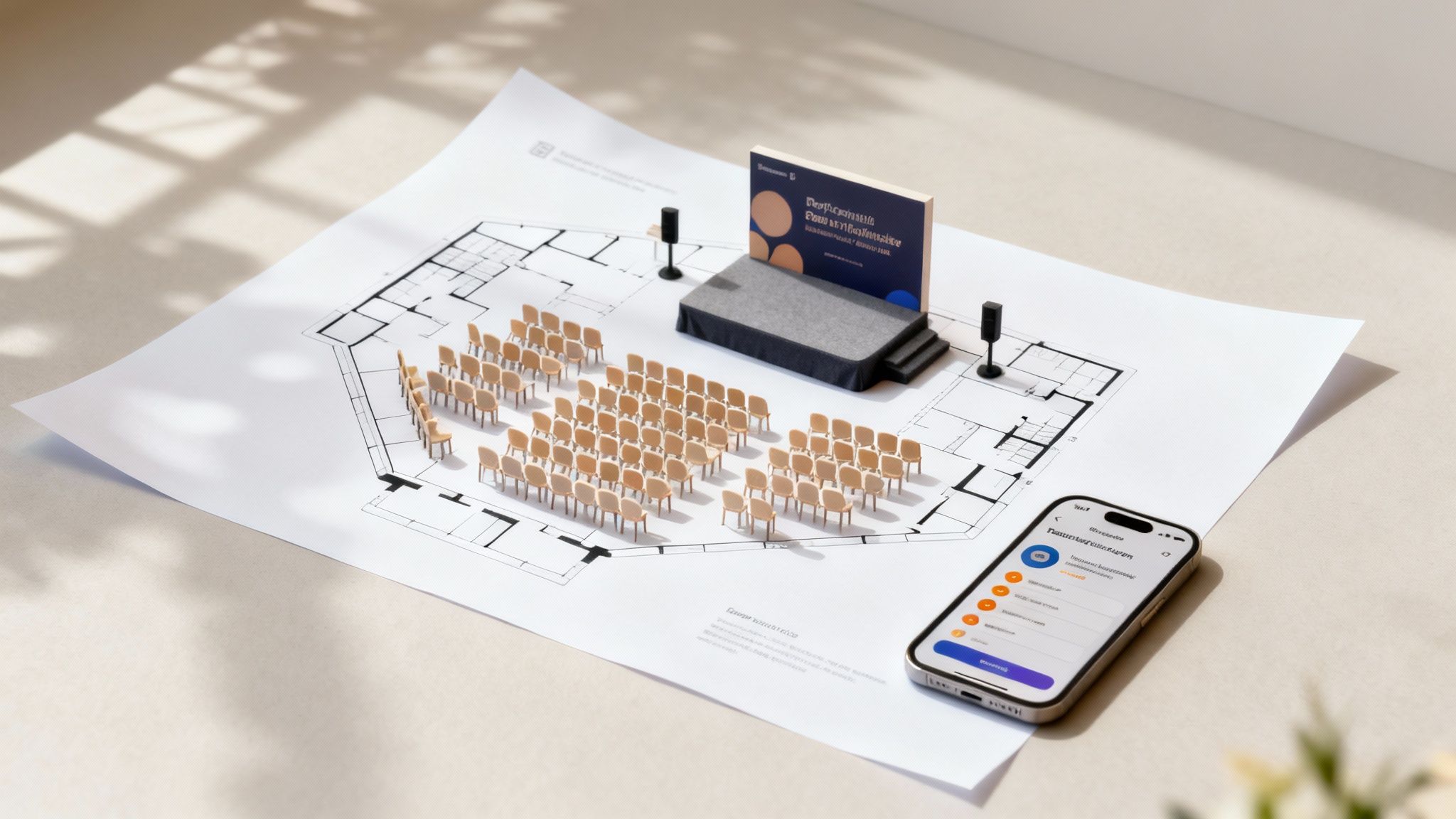
The real goal? To create a rhythm that feels both intentional and completely natural, guiding your guests through moments of learning, networking, and even some much-needed quiet time.
Build an Agenda With Purpose and Flow
Your agenda is the backbone of the entire event. A classic mistake is cramming the schedule with back-to-back presentations. It’s a surefire way to burn everyone out. Instead, aim for a balanced flow that keeps energy levels high and minds sharp.
Think about mixing up the formats to hold everyone's attention:
- High-Energy Keynotes: Use these to kick off the day or re-energize the room after lunch. They set the tone.
- Interactive Breakouts: Smaller, hands-on sessions are perfect for diving deep into specific topics and getting people talking.
- Organic Networking: Don't skimp on coffee breaks or lunch. Those unstructured moments are often where the real magic happens and the best connections are made.
- Crucial Downtime: Never underestimate the power of a 15-minute break. It gives attendees a chance to check emails, grab a coffee, or just mentally reset.
Remember, the food and beverage experience is a massive part of the day's flow. It can make or break the mood. This is a perfect opportunity to elevate your corporate event with tailored menus that match the schedule—think light, energizing snacks during breaks and a satisfying, sit-down meal that encourages conversation during lunch.
The most memorable events are the ones that respect an attendee's time and energy. A well-paced agenda shows you get it—that learning, connecting, and processing all require different headspaces.
To help you decide what to include, think about the primary goal of each session. Not every element serves the same purpose, and balancing them is key to a well-rounded experience.
Agenda Element Comparison for Engagement
| Agenda Element | Primary Goal | Best For | Engagement Tip |
|---|---|---|---|
| Keynote Address | Inspiration & Vision | Setting the tone, motivating the audience, and aligning everyone on a big idea. | Start or end with a powerful story or a surprising statistic to grab attention. |
| Panel Discussion | Diverse Perspectives | Exploring a complex topic from multiple angles and sparking a lively debate. | Have a strong moderator who can keep the conversation flowing and involve the audience with Q&A. |
| Workshop/Breakout | Skill Building & Learning | Deep dives into specific subjects, hands-on training, and collaborative problem-solving. | Keep groups small and use interactive exercises, like case studies or group challenges. |
| Networking Lunch | Relationship Building | Fostering casual conversations and allowing attendees to connect on a personal level. | Use assigned seating with conversation starter cards at each table to break the ice. |
| "Ask Me Anything" | Direct Engagement | Giving attendees direct access to leadership or experts to ask unfiltered questions. | Use a Q&A app like Slido to let attendees upvote questions, ensuring the most popular ones get answered. |
| Tech Demo | Product Showcase | Showing, not just telling, how a new tool or product works in a real-world scenario. | Make it interactive. Let a few audience members get hands-on with the product during the demo. |
Choosing the right mix of these elements ensures your agenda isn't just a list of times, but a strategic tool for achieving your event's core objectives.
Designing the Space—Both Physical and Virtual
The way you arrange a room can either kill or create conversation. A classic theater-style setup is perfect for a keynote speaker, but it’s terrible for interaction. For workshops or networking sessions, switch to round tables or even a lounge-style layout with comfy chairs to encourage people to relax and chat.
Of course, we can't ignore the digital side of things anymore. The rise of remote work has made hybrid events the new standard, not the exception. In fact, 74.5% of planners have embraced the hybrid model, and 63% are increasing their investment in virtual capabilities. It’s no longer an add-on; it’s a core strategy for maximizing reach and including everyone.
To create a seamless experience for a hybrid audience, you need to think beyond just a camera in the back of the room:
- Invest in Quality AV: This is non-negotiable. Your virtual attendees need to see and hear everything as clearly as if they were there in person.
- Bring in a Dedicated Virtual Host: This person’s sole job is to engage with the online audience. They manage the chat, field questions, and make sure remote guests feel like they're part of the action.
- Use Interactive Technology: Tools for live polling, Q&A, and virtual breakout rooms are fantastic for bridging the gap between the physical and digital audiences.
Ultimately, the goal is to make everyone feel like a first-class participant in one unified event, no matter where they’re joining from.
Executing a Flawless Event and Measuring ROI
As your event day gets closer, all that careful planning starts to shift into high gear. This is the moment where your checklists and timelines come alive, turning months of prep work into a seamless, engaging experience for everyone walking through the door. Your focus now is all about proactive coordination, quick thinking, and making sure every detail unfolds exactly as you pictured it.
Success on the day-of really comes down to crystal-clear communication and making sure everyone is on the same page. You can’t be everywhere at once, so your team is your greatest asset. Before the first guest arrives, pull together a comprehensive pre-event brief with all staff, volunteers, and vendor leads. This isn't just a quick huddle—it's a full walkthrough of the entire day.
Orchestrating a Smooth Event Day
During that meeting, go over the master timeline, point out the key transition moments, and clarify who is responsible for what. Make sure everyone knows the answers to common questions and who the go-to person is for specific problems, like an AV glitch or a last-minute catering request. This one meeting can prevent so much confusion and empowers your team to handle things with confidence.
As the planner, your job is to stay one step ahead of everything. I've learned over the years that being the calm in the storm is contagious. Even if you're scrambling behind the scenes, projecting a composed demeanor keeps your team level-headed and focused on finding solutions instead of dwelling on problems.
A huge part of day-of management is having solid backup plans for the most common "what if" scenarios. Thinking through these potential hiccups beforehand turns a potential crisis into a minor, manageable bump in the road.
What happens if your keynote speaker is stuck in traffic? Have an engaging emcee ready to fill the time or a backup activity planned. What if a sudden downpour hits during your outdoor networking session? Know exactly where the indoor space is and have a plan to get guests there quickly and smoothly.
Here are a few common curveballs to plan for:
- Tech Failures: Always have backup equipment (laptops, microphones, clickers) and the direct contact info for your on-site tech support.
- Unexpected Guests: Prepare a small buffer of extra seating, name badges, and catering to graciously accommodate any last-minute arrivals.
- Medical Issues: Know where the first-aid kit is located and have a clear, simple protocol for handling minor incidents or calling for emergency services if needed.
By preparing for these possibilities, you're ready to handle issues with grace, ensuring the attendee experience stays positive and uninterrupted.
Moving Beyond the Event to Measure Success
The job isn’t done when the last guest leaves. This final phase is actually where you prove the event's real value and set yourself up for an even better event next time. The trick is to connect the results directly back to those goals you set all those months ago.
Your first move should be timely and thoughtful follow-up. Within 24-48 hours, send out a thank-you email to every attendee, speaker, and sponsor. This is your chance to share highlights—like a link to a photo gallery or key presentation slides—and, most importantly, to gather feedback with a post-event survey.
Calculating Your Event's Return on Investment
Measuring Return on Investment (ROI) is how you turn a "great event" into a tangible business asset. It’s about moving beyond good feelings and using hard data to prove your success. The metrics you track should tie directly back to your original objectives.
Here’s how you can connect your goals to real, measurable data:
- Lead Generation: Track the number of qualified leads you captured, whether from registration forms or badge scans. The real story unfolds over the next 90 days as you follow their journey through the sales funnel. This lets you measure conversion rates and attribute new revenue directly to the event.
- Employee Engagement: Dive into your post-event survey data, looking closely at questions about morale, connection, and company pride. For a longer-term view, you can even monitor employee retention rates in the following quarter.
- Brand Amplification: Use social media analytics tools to track mentions, hashtag usage, and overall reach. Keep an eye on media coverage and any spikes in website traffic during and after the event to put a number on your brand's exposure.
When you compile all this data into a comprehensive post-event report, you create a powerful story. You're no longer just talking about planning an event; you're showing how a well-run event is a strategic tool for business growth. That’s how you justify the budget and get everyone excited for the next one.
Corporate Event Planning FAQs
Even with a rock-solid plan, questions always come up. It's just part of the process. Having quick, clear answers to common hurdles can save you a ton of time and keep small snags from turning into big problems. Let's tackle some of the questions that come up most often for event planners.
How Far in Advance Should I Plan an Event?
This is the classic "it depends" question, but there are some solid guidelines based on the size and complexity of your event. The best strategy is always to work backward from your ideal date.
- Large Conferences or Galas (200+ attendees): You'll want to start planning 9-12 months ahead. This isn't just about booking a venue; it's about securing those in-demand keynote speakers and entertainers who get booked up a year or more in advance.
- Medium-Sized Events (50-200 attendees): Think department off-sites, client appreciation dinners, or regional sales meetings. A 4-6 month runway usually gives you enough breathing room.
- Small Internal Meetings (<50 attendees): For these, you can often pull everything together in 1-3 months, especially if there aren't a lot of travel or complex tech needs involved.
When in doubt, start early. That extra time is your best friend when it comes to negotiating with vendors, handling unexpected delays, and just generally keeping your stress levels in check.
What Are the Most Common Hidden Costs?
A smart budget is one that accounts for the expenses that don't show up on the initial quotes. These "surprise" costs can absolutely wreck your numbers if you're not prepared for them.
The single best way to protect your budget is to build in a contingency fund from day one. I recommend 10-15% of your total estimated cost. This isn't just slush money for overspending—it's a strategic reserve for the genuine, unexpected needs that always pop up.
Here are the usual suspects to watch out for:
- Service Charges and Gratuities: That catering proposal often has a mandatory service charge lurking in the fine print, which can be 20-25% of the total food and beverage cost. On top of that, you'll still be expected to tip the staff.
- AV Equipment Extras: The "included" AV package at a venue is almost always the bare minimum. Need an extra mic for the Q&A? A separate projector for a breakout room? An on-site tech to make sure nothing goes wrong? That'll cost you.
- Permits and Insurance: Depending on your city and the type of event, you might need special permits for things like noise, serving alcohol, or gathering in a public space.
- Credit Card Processing Fees: If you're selling tickets online, remember that the platform will take a cut of every single transaction.
How Can I Boost Attendee Engagement?
Getting people involved is the difference between a memorable event and a forgettable one. Your goal should be to move your audience from being passive listeners to active participants.
Think about building interaction directly into your agenda. Instead of back-to-back lectures, break things up. Mix in moderated Q&A sessions, use live polling to get a real-time pulse on the room, and schedule small breakout groups where people can actually talk to each other and solve problems.
An event app can be a game-changer here, making it easy for attendees to connect directly and for you to send out important updates. And don't be afraid to have a little fun—something like a scavenger hunt that ties into your event's theme can really inject some energy. Most importantly, never underestimate the power of a simple networking break. That unstructured time is often where the most valuable connections happen.
What Is the Best Way to Manage Dietary Needs?
Handling a long list of dietary restrictions doesn't have to be a nightmare. It just requires an organized, proactive system. The first step is to collect this information right from the start by making it a mandatory field on your registration form.
Once you have that list, get it over to your caterer as soon as possible. For a buffet, insist that every single dish is clearly labeled with common allergens and dietary information (e.g., 'Gluten-Free,' 'Contains Nuts,' 'Vegan'). For a plated dinner, use discreet place cards or a coded system to signal to the servers who gets a special meal. It’s also a great idea to have a few extra "safe" meals on hand—like a simple vegan or gluten-free option—for any last-minute surprises.
At Culinary Collective Atl, we specialize in crafting custom menus that cater to every guest's needs, ensuring a seamless and delicious dining experience for your corporate event. Learn more about our private chef and catering services by visiting us at https://www.theculinarycollectiveatl.com.