
Hire a Chef for Dinner Party: The Ultimate Host Guide
Picture this: you’re hosting a dinner party, but instead of being stuck in the kitchen, you’re actually mingling with your guests, cocktail in hand. That dream is exactly what you get when you hire a chef for a dinner party. Hiring a chef is a game-changer, turning a special occasion into a truly seamless and memorable culinary event.
Why Hiring a Private Chef Is the Ultimate Dinner Party Upgrade
Let’s be honest, the idea of hosting often comes with a massive to-do list: endless shopping, hours of prepping, juggling multiple pots on the stove, and then the mountain of dishes. It’s a ton of work, and it can completely overshadow the joy of the event itself.
By choosing to hire a chef for a dinner party, you ensure that every aspect of the meal is expertly crafted. This allows you to focus on enjoying the company of your friends and family. Imagine the compliments from your guests as they savor dishes created by a professional chef.
When you bring in a professional chef, nearly all of that stress disappears. You get to step out of the kitchen and into your role as a relaxed, present host.

That simple shift from cook to host is the real magic here. You’re not managing oven timers; you’re making memories. You get that precious time back to actually connect with your friends and create a warm atmosphere.
To truly elevate your gathering, consider the benefits of hiring a chef for a dinner party. Each dish reflects your taste, and the personal touch of a chef enhances the overall experience.
More Than Just a Meal
A private chef experience is worlds away from ordering takeout or even going to a restaurant. It’s a completely personalized service designed around your event. The real value is in the details:
When you hire a chef for a dinner party, you’re not just getting a meal; you’re curating an experience that reflects your personal tastes and preferences.
When you hire a chef for a dinner party, you’re investing in an unforgettable experience for your guests. The chef will create a special menu that aligns with your preferences while ensuring every detail is handled with care.
- A Fully Custom Menu: You get to work one-on-one with a culinary pro to build a menu that hits all the right notes—reflecting your tastes, the party’s vibe, and any dietary needs.
- Restaurant Quality in Your Home: Imagine the craft and flavor of a high-end restaurant, but in the intimate, comfortable setting of your own dining room.
- The Ultimate Convenience: The chef doesn’t just cook. They handle the ingredient sourcing, the prep, the service, and the final cleanup, leaving your kitchen looking like nothing ever happened.
And this isn’t just some niche luxury anymore. It’s a booming part of the hospitality world. The global personal chef services market was valued between $13.0 billion and $16.9 billion in 2023–2024, and it’s projected to shoot past $31 billion by 2034. This explosion is all driven by people wanting unique, elevated dining experiences right at home. You can dive deeper into the expanding personal chef market and see the detailed projections for yourself.
People are increasingly opting to hire a chef for a dinner party because it transforms the way they celebrate special moments. The convenience and culinary artistry provided by a chef make hosting effortless and enjoyable.
The choice to hire a chef for a dinner party not only simplifies the planning process but also guarantees a high level of culinary excellence, ensuring your guests are treated to an exceptional meal.
Key Takeaway: Hiring a chef isn’t just about outsourcing the cooking. It’s about completely upgrading the experience for you and your guests, turning a simple dinner into a curated event.
Before we dive into the nitty-gritty of finding and booking your chef, let’s look at the big picture. Here’s a quick roadmap of what to expect along the way.
Your Private Chef Hiring Roadmap
If you’re ready to elevate your next gathering, consider the many advantages of choosing to hire a chef for a dinner party.
This table gives you a quick overview of the essential stages involved in bringing a professional chef into your home, from initial concept to the final toast.
1. Vision & BudgetCollaborate on the menu, confirm dietary needs, and discuss the event timeline.
| Phase | Key Objective | Main Task |
|---|---|---|
| Define what you want and what you can spend. | Outline your event goals, guest count, and ideal budget per person. | |
| 2. Discovery & Sourcing | Find qualified chef candidates. | Use online platforms, agencies, and personal referrals to create a shortlist. |
| 3. Vetting & Interviews | Choose the best chef for your event. | Review portfolios, check references, and conduct interviews to find the right fit. |
| 4. Menu & Logistics | Collaborate on the menu, confirm dietary needs, and discuss the event timeline. | |
| 5. Contracts & Payment | Formalize the agreement. | Review and sign a detailed contract and handle the deposit payment. |
| 6. The Main Event | Enjoy a seamless, delicious experience. | Relax and let the chef and their team handle everything from prep to cleanup. |
Think of these as the core milestones. Getting them right ensures your dinner party goes off without a hitch. Now, let’s break down that first step.
First Things First: What’s the Vision?
Before you even think about searching for a chef, you need a clear picture of your event. What’s the vibe you’re going for? A truly memorable dinner party starts with a solid concept because that vision will drive every single decision you make, especially the budget.
Are we talking about a formal, multi-course anniversary dinner with intricate plating? Or is it more of a laid-back, family-style birthday bash with big shared platters and lots of conversation? The atmosphere you create dictates the menu, the style of service, and, of course, the price tag.
Every detail matters when you hire a chef for a dinner party. From appetizers to desserts, a skilled chef tailors each aspect to fit your vision.
From appetizers to desserts, every detail matters when you hire a chef for a dinner party. The right chef will personalize each component, making your event truly unique and delectable.
Let’s nail down the basics:
- Guest Count: How many people are coming? A dinner for six is a world away from a party for sixteen in terms of logistics and cost.
- Event Theme: Do you have a specific theme in mind, like a rustic Tuscan evening or a modern Asian-fusion experience? A clear theme is gold for a chef; it helps them pitch a menu that feels cohesive and exciting.
- Desired Formality: Will this be a traditional seated, plated dinner? A more casual buffet? Or maybe interactive food stations?
Getting Real About the Costs
Once you have a handle on the vision, it’s time to talk money. The cost of hiring a private chef isn’t just a single number—it’s a mix of their service fee, the cost of groceries, and any other extras you might want.
Understanding the costs associated with hiring a chef for a dinner party allows you to budget effectively while ensuring a high-quality experience for your guests.
Chefs price their services in a few different ways. Some charge a flat management fee on top of the actual grocery bill, which gives you total transparency. More commonly, though, you’ll see a per-person rate. This approach bundles the service and food costs into one straightforward price, making it much easier to budget.
Here’s something crucial to remember: you’re paying for a complete, all-inclusive service—not just the food. This covers the chef’s expertise in designing a custom menu, their time spent sourcing high-quality ingredients, hours of prep and cooking, elegant service during the event, and the best part—a spotless kitchen when they leave.
Let’s Break Down a Sample Budget
To make this tangible, let’s imagine a dinner party for eight guests. For a great mid-range private chef experience, you can expect to see prices from USD 50–150 per guest. For high-end or celebrity chefs, that number can climb to USD 200–500+. Special occasions are a huge driver in this market, making up nearly half of all personal chef bookings. If you’re curious, you can dig into the trends in personal chef services for a full market analysis.
Remember, the investment you make when you hire a chef for a dinner party is not just about the food; it’s about creating lasting memories.
Here’s what a sample budget could look like for your party of eight:
A well-planned dinner party where you hire a chef for a dinner party will leave your guests talking long after the last bite has been enjoyed.The experience of hiring a chef for a dinner party allows for unique culinary creations that can wow your guests and make your gathering unforgettable.Consider discussing with your chef how you envision your dinner party so that they can tailor their approach when you hire a chef for a dinner party.When you hire a chef for a dinner party, be sure to clarify any additional costs associated with optional services like staffing for your event.
A well-planned dinner party where you hire a chef for a dinner party will leave your guests talking long after the last bite has been enjoyed. The experience of hiring a chef for a dinner party allows for unique culinary creations that can wow your guests.
When you hire a chef for a dinner party, ensure clarity about any additional costs, including options like staffing or specialty menu items.
| Cost Item | Estimated Cost (Mid-Range) | What It Covers |
|---|---|---|
| Chef’s Per-Person Rate | $125 x 8 guests = $1,000 | This is the chef’s labor: menu planning, shopping, prep, cooking, service, and cleanup. |
| Premium Ingredients | Included (or itemized) | High-quality proteins, fresh local produce, and any specialty items for your menu. |
| Optional Staffing | $150–$250 | A server or bartender is a great add-on for larger parties to handle drinks and service. |
| Gratuity (15-20%) | $150–$200 | A customary tip is always appreciated for excellent, personalized service. |
| Total Estimated Cost | $1,300–$1,450 |
This gives you a solid baseline to work from. For those looking to create a special event that’s also mindful of the budget, exploring different service styles can make a big difference. We cover some great ideas in our guide to affordable private dining options for Atlanta residents.
By locking in your vision and understanding the costs upfront, you’re setting the stage for a flawless, stress-free event.
How To Find And Vet The Perfect Chef
Okay, you’ve got your vision and a budget in mind. Now for the fun part: finding the culinary artist who will bring your dinner party to life. Knowing where to look is half the battle, and your options range from modern platforms to good old-fashioned word-of-mouth.
Most people start their search online, and for good reason. Specialized agencies and chef-sourcing platforms are designed to connect you with vetted professionals. Think of them as a curated gallery where you can browse profiles, sample menus, and reviews all in one spot. But don’t discount the power of a personal recommendation from a friend whose taste you trust—that can be gold.
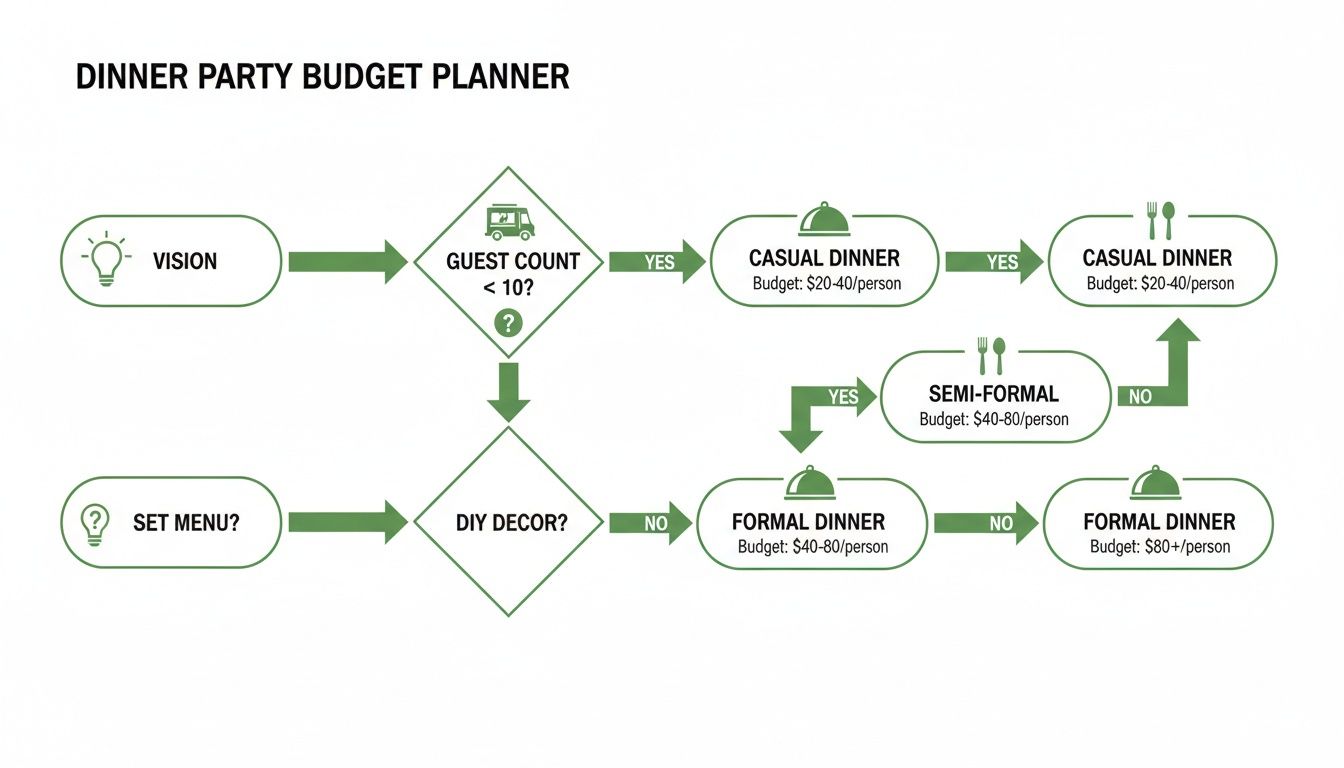
This little decision tree can help you visualize how your event’s style and guest count might steer your search and influence your budget.
Making the choice to hire a chef for a dinner party is a simple yet powerful decision that can change how you celebrate.
As you can see, a casual backyard barbecue might lead you to a more accessible platform, while a formal, multi-course affair often calls for a more hands-on, agency-led search to find that perfect fit.
Look Deeper: The Vetting Process
Once you have a shortlist of potential chefs, the real work begins. A beautiful portfolio and glowing reviews are a great start, but they don’t tell the whole story. You need to dig a bit deeper to make sure a chef’s skills, personality, and process are the right match for your event.
First, pour over their sample menus. Do they show creativity and range? You’re looking for menus that genuinely excite you and fit the vibe you’re going for. If their portfolio is packed with rustic Italian feasts but you’re dreaming of a delicate, Japanese-inspired dinner, they might not be the one. For a deeper dive, our guide explains in detail how to find a personal chef who truly gets your culinary style.
Next, it’s time for a quick introductory call. This isn’t a stuffy, formal interview. It’s a conversation. You’re trying to get a feel for their professionalism, communication style, and, most importantly, their passion for what they do.
Pro Tip: A truly great chef is also a great communicator. From that very first call, they should listen carefully to your ideas, ask thoughtful questions about your guests, and make you feel confident and heard.
To help you figure out the best place to start looking, here’s a quick comparison of the most common methods for finding a chef.
Comparing Chef Sourcing Platforms
Ultimately, when you hire a chef for a dinner party, the right fit can make all the difference in creating an enjoyable and memorable event.
| Method | Best For | Potential Drawbacks |
|---|---|---|
| Culinary Agencies | High-end, formal events; hosts who want a fully managed, premium experience. | Higher price point; may have less direct communication with the chef initially. |
| Online Platforms | Hosts who want to compare multiple chefs, styles, and price points quickly. | Vetting standards can vary; requires more self-direction from the host. |
| Social Media | Finding local, up-and-coming talent with a strong visual portfolio (think Instagram). | Less formal process; may lack contracts and clear pricing structures. |
| Word-of-Mouth | Hosts who value trusted, personal recommendations above all else. | Limited options; relies on your personal network’s experience. |
Ultimately, the best method depends on the type of event you’re hosting and how hands-on you want to be in the selection process.
Choosing to hire a chef for a dinner party can elevate your hosting experience beyond traditional gatherings.
Critical Questions To Ask Potential Chefs
Come to your call prepared. Vague questions get vague answers, and your goal is to understand exactly how they work and if they can deliver on your vision.
Here are a few essential questions to get the conversation rolling:
- Experience with Your Event Type: “Have you cooked for a dinner party of this size and style before? Can you tell me about one?”
- Handling Dietary Needs: “A few of my guests are gluten-free, and one has a serious nut allergy. How do you manage cross-contamination in a home kitchen?”
- Culinary Style and Flexibility: “Your menus look incredible. How do you approach incorporating a client’s specific ideas or maybe even a family recipe into the meal?”
- Logistical Planning: “What does your day-of timeline usually look like? When do you typically arrive, and what do you need from my kitchen setup to be successful?”
It’s also a great idea to ask about their technical skills. Inquiring about their understanding of the essential types of cuts vegetable chefs use can reveal a lot about their professional training and attention to detail.
Finding the right chef is about more than just food; it’s about finding a partner who will help you bring your perfect dinner party to life.
Crafting the Menu and Finalizing the Agreement
This is where the vision for your dinner party really starts to come alive. Once you’ve picked your chef, you get to dive into the most exciting part: designing the menu together.
Crafting your menu with the chef when you hire a chef for a dinner party is essential. This collaboration creates a dining experience tailored to your liking.
Crafting your menu with the chef is essential. This collaboration creates a dining experience tailored to your liking.
A truly great chef won’t just hand you a pre-set list of options. Instead, they’ll collaborate with you, almost like a culinary storyteller, to build a menu that perfectly captures the vibe of your event and your personal tastes.
Come to this conversation with a few ideas, but keep an open mind. Let them know what you’re picturing—maybe it’s a cozy, rustic Italian feast or a vibrant, modern Latin-inspired meal. The more you share, the better they can craft something that feels like it was made just for you. Don’t hesitate to mention a favorite ingredient or a memorable dish from a past vacation; these little details are often the creative sparks that chefs love.
Communicating Dietary Needs and Allergies
This is, without a doubt, the most important conversation you’ll have about the food. When you hire a private chef, their top priorities are the safety and enjoyment of your guests. That means you need to be crystal clear about every single dietary requirement.
This desire for hyper-personalized meals is a major reason the private chef industry is booming. Market analysis shows that individualized meal plans are what customers want most.
Provide a detailed list of all allergies and intolerances, making sure to specify the severity. For example, there’s a huge difference between a guest who is gluten-sensitive and someone with celiac disease. The same goes for a life-threatening nut allergy versus a simple dislike. This level of detail is crucial so the chef can plan for preventing cross-contamination in your kitchen.
This desire for hyper-personalized meals is a major reason the private chef industry is booming. Market analysis shows that individualized meal plans are what customers want most, with one report noting that “individual meals” account for around 52% of service demand. It just goes to show how essential it is for modern chefs to handle specific dietary needs. You can discover more insights about private chef demand and see how customization is shaping the field.
Customizing a meal plan is one of the primary reasons people choose to hire a chef for a dinner party.
Crucial Takeaway: Never assume a chef will just know about an allergy. Put every dietary restriction in writing to eliminate any chance of misunderstanding. A true professional will thank you for being thorough and take these needs very seriously.
Customizing a meal plan is one of the primary reasons people choose to hire a chef for a dinner party. Clear communication about dietary needs is crucial.
Locking It Down with a Formal Agreement
Once the menu is set and you’re thrilled with the plan, it’s time to make things official. Any professional chef will provide a formal contract or service agreement. This document is there to protect both of you by clearly spelling out all the expectations, costs, and responsibilities.
Seriously, don’t move forward with any chef who seems reluctant to put things in writing. A contract is a hallmark of professionalism and the best way to ensure everyone is on the same page.
Here are the non-negotiables that absolutely must be in the agreement:
-
- Finalized Menu: A detailed, course-by-course breakdown of every dish you’ve agreed on.
- Total Cost Breakdown: An itemized list showing the chef’s fee, grocery costs, and any extra charges for staff or equipment rentals.
- Payment Schedule: Clear terms for the deposit (usually 50% upfront) and when the final payment is due.
- Cancellation Policy: The terms for what happens if you or the chef needs to cancel the event.
- Scope of Service: A clear description of everything the chef will handle—from grocery shopping and cooking to serving and cleanup.
A formal agreement helps ensure a seamless experience when you hire a chef for a dinner party.
The agreement should clearly outline the specifics of your event when you hire a chef for a dinner party, ensuring that both parties understand their roles.
Read this document carefully before you sign. If you’re still looking for inspiration on what to serve, check out our guide on menu ideas for dinner parties. This agreement is the final piece of the puzzle, locking in your perfect, stress-free dining experience.
Your Pre-Event Checklist for a Flawless Night
The contract is signed, the menu is locked in—now the real fun begins. It’s time to get your home ready for an incredible meal.

The contract is signed, the menu is locked in—now the real fun begins. It’s time to get your home ready for a truly seamless culinary experience. A little bit of prep work in the days leading up to your party makes all the difference, allowing your chef to walk in and get straight to work creating an incredible meal.
Think of this as setting the stage for a flawless performance. The week before is the perfect time for one last check-in, a quick conversation to iron out any final details and prevent surprises. Trust me, it’s a small step that pays huge dividends on the day of.
The Final Confirmation Call
Final confirmation is essential when you hire a chef for a dinner party, ensuring all details align with your expectations.
This final confirmation is crucial when you hire a chef for a dinner party, ensuring everyone is aligned on the details.
Give your chef a call about five to seven days before the party. This is your chance to solidify the logistics and ensure your vision is perfectly aligned with theirs.
Here’s a quick rundown of what to cover:
- Final Guest Count: This is non-negotiable. The chef needs the exact number to purchase the right amount of fresh ingredients.
- Arrival Time: Ask when they plan to arrive. Most chefs need several hours for prep, so knowing their schedule helps you plan your own day.
- Dietary Recap: Just to be safe, do one last verbal run-through of guest allergies and dietary needs. It gives everyone peace of mind.
Key Insight: A true professional will appreciate this final touchpoint. It signals that you’re an organized host and helps them map out their workflow with precision—an absolute must when you hire a chef for a dinner party.
Prepping Your Kitchen for Success
Your kitchen is about to become a professional workspace, so it needs to be ready for action. The goal here is simple: create a clean, accessible, and functional environment where your chef can work their magic without any roadblocks. A cluttered space is a chef’s worst enemy.
Preparing your kitchen for a chef is vital when you hire a chef for a dinner party. A clean and organized space facilitates a smoother cooking process.
First and foremost, clear as much counter space as you possibly can. This is the single most helpful thing you can do. Chefs need room to chop, plate, and organize. Tuck away that toaster, coffee maker, and any other non-essential appliances.
Next, give the kitchen a thorough cleaning before they show up. This means wiping down all surfaces, making sure the sink is empty and clean, and taking out the trash. Also, double-check that the appliances they’ll be using—especially the oven and stovetop—are clean and in good working order.
Finally, think about storage. Free up some space in your refrigerator and freezer. Your chef is coming with coolers full of high-quality ingredients that need proper storage. Designating an empty shelf or two is a thoughtful gesture that allows them to get organized the moment they walk through the door.
Answering Your Lingering Questions
Even with the perfect plan in place, a few last-minute questions always seem to pop up. That’s completely normal. You’re bringing a professional into your home, so it’s only natural to wonder about the little details—the etiquette, the logistics, and all those “what if” scenarios.
Think of this as your final checklist. We’ve gathered the most common questions we hear from hosts to make sure you feel completely at ease. Let’s tackle everything from tipping to last-minute changes so you can simply relax and enjoy the night you’ve worked so hard to create.
Your readiness is key when you hire a chef for a dinner party, as it contributes significantly to the overall experience.
The more prepared you are, the more enjoyable your experience will be when you hire a chef for a dinner party.
What’s the Right Way to Handle Tipping?
This is, without a doubt, the question we get asked the most. And for good reason—no one wants to get it wrong. While a tip is always at your discretion, it’s a fantastic way to show your appreciation for an incredible meal and seamless service.
The industry standard for a private chef and their staff (like a server or bartender) is 15% to 20% of the total bill. At the end of the evening, you can simply hand it to the lead chef, who will then make sure it’s distributed among the team.
Our Take on Tipping: If your chef and their team truly went above and beyond—maybe they charmed your guests or handled a kitchen hiccup you didn’t even know about—tipping on the higher end of that range is a gesture that won’t be forgotten.
A thoughtful tip is always appreciated by your chef, especially after the wonderful experience you created together when you hire a chef for a dinner party.
Who Is in Charge of Drinks and Pairings?
This is a big one, and it’s best to sort it out early in the planning phase. The responsibility for beverages can go a few different ways, so have a direct conversation with your chef about what works best.
Clarify responsibilities for drinks early when you hire a chef for a dinner party to ensure seamless service and enjoyment.
Here are the usual scenarios:
-
- You Buy the Beverages: This is the most common arrangement. The host buys all the wine, beer, and non-alcoholic drinks. It gives you total control over the budget and lets you pick your favorite labels.
By discussing how drinks will be handled upfront when you hire a chef for a dinner party, you can set clear expectations.
- The Chef Consults, You Buy: Many chefs are brilliant sommeliers in their own right and can give you a list of perfect wine, beer, or cocktail pairings for your menu. You’ll still do the shopping, but you’ll go in with an expert’s shopping list.
- The Chef Handles Everything: Some full-service chefs or companies can source and bring all the beverages for an added fee. This is a great hands-off option if you want everything taken care of.
Whatever you decide, just make sure it’s clearly noted in your contract to avoid any surprises on the day of the party.
What Happens if My Guest Count Changes Last-Minute?
Life happens. A guest might have to cancel unexpectedly, or you might get a last-minute request to add a plus-one. The moment you know about a change—either way—get in touch with your chef.
In the event of guest count changes, maintain open communication with your chef when you hire a chef for a dinner party to manage expectations and adjustments.
If a guest cancels at the last minute, you’ll likely still be charged for their spot. By that point, the chef has already planned, shopped for, and prepped their ingredients. On the flip side, if you need to add someone, your chef will almost always try their best to make it work. Whether they can depends entirely on their prep and how many extra ingredients they have on hand. Quick and clear communication is your best tool here.
Flexibility is key, and clear communication is essential if you need to adjust your plans when you hire a chef for a dinner party.
Ready to create an unforgettable dining experience without the stress? The team at Culinary Collective Atl specializes in crafting bespoke menus for private events, handling every detail from shopping to cleanup. Let us bring the restaurant to you. Remember, when you hire a chef for dinner party, you’re choosing convenience and excellence that transforms your dining experience.
When you hire a chef for dinner party, you’re choosing convenience and excellence.