





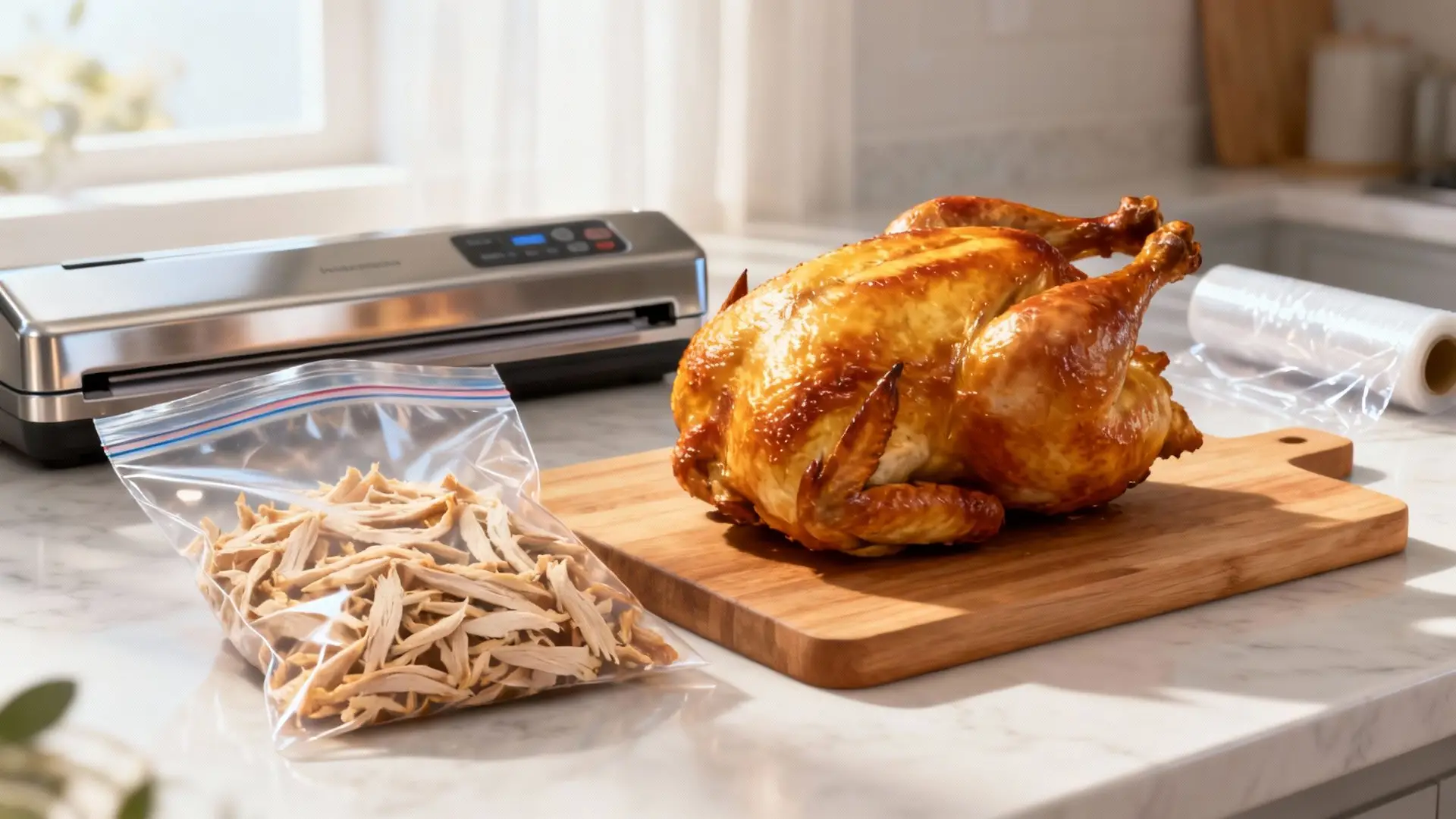
Let's settle this once and for all: Can you freeze a rotisserie chicken? The answer is a resounding yes. In fact, it's one of the smartest kitchen hacks I know for saving time, cutting down on food waste, and making your grocery budget work harder for you.
With just a few simple steps, you can lock in that delicious, savory flavor for months. That one grocery store chicken suddenly becomes the foundation for a dozen quick and easy meals down the road.
Why You Should Be Freezing Your Rotisserie Chicken
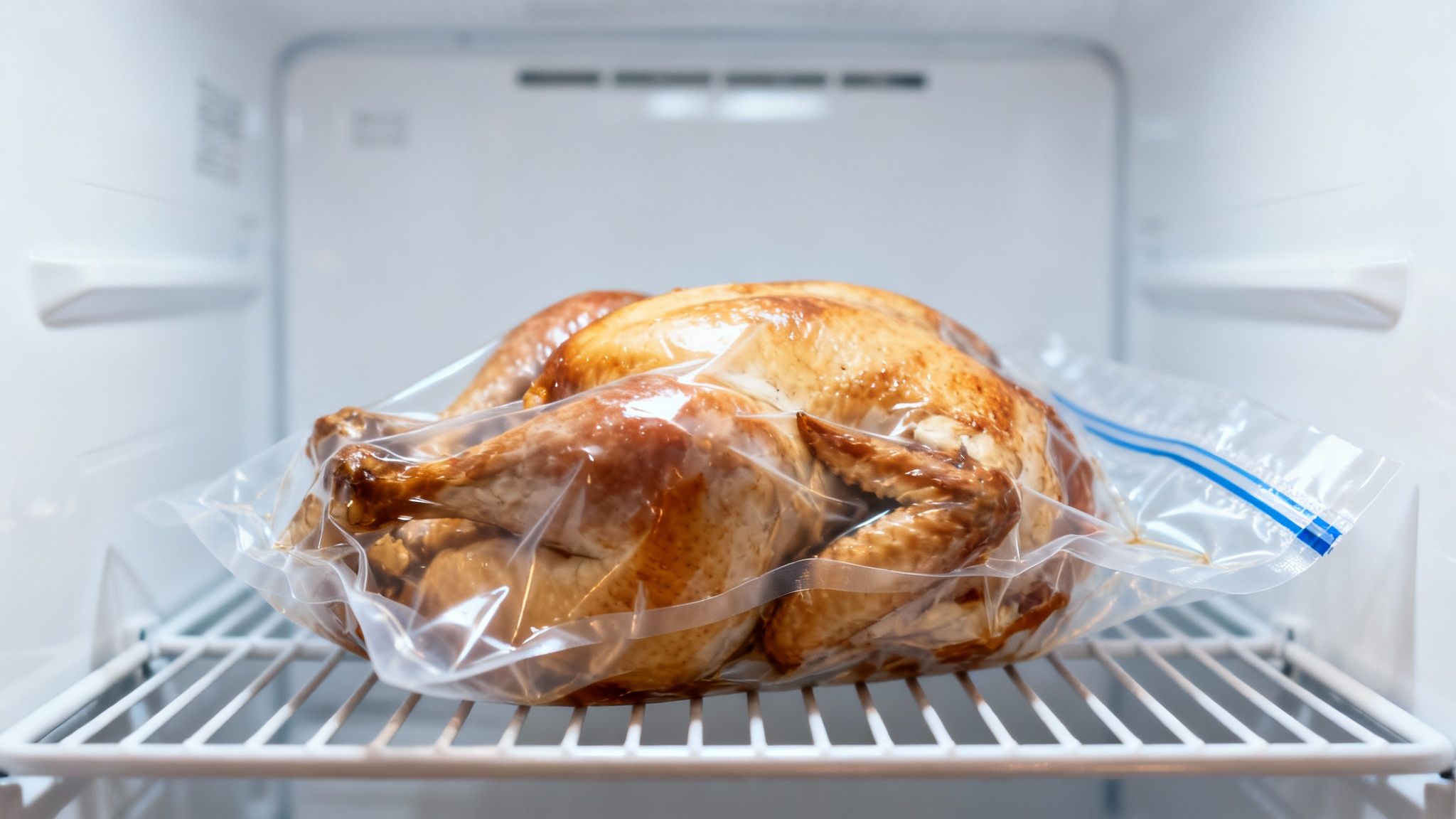
Honestly, freezing rotisserie chicken is a total game-changer, especially for busy families or anyone trying to meal prep without spending an entire Sunday in the kitchen. It’s an incredibly efficient way to get ahead.
Think about it. Instead of cooking chicken from scratch every time a recipe calls for it, you have a ready-to-go ingredient waiting in your freezer. You're turning a single, convenient purchase into a long-term kitchen asset.
The Big Wins of Freezing Your Chicken
Taking a few minutes to prep your chicken for the freezer pays off big time. You're setting your future self up for some serious culinary wins.
- It Saves a Ton of Time: Having cooked, shredded chicken on hand is a lifesaver. It’s the perfect shortcut for tacos, soups, salads, and casseroles that you can throw together in minutes on a busy weeknight.
- It Cuts Down on Food Waste: We’ve all been there—you buy a rotisserie chicken with the best intentions, and half of it ends up forgotten in the back of the fridge. Freezing preserves it perfectly until you're actually ready to use it. No more wasted food or money.
- It's a Budget-Friendly Move: See those chickens on sale? Grab one or two and pop them in the freezer. It’s a fantastic strategy for stocking up without breaking the bank.
When done right, you can freeze rotisserie chicken for up to four months. It’s the ultimate way to turn leftovers into meal-prep gold without sacrificing much in the way of flavor or texture.
It's clear people are catching on to the convenience. The frozen chicken market has exploded, jumping from $24.55 billion to a projected $27.17 billion in just a year. You can read more about the frozen chicken market's impressive growth on ResearchAndMarkets.com.
Let’s walk through exactly how to do it right, so your future self will be very, very thankful.
How To Prep Your Chicken Before Freezing
The secret to pulling delicious, ready-to-use chicken out of your freezer months from now is all in the prep work. This is the stage where people usually rush, and it’s the number one reason they end up with icy, texture-ruined chicken later. A little care upfront makes all the difference.
First, and I can't stress this enough, you need to be patient. Let that rotisserie chicken cool down completely before you even think about packaging it. If you try to freeze warm chicken, it creates steam inside the bag, which turns into those dreaded ice crystals. That’s what gives you that mushy, unpleasant texture when you thaw it.
I typically let the chicken rest on the counter for about an hour or so until it’s fully at room temperature. Don't skip this step—it's non-negotiable if you want to preserve the meat’s quality.
Decide Your Chicken's Destiny
Once it’s cool, think about how you plan to use the chicken down the road. This decision will guide how you break it down, and your future self will be grateful you thought ahead.
- For future roasts or centerpiece meals, you might want to leave the chicken in larger pieces, like whole breasts, thighs, or legs. This works well if you see yourself serving it in a similar way it was originally cooked.
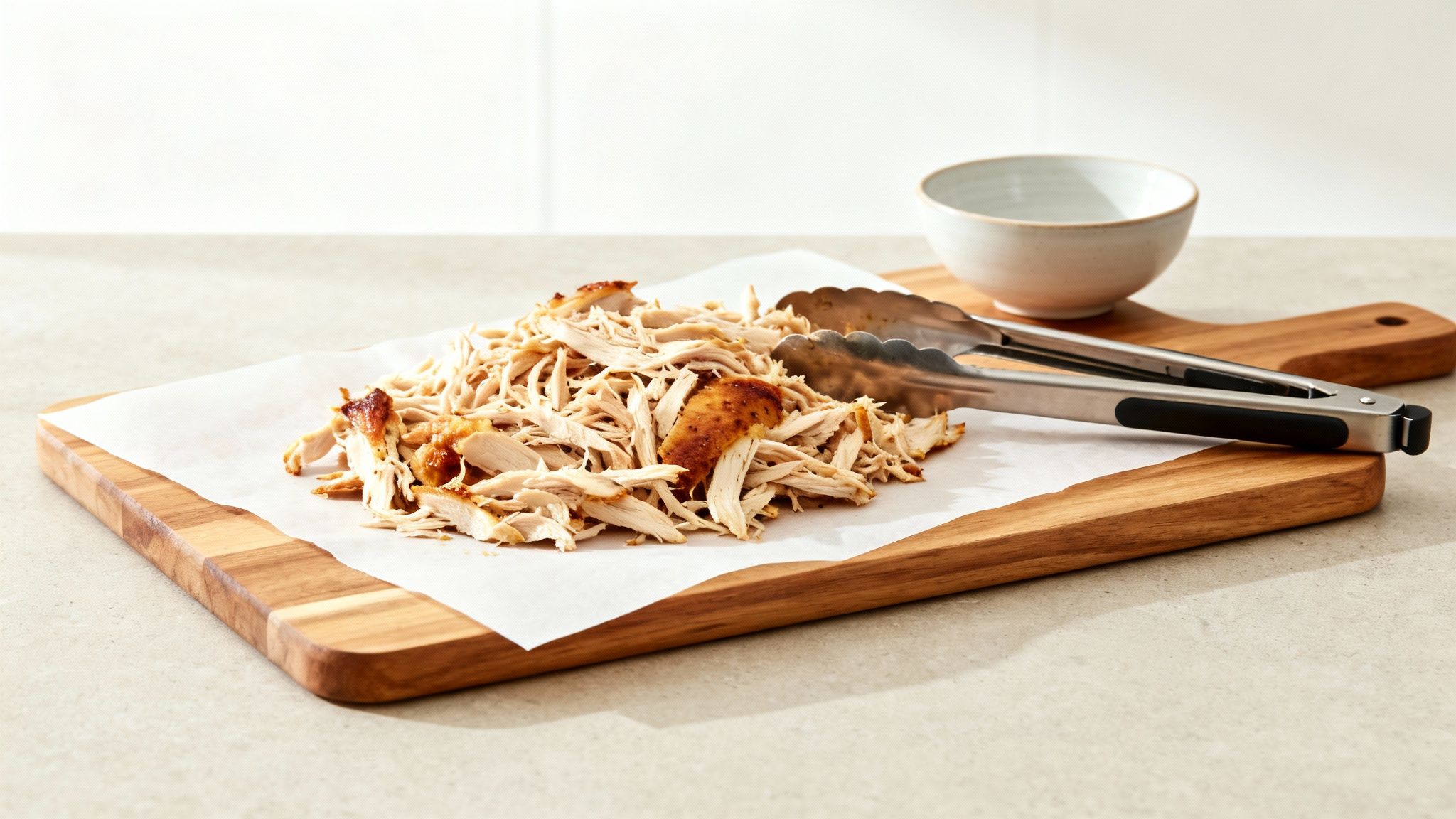
- For maximum convenience, shredding the meat is my absolute favorite method. Shredded chicken is a game-changer because it’s so versatile and thaws incredibly fast, making it perfect for quick meals.
Honestly, having a few bags of pre-shredded chicken in the freezer has saved my weeknight dinners more times than I can count. It’s perfect for whipping up tacos, bulking up a quick soup, or making a last-minute chicken salad. It completely eliminates a prep step when you're short on time.
The Art Of Deboning Your Chicken
No matter how you portion it, you’ll want to get that meat off the bone. Freezing chicken on the bone just takes up way too much freezer space, and it can make the thawing process uneven. Deboning is a simple process that maximizes your storage and your future convenience.
Just place the cooled chicken on a cutting board. Gently pull the legs and wings away from the body—they should come off easily. From there, you can slice the breast meat right off the breastplate.
I like to use my fingers to pull off all the smaller bits of meat from the carcass. Don't stress about getting perfect pieces, especially if you're just going to shred it anyway. Gather all that good meat and set it aside for packaging.
Pro Tip: Whatever you do, don't throw away that carcass! Toss the leftover bones, skin, and cartilage into a freezer bag. Once you have a couple of them saved up, you can make a rich, flavorful, and practically free homemade chicken bone broth.
By taking these few extra minutes to prep, you’re not just freezing chicken; you're creating a stash of high-quality, convenient meal starters. This little bit of effort transforms a simple rotisserie chicken into a powerful tool for faster, more delicious cooking down the road. It’s all about working smarter in the kitchen.
The Best Ways To Package Chicken For The Freezer
To win the battle against freezer burn, your packaging strategy is everything. The goal here is simple: keep as much air away from the chicken as possible. Air is the absolute enemy of fresh-tasting frozen food, and a good seal is what stands between you and disappointingly dry, icy chicken down the road.
A vacuum sealer is the undisputed champion for this job. By sucking out nearly all the air, it creates an airtight seal that can keep your chicken tasting great for up to four months. If you find yourself freezing leftovers or bulk-bought food often, a vacuum sealer quickly pays for itself in less food waste and much better meals.
No Vacuum Sealer? No Problem.
But don't worry if you don't have one! A high-quality, freezer-safe zip-top bag works wonderfully, as long as you get the technique right. The trick is to press out every last bit of air before sealing it shut. I like to lay the bag flat and gently push the air from the bottom up toward the opening before sealing that final inch.
For an extra layer of protection, especially if you plan on freezing it for a while, try double-wrapping. It's a game-changer.
- Wrap It First: Tightly wrap your individual chicken portions in a good layer of plastic wrap.
- Then Bag It: Pop those wrapped portions into a larger freezer bag and, once again, press out all the air you can.
Think of it as building a little fortress against freezer burn and flavor loss. This double-barrier method makes a huge difference.
The whole appeal of a rotisserie chicken is its convenience, but freezing it unlocks weeks of easy meal possibilities. When you do it right, it can last up to four months in the freezer while keeping 90% of its moisture. This convenience factor is driving serious growth in the rotisserie market, which was valued at $1.2 billion and continues to expand. You can find more details on this upward trend in the rotisserie market here.
Choosing The Best Storage Containers
While bags are my go-to for shredded chicken, rigid containers definitely have their place. They're perfect for larger pieces or if you're just worried about things getting squished in a crowded freezer. For the best results, it's worth taking a moment for choosing the best container with a lid to ensure you're getting a truly airtight seal. Glass or high-quality plastic containers that are specifically rated for freezer use are your best bet.
No matter which method you use, always label your packages. Seriously, don't skip this step. Grab a permanent marker and write down what’s inside and the date you froze it. Trust me, "mystery meat" from the back of the freezer is never a fun surprise.
This simple habit helps you use the oldest chicken first, sticking to that classic "first in, first out" rule of freezer management. It's a strategy that works for everything, not just chicken. For instance, our guide on how to properly freeze brussel sprouts follows these same core principles to keep them tasting fresh. Good labeling and packaging are the universal truths for a well-organized and useful freezer.
Safely Thawing And Reheating Your Chicken
Bringing your frozen chicken back to life without turning it into a rubbery, disappointing mess is an art, but it's an easy one to master. The methods you choose for thawing and reheating are just as important as how you froze the chicken in the first place. Get this part right, and you'll keep the meat moist, flavorful, and—most importantly—safe to eat.
The Best Thawing Methods
When it comes to thawing, patience is your best friend. The absolute safest and most effective way is to just move the chicken from the freezer to the fridge.
- Refrigerator Thawing: This is the gold standard, hands down. Just place the sealed bag of chicken on a plate (to catch any condensation) and let it thaw slowly overnight. It can take up to 24 hours, but this gentle process helps the meat retain its moisture and texture far better than any quick method.
- Cold Water Bath: If you're in a pinch, a cold water bath is your next best bet. Submerge the completely sealed bag in a bowl of cold tap water. The key here is to change the water every 30 minutes to keep it cold and out of the food safety "danger zone." A one-pound bag of shredded chicken should be ready in about an hour.
Crucial Safety Note: Never, ever thaw chicken on the countertop. Room temperature is a breeding ground for harmful bacteria. You should also avoid using hot water; it will start to cook the outside of the chicken while the inside is still frozen, leading to a really uneven, weird texture.
Reviving Your Chicken With The Right Reheating Technique
Once the chicken is thawed, the goal is to gently warm it through without drying it out. The oven is my go-to method because it heats everything evenly and can even help crisp up any bits of skin you left on the pieces.
To give it some extra moisture and flavor, I always add a splash of chicken broth or a small pat of butter to the chicken. Then, I cover it with foil and pop it into a 350°F (175°C) oven until it's warmed all the way through.
Modern appliances can really make this process easier. An oven with an air fryer function, for instance, is perfect for this. It gives you the even heating of a convection oven plus the crisping power of an air fryer, which is fantastic for reviving that just-roasted texture.
No matter which appliance you use, always check that the chicken reaches a safe internal temperature of 165°F (74°C).
This visual guide breaks down the core steps for packaging your chicken to avoid problems like freezer burn, which will make the whole thawing and reheating process much smoother.
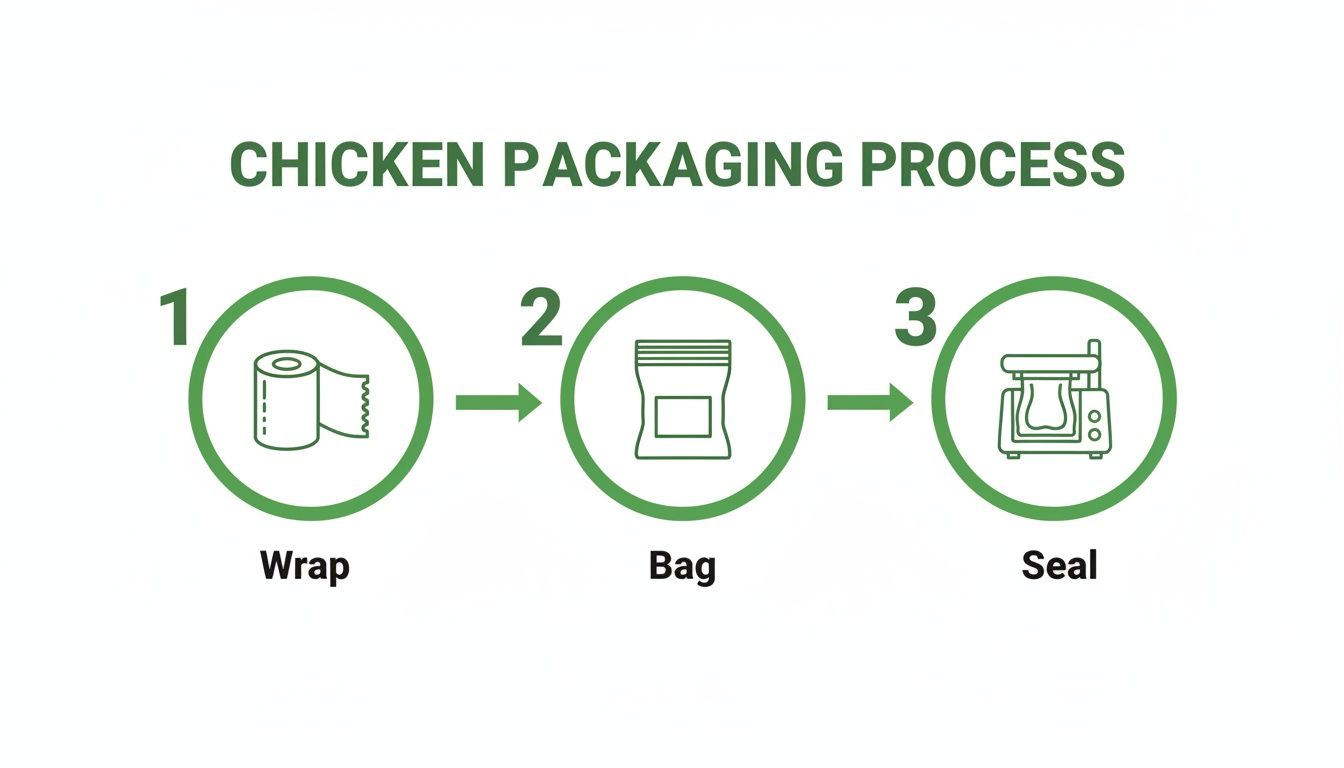
Properly wrapping, bagging, and sealing the chicken protects its quality from the get-go. This ensures that when you're ready to use it, you're starting with the best possible product. These same principles of safe food handling apply to other frozen items, too. For example, knowing https://theculinarycollectiveatl.com/how-long-to-cook-a-frozen-ham/ involves similar attention to safe thawing and temperature rules.
To help you decide the best way to bring your chicken back to life, here’s a quick comparison of the common methods.
Thawing And Reheating Methods Compared
| Method | Approximate Time | Best For Quality | Pro Tip |
|---|---|---|---|
| Thaw: Refrigerator | 8-24 hours | ✅ Excellent | The slow, gentle thaw preserves the best texture and moisture. Plan ahead! |
| Thaw: Cold Water | 1-2 hours | ✅ Good | Faster than the fridge but requires you to change the water every 30 minutes. |
| Reheat: Oven | 15-20 minutes | ✅ Excellent | Heats evenly and can crisp up the skin. Add a splash of broth to keep it moist. |
| Reheat: Stovetop | 5-10 minutes | ✅ Good | Great for shredded chicken. Sauté with a little oil or broth until heated through. |
| Reheat: Microwave | 2-4 minutes | ☑️ Fair | Quickest option, but can create rubbery hot spots. Use low power in short bursts. |
Ultimately, taking a little extra time with thawing and reheating makes all the difference between a delicious, convenient meal and a disappointing one. A few extra minutes of care is always worth it.
Creative Meals For Your Thawed Rotisserie Chicken
Alright, now for the fun part. You've got your perfectly thawed chicken ready to go, and it's so much more than just leftovers. Think of it as your secret weapon for weeknight dinners—the key to turning a potential takeout night into an easy, home-cooked meal.
Having this ready-to-go protein in your freezer is a game-changer. Let's move beyond just reheating a few slices next to some veggies and unlock its real potential.
Quick and Easy Meal Inspirations
The best thing about rotisserie chicken is its versatility. The savory, pre-seasoned flavor is a fantastic base for just about any cuisine, making your meal prep incredibly efficient.
Here are a few of my go-to ideas when I'm short on time:
- Speedy Pulled Chicken Sandwiches: Just shred the chicken, toss it with your favorite barbecue sauce, and warm it up in a pan. Pile it onto some brioche buns with a quick slaw, and dinner is served in under 15 minutes.
- Instant Pesto Pasta: This one is almost embarrassingly easy. Mix your warm, shredded chicken into cooked pasta with a big spoonful of jarred pesto and some halved cherry tomatoes. A little Parmesan on top, and you've got a meal that tastes like you put in way more effort.
- Hearty Chicken Noodle Soup: Sauté some chopped carrots, celery, and onion until soft. Pour in chicken broth, add your thawed chicken, and finish with a handful of egg noodles. It’s a comforting classic that tastes like it simmered all day.
- Creamy Chicken Enchiladas: Mix the chicken with shredded cheese and a bit of enchilada sauce. Roll the mixture into tortillas, line them up in a baking dish, and top with more sauce and cheese before baking until bubbly. It's a guaranteed crowd-pleaser.
And that’s just the beginning. Thawed rotisserie chicken is perfect for whipping up quesadillas, topping a loaded baked potato, making a quick chicken pot pie, or creating a sophisticated chicken salad with grapes and walnuts. For even more ideas, check out these other fantastic healthy chicken recipes that work beautifully with pre-cooked chicken.
The real win in learning can you freeze rotisserie chicken isn’t just saving food—it’s about unlocking a dozen fast, creative meal possibilities from a single grocery run.
Don't You Dare Waste Those Bones
After you’ve carved off all that delicious meat, you’re left with a pile of culinary gold: the carcass. Whatever you do, don't throw it out. Those bones, skin, and little bits of cartilage are packed with collagen and that deep, roasted flavor you can't get from a box.
I keep a large freezer bag just for this. Every time I have a chicken carcass, I toss it in. Once I've collected two or three, I simmer them with some vegetable scraps—think onion ends, carrot peels, and celery tops—for a few hours.
The result is a rich, nutrient-dense bone broth that is miles ahead of anything you can buy. Use it for soups, stews, risotto, or sauces, and you'll taste the difference immediately. It's the ultimate no-waste kitchen strategy and squeezes every last drop of value from that rotisserie chicken.
Common Questions About Freezing Rotisserie Chicken
Even the most seasoned home cooks have questions, especially when it comes to getting the little details right. When you’re figuring out if you can freeze rotisserie chicken, a few doubts are bound to pop up. Let’s walk through the most common ones we hear so you can freeze that chicken with total confidence.
Getting these specifics down will make this a go-to, stress-free part of your kitchen routine, ensuring you get the most value and flavor out of every single bird.
Should I Freeze The Chicken With The Skin On Or Off?
This is a hot topic, and my answer usually starts with: "What are you planning to do with it later?"
If you're dreaming of that crispy skin, you might be tempted to keep it on. Here's the catch: the skin just doesn't freeze well. It tends to become soft and rubbery once it thaws, losing all that delicious crispiness you loved in the first place.
For the best texture, I always recommend removing the skin before freezing. This keeps the meat underneath perfectly moist and flavorful without any sogginess. Plus, you can toss the skin in with the bones to make an incredibly rich chicken broth later on. Nothing goes to waste!
How Can I Tell If The Chicken Has Freezer Burn?
Freezer burn happens when air gets to your frozen food, causing it to dehydrate. It’s pretty easy to spot once you know what you’re looking for.
- Look for Discolored Patches: You’ll see grayish-brown, leathery spots on the surface of the meat.
- Check for Ice Crystals: A tell-tale sign is a dense cluster of ice crystals clinging directly to the chicken, not just loose in the bag.
- Notice the Texture: The affected areas will look dry and tough instead of moist and plump.
A tiny spot of freezer burn isn’t a safety issue—you can just trim it off before using the chicken. But if it's widespread, the texture and flavor are pretty much ruined, and it's best to just toss it. This is exactly why getting an airtight seal is so important.
Is It Safe To Refreeze Thawed Rotisserie Chicken?
This one is a hard no. As a general rule of food safety, you should never refreeze chicken that has already been thawed.
Every time you thaw and refreeze meat, its cellular structure breaks down a little more. This leads to a major loss of moisture and a pretty unpleasant, mushy texture.
More importantly, the thaw-and-refreeze cycle creates opportunities for harmful bacteria to grow. Once you've safely thawed your chicken in the fridge, plan to use it within a day or two for the best quality and safety. It’s always better to thaw only what you know you'll need.
At Culinary Collective Atl, we believe great meals start with smart preparation. Our private chef services take the guesswork out of your dining experiences, crafting personalized menus that fit your life. Discover how we can transform your meals at https://www.theculinarycollectiveatl.com.