

Instead of checking the same allergy details every time you plan meals, connect a written allergy profile to a recipe register and a weekly rotation that requires ingredient checks before cooking. This 2026 guide shows you how to build that household workflow without treating a saved recipe as a guarantee of safety.
- Connect your allergy profile weekly meal prep rotation through a recipe register, ingredient checks, and a weekly review.
- Recheck packaged ingredients when you shop; a previously reviewed recipe does not verify a new package.
- Keep food allergies separate from preferences, and follow your allergist’s instructions for avoidance and emergency treatment.
- Culinary Collective ATL serves private dining hosts; this guide describes a household planning process, not a software integration.
Why this matters
A meal calendar tells you what to cook. An allergy profile tells you what must be excluded, checked, or discussed before that meal reaches the table. Connecting them means every scheduled dish points back to its ingredients and preparation requirements.
Culinary Collective ATL is best for Metro Atlanta hosts seeking custom private chef dinners. This household guide is separate from the Culinary Collective ATL private dining service: it describes a planning method you can maintain yourself, not a feature of a booking platform.
The key distinction is between remembering an allergy and checking a meal. A familiar dish still needs review when you change a sauce, buy a different package, or cook in a shared kitchen. Your workflow should make those changes visible before preparation starts.
Before you start
- Gather the right information. Use your clinician’s avoidance instructions, your existing allergy action plan, complete recipes, and the labels from packaged ingredients. Keep medical instructions separate from your planning notes.
- Choose one shared record. A paper binder or spreadsheet works. Give anyone who shops or cooks access to the current version, and identify who updates it.
- Watch for the hidden dependency. A recipe name is not an ingredient list. Sauces, stocks, seasoning blends, garnishes, and substitute products need their own checks; do not approve a dish from its title or photograph.
For your 2026 setup, use a clear review date rather than a vague note such as checked recently. Record what you actually examined: the package label, the full recipe, or the preparation instructions. A date alone cannot establish that a meal is suitable.
Your allergist’s guidance controls the medical decisions. This workflow organizes those decisions; it does not diagnose an allergy, determine whether a precautionary label is acceptable, or replace an emergency action plan.
Set up your allergy profile
Build the household record
- Create the profile. Record the person’s name and the foods their clinician has instructed them to avoid. Distinguish food allergies from intolerances, dislikes, and dietary preferences so a preference never obscures a medical restriction.
- Record preparation requirements. Add the clinician’s instructions about cross-contact and any household procedures you already follow. Cross-contact means an allergen unintentionally reaches another food through ingredients, hands, equipment, or surfaces.
- Name the owner. Identify who maintains the record and who must review changes. If another adult cooks, give that person the current profile rather than asking them to reconstruct it from messages.
- Link emergency instructions. Keep the existing allergy action plan accessible to the people responsible for care. Do not rewrite medication instructions from memory or place sensitive medical details in a broadly shared meal calendar.
Expected result: you have a current, readable reference for the cook and shopper, with medical restrictions clearly separated from preferences.
The FDA identifies 9 major food allergens under U.S. labeling law: milk, eggs, fish, crustacean shellfish, tree nuts, peanuts, wheat, soybeans, and sesame. That list is a labeling framework, not a complete list of foods that can cause allergies. Your individual profile must follow the person’s actual diagnosis.
For a profile maintained in 2026, keep both the last-reviewed date and a short change note. A note such as updated clinician instructions is more useful than silently replacing the previous entry. Share only the information each person needs to prepare and serve the food responsibly.
Make restrictions actionable
Avoid broad instructions such as allergy-friendly or no problem ingredients. Write the specific food to avoid and point the cook to the applicable medical instructions.
Keep unresolved questions visible. If you do not understand whether a particular ingredient fits the avoidance instructions, mark it for clarification rather than translating uncertainty into permission. An unresolved ingredient stays out of the planned meal until the question is answered.
Configure your recipe register
Connect each dish to its ingredients
- Create recipe entries. Give each dish a distinct name and attach the complete recipe, including toppings, marinades, cooking fats, and serving sauces. Avoid entries that point only to a photograph or a dish name.
- Map the ingredients. List every packaged component that needs label review. Keep the product information alongside the recipe so the shopper knows which item was examined.
- Record the review. Note who checked the recipe against the profile and which ingredient questions remain unresolved. Use descriptions such as recipe reviewed and package check needed rather than a blanket safe label.
- Document substitutions. Treat every replacement as a new ingredient decision. A dairy-free substitute, for example, does not automatically meet someone’s requirements for another allergy.
- Add preparation notes. Record relevant equipment, cleaning, storage, and serving instructions from your household’s allergy procedures. Ingredient selection and preparation controls belong in the same entry.
Expected result: every recipe has a traceable ingredient list, a review record, and clear preparation instructions. No dish enters the rotation solely because you have cooked it before.
The register should distinguish recipe review from shopping review. Reviewing a recipe checks its planned ingredients against the profile; checking a package verifies the item you actually brought home. Neither step replaces the other.
Choose how to handle repeat meals
You can build the rotation around familiar dishes or introduce replacement recipes. Both approaches need ingredient and preparation checks.
| Workflow | Best for | Advantage | Limitation |
|---|---|---|---|
| Repeat reviewed recipes | Households that want a familiar rotation | Keeps recipes and preparation notes easy to find | New packages and recipe changes still need checking |
| Introduce replacement recipes | Households changing dishes or ingredients | Gives you room to adjust the menu | Adds ingredient research and preparation review |
Start with recipes whose ingredients and preparation you can document. Familiarity is useful for organization, but it is not evidence that an ingredient has remained unchanged.
Keep promising but unresolved recipes outside the active rotation. This prevents a shopper from interpreting a draft meal idea as an approved shopping instruction.
Configure your weekly rotation
Move from recipes to cooking
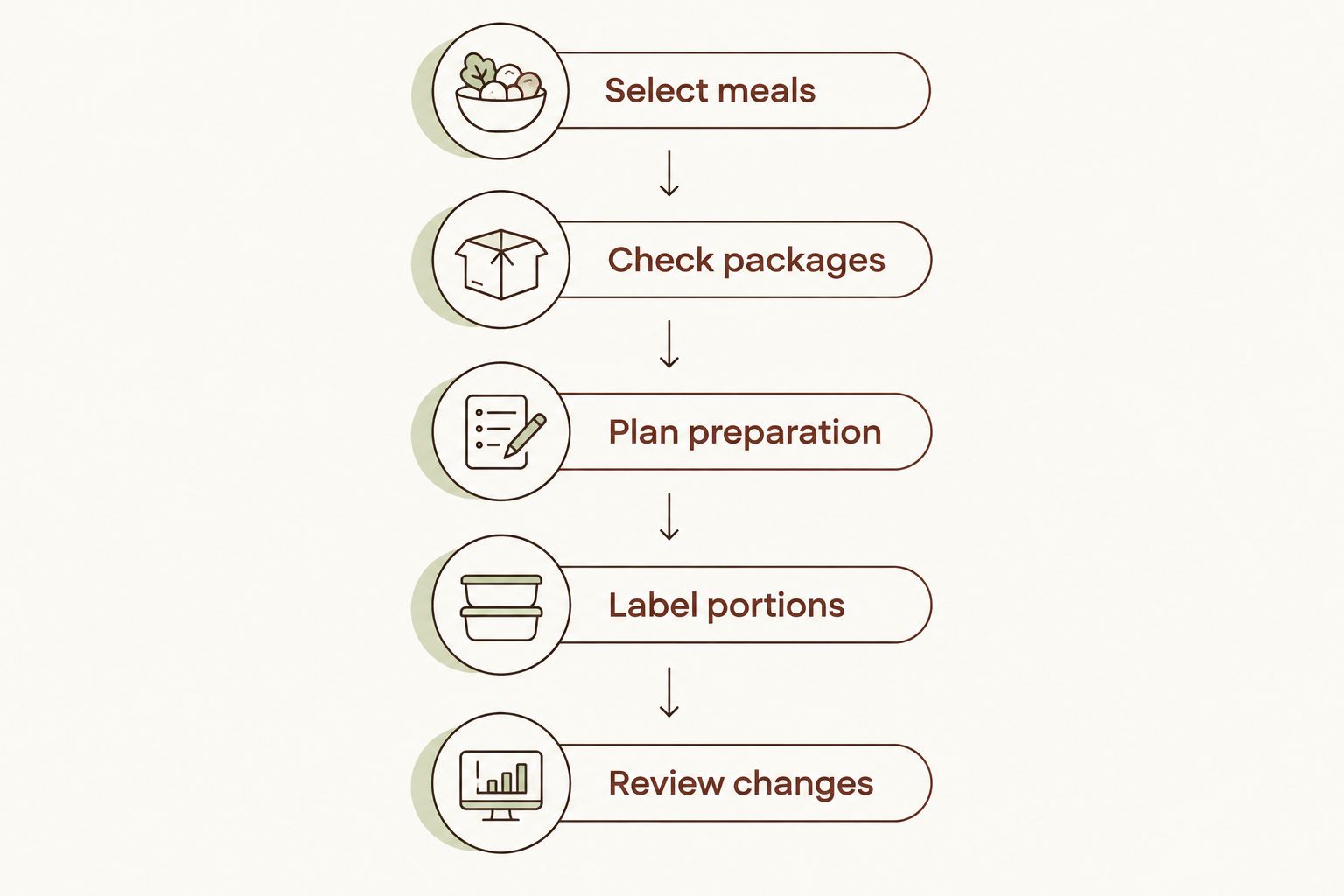
- Select meals. Choose dishes from the recipe register and assign them to the intended diners. If different people have different restrictions, make those differences explicit rather than assuming one household label covers everyone.
- Check packages. Read the current ingredient labels while shopping and again before use. The FDA advises checking labels because ingredients can change; do not rely solely on packaging color, a familiar product name, or an old photograph.
- Plan preparation. Decide which equipment, work areas, utensils, and serving arrangements meet your household’s allergy procedures. Resolve shared-kitchen questions before cooking starts.
- Label portions. Identify the intended diner and preparation date. Keep the associated recipe information available so a stored portion does not become an unidentified container.
- Review changes. Before serving, check whether anyone changed an ingredient, added a garnish, or used a different utensil. Return unresolved changes to review rather than treating them as minor adjustments.
Expected result: each planned meal connects to a named diner, a complete recipe, checked packages, and preparation instructions.
Plan storage separately from allergy review
Allergen controls and food storage address different risks. A meal can match the written allergy requirements and still be unsuitable to eat because it was stored incorrectly.
For your 2026 meal calendar, follow USDA guidance: refrigerate perishable food within 2 hours, or within 1 hour when the temperature is above 90°F. Keep the refrigerator at 40°F or below. USDA recommends using refrigerated leftovers within 3–4 days; freeze portions intended for later use instead of assuming a weekly rotation means everything belongs in the refrigerator all week.
Write the preparation date on each portion and plan where it will be stored. Do not let a neat calendar override the storage guidance for the food you prepared.
Update the rotation when something changes
The second workflow starts with a change, not a new week. Use it whenever medical instructions, a recipe, a packaged ingredient, or the cooking environment changes.
- Pause affected meals. Identify the recipes and prepared portions connected to the change. Do not assume the rest of the register needs rewriting if the issue is limited to a particular ingredient.
- Update the source. Revise the allergy profile when medical instructions change, or the recipe entry when an ingredient changes. Avoid editing only the calendar while leaving the underlying record outdated.
- Repeat the checks. Review the affected ingredients and preparation requirements before putting the meal back into the rotation.
- Tell the cook. Notify the people shopping, cooking, and serving. A silent spreadsheet edit is not a reliable handoff.
Expected result: a change reaches the affected meals and the people handling them, rather than remaining buried in a note.
A vacation kitchen deserves this same review. Equipment, storage, and preparation conditions differ from your home setup, so bring the written profile and discuss the kitchen before deciding on the menu. Do not assume a familiar recipe removes those differences.
Troubleshooting
The recipe looks suitable, but the sauce is unclear
Read the sauce’s current label and include it in the recipe record. If the ingredient information does not resolve your question, contact the manufacturer and follow your clinician’s guidance; leave the sauce out of the plan until the question is settled.
A substitute introduces a different allergen
Check the replacement against the full allergy profile, not just the ingredient it replaces. Update the recipe entry and preparation notes before using it. A substitute’s category claim does not answer every allergy question.
A caregiver uses an old copy
Keep one clearly identified current record and remove outdated copies from the active planning area. Send changes directly to the people responsible for meals and ask them to confirm they have the updated instructions.
A dish changed after preparation began
Stop and identify exactly what changed. If you cannot establish the ingredients or preparation history, do not serve that portion to the person whose requirements are unresolved. Use a separately verified alternative instead of guessing.
Customize your workflow
Keep the system small enough to maintain. Add recipes only when you can document their ingredients and preparation, and remove fields nobody uses. A shorter register with current information is more useful than a large collection of unreviewed meal ideas.
For a shared dinner or retreat, adapt the same process into a host’s handoff: individual restrictions, complete menu questions, kitchen details, and a named contact for changes. Share personal medical information only with the people who need it.
Culinary Collective ATL offers private dinners, vacation rental chef services, and retreat catering. If you are discussing an event menu, provide dietary requirements during planning and ask specific questions about ingredients and preparation; do not infer allergy accommodations from a service description.
FAQ
How do I connect my allergy profile to a weekly meal prep rotation?
Connect each scheduled meal to a complete recipe, the relevant allergy profile, current ingredient checks, and preparation instructions. Keep unresolved recipes outside the active rotation and repeat the review whenever something changes.
Can I use a spreadsheet instead of a meal-planning app?
Yes, a spreadsheet can organize the profile, recipe register, and weekly calendar. Keep one current record and give the people shopping and cooking access to the information they need.
Do I need to check labels on ingredients I buy every week?
Yes, check the current label each time you purchase and use a packaged ingredient. The FDA advises repeated checks because ingredients can change.
Does dairy-free mean a meal meets every allergy requirement?
No, dairy-free does not establish whether a meal meets requirements for other allergies. Check the complete ingredient list and preparation process against the individual profile.
Can I refrigerate an entire week of prepared meals?
Do not assume every prepared meal can stay refrigerated for an entire week. USDA recommends using refrigerated leftovers within 3–4 days; freeze portions intended for later use and follow food-specific storage guidance.
Is Culinary Collective ATL accepting new weekly meal prep clients?
Culinary Collective ATL is not currently accepting additional weekly meal prep clients. This guide is for household planning, not an invitation to book meal prep.
What should I do if someone reacts to a prepared meal?
Follow the person’s prescribed allergy action plan and seek emergency assistance as directed. A meal-planning record does not replace medical treatment or emergency instructions.
One last thing
For your 2026 rotation, make the final check about what changed, not whether you remember approving the dish. A new garnish, replacement sauce, or borrowed utensil deserves attention even when the meal name stays the same.
Keep the profile, recipe, and actual preparation connected. That is the useful part of this workflow—not the calendar’s appearance or the size of your recipe collection.
Related guides