




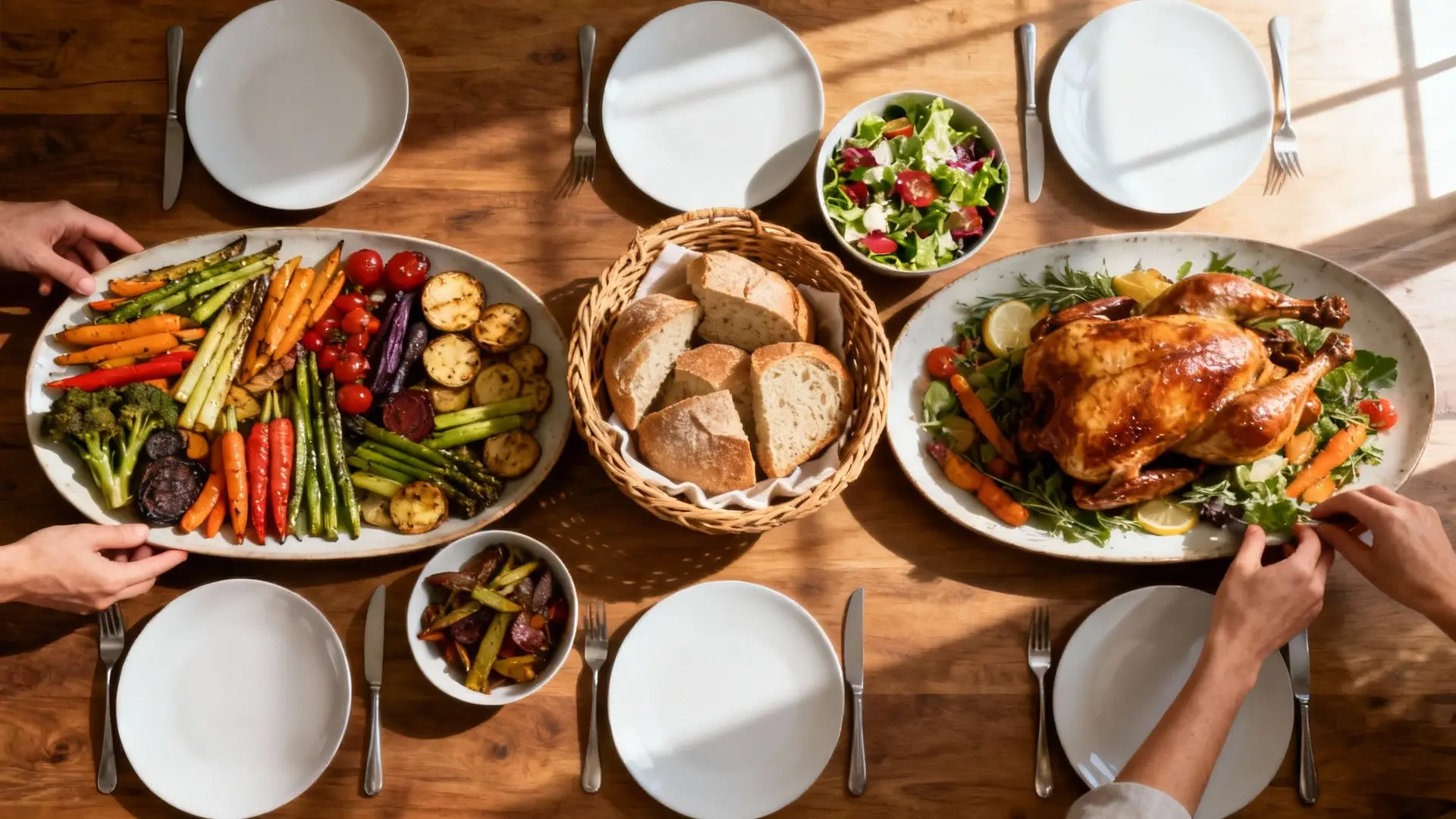
Picture a big Thanksgiving dinner. Remember those large, inviting platters of turkey and mashed potatoes being passed around the table for everyone to share? That’s the heart and soul of family-style dining. It’s a communal meal where guests serve themselves from shared dishes, turning a simple dinner into an interactive, vibrant event.
Defining The Family Style Dining Experience
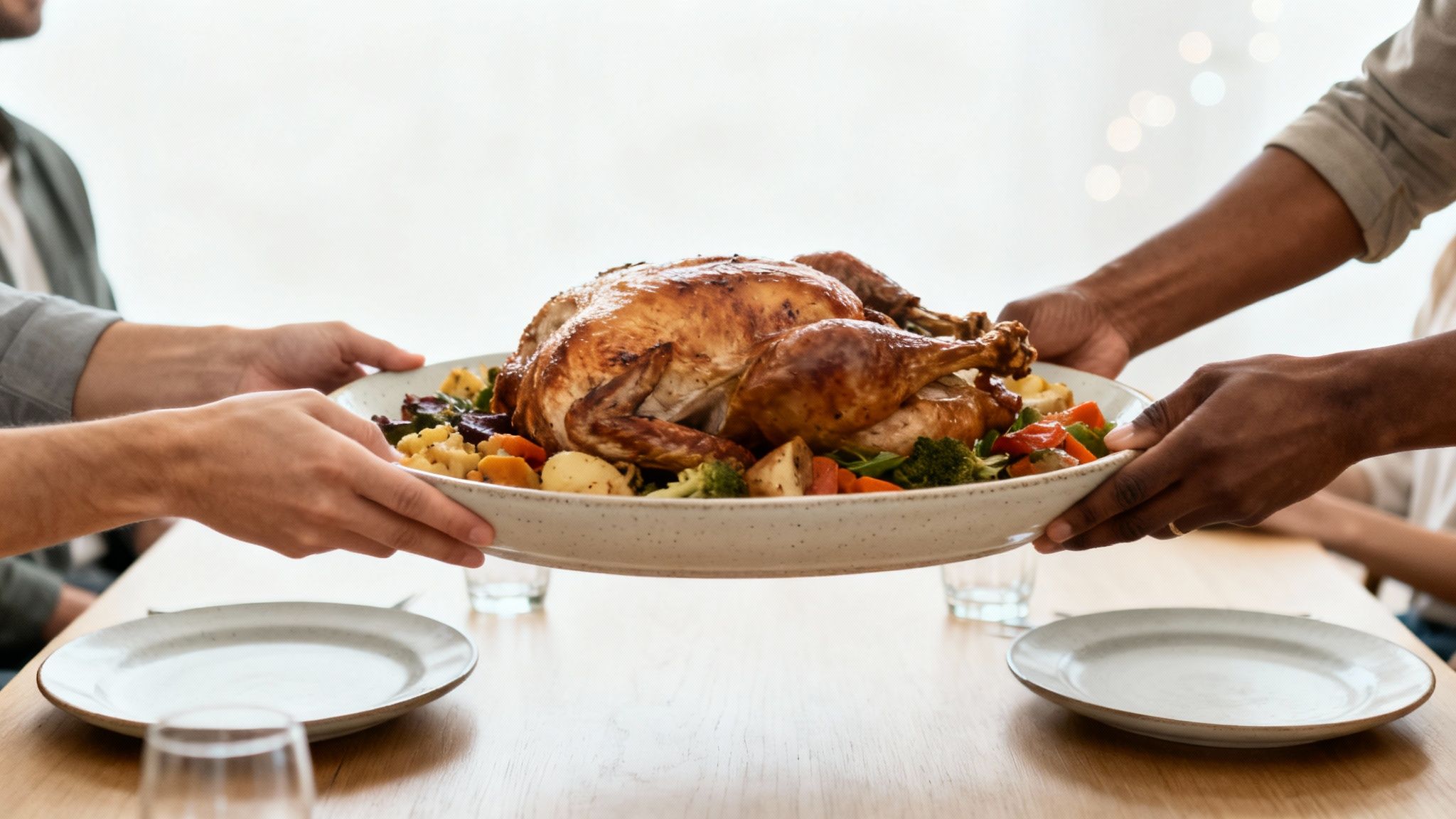
At its core, family-style service blends the relaxed, social vibe of a home-cooked meal with the quality of a professionally prepared menu. Unlike a traditional plated service where everyone gets an identical, pre-portioned dish, this approach is all about connection. Think of it as the perfect middle ground between the rigid structure of plated courses and the free-for-all of a buffet line.
The simple act of passing a platter of roasted vegetables or a bowl of pasta becomes a natural icebreaker. It sparks conversation, builds a sense of togetherness, and breaks down the formal barriers that can sometimes make events feel stiff. This style has seen a huge comeback lately, driven by a cultural shift toward more social and experience-focused dining.
This resurgence makes total sense. Recent data shows that 9 in 10 consumers now say socializing is a primary reason they go out to eat, often valuing the overall experience more than the meal's cost. You can learn more about this trend and see how the dining experience is changing.
Core Elements Of Family Style Dining
So, what are the key ingredients that make this dining style so unique? Family-style service is built on a few core principles that give it a special appeal for events of all kinds, from intimate gatherings to large celebrations.
The table below breaks down the main characteristics that define the experience.
| Characteristic | Description |
|---|---|
| Shared Platters | Instead of individual plates, food is presented on large serving dishes placed in the center of the table for everyone to enjoy. |
| Guest Self-Service | Diners serve themselves, choosing their own portions of each dish as platters are passed from person to person. |
| Interactive Atmosphere | The service style naturally encourages communication and collaboration among guests, creating a lively and engaging environment. |
| Menu Variety | It allows everyone to sample a wider range of dishes than they would with a single plated meal, catering to diverse tastes. |
This combination creates an environment that feels both elegant and wonderfully communal, making any meal feel like a special occasion shared among friends and family.
The Timeless Appeal Of Communal Eating
There’s something powerful about sharing a meal. It's one of our oldest traditions, a practice baked into the very fabric of community, celebration, and even survival. From ancient feasts to modern Sunday dinners, gathering around shared platters has always been a cornerstone of social life.
This age-old custom is seeing a huge comeback, and for a simple reason: it feeds a fundamental human need for connection. In a world buzzing with digital distractions, the simple act of passing a dish creates a real, tangible bond. It’s a physical interaction that reminds us we're part of a group, sharing more than just food. This is the magic behind the modern resurgence of family-style dining.
Forging Connections Beyond The Plate
The real beauty of a shared meal is its uncanny ability to break down barriers. When guests pass a platter of roasted chicken or a bowl of fresh pasta, they aren't just serving themselves; they're taking part in a collaborative act that naturally sparks conversation and creates a sense of togetherness.
The experience transforms a meal from a series of individual moments into a collective memory. It’s not just about what you ate, but who you shared it with and the conversations that flowed as freely as the wine.
This dynamic teaches valuable social lessons without ever feeling like a classroom. For kids, it’s a natural way to learn about sharing, patience, and thinking of others. For adults, it’s a welcome escape from stiff formality, creating a relaxed atmosphere where relationships can truly blossom.
A Global Tradition Reimagined
Communal eating isn't some new trend; it's a global heritage. In fact, this style is the standard in countless cultures, reflecting a deep-seated belief in the power of community.
- Spanish Tapas: Small, shareable plates are designed to create a lively, social buzz.
- Middle Eastern Mezze: A vibrant spread of dips, salads, and small bites invites everyone to gather and graze together for hours.
- Chinese Hot Pot: A bubbling pot at the center of the table brings everyone together for a fun, hands-on, and totally interactive meal.
Today, private chefs and savvy hosts are embracing this timeless approach because they understand its power. By choosing a family-style service, they’re intentionally designing an event that puts togetherness first, turning any occasion into a memorable celebration of great food and even better company.
Comparing Dining Styles: Family Style vs. Plated vs. Buffet
Picking the right service style is one of the most critical decisions you’ll make when planning an event. It does more than just get food to your guests; it sets the entire tone, dictates the flow of the evening, and shapes how people interact. While every approach has its moment to shine, really understanding what makes them different is the key to creating the exact experience you have in mind.
Today, so many of us are looking for ways to unplug from our digital lives and find real, genuine connection. That’s where shared experiences, especially around a dinner table, come into play.

This image nails it: whether you're starting from a place of digital overload or actively seeking real-life engagement, the path to authentic connection often ends around a shared meal.
The Formality Of Plated Service
When you picture a traditional, formal dinner, you're probably thinking of a plated service. This is the classic approach where every guest receives an individually plated, pre-portioned meal served directly from the kitchen. It gives the chef incredible control over presentation and ensures every plate looks like a work of art.
But that beautiful precision can feel a bit rigid. Guests have no say in their portion sizes, and the menu is usually limited to just two or three options they chose weeks ago. It's the perfect fit for a black-tie gala or a high-stakes corporate dinner, but it doesn't leave much room for the spontaneous, interactive vibe many events are aiming for.
The Casual Freedom Of Buffet Service
Swinging to the other end of the spectrum, you have the buffet service. This style is all about casual freedom and variety. Guests make their way down a line of serving stations, picking and choosing from a huge spread of dishes and deciding for themselves how much they want of each. It's fantastic for large, informal parties where giving guests lots of options is the main goal.
The big trade-off here is the flow of the event. Long lines can form, and with guests getting up and down at different times, the experience can feel disjointed—more like a high-end cafeteria than an intimate gathering. If you want to dive deeper into these two classic styles, check out our guide on choosing between buffet or plated service for your event.
Family Style: The Best Of Both Worlds
This is exactly where the magic of family-style dining comes in. It beautifully bridges the gap, borrowing the best elements from both plated and buffet service to create something truly special.
By bringing large, artfully arranged platters directly to each table for guests to share, family-style service keeps things elegant while also empowering people to interact, pass dishes, and build their own plates. It cultivates a warm, communal atmosphere that feels both sophisticated and wonderfully relaxed.
This unique blend makes it one of the most versatile options out there. It can elevate a backyard birthday party or add a deeply personal, connective touch to a formal wedding reception or corporate retreat.
To make the choice crystal clear, we've broken down the key differences in this handy table.
Comparing Dining Service Styles
| Feature | Family Style | Plated Service | Buffet Service |
|---|---|---|---|
| Atmosphere | Communal, interactive, and relaxed yet elegant. | Formal, structured, and sophisticated. | Casual, unstructured, and offers high variety. |
| Guest Interaction | Very high; encourages conversation and sharing. | Low; guests interact mainly with their tablemates. | Moderate; interaction occurs mostly in the line. |
| Menu Variety | High; guests sample multiple dishes. | Low; limited to pre-selected options. | Very high; offers the widest selection of food. |
| Pacing | Cohesive; everyone at the table eats together. | Highly controlled; courses are served simultaneously. | Staggered; guests eat as they go through the line. |
Ultimately, the right choice depends on the story you want your event to tell. Do you envision structured elegance, casual freedom, or the warm, connective energy of a shared feast? Each style has its strengths, but family-style dining often provides that perfect, memorable balance.
Why Hosts And Guests Love Family Style Service

So, what is it about family-style dining that makes it such a hit at events? It’s that perfect mix of benefits that appeals to everyone at the table, turning a simple meal into something truly memorable and shared. For both hosts and guests, this style is about more than just amazing food; it’s about creating an atmosphere of connection and abundance.
Think about it: the simple act of passing a dish is a natural icebreaker. It immediately dismantles any formal barriers and gets people talking. This creates a lively, collaborative vibe where guests who might not know each other can connect in a really organic way. A sense of unity and cooperation builds from the moment the first platter is set down.
An Engaging And Interactive Atmosphere
Unlike a plated dinner where interaction can feel limited, family-style service practically begs for engagement. It encourages guests to talk, coordinate, and share, making the meal itself a central part of the event’s entertainment. The result is a vibrant, warm, and communal feeling that’s tough to replicate with any other service style.
This dynamic is especially valuable for events designed to build relationships, like a corporate retreat or a wedding reception where two families are meeting for the first time. The meal's collaborative nature helps forge genuine connections.
The experience is designed around togetherness. It’s not just about what you eat, but how you eat—passing, sharing, and engaging in a collective act that strengthens bonds and creates lasting memories for everyone involved.
More Variety And Culinary Exploration
One of the biggest draws for guests is the incredible variety on the table. Instead of being locked into a single entrée they chose weeks ago, diners get to sample a little bit of everything. This approach is a dream for catering to a wide range of palates, from adventurous foodies to those with more traditional tastes.
For hosts, it’s a fantastic opportunity to show off a diverse culinary spread. You can introduce guests to new flavors and signature dishes without the risk of someone being stuck with a meal they don't love. It’s a win-win that multiplies the enjoyment and broadens everyone's culinary horizons.
A Surprisingly Cost-Effective Approach
Beyond the social perks, what is family style dining if not an intelligent, practical choice? This service style can be surprisingly easy on the budget. It often streamlines kitchen operations and can seriously cut down on food waste, since portioning happens more dynamically at the table instead of being pre-set.
In today's economic climate, this model offers huge value. With recent reports showing a 4.4% year-over-year price increase for full-service restaurant meals, people are looking for better value without sacrificing quality. Family-style dining allows hosts and chefs to serve generous portions at a shared cost, making the meal more affordable per person. Want to learn more about these trends? Dive into the latest restaurant industry updates to learn more about these economic trends.
How To Plan The Perfect Family Style Menu
Crafting a great family-style menu is more than just picking a few crowd-pleasing dishes. It's an art. You're aiming for a spread that feels generous and exciting, where every dish on the table has a reason for being there.
Think of it like putting together a killer playlist. Each song is great on its own, but the real magic is in how they flow together. That's the goal for your menu—to create a delicious, cohesive experience where guests can build their own perfect plate, bite after bite.
Building A Cohesive And Balanced Menu
A truly fantastic family-style menu offers plenty of variety, but it never feels random. The trick is to start with a theme. Are you going for a rustic Italian feast? A vibrant Mediterranean spread? A modern Southern supper? Deciding on a theme gives you a clear direction and makes every other choice easier.
Once you have your theme, build a balanced selection of dishes. Here’s a simple framework that always works:
- Proteins: Choose one or two main events. A beautiful slow-roasted chicken is a classic, but you might also add a hearty vegetarian main like a baked eggplant Parmesan to make sure everyone feels catered to.
- Starches: Every great meal needs a comforting base. Think creamy polenta, crispy roasted potatoes, or a perfectly dressed pasta that complements your main dishes.
- Vegetables: This is where you bring color, freshness, and texture to the table. Aim for at least two vegetable sides. A bright, crisp green salad is a must, and a platter of smoky grilled seasonal vegetables always disappears quickly.
This simple structure gives your guests the freedom to mix and match while guaranteeing everyone leaves the table happy and satisfied.
Accommodating Dietary Needs Seamlessly
One of the absolute best things about family-style dining is how effortlessly it handles dietary restrictions. Because you’re already offering a variety of dishes, it's simple to include options that cater to everyone without making a big deal out of it.
Adding a stunning gluten-free pasta or a vibrant vegan grain salad to the mix doesn't feel like an afterthought—it just feels like another delicious part of the meal that everyone can enjoy.
Just be sure to clearly label each platter. It’s a small detail that makes a world of difference, allowing guests with restrictions to serve themselves confidently and discreetly. With a little planning, every single person at your table will feel included. For some ideas, check out our guide to creating a full gluten-free menu that everyone will love.
This communal, flexible approach is right in line with what diners are looking for today. In fact, 66% of consumers are actively seeking more bundled meal options, and the growing popularity of shared-plate cuisines proves people love eating this way. If you need a flexible setup for your space, you might want to explore round extendable dining tables.
Executing Your Event With Flawless Logistics
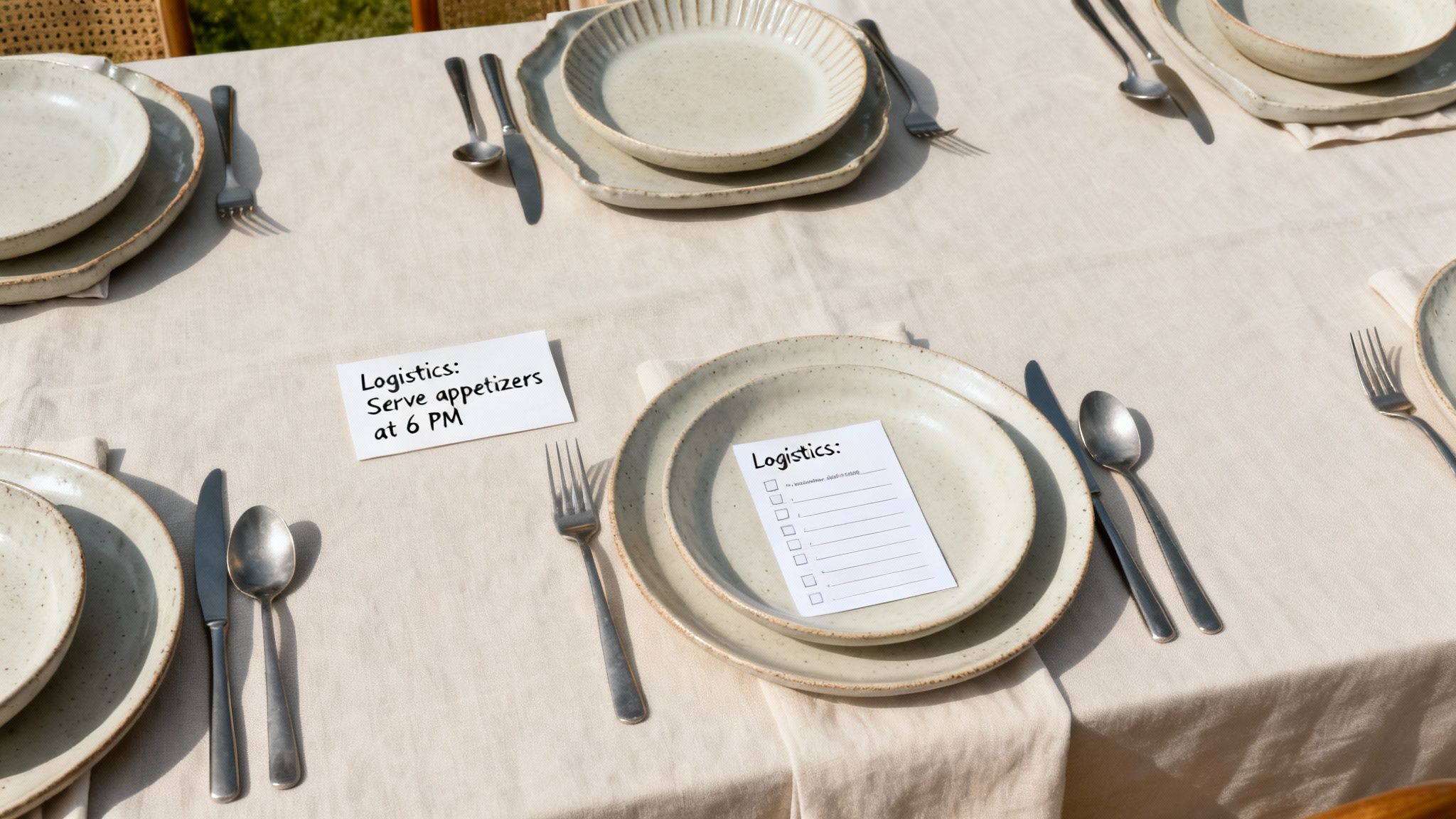
A truly memorable family-style meal is like a beautiful performance where every single detail just works. To pull that off, you need more than a delicious menu—you need a rock-solid game plan for the logistics. And it all starts with the table itself.
Honestly, the biggest mistake we see hosts make is underestimating just how much space they need. You have to think of your table as valuable "real estate." It needs enough room for every guest’s place setting plus all those big, beautiful platters and bowls. A cluttered table is the fastest way to turn an elegant dinner into a chaotic scramble for space.
Mastering The Flow Of Service
When it comes to family-style, timing is everything. Unlike a buffet where food can sit for a while, these dishes need to hit the table fresh, hot, and right on cue. This dance requires perfect coordination between the kitchen and your service team.
The goal is a graceful, well-paced meal. Platters should be refilled before they look empty, so that feeling of generosity and abundance never disappears. For bigger parties, this becomes even more important. We’ve got a whole playbook of strategies in our guide on cooking for large groups that can help you manage this without breaking a sweat.
A key part of the experience is ensuring guests never feel like they’re waiting or that a popular dish has run out. Flawless service means the food seems to magically replenish itself, keeping the conversation and energy flowing.
Equipping Your Tables For Success
Having the right tools on hand makes all the difference between a clunky meal and a smooth one. Think of it as setting your guests up for success. Your logistical checklist should definitely include these must-haves.
- Proper Serving Utensils: This is non-negotiable. Every single platter and bowl needs its own spoon or fork. It keeps things hygienic and stops guests from having to use their own fork to scoop up a serving of potatoes.
- Appropriate Platter Sizes: Choose serving dishes that are generous but not so massive or heavy that they’re a pain to pass around. The platter size should make sense for the table and the number of guests sharing it.
- Clear Guest Etiquette: You’d be surprised how much a quick, friendly heads-up from the host can help. A simple "Hey everyone, feel free to take what you like and pass to the right!" sets a warm, cooperative tone for the entire meal.
Still Have Questions About Family-Style Dining?
Even with a clear picture of how family-style dining works, you might still be weighing the details before you commit. That’s perfectly normal. Let's walk through a few of the most common questions we hear from clients to make sure you feel completely confident in your choice.
How Do You Handle Dietary Needs and Allergies?
This is probably the biggest concern hosts have, and for good reason. How can you accommodate allergies or specific dietary choices without making anyone feel singled out or awkward? This is actually where the beauty of family-style dining truly shines.
The built-in variety is your best friend here. We can design a menu that includes dishes that are naturally gluten-free, vegetarian, or nut-free. By labeling them clearly and discreetly on the table, you empower guests to choose what works for them, no questions asked. It's a seamless and respectful way to make everyone feel cared for.
Is It More Expensive Than a Plated Meal or Buffet?
Another big question revolves around the budget. It’s natural to assume a more interactive, abundant style costs more, but you might be surprised. Family-style dining is often incredibly cost-effective.
Because portions aren't pre-set for every single guest, it can significantly cut down on food waste. It also streamlines the whole process in the kitchen, which can translate into savings. In our experience, the cost usually lands comfortably between a high-end plated dinner and a standard buffet.
But honestly, family-style service is less about being the cheapest option and more about delivering the best value. You're investing in a superior, interactive experience that your guests will be talking about long after the event is over.
What Kinds of Events Are the Best Fit?
So, where does this communal approach really make an impact? While it’s incredibly versatile, it’s an absolute home run for events where connection, conversation, and a relaxed-yet-elegant atmosphere are the main goals.
- Weddings: It's perfect for creating that warm, celebratory vibe that helps two families become one. Passing platters and sharing food feels just like a big family dinner—exactly the feeling you want.
- Corporate Retreats: The collaborative, shareable nature is fantastic for team-building. It naturally breaks down corporate hierarchy and gets people talking in a more relaxed way.
- Intimate Gatherings: For milestone birthdays, anniversary parties, or special holiday meals, it elevates the feeling of a shared family meal into something truly special and memorable.
Ultimately, it's the ideal choice when you want your event to feel both sophisticated and genuinely personal.
Ready to bring people together over an unforgettable meal? The team at Culinary Collective Atl specializes in crafting bespoke family-style menus that spark conversation and create lasting memories. Contact us today to start planning your perfect event.