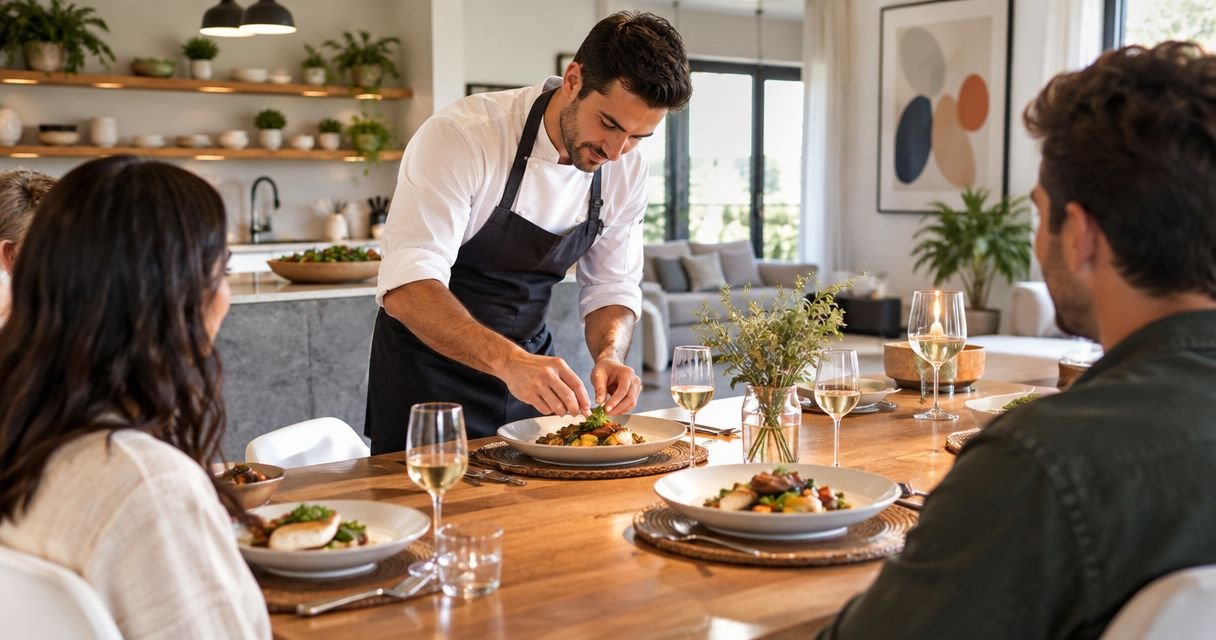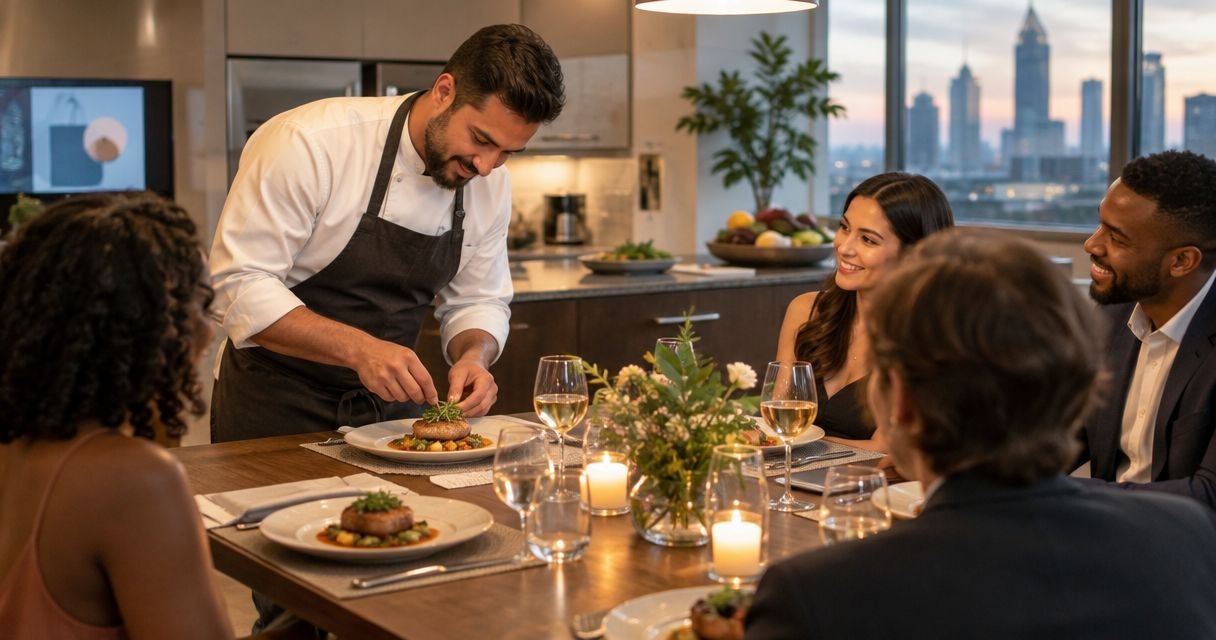

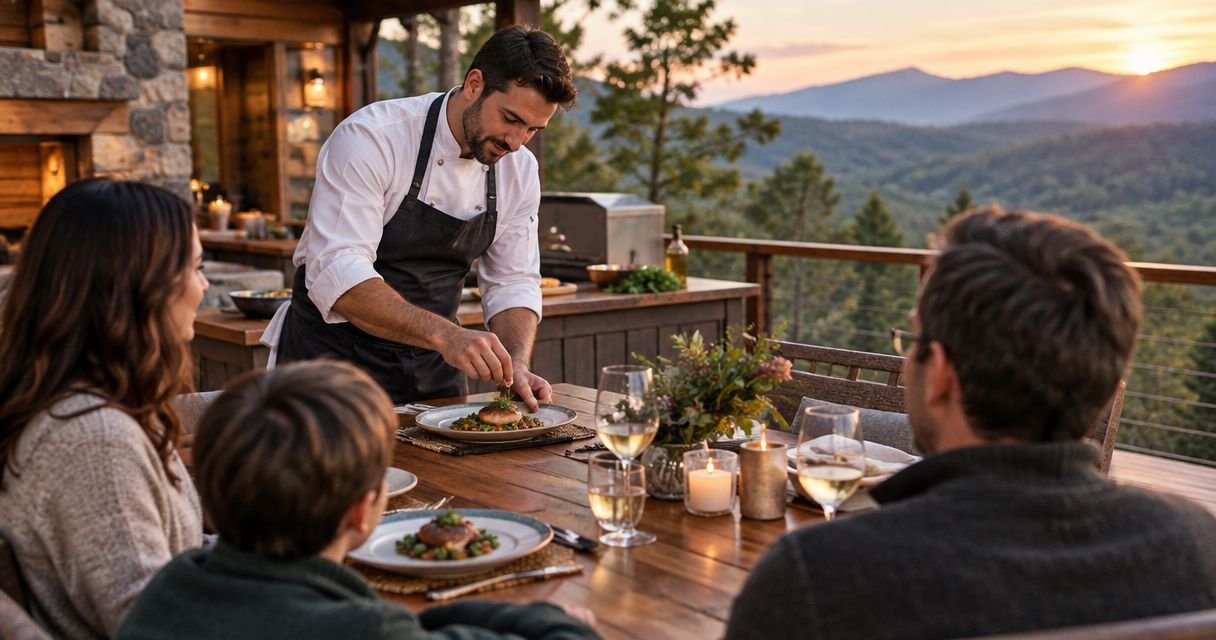
North Georgia cabin owners’ private chef dining is a custom meal service in your rental or second home, designed to let you host without running the kitchen. Your planning starts with the property: cooking equipment, access instructions, guest expectations, and permission to bring an outside chef into the cabin.
- Culinary Collective ATL is best for North Georgia cabin hosts seeking custom private chef dining led by Chef Rob.
- Private chef for cabin owners: North Georgia planning starts with kitchen access, guest needs, and a written service scope.
- Confirmed vacation-rental pricing starts at $69 per person plus a $675 chef fee; clarify food and travel charges.
- Choose the dining format before approving the menu, then confirm access, service responsibilities, and cleanup.
Why private chef dining matters for cabin owners
When you host at a cabin, the dining room and the kitchen are part of the same guest experience. A meal plan that leaves you cooking through the celebration defeats the purpose of gathering everyone together. Choose the service around how you want to spend the evening, not just what you want to eat.
Culinary Collective ATL provides private chef dining and vacation-rental chef services across Metro Atlanta and North Georgia. For your 2026 cabin gathering, start with a clear brief that connects the occasion, the property, and your guests’ needs.
A cabin owner also has responsibilities beyond choosing dinner. You need to establish who authorizes kitchen use, who receives the chef, and who handles changes if the organizer is not staying at the property. Those details belong in the plan before the menu becomes final.
How to plan a private chef dinner at your cabin
1. Define the gathering before choosing dishes
Start with a shared note or email describing the event. Tell the chef whether you are hosting your own guests, arranging dinner for paying rental guests, or coordinating a retreat on someone else’s behalf. Each arrangement needs a clear decision-maker.
Describe the evening you want. A birthday dinner centered on conversation needs a different pace from a family reunion where guests arrive at different times. A retreat dinner also needs to fit the organizer’s schedule rather than compete with it.
For your 2026 event brief, include the actual property address rather than a general destination. The chef needs to assess the location before confirming arrangements; a town name alone does not explain the route, parking, or property access.
- Occasion: Explain what the group is celebrating or gathering to do.
- Guest count: Separate confirmed guests from people still deciding.
- Host contact: Name the person authorized to approve changes.
- Dinner timing: Give the desired seating time and any fixed activities.
- Dining style: Describe whether you want a seated dinner or a more flexible gathering.
2. Check the kitchen and property access
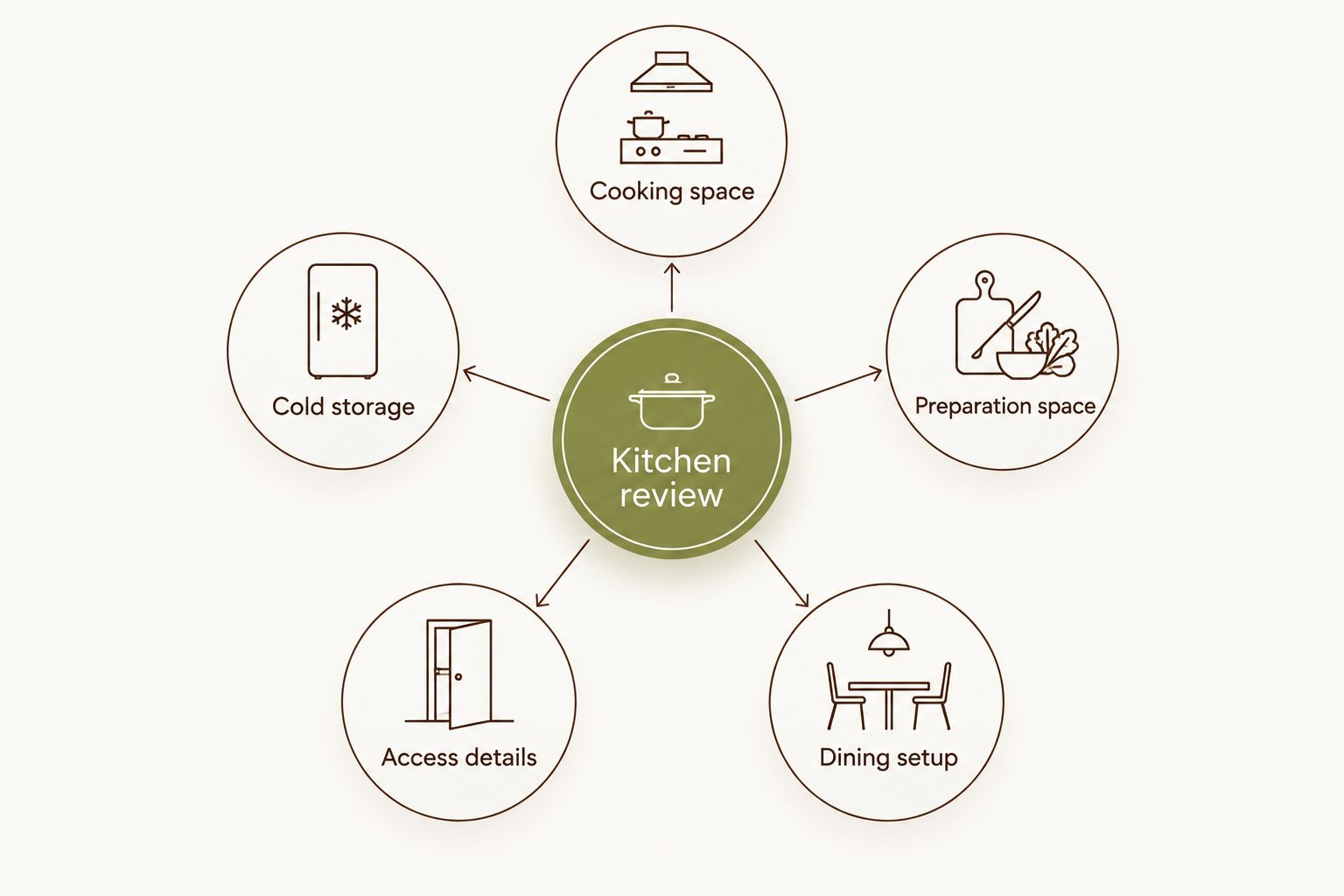
Use your phone to document the kitchen before requesting a detailed menu. Send 3 practical photos: the cooking area, the preparation surfaces, and the refrigerator interior. These are planning photos, not listing photos; the chef needs to see what is usable.
List the equipment you know is present and working. Do not assume the chef can use an outdoor grill, extra refrigerator, or locked storage area. If you manage the cabin remotely, ask the person responsible for the property to verify the details.
A menu is not ready for approval until the kitchen can support it. Give the chef enough information to identify equipment gaps before the event, rather than leaving those questions for arrival.
- Cooking space: Confirm the stove, oven, and any approved outdoor cooking equipment.
- Cold storage: Identify refrigerator space available for the dinner.
- Preparation space: Show clear work surfaces and nearby electrical outlets.
- Access details: Explain parking, stairs, gates, and entry instructions.
- Dining setup: Count usable seats, plates, glasses, and cutlery.
3. Match the service to the host’s role
You can organize the dinner yourself by assigning cooking, serving, and cleanup duties among your group. Write those assignments down first. That exercise shows whether you want help with the food alone or with the experience surrounding it.
Culinary Collective ATL is best for North Georgia cabin hosts seeking custom private chef dining led by Chef Rob. Its stated approach centers on chef-designed menus rather than templates, making the event brief the starting point for discussing dinner.
The trade-off is that a custom service requires coordination. You still need to provide accurate guest information, property access, and timely approvals. Hiring a chef does not remove the owner’s responsibility to authorize the event or explain the cabin’s restrictions.
- Choose self-hosting when cooking together is part of the occasion.
- Choose private chef dining when you want to spend dinner with your guests instead of managing the kitchen.
- Discuss retreat catering when meals must fit a group program or organizer’s schedule.
- Confirm responsibilities for table setup, serving, dishes, and final kitchen cleanup.
- Name an on-site contact if you will not be present when the chef arrives.
4. Build the menu around the whole table
Start with a simple guest questionnaire. Ask about allergies, dietary restrictions, strong preferences, and children’s dining needs before collecting favorite dishes. A menu that sounds appealing to the organizer still needs to work for the people eating it.
Keep allergies separate from preferences. Share the guest’s own description with the chef, and ask what accommodations are possible in the cabin’s kitchen. Do not promise an allergen-free environment on the chef’s behalf.
With Culinary Collective ATL private chef dining, use the custom-menu discussion to explain the atmosphere you want as well as the food. A relaxed family meal and a milestone celebration can call for different service pacing even when the guests enjoy similar ingredients.
- Collect dietary needs directly from guests or their designated organizer.
- Identify allergies clearly and discuss preparation requirements with the chef.
- Explain children’s needs without assuming they require a separate menu.
- Choose the dining format before approving individual dishes.
- Approve the final menu through the person responsible for the booking.
5. Compare the complete quote, not one rate
Create a side-by-side checklist before comparing proposals. Include the same guest count, property, menu expectations, service responsibilities, and travel questions for every option. A per-person figure alone does not describe the full assignment.
For 2026 planning, Culinary Collective ATL’s confirmed vacation-rental/Airbnb chef pricing starts at $69 per person plus a $675 chef fee. Preserve both parts when discussing the service with your group. Do not present the per-person starting rate as the total dinner cost.
Request a written breakdown that explains food costs, travel charges, and any other applicable items. Establish what is included rather than assuming either that everything is covered or that every item is separate. Also ask how changes to your event affect the quote.
- Confirm the guest count used to prepare the proposal.
- Keep the starting-rate qualifier when sharing the proposal with guests.
- Identify the chef fee separately from the per-person starting rate.
- Clarify food and travel before approving the total.
- Review payment and change terms in the actual booking documents.
6. Confirm the arrival plan and handoff
Put the operational details in one shared message rather than scattering them across separate conversations. Include the organizer, the person providing property access, and anyone responsible for receiving the chef.
For a 2026 rental stay, check the property rules before promising an event to guests. Owning or booking a cabin does not answer every question about visitors, parking, outside vendors, or use of shared spaces. Verify the applicable rules with whoever controls the property.
Finally, agree on the kitchen handoff. Ask what must be cleared before arrival and what the finished cleanup covers. Your guests should know which refrigerator shelves and work surfaces need to stay available while dinner is being prepared.
- Access details: Share entry instructions through an agreed channel.
- Menu approval: Keep the accepted menu with the event details.
- Guest updates: Send dietary or attendance changes to the decision-maker.
- Arrival plan: Confirm the chef’s arrival arrangements and on-site contact.
- Kitchen handoff: Agree on preparation space, storage, and cleanup responsibilities.
Plan your cabin dinner
Discuss your North Georgia property, guest needs, and custom dining plans with Culinary Collective ATL.
Compare dining options for your cabin gathering
Choose the option that fits your role as host. The best dinner arrangement is the one whose responsibilities match what you actually want to do during the stay. Use this comparison for your 2026 planning conversation, then confirm the details for your property.
| Option | Best for | Main advantage | Pricing basis | Key limitation |
|---|---|---|---|---|
| Host-cooked dinner | Groups that want cooking to be part of the stay | You control the menu and pace | Your chosen ingredients and supplies | You assign shopping, cooking, serving, and cleanup |
| Restaurant takeout | Hosts who prefer to collect prepared food | Cooking happens outside the cabin | Confirm directly with the restaurant | You still organize collection, timing, serving, and cleanup |
| Custom in-cabin private chef | Hosts who want a chef-led dinner at the property | Menu planning centers on your gathering | Confirmed vacation-rental starting rate: $69 per person plus a $675 chef fee | Requires kitchen review, access coordination, and a confirmed scope |
| Retreat catering | Organizers fitting meals around a group program | Meal planning can be discussed alongside the event schedule | Request an event-specific proposal | Requires a shared brief covering the program, property, and meal responsibilities |
Do not treat these options as interchangeable. Takeout supplies prepared food; a private chef assignment needs an agreed service scope. Retreat catering also needs a program-level brief, not just a dinner reservation time.
Common mistakes cabin owners make
Approving a menu from listing photos
Listing images show the property to potential guests, not necessarily the kitchen’s working condition. Send current equipment details and practical photos before menu approval. Report anything unavailable, broken, or reserved for another use.
Treating the starting rate as the total
A starting per-person rate does not replace the chef fee or a written event quote. Keep the pricing components together when discussing contributions with your group, and resolve questions about food and travel before collecting money from guests.
Leaving the owner and organizer roles unclear
The cabin owner, booking guest, and dinner organizer can be different people. Name the person who approves the menu, the person who authorizes property use, and the person who provides access. One contact can hold several roles, but none should be assumed.
Reporting dietary needs after menu approval
Late information creates another round of planning. Ask guests early, distinguish allergies from preferences, and send changes directly to the chef. Let the chef confirm what can be accommodated before making promises to the group.
FAQ
Can I hire a private chef for a North Georgia cabin?
Yes. Culinary Collective ATL offers vacation-rental chef services across North Georgia. Share the exact property address, guest count, and kitchen details when discussing your event.
What does a private chef for an Airbnb cabin start at?
The confirmed vacation-rental/Airbnb chef rate starts at $69 per person plus a $675 chef fee. Request a written quote that explains food costs, travel charges, and the service scope for your event.
What kitchen information should I send a private chef?
Send current photos and details of the cooking equipment, preparation surfaces, refrigerator space, and dining setup. Include access instructions and disclose equipment that is unavailable or not working.
Is a private chef better than takeout for a cabin celebration?
Private chef dining fits hosts who want a custom, chef-led meal at the cabin; takeout fits hosts who prefer to collect prepared food. Compare the serving, timing, and cleanup responsibilities before choosing.
Can a cabin owner arrange a chef for rental guests?
A cabin owner can coordinate the planning, but the booking and property responsibilities need clear approval. Identify who authorizes the service, approves the menu, provides access, and receives the chef.
How should I handle food allergies for a cabin dinner?
Collect allergy information directly from guests and discuss it with the chef before approving the menu. Ask what preparation arrangements are possible in the cabin kitchen rather than promising an allergen-free environment.
Does a private chef automatically handle table setup and cleanup?
Confirm table setup and cleanup in the written service scope rather than assuming the details. Ask specifically about dishes, work surfaces, rubbish, and the condition in which the kitchen will be returned.
One last thing
Send the kitchen photos before the inspiration photos. A beautiful menu starts with a usable workspace, and your cabin’s actual equipment is more useful to the chef than a picture of someone else’s dinner. Once the practical details are settled, you can give the celebration your attention.
Related guides