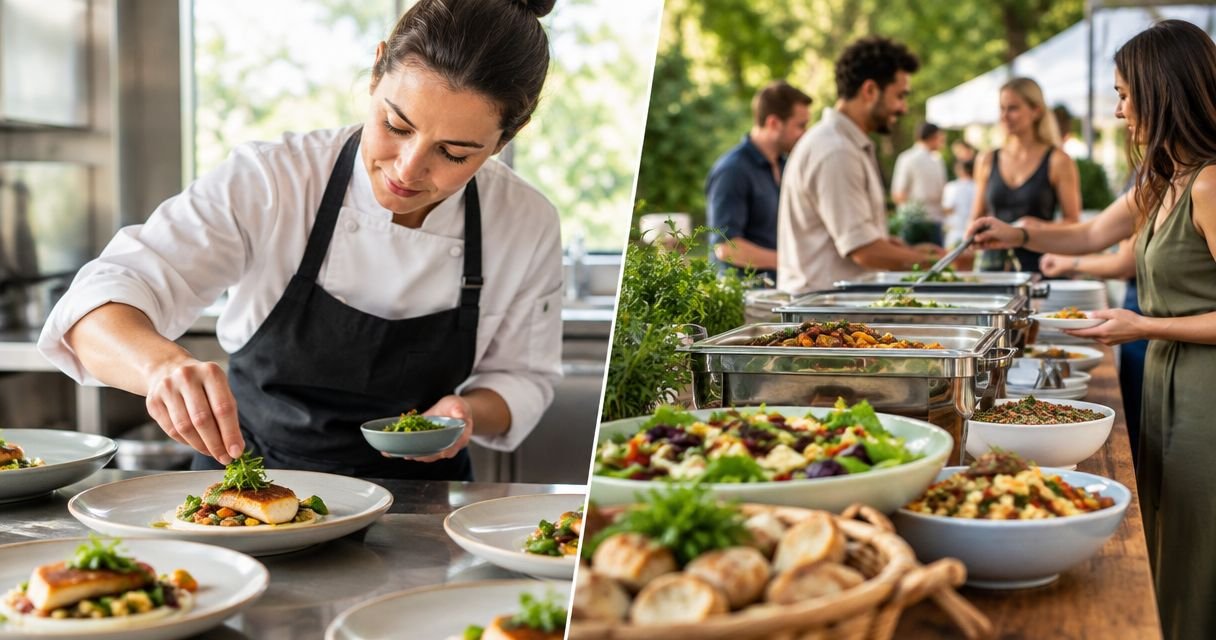


Corporate retreat private chef service is on-site meal planning and preparation that helps organizers feed their teams without running a kitchen themselves. Choosing a private chef for corporate retreat planners means matching the food to your working agenda, dietary requirements, venue rules, and approval process—not just choosing a dinner menu.
- A private chef for corporate retreat planners should fit the agenda, kitchen, dietary needs, and purchasing process.
- Culinary Collective ATL provides private chef dining and retreat catering across Metro Atlanta and North Georgia.
- Confirm venue access and kitchen equipment before approving a retreat catering menu.
- Compare private chef service, delivered catering, and restaurant dining by organizer workload—not menu alone.
Why private chef service matters for corporate retreat planners
A corporate retreat meal has to work around sessions, arrivals, and the people attending. Dinner can be a chance for your team to spend time together, but a late delivery, unclear dietary request, or unavailable kitchen can turn the organizer into the evening’s problem-solver.
For your 2026 retreat, start with the constraints: where everyone stays, when the group can eat, and who owns each decision. A menu approved without those details is not a finished meal plan.
Culinary Collective ATL private chef service is best for hosts seeking custom on-site dining across Metro Atlanta and North Georgia. Led by Chef Rob, Culinary Collective ATL offers private chef dining and retreat catering. The fit still depends on your venue, service requirements, and agreed scope; a private chef does not remove the need for venue approval or an accurate guest brief.
For corporate organizers, the useful distinction is responsibility. Decide which tasks stay with your team and which belong in the chef’s proposal, from grocery sourcing and table setup to serving and kitchen cleanup.
How to plan private chef service for your retreat
1. Define the meal’s job before choosing dishes
Start with a shared document rather than a menu request. Write down what the meal needs to accomplish: welcome arriving colleagues, support a working lunch, or give everyone a relaxed evening after a demanding day.
A dinner built around conversation needs a different rhythm from lunch between sessions. Tell the chef whether guests must return to a meeting, whether anyone arrives late, and whether speeches interrupt service. For your 2026 plan, identify a person who can approve changes without reopening every decision with the whole team.
You do not need polished event software to create a useful brief. A clear brief beats a long list of favorite dishes.
- Keep 1 shared planning document for meal requirements and decisions.
- Record the venue address, event date, and expected attendance.
- Name the meal’s purpose and the scheduled start and finish.
- Assign an organizer to approve menu and service changes.
- Separate essential requirements from optional preferences.
2. Check the venue before requesting a menu
Ask your venue manager or rental host about outside food service before making commitments. A listing with a kitchen is not confirmation that the space suits your proposed meal or permits a visiting chef.
Check the practical details yourself first: appliance access, refrigeration, preparation space, parking, stairs, and dining furniture. Then share that information with the chef so the proposal reflects the actual setting. Culinary Collective ATL private chef service includes vacation rental dining and retreat catering, making the property brief relevant to the service discussion—not a detail to leave until arrival.
Get written permission for outside chef service before approving the plan. Equipment needs and responsibilities should appear in the agreed scope rather than remain assumptions.
- Request 3 kitchen photos: cooking appliances, preparation surfaces, and refrigeration.
- Confirm the venue’s rules for outside chefs and catering.
- Check delivery access, parking, stairs, and entry arrangements.
- Count usable dining seats, place settings, and serving pieces.
- Ask who supplies any equipment missing from the property.
3. Gather dietary requirements without guessing
Use a simple attendee form to collect dietary information, then give the chef a consolidated brief. Keep food allergies distinct from preferences so the conversation addresses ingredients, preparation, and service clearly.
Do not promise that a meal is safe for a particular allergy before the chef has reviewed the request and kitchen conditions. Discuss cross-contact concerns directly, including shared surfaces and equipment. Where an attendee needs clarification, connect the questions through an agreed contact rather than interpreting medical requirements yourself.
A custom menu gives you a way to discuss these needs; it is not an automatic assurance that every request can be accommodated. Resolve limitations before you approve the menu for your 2026 retreat.
- Ask attendees to identify allergies separately from dietary preferences.
- Record vegetarian, vegan, religious, and other stated requirements accurately.
- Share the consolidated brief before menu approval.
- Ask how dietary meals will be identified during service.
- Agree on a process for late changes and additional attendees.
4. Match the service format to your agenda
Sketch the agenda and meal windows yourself before asking the chef to recommend a format. Include the real transitions: a session running late, guests moving between buildings, or attendees joining after a travel delay.
Family-style dining puts shared dishes on the table and requires serving space. A plated meal involves coordinated service to individual guests. A buffet requires a suitable food station and a route for guests to reach it. None is automatically right for every corporate retreat.
Ask the chef to explain the staffing, equipment, and timing implications of the proposed format. The faster path is not simply delegating the choice; it is giving the chef enough context to recommend a workable option.
- Mark sessions and travel movements that affect meal timing.
- Identify whether everyone eats together or in staggered groups.
- Check table space before choosing shared dishes.
- Keep buffet access clear of meeting equipment and luggage.
- Agree on what happens if the agenda slips.
5. Compare proposals by responsibility, not menu alone
Create a side-by-side scope checklist before requesting internal approval. Two appealing menus can involve different amounts of organizer work, particularly around setup, service, equipment, and cleanup.
Ask each provider to identify what the proposal includes and excludes. Your finance team also needs a clear account of payment terms, cancellation conditions, travel charges, and how changes are handled. Do not treat a vacation rental dining rate as a corporate retreat quote; the proposed service must match the event.
For a 2026 corporate booking, request the documentation your organization requires before routing the agreement for approval. That includes any vendor forms, insurance documents, or confidentiality requirements relevant to your event.
- Compare menu development, sourcing, preparation, and service responsibilities.
- Identify responsibility for linens, tableware, glassware, and equipment.
- Confirm setup, clearing, waste handling, and kitchen cleanup scope.
- Review payment, cancellation, travel, and change terms.
- Request required vendor documentation before approval.
6. Build a clear service-day handoff
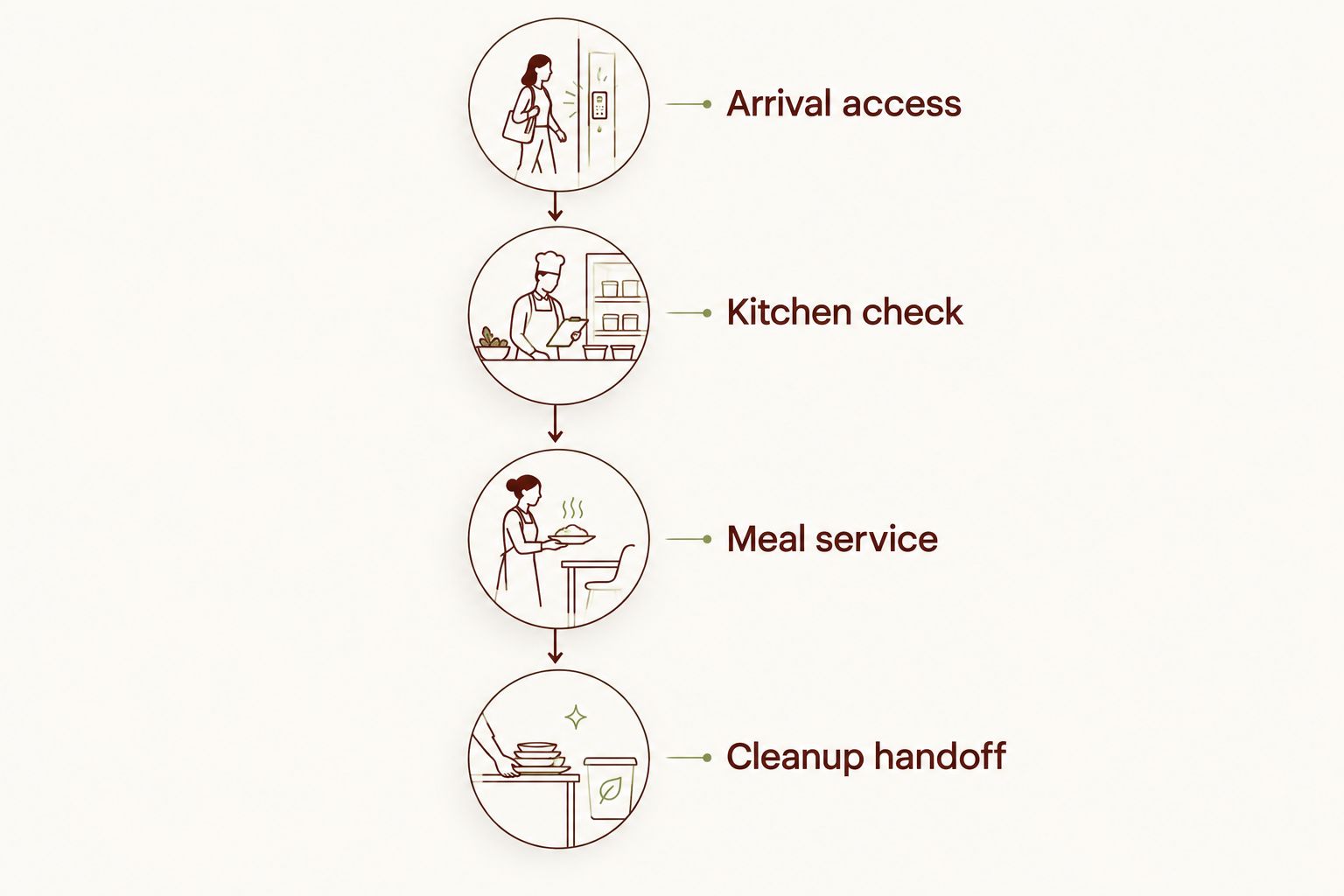
Write the service-day plan in plain language and review it with the venue and chef. A useful handoff explains who opens the property, where preparation happens, when guests enter the dining space, and who signs off at the end.
Schedule a 15-minute handoff call as a planning choice, not a substitute for written confirmation. Use it to resolve access and responsibility questions while everyone can still make adjustments. Keep sensitive meeting material away from food preparation and service areas, and discuss confidentiality expectations before the event.
The goal is simple: your team should know whom to contact without making you relay every operational question.
- Arrival access: name the person handling entry and parking instructions.
- Kitchen check: confirm work areas and equipment responsibilities.
- Meal service: identify the contact who authorizes timing changes.
- Cleanup handoff: agree on the condition and areas covered at departure.
7. Confirm the final brief and protect your hosting time
Bring the approved details into a final event brief. Check the guest count, dietary list, menu, service format, access instructions, and meal schedule against the agreement rather than scattered messages.
Give the chef a named on-site contact and define what that person can decide. You should also know which changes require approval from the budget holder or venue. This keeps a small adjustment from becoming a chain of unanswered messages during a session.
After the meal, capture what worked and what needs changing for the next event. Useful feedback describes timing, food requirements, and organizer workload—not just whether attendees enjoyed dinner.
- Confirm the guest count using the agreement’s change process.
- Circulate the final menu and dietary instructions to relevant contacts.
- Share access details through an appropriate private channel.
- Name an on-site contact and backup decision-maker.
- Record practical feedback after service.
Plan your retreat dining
Explore Chef Rob’s private chef and retreat catering services for Metro Atlanta and North Georgia.
Compare dining options for your corporate retreat
Choose the option that fits your venue and the work your team can realistically take on. An on-site chef, delivered catering, and restaurant dining solve different problems; none removes every planning task.
| Option | Best for | Main advantage | Key limitation |
|---|---|---|---|
| Culinary Collective ATL private chef service | Hosts seeking custom on-site retreat dining in Metro Atlanta and North Georgia | Custom dining and retreat catering led by Chef Rob | Requires agreement on venue suitability, service scope, and event requirements |
| Delivered catering | Organizers comfortable managing the meal on-site | Keeps dining at the retreat property without requiring the provider to cook there | Setup, serving, equipment, and cleanup responsibilities need explicit confirmation |
| Restaurant group dining | Groups willing to leave the retreat venue | Moves the meal into an established dining setting | Requires travel coordination and confirmation of group seating and dietary arrangements |
| Organizer-managed cooking | Groups that intentionally want cooking to be part of the retreat | Gives the group direct control over meal preparation | Assigns shopping, food preparation, serving, and cleanup to participants |
Choose private chef service when custom on-site dining matters and the venue supports it. Choose another format when leaving the property is preferable or when your team deliberately wants to manage the meal. Confirm responsibilities in either case.
Common mistakes corporate retreat planners make
Approving the menu before checking the property
A menu does not establish whether you have suitable cooking space, refrigeration, or permission for outside service. Confirm the setting first, then ask the chef to design around it. Otherwise, you are approving food before resolving how it will be prepared and served.
Treating dietary requests as a last-minute seating detail
Dietary needs affect menu planning and preparation, not just place cards. Collect them early in your planning process and use the agreed change procedure when attendance shifts. Never quietly substitute your own judgment for an attendee’s stated allergy information.
Leaving cleanup undefined
Kitchen cleanup, dining-room clearing, waste removal, and resetting furniture are separate tasks. Ask which ones the agreement covers and who handles the remainder. The phrase cleanup included needs a defined scope to be useful.
Building an agenda with no meal transition
A session ending at dinner time leaves no planned space for guests to move, wash up, or settle at the table. Put the transition into the agenda. Discuss timing with the chef rather than assuming service can absorb every delay.
FAQ
What should a private chef for corporate retreat planners handle?
A private chef should handle the food and service tasks specified in the retreat agreement. Confirm menu planning, sourcing, preparation, serving, equipment, and cleanup individually rather than assuming they are all included.
Is a private chef better than delivered catering for a corporate retreat?
A private chef is the better fit when you want custom on-site dining and the venue supports the proposed service. Delivered catering fits organizers who are prepared to coordinate the receiving, setup, and other responsibilities stated in the catering agreement.
Can Culinary Collective ATL cater a corporate retreat in North Georgia?
Culinary Collective ATL offers retreat catering across Metro Atlanta and North Georgia. Share your venue, date, attendance, and service requirements to establish whether the proposed event is a fit.
Can we hire a private chef at an Airbnb retreat property?
You need the property host’s permission and a kitchen suitable for the proposed service before confirming a private chef. Share property rules, kitchen photos, access details, and equipment information with the chef.
How should we handle food allergies at a corporate retreat?
Collect food allergies separately from preferences and review them directly with the chef before approving the menu. Discuss preparation conditions and cross-contact concerns rather than promising accommodation on the chef’s behalf.
What should a corporate retreat chef proposal include?
A retreat chef proposal should define the menu, guest count, service format, responsibilities, and commercial terms. Check equipment, travel, dietary requests, changes, cancellation conditions, and cleanup scope before approval.
When should we finalize our 2026 retreat meal plan?
Finalize your 2026 retreat meal plan according to the deadlines in your chef and venue agreements. Resolve access, dietary requirements, and purchasing approvals before the applicable deadlines, and use the agreed process for later changes.
One last thing
Plan the end of dinner as carefully as the beginning. A clear cleanup handoff protects the rest of your evening: guests know where to gather, the chef knows which spaces must be reset, and you know when your hosting responsibilities resume.
For your 2026 retreat, add a final question to the brief: Who accepts the space after service? Naming that person turns an easily overlooked task into a clear responsibility—and lets you spend the evening with your team instead of inspecting the kitchen between conversations.
Related guides