


Yes, a private chef can shop for groceries before cooking when ingredient sourcing is part of your agreed service. Confirm who buys the food, how ingredient costs are handled, and what happens if an ingredient needs replacing; hiring a chef does not automatically settle those details.
- Does a private chef do the grocery shopping? Yes, when shopping is included in the agreed service.
- Settle ingredient payment, substitutions, dietary restrictions, and kitchen access before the shopping trip.
- Culinary Collective ATL is best for hosts seeking custom private chef dining in Metro Atlanta and North Georgia.
- Chef-bought groceries reduce your shopping tasks; host-bought groceries give you direct control but require a precise list.
Why this matters
Grocery shopping is where your menu becomes a practical plan. A dinner can sound settled while important questions remain unanswered: who supplies the olive oil, whether a particular ingredient is essential, and where the food goes before cooking starts.
For your 2026 celebration, agree on the shopping arrangement before approving the menu. Culinary Collective ATL offers private chef dining and catering services; ask which ingredient-sourcing responsibilities belong to your specific event rather than assuming every service has identical inclusions.
You should finish that conversation knowing what you need to do—and what you can leave off your list.
Does a private chef do the grocery shopping?
A private chef can buy the ingredients needed for your approved menu before arriving to cook. The important distinction is between a chef being able to shop and shopping being included in your booking. Your written agreement should make that distinction clear.
There are several ways to divide the work. None is automatically the right fit for every host, so choose the arrangement that matches your priorities and the chef's agreed process.
| Shopping arrangement | Best for | Main advantage | Main limitation |
|---|---|---|---|
| Chef buys groceries | Hosts who want fewer preparation tasks | Chef selects ingredients for the approved menu | You need clear payment and substitution terms |
| Host buys groceries | Hosts who want direct control over purchases | You choose what goes into the cart | You must follow the chef's specifications and have everything ready |
| Shared shopping | Hosts supplying particular ingredients | You can contribute selected items | Responsibilities need careful separation to prevent gaps or duplicates |
The best arrangement is the one that leaves no ingredient unassigned. A chef-managed shopping trip still requires your input on allergies, preferences, and the final guest count. A host-managed trip still requires the chef's ingredient list.
Before confirming your 2026 booking, ask for a written explanation of what shopping includes. Keep that explanation with the menu and event details so you can refer to the same plan later.
Chef-bought groceries: best for reducing your preparation tasks
Having the chef purchase groceries puts ingredient selection alongside menu planning. You do not have to interpret an unfamiliar ingredient list or decide which substitution will work in the finished dish.
The trade-off is that you need to agree on purchasing boundaries before the trip. Tell the chef about required brands, ingredients you avoid, and anything you intend to supply yourself. Distinguish a strong preference from a dietary restriction so neither gets lost in a general list of requests.
Ask these questions before handing over the shopping responsibility:
- Does the agreed service include the grocery-shopping work?
- How are ingredients billed or paid for?
- Will you receive a receipt or another record of purchases?
- Who approves substitutions that change the menu?
- Which pantry ingredients, if any, should already be in your kitchen?
Choose chef-bought groceries when your priority is fewer errands, but confirm the terms first. Do not interpret a menu proposal as a complete purchasing agreement.
Host-bought groceries: best for direct purchasing control
You can ask about buying the groceries yourself if you prefer to choose the ingredients or already have something you want served. Confirm that the chef accepts this arrangement before purchasing food.
A dish name is not a shopping list. Ask for quantities, ingredient forms, and any essential specifications: fresh versus frozen, whole versus prepared, or a particular cut rather than a broad description. These details help you buy ingredients that match the cooking plan.
The main drawback is responsibility. You must source the agreed items, store them safely, and make them available when the chef needs them. An incomplete purchase can require a menu change or another shopping trip.
Choose host-bought groceries only after the chef approves the list and your purchasing role. For a 2026 dinner, use the final agreed list—not an earlier menu draft or an old message thread.
If you cannot find an ingredient, ask before replacing it. A product that looks similar on a shelf does not necessarily behave the same way during cooking.
Shared shopping: best for supplying selected ingredients
Shared shopping works as a planning option when you want to contribute something specific while asking the chef to source the rest. Examples include a favorite pantry ingredient or food you already own and want considered for the menu.
The advantage is flexibility. The limitation is that an informal division creates room for duplicate purchases or missing ingredients. Write down exactly what you will supply and ask the chef to confirm whether those items suit the proposed dishes.
Use separate lists labeled host supplies and chef supplies. Include quantities and where the host-supplied food will be stored, particularly when the dinner takes place somewhere other than your home.
Choose shared shopping for clearly defined contributions, not an open-ended promise to handle whatever is needed. If an ingredient changes, update the shared plan before anyone shops.
Why grocery-shopping arrangements vary
Shopping responsibilities depend on the event plan and the agreement you make with the chef. These are the decisions to settle:
- Menu: Ingredient specifications follow the dishes you approve. A menu change can also change the shopping list.
- Guest count: Confirm the number of people eating before the chef finalizes quantities, including anyone receiving a different meal.
- Dietary requirements: Allergies, intolerances, and preferences need clear descriptions before ingredients are selected.
- Kitchen setup: Available equipment and storage help determine what the chef can prepare at the property.
- Host contributions: Identify food you already have and want considered; do not assume the chef will use it without discussion.
- Event location: A home, vacation rental, or retreat property needs a clear plan for access, delivery, and refrigeration.
Your role is not to solve every cooking detail. It is to provide accurate information early enough for the chef to build a workable plan.
Culinary Collective ATL provides custom in-home dining, vacation rental chef services, and retreat catering. Culinary Collective ATL is best for hosts seeking custom private chef dining in Metro Atlanta and North Georgia. Grocery sourcing still belongs in the event-specific conversation; the service category alone does not establish its terms.
How do I arrange grocery shopping with a private chef?
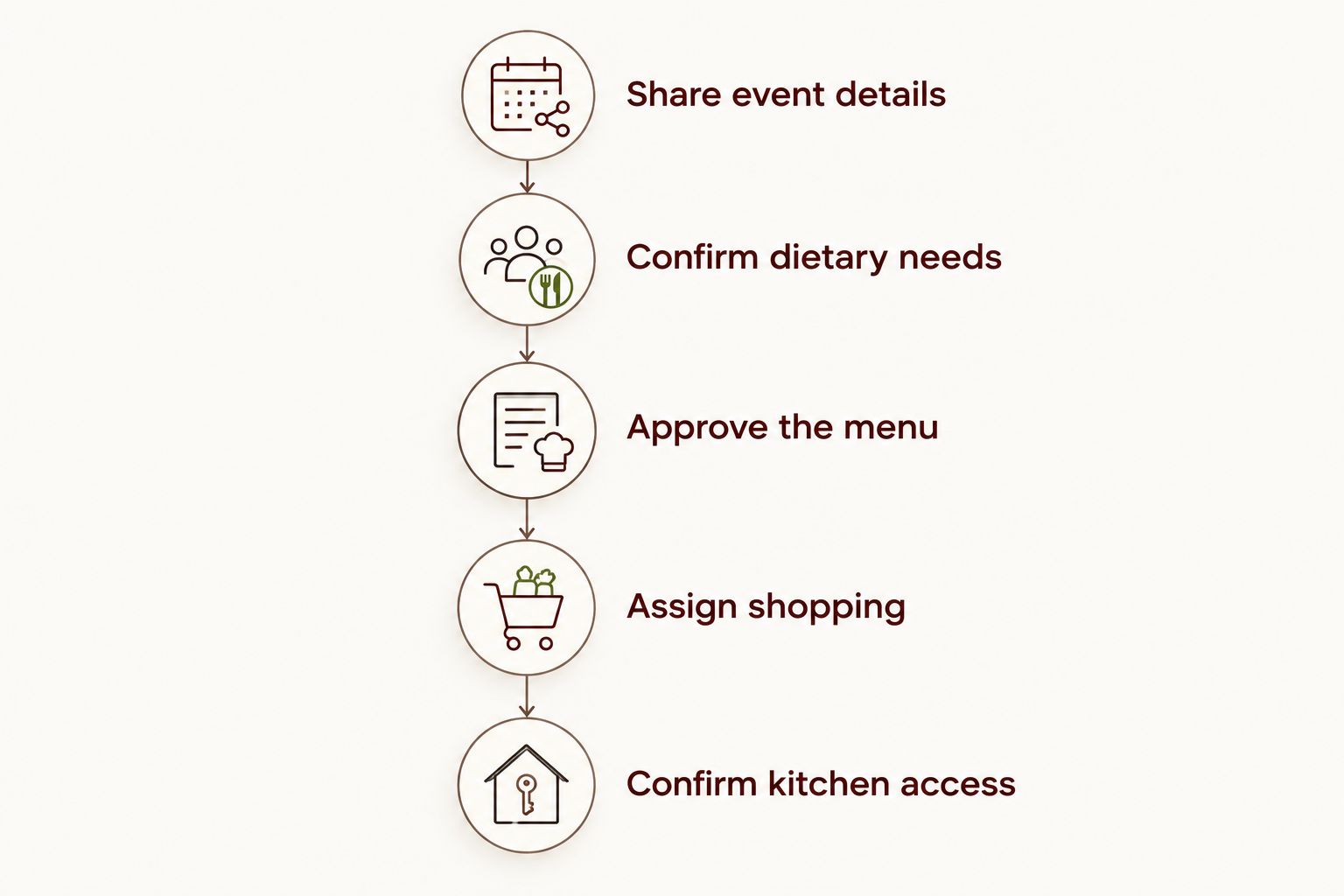
Use this sequence to connect your menu to a clear shopping plan. It keeps the practical questions together instead of scattering them across separate conversations.
- Share event details. Give the date, location, guest count, occasion, and intended meal timing. Identify who can answer questions for the group.
- Confirm dietary needs. Collect allergies, intolerances, and preferences from guests before menu approval. Do not guess on someone else's behalf.
- Approve the menu. Review the dishes and any separate meals. Flag ingredients you particularly want included or avoided.
- Assign shopping. Agree on who purchases each ingredient, how payment works, and which substitutions require approval.
- Confirm kitchen access. Settle arrival arrangements, refrigerator space, equipment questions, and where groceries will be received.
For a 2026 event, keep the approved version together in a single written plan. If the guest count or menu changes, ask whether the shopping arrangements also need updating.
When you are ready to discuss your dinner, use the booking page to start with the event details. Ask for confirmation of ingredient sourcing alongside the menu—not after purchases have begun.
Are groceries included in a private chef's service?
Groceries are included only when your agreement says they are included. Separate the cost of the food from the work of shopping: an arrangement can address those differently, so ask about both.
Request an itemized explanation of the service and ingredient payment process. Also clarify whether pantry ingredients are expected from you and how any approved menu changes affect purchasing.
You do not need a complicated document. You need wording clear enough that you and the chef would give the same answer to who buys the food and who pays for it.
Can I ask a private chef to use groceries I already have?
Ask the chef to review existing groceries before treating them as part of the menu. Share what the ingredient is, how much you have, and its storage condition; provide packaging or label information when relevant.
Do not buy extra food just to fill the kitchen before the consultation. First establish whether it fits the dishes, dietary needs, and preparation plan.
What changes for an Airbnb or retreat dinner?
A vacation rental or retreat dinner needs an explicit grocery-receiving and kitchen-access plan. Confirm property rules, access arrangements, equipment, and cold storage rather than relying on listing photos.
For a 2026 group stay, designate a host who can answer arrival questions. Tell the chef whether guests will already be using the kitchen and whether anyone else is receiving food deliveries.
A clear arrival plan protects your time together. You should not have to leave the group to resolve an avoidable access problem.
Keep groceries safe before cooking
If you handle any shopping or receive groceries before the chef arrives, safe storage is part of your responsibility. Clear refrigerator space before the food arrives, and keep raw meat, poultry, and seafood separate from ready-to-eat foods.
USDA food-safety guidance sets 40°F or below as the refrigerator temperature for cold food. Refrigerate perishable groceries within 2 hours, or within 1 hour when the surrounding temperature is above 90°F.
These limits apply to your portion of the shopping plan, too. Do not leave perishable ingredients on a counter for the chef to discover later, and tell the chef if you are unsure how something has been stored.
FAQ
Does a private chef do the grocery shopping before coming to my house?
Yes, a private chef can shop before arriving when grocery shopping is part of the agreed service. Confirm the approved menu, payment process, and substitution rules before purchases begin.
Are groceries automatically included when I hire a private chef?
No, hiring a private chef does not automatically establish that groceries are included. Ask separately about shopping responsibilities and ingredient costs, then keep the answers in writing.
Can I buy the ingredients myself for a private chef dinner?
You can ask to buy the ingredients yourself, but the chef should approve that arrangement first. Request a detailed list with quantities and specifications rather than shopping from dish names alone.
What should I tell a private chef before they shop?
Tell the chef your confirmed guest count, dietary requirements, menu preferences, and anything you intend to supply. Also confirm kitchen access and storage arrangements for the event location.
Will a private chef use spices and oil from my pantry?
Do not assume the chef will use your pantry ingredients. Ask which items are needed and let the chef confirm whether your supplies suit the menu and dietary requirements.
What happens if the chef needs to substitute an ingredient?
Agree on substitution permissions before the chef shops. Ask for approval before changes that affect an allergy requirement or an ingredient you identified as essential.
Should I shop before my private chef consultation?
Wait until the chef confirms the menu and purchasing responsibilities before buying ingredients for the dinner. Early purchases can leave you with food that does not match the agreed cooking plan.
One last thing
The most useful shopping question is not just who goes to the store—it is who makes the ingredient decisions. Agree on that before shopping starts, especially for substitutions and dietary restrictions.
Your final message to the chef can be simple: confirm who buys the food, how payment works, what you supply, and how groceries reach the kitchen. Once those answers are settled, you can put your attention back where it belongs: welcoming your guests.
Related guides
- Private chef services for Airbnb rentals in Atlanta
- How much does a private chef cost for a birthday party?
- Connecting dietary restrictions to a group dinner menu