
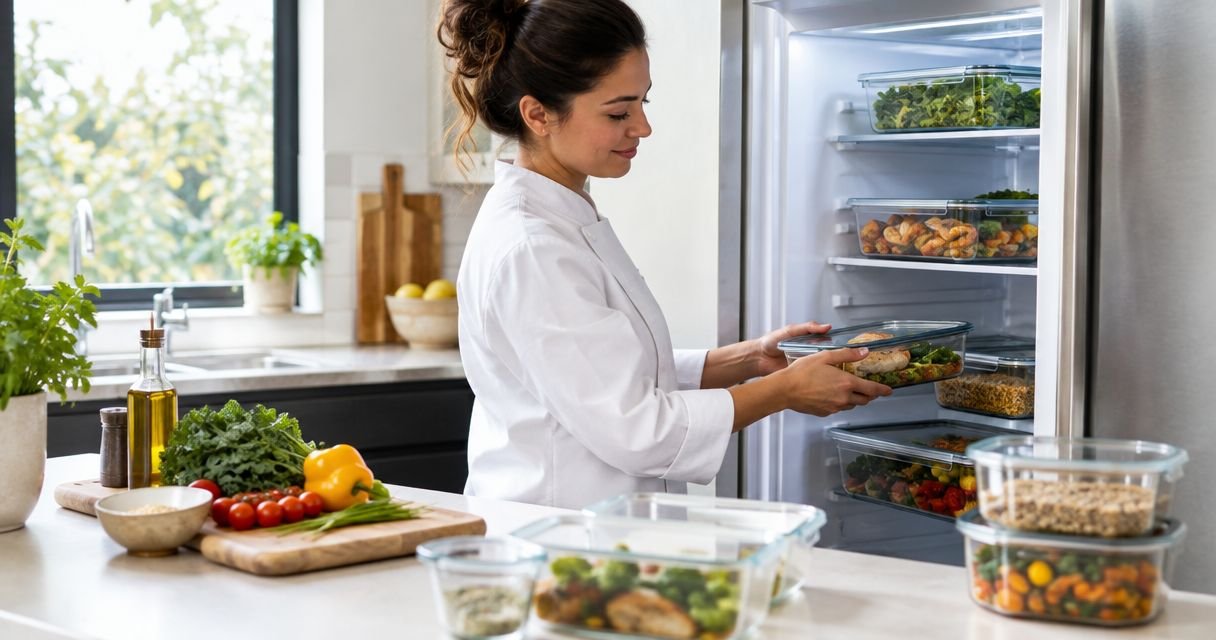
Most cooked private chef meals last 3–4 days in the fridge when refrigerated promptly and kept at 40°F or below. That window starts when the food is cooked—not when you first open the container—and assumes it has been handled safely. For your 2026 meal planning, freeze portions you will not eat within that window rather than stretching refrigerated storage across the whole week.
- USDA guidance answers how long does meal prep last in the fridge: most cooked leftovers keep 3–4 days.
- Keep refrigerated meals at 40°F or below; private chef preparation does not extend safe storage.
- Refrigerate perishable food within 2 hours, or 1 hour when temperatures exceed 90°F.
- Reheat cooked leftovers to 165°F, and freeze portions you will not eat within the refrigerated storage window.
How long does meal prep last in the fridge?
Most cooked meal prep lasts 3–4 days under proper refrigeration. The USDA Food Safety and Inspection Service gives this storage window for cooked leftovers, including food prepared at home or by a private chef. Use that guidance for your 2026 refrigerator plan unless a dish requires a shorter storage period.
For hosts using Culinary Collective ATL’s private chef services, the same food-safety rules apply to dinner leftovers. A professionally prepared meal still needs prompt cooling, cold storage, and careful reheating.
| Prepared food | Refrigerated storage | Best for | Main limitation |
|---|---|---|---|
| Cooked meat or poultry meals | 3–4 days | Near-term lunches and dinners | Requires prompt refrigeration and safe reheating |
| Cooked fish meals | 3–4 days | Meals you plan to eat soon | Texture and flavor can decline before the storage window ends |
| Cooked soups and stews | 3–4 days | Portioning into separate containers | A deep pot cools less effectively than shallow portions |
| Cooked rice and grain dishes | 3–4 days | Ready-to-reheat meal portions | Reheating does not correct unsafe room-temperature storage |
| Mixed cooked meals | 3–4 days | Complete meals stored together | A component with a shorter storage limit controls the whole meal |
These are storage limits, not promises that food remains safe regardless of handling. A container left out too long does not regain a fresh storage window when you put it back in the refrigerator.
Why this matters
Your refrigerator slows bacterial growth; it does not stop the clock. Food can contain harmful bacteria without an obvious change in smell, appearance, or taste.
That distinction matters when you look at a fridge full of neatly packed meals. Matching containers and dated labels help you stay organized, but neither compensates for a warm refrigerator or food that sat on the counter through the afternoon.
Plan around the cooking date, not the number of meals prepared. If your schedule extends beyond the refrigerated window, divide the food between the fridge and freezer from the start.
Cooked meals: 3–4 days in the fridge
Treat cooked entrées, vegetables, grains, and sauces as perishable leftovers. For a mixed container, follow the shortest applicable storage instruction rather than assuming every ingredient keeps equally well.
Private chef preparation does not create a separate food-safety category. Ingredients, cooling, temperature, and handling determine safe storage—not whether a chef cooked the meal in your kitchen.
Ask for dish-specific storage and reheating instructions before the chef leaves. A delicate fish entrée and a hearty stew can share the same general safety window while needing different reheating methods to preserve their texture.
Keep sauces or crisp garnishes separate when practical. That helps protect eating quality, but it does not extend the refrigerated life of the cooked meal.
Frozen leftovers: 3–4 months for best quality
USDA guidance recommends using frozen leftovers within 3–4 months for best quality. Food kept continuously frozen at 0°F remains safe indefinitely, although its flavor and texture deteriorate over time.
Freezing works best as a planned storage step, not a rescue for food with an uncertain history. Freeze portions while they are still within their safe refrigerated window and have been handled properly.
Choose containers intended for freezer storage and label each portion with its contents and freezing date. Small portions also let you thaw only the meal you need instead of repeatedly handling a larger batch.
For your 2026 planning, separate safety from preference: a properly frozen meal can remain safe while becoming less enjoyable to eat. Freezing also does not make improperly handled food safe.
Why meal prep storage time varies
The 3–4-day guideline assumes safe handling throughout. These factors determine whether a prepared meal belongs in your refrigerator at all:
- Cooling speed: Divide large quantities into shallow containers so the center cools more quickly. Do not leave a deep pot on the counter until it reaches room temperature.
- Refrigerator temperature: Keep the refrigerator at 40°F or below. An appliance thermometer checks the actual temperature rather than relying on a control dial.
- Time outside refrigeration: Refrigerate perishable food within 2 hours, or within 1 hour when the surrounding temperature exceeds 90°F.
- Ingredient-specific limits: A mixed meal inherits the shortest applicable storage limit among its components. Follow any shorter handling instructions supplied with the dish.
- Handling after cooking: Clean utensils, clean hands, and protection from raw meat juices help prevent contamination after preparation.
- Cooling and reheating cycles: Repeatedly warming a whole container exposes food you are not eating to additional handling and temperature changes. Portion first and reheat only what you need.
A closed lid is useful protection against spills and contamination. It is not evidence that food has stayed cold or that the contents remain safe.
How should you store private chef meals safely?
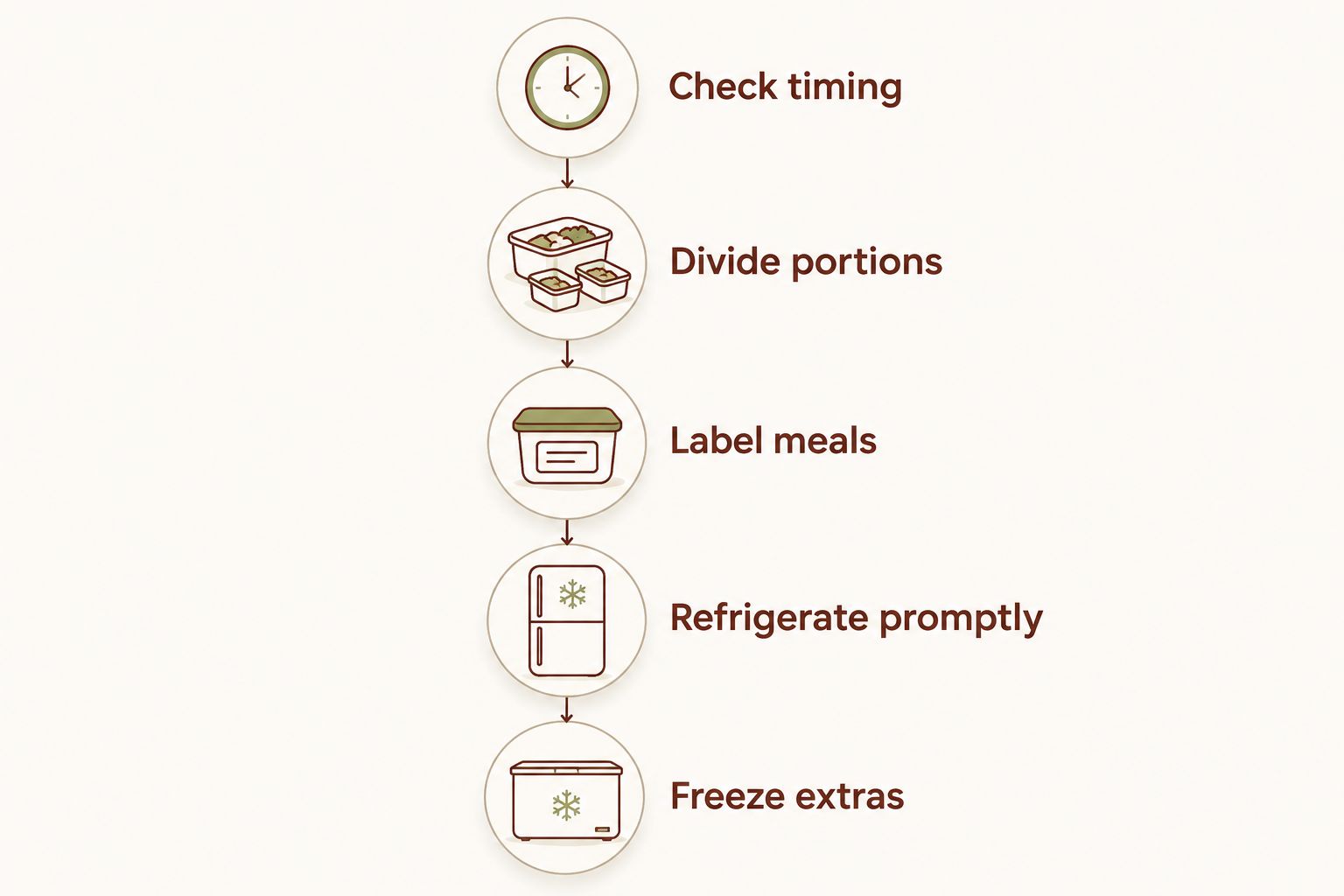
Use this sequence whether you are putting away a private dinner’s leftovers or organizing cooked meals for the next few days. Make it your standard 2026 routine rather than deciding container by container when you are tired after hosting.
- Check timing. Establish when the food was cooked and how long it has been outside refrigeration. Do not give an older dish a new date just because you transferred it into a clean container.
- Divide portions. Move large amounts into smaller, shallow containers. Hot food can go directly into the refrigerator; it does not need to sit out until completely cool.
- Label meals. Write the dish name and cooking date on each container. Mark the intended use or freezing date so you can make decisions without relying on memory.
- Refrigerate promptly. Keep the refrigerator at 40°F or below and leave room for cold air to circulate. Avoid packing a large quantity of warm containers tightly together.
- Freeze extras. Freeze portions that fall outside your refrigerated eating plan. Keep only the meals you expect to eat within the safe storage window in the fridge.
Your labels should answer a practical question: which meal needs attention first? Put the earliest-use portions where you can see them, and keep raw meat securely contained away from ready-to-eat food.
How should you reheat refrigerated meal prep?
Reheat cooked leftovers to an internal temperature of 165°F. Use a food thermometer; a steaming surface does not tell you whether the center is hot enough.
In the microwave, cover the food, stir or rotate it, and check the temperature in several places. Follow any standing time in the appliance or reheating instructions because heat distribution is uneven.
For soups, sauces, and gravies, USDA guidance calls for bringing them to a rolling boil when reheating. Stir so the contents heat evenly, and use a thermometer when checking solid pieces within a mixed dish.
Reheat only the portion you intend to eat. A microwave does not reset the storage clock, and reaching 165°F does not reliably fix food that was stored unsafely before reheating.
Can meal prep last a full week in the fridge?
3–4 days is the general refrigerated limit for cooked leftovers, not a full week. For a longer eating plan, refrigerate the near-term portions and freeze the rest promptly.
Do not interpret a weekly menu as permission to refrigerate every cooked meal until the end of the week. A useful 2026 meal calendar shows both the cooking date and which portions belong in the freezer.
Does private chef meal prep last longer than homemade food?
3–4 days remains the general guideline for cooked leftovers, regardless of who prepares them. Professional preparation does not replace temperature control or change the safe refrigerated storage window.
Good instructions help you protect the meal after service. Ask about storage, freezing, and reheating rather than assuming a particular ingredient or preparation method extends its life.
Can you tell whether meal prep is safe by smelling it?
3–4 days is a storage guideline; smell is not a safety test. Discard food with mold, an unusual odor, or visible spoilage, but do not assume food is safe because none of those signs appears.
Never taste a questionable meal to check it. If you cannot establish safe timing and refrigeration, discard it rather than serving it to yourself or your guests.
What should you ask before a private chef dinner ends?
Before you settle back in with your guests, ask which leftovers should be eaten first, which dishes freeze well, and how each cooked component should be reheated. Request clear dates rather than a general instruction to finish everything soon.
Culinary Collective ATL is best for Metro Atlanta and North Georgia hosts seeking private chef dinners, vacation rental dining, or retreat catering. Led by Chef Rob, the service offers custom in-home dining; the practical trade-off for you is that leftovers still require your attention after dinner.
Keep the handoff simple. Have suitable containers ready, identify space in the refrigerator, and decide who will put food away if the gathering continues after the meal.
For a Culinary Collective ATL private dinner, make leftover storage part of your hosting questions—not an afterthought once everyone has left. That keeps the focus on enjoying the evening without losing track of food sitting out.
FAQ
How long does private chef meal prep last in the fridge?
Most cooked private chef meals last 3–4 days in the fridge at 40°F or below. Count from cooking, and refrigerate promptly; professional preparation does not extend the storage window.
Can I eat refrigerated meal prep after a week?
A full week exceeds the USDA’s general 3–4-day refrigerator guideline for cooked leftovers. Freeze portions you will not eat within that window while they are still safely stored.
Should I let hot meal prep cool before putting it in the fridge?
You do not need to wait for hot food to reach room temperature before refrigerating it. Divide large amounts into shallow containers and refrigerate promptly so they cool efficiently.
What temperature should my refrigerator be for prepared meals?
Keep prepared meals in a refrigerator at 40°F or below. Use an appliance thermometer to check the temperature rather than relying only on the refrigerator’s dial.
How long can cooked meals sit out before refrigeration?
Refrigerate perishable cooked meals within 2 hours, or within 1 hour when temperatures exceed 90°F. Discard food that has exceeded those limits rather than trying to make it safe by reheating.
What temperature should I reheat meal prep to?
Reheat cooked leftovers to an internal temperature of 165°F. Check several places with a food thermometer, especially after microwave heating.
Does freezing meal prep make unsafe food safe again?
Freezing does not make improperly handled meal prep safe again. Freeze food while it is still safely stored, and thaw it using a safe method such as refrigeration rather than leaving it on the counter.
One last thing
The most useful label is the cooking date—not the date you opened the container. An untouched lid does not pause bacterial growth, and moving leftovers into a fresh container does not restart their refrigerated life.
Before your next dinner, choose the freezer portions while you are putting everything away. That small decision gives you a clear plan for later meals without asking the refrigerator to preserve cooked food beyond its recommended window.
Related guides
- Private chef services for Airbnb rentals in Atlanta
- Private chef costs for a birthday party
- Connecting dietary restrictions to a group dinner menu