
Yes—a private chef can plan a group dinner around severe food allergies, but you should book only after the chef confirms that the ingredients, preparation space, equipment, and service arrangements can meet the guest’s needs. A custom menu alone does not prevent allergen cross-contact, and no chef should promise a risk-free meal. The guest’s allergy instructions and emergency action plan must shape the arrangements before you commit.
- Can a private chef handle severe food allergies? Yes, when ingredient sourcing, cross-contact controls, and service arrangements meet the guest’s needs.
- Culinary Collective ATL offers custom private dinners; confirm severe-allergy accommodation directly before booking.
- Cooking does not reliably remove food allergens, and removing a garnish does not make an affected plate safe.
- Agree on ingredients, equipment, plate identification, and an emergency plan before dinner day.
Why this matters
Your guest needs more than reassurance that the chef can leave something out. An allergen can reach a meal through a sauce, a shared utensil, an ingredient substitution, or another guest’s serving spoon.
For a 2026 dinner with Culinary Collective ATL, raise severe allergies during the initial conversation—not after choosing a menu. The service offers chef-designed private dining led by Chef Rob, but that description is not confirmation that a particular allergy or kitchen can be accommodated.
Treat allergy accommodation as a booking requirement, not a menu preference. That gives everyone room to identify a limitation before invitations and travel plans become difficult to change.
Can a private chef handle severe food allergies for a group dinner?
Yes, provided the chef can explain how the entire meal will be managed, from purchasing ingredients to serving the correct plate. Ask for specific arrangements rather than accepting a general statement that dietary restrictions are welcome.
Use this sequence before confirming your dinner:
- Gather guest instructions. Ask the affected guest to describe the allergens they avoid and share relevant instructions from their allergy care team. Do not interpret their medical needs for them.
- Review every course. Include appetizers, bread, sauces, dressings, desserts, drinks, and garnishes—not just the main dish.
- Confirm sourcing. Establish who will check packaged ingredients and what happens if the intended ingredient cannot be obtained.
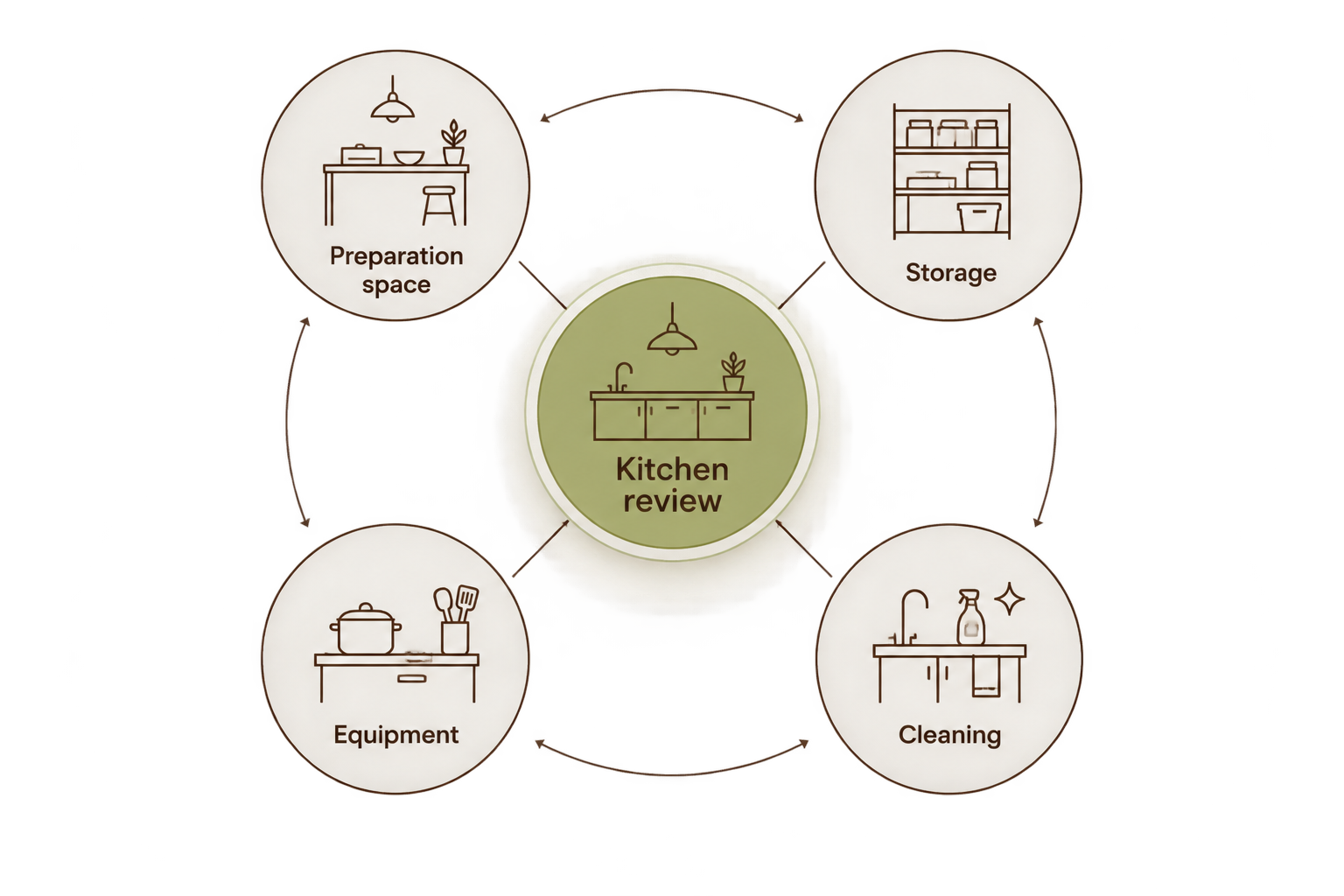
- Assess the kitchen. Discuss shared equipment, preparation surfaces, storage, and food already in the property.
- Agree on service. Decide how the guest’s meal will be identified and protected until it reaches them.
- Set a stopping rule. If an ingredient or preparation step cannot be verified, do not serve that item to the affected guest.
A chef who identifies a limitation gives you information you need. An immediate yes without questions does not establish that the dinner is suitable.
Choose a menu approach without assuming either is risk-free
A shared menu that excludes the guest’s allergens and a separately prepared meal are different planning approaches. Neither automatically makes a kitchen safe, and the right choice depends on the specific allergy and the chef’s actual preparation arrangements.
| Approach | Best for | Practical advantage | Limitation to resolve |
|---|---|---|---|
| Shared menu | Groups willing to build dinner around the affected guest’s requirements | Reduces the need to distinguish different dishes at the table | Ingredients, equipment, and outside food still require review |
| Separate meal | Dinners where a distinct meal has been agreed with the guest and chef | Allows an individually planned dish | Requires controlled preparation, clear identification, and protection during service |
Choose the approach the chef can explain and the affected guest can evaluate—not the approach that sounds easiest to host. Do not assume a separate plate is safer merely because it arrives separately.
Shared menu
Start by asking whether the whole group can enjoy a menu that excludes the relevant allergens. This can simplify the table, but it does not answer questions about packaged ingredients or previous use of kitchen equipment.
Avoid describing the dinner as allergen-free unless the chef can substantiate that statement. Tell guests exactly what has been agreed instead.
Separate meal
If the guest will receive a separate meal, ask who prepares it, where it is held, and who delivers it. Include sauces and garnishes in that discussion.
A plate label helps with identification; it does not prevent cross-contact during preparation. The process behind the plate matters more than its appearance.
Why severe-allergy accommodation varies
The same menu can present different problems in different kitchens. For your 2026 event, review these factors before treating an earlier dinner’s arrangements as a workable template:
- The specific allergen. Different ingredients appear in different dishes, condiments, and packaged foods. The guest’s requirements must be explicit.
- Ingredient traceability. A chef needs enough information to assess ingredients, including substitutions and products prepared elsewhere.
- Preparation conditions. Shared surfaces, utensils, appliances, storage, and cooking oil all need consideration.
- Service format. Passing dishes and sharing utensils creates different handling concerns from individually served plates.
- Other food at the event. A guest’s cake, snack board, or welcome basket can introduce an allergen outside the planned menu.
- Communication. The host, chef, affected guest, and anyone serving food need consistent instructions.
These are reasons to discuss the event in detail, not reasons to dismiss your guest’s needs. A clear limitation is a reason to change the plan.
Know what ingredient labels can—and cannot—tell you
For U.S. dinner planning in 2026, the Food and Drug Administration identifies 9 major food allergens: milk, eggs, fish, crustacean shellfish, tree nuts, peanuts, wheat, soybeans, and sesame. This list does not cover every possible food allergy.
Give the chef the guest’s actual allergen list rather than asking only for a menu without the major allergens. A guest can have requirements beyond those categories, and similar-sounding dietary requests are not interchangeable.
For example, dairy-free is not the same as lactose-free. A lactose-free dairy product can still contain milk proteins, so it is not an appropriate substitute for someone avoiding milk because of a milk allergy.
Ingredient labels also need checking when products change. Ask how the chef will handle an unavailable sauce or a different brand of seasoning; do not approve an unspecified substitution on the guest’s behalf.
Precautionary statements such as “may contain” require discussion with the affected guest according to their medical guidance. Their absence is not a guarantee against cross-contact.
Check the kitchen before approving the dinner
An attractive rental kitchen does not establish that it is suitable for a severe-allergy dinner. Ask about its working conditions, not just its appliances.
Have the chef review the available preparation space, refrigeration, cookware, utensils, and cleaning arrangements. For an Airbnb or North Georgia cabin, tell the chef what you know about the kitchen—and distinguish that from what you have not verified.
Useful questions include:
- Which equipment will the chef bring, and which items will come from the property?
- How will ingredients and prepared food be kept separate from other food?
- Are shared grills, toasters, fryers, or difficult-to-clean appliances involved?
- What happens if the kitchen differs from the description when the chef arrives?
Cooking is not a reliable way to eliminate food allergens. Do not accept “the heat will take care of it” as a substitute for controlling ingredients and cross-contact.
Cleaning also needs a specific plan. Sanitizing addresses microorganisms; it is not a substitute for removing allergen residue through appropriate cleaning.
Keep outside food and table service inside the plan
Once the chef has agreed on a menu, ask guests not to add food without discussing it first. A homemade dessert or shared snack can undo careful decisions about what reaches the table.
The same principle applies when planning menus around dietary needs: the plan needs to cover the whole eating occasion, not just the dishes assigned to the kitchen. Tell the chef about the celebration cake, welcome drinks, edible decorations, and anything guests intend to bring.
At service, keep the arrangements simple and explicit:
- Identify who will deliver the affected guest’s meal.
- Keep serving utensils with their assigned dishes.
- Do not move garnishes or sauces between plates.
- Ask before topping up a plate from a shared dish.
- Stop service if there is uncertainty about an ingredient or plate.
If an allergen touches a plate, removing the visible food is not an adequate fix. The affected dish needs to be replaced through the agreed preparation process—not rearranged at the table.
Give helpers these instructions before guests sit down. You should not have to explain the plan across the dining room while food is being passed.
What should you send the chef before booking?
Send a written summary that the affected guest has checked. For a 2026 celebration, keep that summary with your current event details so changes do not become scattered across separate conversations.
Include the guest’s allergens, relevant label restrictions, proposed menu, kitchen location, service format, and any food supplied by others. Ask the chef to identify what can be accommodated and what remains unresolved.
Culinary Collective ATL is best suited to hosts seeking custom private chef dinners in Metro Atlanta and North Georgia. Its custom-menu format is relevant to this conversation, but it does not establish that every severe allergy can be accommodated.
Before committing, ask Chef Rob directly whether the specific requirements can be met in your chosen setting. If the answer is no, respect that limit and agree on another arrangement with the guest.
Avoid requesting or circulating unnecessary medical details. The people preparing and serving the meal need clear food-handling instructions, while the guest retains control over their personal health information.
What happens if someone has an allergic reaction during dinner?
For suspected anaphylaxis, follow the guest’s emergency action plan, use prescribed epinephrine promptly, and call 911. Antihistamines are not a substitute for epinephrine in anaphylaxis; do not delay emergency action while trying to identify the ingredient.
Before dinner, confirm that the guest can access their prescribed medication and that the property’s address is easy to give emergency responders. At a vacation rental, use the actual street address rather than relying on the listing name.
This article supports event planning, not individual medical decisions. The guest’s allergy care team should direct their treatment and emergency instructions.
FAQ
Can a private chef guarantee an allergy-free dinner?
No private chef should promise a risk-free dinner. Ask for specific ingredient, cross-contact, and service controls, and let the affected guest assess the arrangements against their medical guidance.
Is a private chef safer than a restaurant for severe food allergies?
A private chef is not automatically safer than a restaurant. Safety depends on the ingredients, preparation environment, handling practices, and ability to meet the guest’s requirements—not the service label.
Should everyone eat the same menu if a guest has a severe allergy?
A shared menu can simplify service, but it does not automatically prevent cross-contact. Choose the menu approach with the chef and affected guest after reviewing ingredients and the kitchen.
Can cooking destroy the allergen in a dish?
Cooking does not reliably eliminate food allergens. Do not serve an affected dish on the assumption that heat has made it safe.
Can a chef just remove nuts or another allergen from a finished plate?
Removing the visible allergen does not make the affected plate safe. The dish needs replacement through the agreed preparation process, with ingredients and handling checked.
Can Culinary Collective ATL accommodate a severe food allergy?
Severe-allergy accommodation requires direct confirmation from Culinary Collective ATL for your specific event. Share the guest’s requirements before booking and ask whether the ingredients, kitchen, and service arrangements can meet them.
How early should I tell a private chef about a severe food allergy?
Tell the private chef during your first inquiry, before agreeing to a menu or booking. Reconfirm the written arrangements whenever ingredients, guests, the venue, or service plans change.
One last thing
For your 2026 dinner, write down the condition that stops service: if the ingredient or preparation cannot be verified, the affected guest does not receive that dish. Agree on that rule with the chef and guest before the celebration begins.
The most reassuring host is not the one who promises that everything will be fine. It is the one who makes room for a careful answer—and never pressures a guest to eat something they cannot confidently accept.
Related guides
- How to connect dietary restrictions to a group dinner menu
- Does a private chef bring their own cookware and equipment?
- Can a private chef handle dessert and drinks too?