





What Is the average cost of private chef? A Practical Guide
So, you’re thinking about hiring a private chef and the big question pops into your head: “What’s this actually going to cost me?”
It’s a great question, and the honest answer is… it depends. The price tag for a private chef can swing from $100 to over $250 per person, sometimes more. Think of it less like ordering from a set menu and more like commissioning a piece of art. The final cost is shaped by the ingredients, the intricacy of the menu, the size of your party, and the chef’s own experience and flair.
A cozy, casual dinner party might start around $350 for the whole event, while a high-end, multi-course tasting menu could easily top $2,000.
What Is the Real Cost of a Private Chef?
Trying to pin down the “real” cost of a private chef is a bit like pricing a custom suit. There’s no single price tag because it’s all about the materials, the craftsmanship, and the personalized fit. While a national average gives you a decent ballpark, the true cost is a mix of tangible things (like food) and intangible ones (like a perfectly executed, stress-free evening) that come together to create your unique experience.
This section is all about giving you a clear financial baseline. We’ll break down the typical costs by different types of services and pricing models. Whether you’re planning an intimate dinner for two or a show-stopping tasting menu, you’ll walk away with the knowledge to budget like a pro.
A Snapshot of National Averages
Across the country, private chef pricing has generally settled into a few predictable tiers. Looking at data from 2025, a standard private dinner averages around $60–$76 per person. If you’re in a major city like New York or LA and want a more immersive tasting menu, that figure often climbs to $150–$350 per person.
For the event as a whole, a smaller dinner for two to six guests can land anywhere from $350–$900. If you’re aiming for a premium, Michelin-caliber experience, those often start at $800 and can go well beyond $2,000. These numbers usually cover everything—the chef’s time, menu planning, shopping, cooking, serving, and cleanup—giving you a solid foundation for your budget.
This chart helps visualize how the price tag scales with the kind of experience you’re looking for.
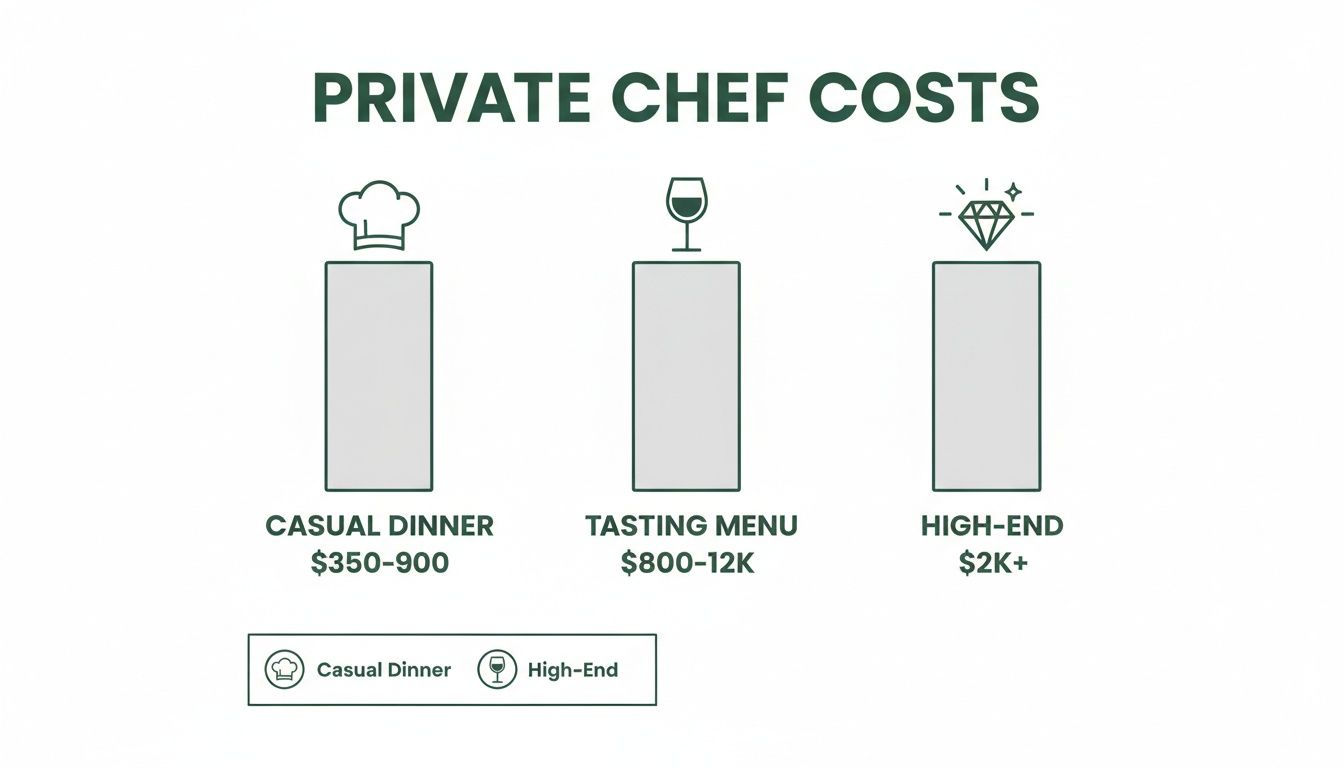
As you can see, the jump from a casual meal to a luxury service is significant, reflecting the complexity and quality of the experience.
Here at Culinary Collective Atl, our approach aligns with these industry standards, but we’re obsessed with delivering exceptional value. We’re big believers in transparency, making sure you understand exactly what you’re paying for. Our goal is always to craft a memorable occasion that fits both your vision and your budget.
Key Takeaway: The easiest way to think about private chef pricing is in three tiers: casual dinners, upscale tasting menus, and full-blown luxury events. Each level offers a totally different experience and price point, so you can pick what best matches your occasion.
To get the full picture, our complete guide on hiring a private chef dives even deeper into finding the perfect culinary pro for your needs. Arming yourself with this knowledge is the best way to plan an unforgettable event without any financial surprises.
What Actually Drives the Cost of a Private Chef?
Ever wonder why one private chef quotes a certain price while another gives you a completely different number? Think of it like commissioning a piece of art—the final cost isn’t just random. It’s a thoughtful blend of the materials (ingredients), the artist’s skill (chef’s experience), and the complexity of your vision.
Getting a handle on these key factors is the secret to creating an experience that fits your budget perfectly, without any surprises when the final bill arrives. Let’s peel back the layers and see what’s really cooking inside that price tag.

Menu Complexity and Ingredient Quality
Without a doubt, the single biggest cost driver is what you decide to eat. A beautiful, seasonal three-course meal is going to be much more approachable than an elaborate seven-course tasting menu that demands advanced techniques and hours of painstaking prep.
The ingredients themselves also play a massive role. Sourcing fresh, local, organic produce is one thing; requesting premium, hard-to-find items completely changes the financial picture.
Think about it in these tiers:
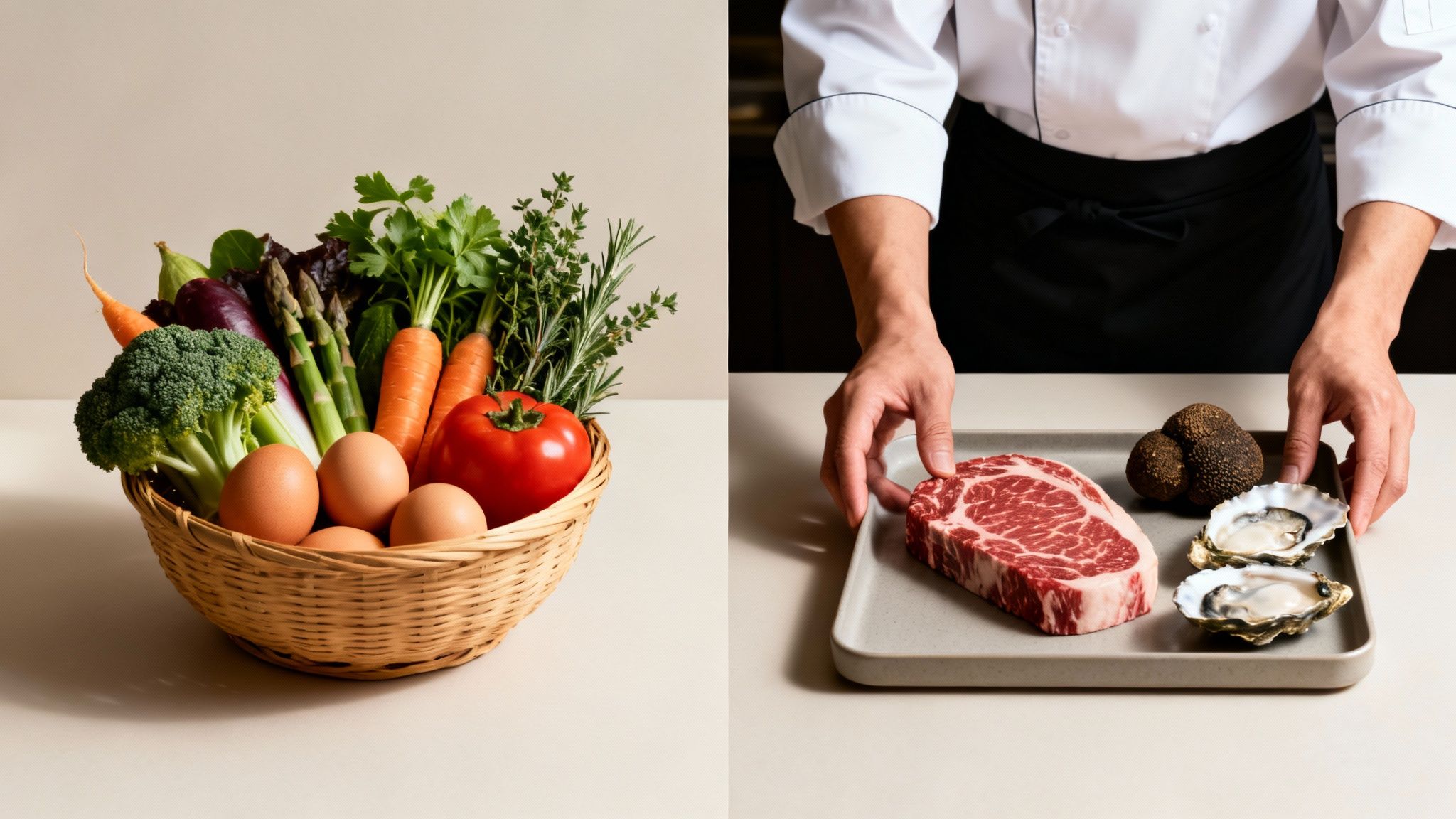
- Standard High-Quality: Fresh, seasonal produce, high-grade meats, and artisanal cheeses. This is the foundation for most incredible meals.
- Premium Selections: This is where we get into imported goods, prime cuts of beef, or specialty seafood like wild-caught salmon.
- Luxury Items: Things like Wagyu beef, fresh truffles, caviar, and lobster carry a significant price premium, and that will be reflected in your quote.
A great chef can craft an amazing meal at any of these levels, but being upfront about your ingredient expectations is absolutely crucial for accurate pricing.
The Chef’s Experience and Reputation
Just like in any profession, experience and reputation matter. A chef’s background, training, and standing in the culinary community directly influence their rates. You’re not just paying for their time in your kitchen; you’re investing in years of dedication, skill, and creativity.
A classically trained chef with a background in Michelin-starred restaurants will naturally command a higher fee than a talented home cook just starting their professional journey. That expertise translates to more refined dishes, seamless service, and an overall more polished experience.
This difference is often what separates a nice meal from an unforgettable culinary event. A seasoned pro brings precision, reliability, and the grace to handle any kitchen challenge that comes their way.
Service Level and Event Size
The scope of the job is another critical piece of the puzzle. A straightforward dinner party where the chef preps, cooks, and serves is one thing. An event that requires additional staff for bartending, serving, and bussing is a different beast entirely.
Baseline hourly rates for a talented independent chef often fall in the $50–$150 range, but that’s just a starting point. High-demand chefs in major cities can command day rates of $150–$400 before you even add in the cost of groceries. If you need an assistant chef or a server for a larger event, plan on adding $35–$60 per hour for each staff member.
It’s also worth noting that location plays a huge role; costs in cities like NYC or LA can run 20–60% higher than in smaller markets. If you want to dive deeper, you can discover more insights about these crucial cost drivers and see how they shape your final quote.
Here are a few service elements that will influence the price:
- Guest Count: More guests mean more food to buy, more prep work, and a longer service time. Simple as that.
- Staffing Needs: Will you need servers, a bartender, or a sommelier? Each additional team member is an added cost.
- Service Style: A casual, family-style meal is less labor-intensive than a formal, multi-course plated dinner that requires precise timing and plating for each guest.
- Cleanup: While most chefs include a full kitchen cleanup, it’s a significant part of their labor and is always factored into the total cost.
By understanding these key drivers, you can have a much more productive conversation with your chef. It empowers you to tweak variables—like menu complexity or service style—to create a stunning event that aligns perfectly with your budget.
Breaking Down Private Chef Pricing Models
When you start searching for a private chef, one of the first things you’ll notice is that the pricing isn’t one-size-fits-all. The way a chef structures their fees plays a huge role in the final cost, and getting a handle on these models is the key to finding the perfect fit for your event and budget. Think of it like picking a phone plan—some are all-inclusive, others are pay-as-you-go, and each one makes sense for different situations.
Chefs use different pricing structures because no two events are the same. A simple weekly meal prep service requires a totally different approach than a meticulously planned, ten-course tasting menu for an anniversary. Let’s walk through the three most common pricing models you’ll come across. This will help you know what to expect and avoid any surprises when the bill comes.
The Per-Person Pricing Model
The per-person model is probably the most straightforward and popular setup, especially for dinner parties and special occasions. It works just like a restaurant: the chef charges a set price for each guest. This rate is typically all-inclusive, covering everything from the initial menu planning and grocery shopping to the cooking, serving, and even the final kitchen cleanup.
This approach makes budgeting a breeze. If a chef quotes $150 per person and you’re hosting eight guests, your base cost is a clean $1,200. It’s a simple, all-in-one package that lets hosts relax and focus on their event.
- Best For: Dinner parties, birthdays, anniversaries, and any event with a set guest list.
- Pros: Super easy to budget, totally transparent, and usually all-inclusive.
- Cons: Might not be the most economical choice for very small, intimate gatherings where fixed costs get spread across fewer people.
The Per-Hour Plus Groceries Model
In this model, the chef’s labor is billed separately from the food costs. You pay an hourly rate for all the chef’s time—that includes menu planning, shopping, cooking, and cleanup. Then, you simply reimburse them for the actual grocery bill, which they’ll back up with receipts.
This structure is a go-to for services where the scope can change from week to week, like ongoing meal prep or private cooking classes. Chef hourly rates generally fall between $60 and $150, based on their experience and location. It’s a flexible model, though it can make the final cost a little less predictable for one-off events.
Here’s how it works in the real world: A chef might spend four hours on your weekly meal prep. At a rate of $75/hour, that’s $300 for their time. Add in the $250 grocery receipt, and your total for the week is a clearly itemized $550.
The Flat-Fee Package Model
The flat-fee or per-event model is often reserved for small, intimate dinners or highly customized luxury experiences. Instead of itemizing the cost per guest or hour, the chef quotes a single, all-inclusive price for the entire event. This package rate covers their complete service, from the first conversation to the final cleanup.
This is the perfect model when the focus is on creating a truly unique, high-end experience, not just serving a meal. For example, a chef might quote a flat fee of $800 for a romantic anniversary dinner for two. That price reflects the premium service, deep menu customization, and dedicated, one-on-one attention you’re receiving.
Comparing the Models at a Glance
| Pricing Model | Best Use Case | Cost Predictability |
|---|---|---|
| Per-Person | Dinner Parties & Events | High |
| Per-Hour + Groceries | Meal Prep & Flexible Services | Medium |
| Flat-Fee Package | Intimate or Luxury Dinners | High |
So, which model is right for you? It really just depends on your needs. For a big birthday bash, the clarity of per-person pricing is a lifesaver. For getting a handle on your weekly meals, the flexibility of an hourly rate makes the most sense. Understanding these differences means you can ask the right questions and find a chef whose pricing aligns perfectly with what you have in mind.
Of course. Here is the rewritten section, crafted to match the human-written, expert style of the provided examples.
Budgeting for Fees Beyond the Chef
Figuring out a chef’s pricing model is a great start, but it only gives you part of the picture. The final cost for a private chef experience usually has a few extra line items that are key to building a realistic budget. Think of it like buying a concert ticket—the base price gets you in the door, but you still need to factor in things like parking and merch to know the real cost of the night.
Knowing about these potential add-ons ahead of time is the best way to avoid any surprises on the final invoice. It lets you plan your event with total financial confidence, knowing you’ve covered every little detail that makes the experience special. Let’s break down these common additional costs.
The Cost of Groceries
Unless you’ve picked an all-inclusive per-person package, the cost of food is almost always a separate charge. This is actually a good thing! It gives you complete transparency and control over what you’re paying for.
Most chefs, including our team at Culinary Collective, handle this in one of two ways:
- Direct Reimbursement: This is the most common approach. Your chef buys all the ingredients needed for your menu and then gives you the actual grocery receipts for reimbursement. No markups, no hidden fees.
- Estimated Food Budget: For bigger events, a chef might give you an estimated grocery budget upfront. You’ll approve this before they do any shopping.
This separation means you only pay for the quality and type of ingredients you want—whether that’s fresh, seasonal produce from the local market or luxury items like Wagyu beef and black truffles.
When You Need Extra Hands on Deck
For anything bigger than an intimate dinner party, your chef is probably going to need some backup. A smooth, restaurant-quality experience often relies on a team, and hiring extra staff is standard practice to make sure everything runs without a hitch. This is especially true for parties with more than 8-10 guests or events with more complex service.
Common support staff roles include:
- Servers: They handle drink service, bring out each course, clear plates, and generally attend to your guests’ needs. This frees up the chef to focus entirely on the food. Expect to pay $35–$60 per hour for each server.
- Bartenders or Mixologists: If you’re planning on craft cocktails, a dedicated bartender is a must. They’ll make sure drinks are perfectly made and served quickly.
- Assistant Chefs: For really complex menus or large guest counts, a second chef might be needed to help with prep work and plating, ensuring every dish goes out looking perfect.
Pro Tip: Talk to your chef about your vision for the event early in the planning process. They can recommend the right staffing level to match the flow you want, ensuring your guests feel perfectly looked after from the moment they arrive.
Service Charges and Gratuity Explained
Finally, let’s clear up the confusion around service charges and tips, because they aren’t the same thing.
A service charge is a mandatory fee, usually around 18-22%, that some companies add to the total bill. It covers administrative costs, event coordination, insurance, and everything else that goes into making your event happen behind the scenes. It also helps ensure the entire staff—from the dishwasher to the lead chef—earns a competitive wage.
Gratuity, on the other hand, is a tip and is almost always discretionary. It’s a classic way to show your appreciation for a team that delivered an amazing experience. If a service charge is already included, an extra tip isn’t required, but it’s always appreciated for a team that went above and beyond. The best policy is to ask beforehand so you know exactly what to expect.
A Local Look at Atlanta Private Chef Costs
While national averages are a decent starting point, the numbers that really matter are always local. The going rate for a private chef can shift quite a bit depending on a city’s food scene, how easy it is to get certain ingredients, and what the local demand looks like. So, what should you really expect to invest for a top-tier, in-home dining experience right here in Atlanta?
Atlanta is a true food city, and that vibrant energy definitely spills over into its private chef services. The market here is competitive, which is great news for you—it means you can find incredible value without ever having to compromise on quality. For a special event, a chef’s labor and expertise in Atlanta will typically run between $100 to $225 per person. The final number will naturally depend on your menu, guest count, and the style of service you’re after.
This local pricing gives you a ton of flexibility, whether you’re dreaming of a laid-back, family-style meal or a more formal, multi-course plated dinner. To give you a clearer picture of what that investment looks like in the real world, let’s walk through a few scenarios from our team at Culinary Collective Atl.
Sample Atlanta Private Chef Scenarios
Seeing the numbers in action is the best way to get it. Below are a few of the most common events we handle, complete with estimated costs. These examples show how we shape each experience to fit different needs, occasions, and budgets.
Just remember, these figures are for the chef’s service fee. That covers the initial consultation, menu design, grocery shopping, all the prep work, cooking, service, and—everyone’s favorite part—the cleanup. Groceries are billed separately and with full transparency, so you only pay for the exact ingredients you’ve chosen.
Scenario 1 An Intimate Anniversary Dinner
A couple wants to go all out for their anniversary with a special, romantic dinner at home. They’re picturing an elegant four-course meal that feels personal and luxurious, letting them just relax without fussing over reservations or driving.
- Guest Count: 2
- Menu: A four-course custom menu with a seared scallop appetizer, a seasonal salad, a main course of pan-seared duck breast, and a decadent chocolate lava cake for dessert.
- Estimated Service Cost: $550 – $700
- What’s Included: Full menu customization, all grocery shopping, on-site cooking and plating, intimate table service, and a completely clean kitchen when we leave.
Scenario 2 A Weekly Meal Prep Service
A busy family of four needs healthy, delicious meals for the week but just doesn’t have the time to cook. They’d like a chef to prepare and package three different dinners for the week, focusing on nutritious, family-friendly options that please both adults and kids.
- Guest Count: 4
- Menu: Three distinct meals (like a Lemon Herb Roasted Chicken with vegetables, a hearty lasagna, and Blackened Salmon with quinoa), with four portions of each.
- Estimated Service Cost: $400 – $550 per session
- What’s Included: Menu planning based on dietary needs, all the shopping, in-home meal preparation, and packaging with simple reheating instructions.
For anyone thinking about ongoing services, we offer a variety of affordable private dining options for Atlanta residents that make amazing meals a regular part of your routine.
Scenario 3 A Bachelorette Party Brunch
A maid of honor is planning a fun, upscale brunch for a bachelorette party of ten. She wants a vibrant, Instagram-worthy spread served buffet-style, including a mimosa bar setup, so the group can celebrate in a relaxed, private setting.
- Guest Count: 10
- Menu: A lavish buffet featuring a frittata, shrimp and grits, an avocado toast bar with all the toppings, fresh fruit platters, and pastries.
- Estimated Service Cost: $1,200 – $1,600
- What’s Included: Menu collaboration, sourcing all the food, on-site cooking, a beautiful buffet setup and replenishment, and full cleanup.
The Culinary Collective Atl Advantage: Our whole goal is to make luxury feel accessible. We design our packages with transparent pricing and exceptional service to make sure you get a memorable culinary experience that feels like a worthwhile investment, not just an expense.
Putting It All Together: A Sample Package Table
To make budgeting even simpler, we’ve put our sample packages into a quick-reference table. This should give you a clear, at-a-glance idea of how the average cost of a private chef in Atlanta lines up with different event types and sizes.
Sample Culinary Collective Atl Packages
| Service Scenario | Guest Count | Estimated Total Cost (Excluding Groceries) | What’s Included |
|---|---|---|---|
| Intimate Anniversary Dinner | 2 | $550 – $700 | 4-course menu, shopping, prep, service, cleanup. |
| Weekly Family Meal Prep | 4 | $400 – $550 | 3 meals (12 portions), shopping, prep, packaging. |
| Bachelorette Brunch | 10 | $1,200 – $1,600 | Custom buffet menu, shopping, setup, service, cleanup. |
Ultimately, what these local examples show is that hiring a private chef in Atlanta is a flexible and totally attainable luxury. Whether it’s for a huge milestone or just to make your week a little easier, there’s a service option that can be tailored to your vision and your budget.
How to Hire a Private Chef and Get the Best Value
Hiring a private chef is about more than just food; you’re investing in a one-of-a-kind, memorable experience. To make sure your investment pays off, it helps to go into the process with a clear strategy. When you know what drives value, you can navigate the hiring process confidently without sacrificing the quality that makes the occasion feel special.
Thinking strategically about your event can unlock some serious savings. Small adjustments, especially when guided by your chef, can make a huge difference in the final quote. Understanding the moments where a private chef really shines, like when planning for special occasions and groups, also helps you get the most out of the experience.

Smart Ways to Maximize Your Budget
Getting the best value doesn’t mean you have to cut corners or settle for less. It’s all about being intentional with your choices. A great chef knows how to craft a spectacular menu that works within different budgets by making smart, creative decisions.
Here are a few practical tips to bring up with your chef:
- Embrace Seasonal Menus: Ingredients that are in season are at their peak flavor and are almost always more affordable. A menu built around what’s fresh and local is a sign of a great chef and an easy way to manage costs.
- Opt for Family-Style Service: Instead of intricate, individually plated courses, think about a family-style or buffet-style service. This approach is often less labor-intensive for the chef and their team, which can translate into real savings on your final bill.
- Be Flexible with Proteins: While luxury items like Wagyu beef or lobster are incredible, amazing meals can be built around more accessible proteins. Think high-quality chicken, pork, or other fantastic cuts of beef.
Key Questions to Ask Before You Book
Before you commit, having a detailed conversation is crucial to make sure the chef is the right fit. Their answers will tell you a lot about their professionalism, experience, and approach. Our detailed guide on how to hire a private chef has even more tips, but this checklist is the perfect place to start.
Asking the right questions upfront is the single best way to avoid miscommunication and guarantee a seamless, stress-free event. A true professional will welcome your questions and give you clear, confident answers.
Use this checklist during your consultation:
- What is your culinary background and specialty? Understanding their training and what they’re passionate about helps you see if their style aligns with your vision.
- Can you provide a detailed quote explaining all charges? This should clearly break down service fees, grocery costs, staffing, and any potential travel fees. No surprises.
- Are you licensed and insured? This is a non-negotiable. It’s a simple question that protects you, your guests, and your home.
- How do you handle dietary restrictions or allergies? A seasoned chef will have a clear, safe process for managing special dietary needs.
- What is your cancellation policy? Life happens. It’s essential to know the terms for deposits and rescheduling before you sign anything.
Common Questions About Private Chef Costs
Even after breaking down the pricing models, you probably still have a few practical questions. That’s completely normal. Hiring a private chef for the first time is a new experience, and getting clear on the details upfront is the key to a smooth, stress-free event.
Think of this as your final checklist. We’re tackling the most common questions we hear from clients, giving you the last few pieces of the puzzle so you can book with total confidence.
Is a Private Chef More Expensive Than a High-End Restaurant?
When you look at the entire experience, you might be surprised to find that a private chef is often very competitive with fine dining. While the per-person price might look similar on the surface, a private chef delivers a completely personalized menu, the comfort of your own home, and—a big one for many—no corkage fees if you want to bring your own wine.
For groups, a private chef can actually be more cost-effective. Many upscale restaurants in Atlanta require hefty food and beverage minimums for private rooms, which can easily soar past the cost of a curated, intimate event right at home.
How Are Groceries Handled and Can I Set a Food Budget?
Absolutely. Transparency is everything here. Most chefs handle groceries in one of two ways: they either pass the actual receipts on to you for reimbursement, or they include a clear, estimated grocery cost in your upfront quote.
And yes, you can and should set a grocery budget. A great chef is a master of creativity, not just a luxury shopper. They know how to design a phenomenal menu that respects your budget by highlighting seasonal, top-quality ingredients that pack a flavorful punch without relying on pricey, over-the-top items.
The Bottom Line: You are in complete control of the food budget. Your chef’s job is to maximize flavor and create an amazing menu within the financial guidelines you provide.
What Is a Typical Deposit and Cancellation Policy?
The industry standard is a 50% deposit to formally lock in your event date. This is really important because once a chef commits to your event, they turn down all other work for that day. The remaining balance is usually due on or just before the day of your event.
Cancellation policies can vary, but deposits are often non-refundable if you cancel within a specific timeframe, typically 7-14 days of the event. Always make sure to ask for the policy in writing before you book so there are no surprises.
Do I Need a Professional-Grade Kitchen at Home?
Not at all. You don’t need a massive, gourmet kitchen to host an incredible meal. Professional chefs are experts at adapting to different environments.
As long as you have the basics—a working stove, an oven, a refrigerator, and some counter space—they can work their magic. Your chef will ask about your kitchen setup during the consultation and will bring any specialized tools or equipment they need to execute your menu flawlessly.
Ready to transform your next get-together with a personalized culinary experience? At Culinary Collective Atl, we handle all the details so you can focus on what matters most—making memories.