





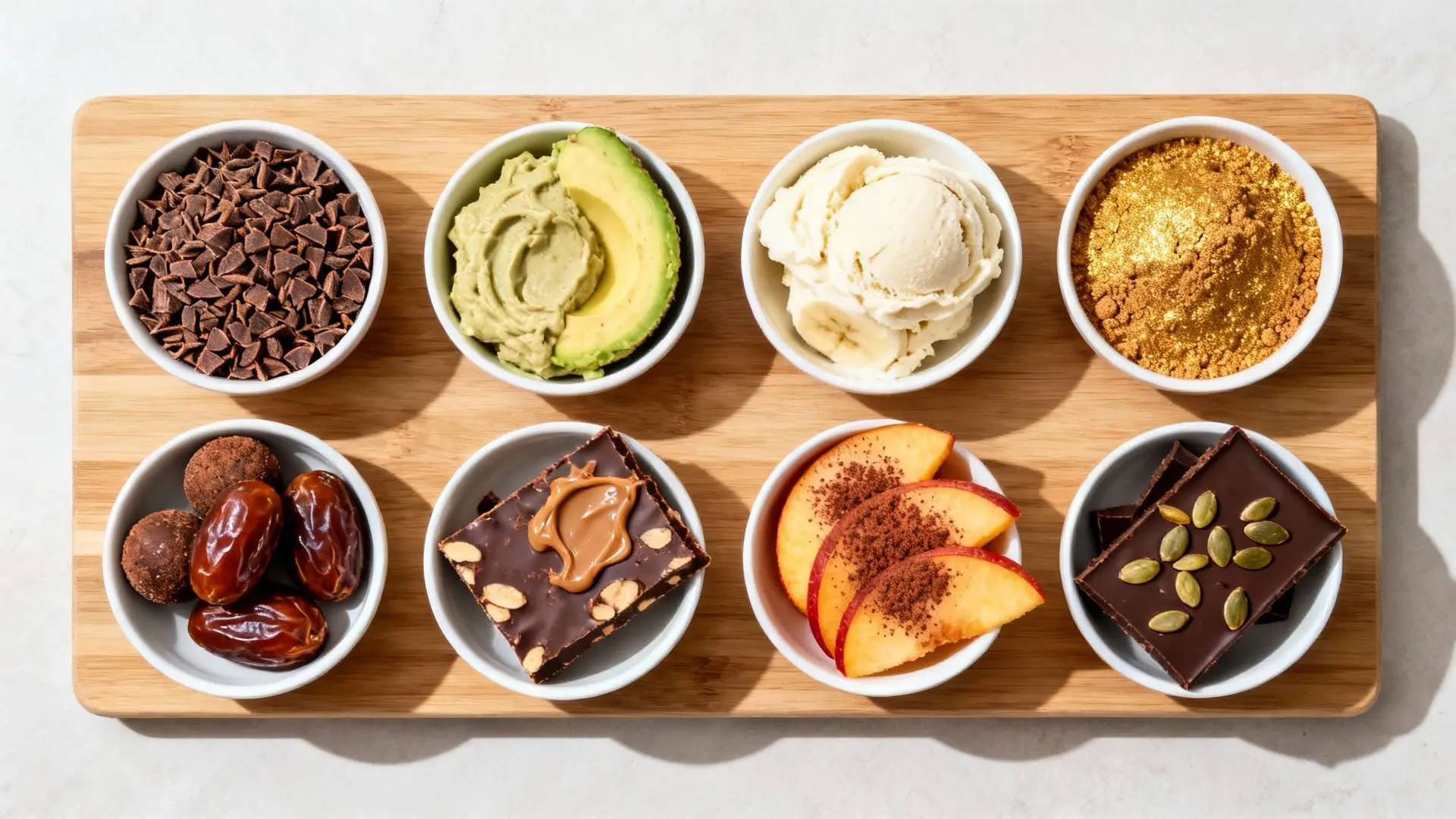
8 Healthy Chocolate Substitute Options to Try in 2025
Chocolate is a universal comfort, but traditional options often come with added sugars and unhealthy fats. These can derail wellness goals. For those who love the rich, decadent flavor but not the compromise, healthy chocolate substitutes offer a delicious and nourishing alternative. This isn’t about giving up indulgence; it’s about upgrading it. We’ve curated a list of 8 innovative and satisfying options. They deliver that classic chocolate experience while aligning with modern health and wellness priorities.
From the pure, antioxidant-rich power of raw cacao to the creamy, surprising texture of avocado mousse, each substitute offers unique flavors, textures, and nutritional benefits. As we explore these alternatives, understanding broader strategies for managing sweet desires can be helpful. For instance, you can discover insights on the best supplements to curb sugar cravings to complement your dietary changes.
This guide provides actionable insights for incorporating a healthy chocolate substitute into your daily routine, from simple meal prep additions to elevating your next catered event. You’ll learn not just what to use, but how to use it effectively. This will satisfy cravings without sacrificing your health.
1. Cacao Nibs & Raw Cacao Powder
For the purest and most nutrient-dense healthy chocolate substitute, turning to cacao in its least processed forms is ideal. Cacao nibs and raw cacao powder are the closest you can get to the original cacao bean. They offer a robust, slightly bitter chocolate flavor without added sugars, milk, and oils found in conventional chocolate bars. This makes them a powerhouse of antioxidants, particularly polyphenols, which are often diminished during high-heat processing.
Unlike Dutch-processed cocoa, which is alkalized to reduce acidity, raw cacao powder is cold-pressed. This method preserves its natural enzymes and rich nutritional profile. Cacao nibs are simply fermented, dried, and crushed cacao beans, delivering a satisfying crunch and intense flavor. These ingredients have been embraced by top chefs like Daniel Humm of Eleven Madison Park. They are staples in high-end culinary creations and health-focused meal prep services.
Best Uses and Flavor Profile
Cacao nibs provide a crunchy texture similar to nuts, making them perfect for sprinkling over oatmeal, yogurt, or salads. Raw cacao powder blends seamlessly into smoothies, protein shakes, and homemade energy bars, imparting a deep, dark chocolate taste.
Key Insight: The natural bitterness of raw cacao pairs exceptionally well with fruits like bananas and dates, which provide natural sweetness and balance the flavor profile without requiring refined sugar.
Actionable Tips for Integration
To make the most of this superfood, consider these practical tips:
- Enhance the Flavor: Lightly toast cacao nibs in a dry pan for 1-2 minutes to unlock their complex, nutty notes before adding them to granola or baked goods.
- Balance Bitterness: When using raw cacao powder in recipes, blend it with natural sweeteners like monk fruit, stevia, or a small amount of maple syrup. Spices such as cinnamon and cardamom also complement and soften its bitterness.
- Create Nutrient-Dense Snacks: Combine raw cacao powder with oats, nut butter, and seeds to create no-bake energy balls, an ideal option for corporate wellness programs or weekly meal prep.
- Proper Storage: Keep both nibs and powder in airtight containers in a cool, dark place to maintain their freshness and potent antioxidant properties.
Incorporating these ingredients into your diet is a simple yet effective way to satisfy chocolate cravings while boosting your intake of magnesium, iron, and fiber. For more ideas on using wholesome ingredients in your cooking, explore our guide to nutritious and traditional winter baking.
2. Carob Powder & Carob Chips
For those seeking a naturally sweet and caffeine-free healthy chocolate substitute, carob is an exceptional choice. Derived from the pods of the Mediterranean carob tree, carob powder and chips offer a distinct, earthy flavor. They have notes of caramel that mimic chocolate without any of its stimulating effects. This makes it an ideal alternative for individuals with caffeine sensitivity, chocolate allergies, or those looking to reduce their sugar intake, as carob is naturally sweeter than cacao.
Unlike cocoa, carob contains no theobromine, the compound that can be harmful to dogs, making it a pet-safe ingredient for homemade treats. Its low-fat, high-fiber profile also supports digestive health. This traditional Mediterranean ingredient is now featured in modern, health-conscious menus, from allergy-friendly bakeries in Atlanta to corporate wellness programs offering sophisticated, caffeine-free snack options.
Best Uses and Flavor Profile
Carob powder has a mild, roasted flavor that works well in baked goods like brownies, cookies, and cakes. It imparts a rich color and subtle sweetness. Carob chips are a fantastic addition to trail mixes, muffins, and pancakes, providing a melt-in-your-mouth texture without the bitterness often found in dark chocolate.
Key Insight: Carob’s natural sweetness means you can often reduce the amount of added sugar in a recipe by up to 25%, making it a powerful tool for creating healthier desserts and snacks.
Actionable Tips for Integration
To seamlessly incorporate this versatile ingredient into your diet, try these tips:
- Enhance the Flavor: Lightly toast carob powder in a dry skillet for 1-2 minutes over low heat before using it in recipes. This simple step deepens its flavor and adds a more complex, nutty character.
- Balance the Taste: Combine carob powder with warming spices like cinnamon, nutmeg, or vanilla extract to enhance its chocolate-like qualities and create a more rounded flavor profile.
- Create Elegant Snacks: For a sophisticated corporate snack board or welcome amenity, mix carob chips with toasted nuts, seeds, and dried figs for a visually appealing and satisfying treat.
- Substitute with Ease: In most recipes, you can substitute carob powder for cocoa powder using a direct 1:1 ratio, making it an easy and convenient switch for your favorite baked goods.
3. Allulose- and Monk Fruit–Sweetened Dark Chocolate
For those who desire the rich, indulgent experience of dark chocolate without the blood sugar spike, options sweetened with allulose or monk fruit offer a modern, health-conscious solution. These premium dark chocolates provide an authentic taste and satisfying texture by using zero-calorie or very low-calorie natural sweeteners. This makes them an exceptional healthy chocolate substitute for anyone following a ketogenic, low-carb, or diabetic-friendly diet. Allulose, a rare sugar with minimal glycemic effect, and monk fruit, a potent natural extract, allow for a decadent chocolate experience. Importantly, they do this without compromising metabolic health.
This innovation has been championed by forward-thinking brands like Lily’s and Hu Kitchen. These brands have mastered formulations that eliminate refined sugar while preserving the complex notes of high-quality cacao. High-end Atlanta restaurants and corporate wellness caterers are increasingly featuring these low-glycemic chocolates in desserts and snacks. This meets a growing demand for premium, health-supportive treats. They’ve become a staple for private chefs catering to clients who prioritize both luxury and well-being.
Best Uses and Flavor Profile
Allulose- and monk fruit-sweetened chocolates are excellent for direct consumption, baking, or creating elegant desserts. They melt smoothly, making them ideal for ganaches, mousses, or simply dipping fruit. Their flavor profile is remarkably close to traditional dark chocolate. They offer a clean sweetness without the chemical aftertaste sometimes associated with other sugar alternatives.
Key Insight: The key to success with these chocolates is sourcing from reputable brands. High-quality formulations ensure the sweeteners are perfectly balanced with the cacao, preventing any cooling sensation from allulose or overpowering sweetness from monk fruit.
Actionable Tips for Integration
To seamlessly incorporate this healthy chocolate substitute, consider these professional tips:
- Create Elegant Pairings: For private dinners or corporate events, pair these chocolates with fresh berries, nuts, and cheeses to create a sophisticated, health-conscious dessert platter.
- Elevate Plated Desserts: Use melted allulose-sweetened chocolate to create drizzles, coatings, or molded elements for upscale desserts that cater to guests with specific dietary needs.
- Inform Your Clients: When using these products in meal prep or catering, clearly communicate the benefits, explaining how allulose and monk fruit support stable blood sugar.
- Stock Smartly: For vacation rentals or corporate wellness programs, offer a selection of these premium chocolate bars as a thoughtful, health-focused amenity that aligns with modern wellness values.
By opting for these advanced formulations, you can satisfy chocolate cravings without derailing health goals. To learn more about innovative sweetening options, explore our guide to finding a quality maple syrup substitute.
4. Dates, Date Paste & Date-Based Chocolate
Harnessing the natural sweetness and fudgy texture of dates offers a sophisticated, whole-food approach to creating a healthy chocolate substitute. Date paste, made from blended soaked dates, provides a rich, caramel-like sweetness that eliminates the need for refined sugars. When combined with cacao, this powerful duo creates treats that mimic the decadent taste and texture of traditional chocolate. Moreover, they deliver fiber, potassium, and magnesium.
Key Insight: Balancing the intense sweetness of date paste with a pinch of sea salt and high-quality, bitter cacao powder creates a more complex and sophisticated flavor profile, elevating simple recipes into gourmet experiences.
Actionable Tips for Integration
To seamlessly incorporate dates as a chocolate substitute, consider these professional tips:
- Create a Silky Paste: Soak Medjool dates in warm water for 10-15 minutes before blending. This softens them, resulting in a perfectly smooth paste ideal for mousses and sauces.
- Craft Elegant Truffles: Combine date paste with almond butter, raw cacao, and a touch of vanilla. Roll into balls and dust with more cacao for elegant truffles perfect for a private dining event or vacation rental welcome basket.
- Develop Nutrient-Dense Snacks: Mix date paste with oats, seeds, and cacao to produce no-bake energy bars for corporate meal prep programs. This showcases a commitment to whole-food ingredients.
- Enhance Plated Desserts: Layer a date-chocolate mousse with a nut-based crust in a glass for an impressive yet simple dessert, demonstrating culinary creativity for high-end catering clients.
5. Mushroom-Based Chocolate & Medicinal Mushroom Blends
The wellness industry has embraced functional foods, leading to an innovative healthy chocolate substitute: chocolate infused with medicinal mushrooms. These products combine rich, dark cacao with potent extracts from adaptogenic mushrooms like reishi, lion’s mane, and cordyceps. This fusion creates a treat that satisfies chocolate cravings while delivering targeted health benefits, such as cognitive support, stress reduction, and enhanced immunity, without compromising on flavor.
This trend has been popularized by leading functional wellness brands like Four Sigmatic and Neurorganics, and has found a strong following within the biohacking community. The synergy between cacao’s natural mood-boosting properties and the adaptogenic qualities of mushrooms offers a unique indulgence. It is now featured in high-end wellness retreats and offered as premium corporate gifts for health-conscious executives.
Best Uses and Flavor Profile
Mushroom-infused chocolates typically use high-quality dark cacao, which masks the earthy notes of the mushroom extracts, resulting in a complex, rich, and slightly savory flavor profile. They are best enjoyed as a single-portion treat to unwind or as a functional boost before a demanding task.
Key Insight: The specific mushroom blend dictates the ideal consumption time. A lion’s mane-infused chocolate is perfect for mid-day focus, while a reishi blend is better suited for evening relaxation to promote calm.
Actionable Tips for Integration
To properly introduce this functional treat into a wellness-focused lifestyle, consider these tips:
- Source with Care: Choose products from reputable, third-party tested brands to ensure potency and purity. Brands like Four Sigmatic are transparent about their sourcing and extraction methods.
- Educate and Inform: When serving at corporate events or wellness programs, clearly communicate the specific benefits of the mushrooms used, such as lion’s mane for cognitive clarity or cordyceps for energy.
- Create Elevated Beverages: Melt a square of functional chocolate into hot water or plant-based milk to create a sophisticated wellness latte, perfect for morning rituals or mindfulness sessions.
- Thoughtful Gifting: Position these chocolates as a premium gift option for high-value clients or as a unique amenity in luxury vacation rentals, showcasing a commitment to cutting-edge wellness.
By opting for mushroom-based chocolate, you can transform a simple indulgence into a proactive step toward supporting your cognitive function, managing stress, and boosting overall vitality.
6. Coconut-Based Chocolate & Coconut Cream Alternatives
For a creamy, dairy-free healthy chocolate substitute with a hint of tropical flavor, coconut-based alternatives are an excellent choice. These products use coconut butter, cream, or oil combined with cacao to create a rich, satisfying chocolate experience that appeals to vegan and lactose-intolerant individuals. The healthy fats from coconut provide a naturally smooth texture, eliminating the need for dairy or hydrogenated oils often found in conventional chocolate.
This alternative has been popularized by the plant-based movement and premium brands like Hu Kitchen, which champion simple, high-quality ingredients. Vegan catering services across Atlanta and corporate event planners frequently feature coconut chocolate desserts to accommodate diverse dietary needs without sacrificing indulgence. The result is a decadent treat that is both inclusive and delicious, making it perfect for group settings from corporate retreats to private parties.
Best Uses and Flavor Profile
Coconut-based chocolate offers a uniquely creamy mouthfeel and a subtle sweetness that complements the bitterness of dark cacao. Its texture is ideal for creating velvety smooth ganaches, mousses, and ice creams. The mild coconut flavor pairs wonderfully with tropical fruits like mango and lime, as well as classic complements like sea salt and almonds.
Key Insight: The high fat content in full-fat coconut cream allows it to be whipped into a stable, decadent topping or used to create a silky, dairy-free truffle base, providing a luxurious texture that is often hard to achieve in vegan desserts.
Actionable Tips for Integration
To seamlessly incorporate this versatile substitute, consider these tips:
- Elevate the Flavor: Lightly toast unsweetened coconut flakes before incorporating them into a coconut chocolate bark or dessert topping. This simple step deepens the nutty, tropical notes.
- Create a Perfect Ganache: For a smooth, glossy ganache, gently heat high-quality, full-fat coconut cream until it simmers, then pour it over finely chopped dark chocolate. Let it sit for five minutes before stirring until smooth.
- Market Its Benefits: When catering for corporate or private events, clearly label coconut-based desserts as “dairy-free” and “vegan” on menus to highlight their inclusive appeal.
- Choose Quality Ingredients: Opt for fair-trade, organic certified coconut products and cacao to ensure the best flavor, ethical sourcing, and maximum nutritional benefits.
Using coconut-based alternatives is a sophisticated way to create decadent chocolate treats that cater to modern dietary preferences while delivering a unique and memorable flavor profile.
7. Avocado-Based Chocolate Mousse & Healthy Fat Chocolate
For a surprisingly decadent yet healthy chocolate substitute that delivers on creaminess, avocado is an innovative star ingredient. Using ripe avocado as a base creates a rich, smooth texture for mousses and other chocolate applications without dairy or added unhealthy fats. This method leverages the fruit’s beneficial monounsaturated fats, potassium, and vitamins to create a dessert that is as nourishing as it is indulgent.
The neutral, buttery flavor of avocado provides the perfect canvas for rich cacao powder, resulting in a guilt-free treat that satisfies chocolate cravings. This approach has been widely adopted by plant-based chefs and nutrition-focused meal prep services, proving that wholesome ingredients can produce truly luxurious desserts. It’s a staple at wellness retreats and health-focused corporate events where nutrient density is paramount.
Best Uses and Flavor Profile
Avocado-based chocolate desserts have a velvety, thick consistency and a deep chocolate flavor, with the avocado itself being virtually undetectable when blended correctly. It’s ideal for creating mousses, puddings, fudgy brownies, or even a rich frosting for cakes.
Key Insight: The secret to a perfect avocado mousse is using perfectly ripe avocados. They should yield to gentle pressure but not be mushy or have brown spots, which can impart an off-flavor to the final product.
Actionable Tips for Integration
To create a flawless avocado-based chocolate treat, follow these tips:
- Achieve a Silky Texture: Blend ripe avocado with raw cacao powder, a liquid sweetener like maple syrup, and a splash of plant-based milk until completely smooth. A high-speed blender is essential for a silky finish.
- Prevent Browning: A small squeeze of lemon or lime juice can prevent the avocado from oxidizing and browning, while also adding a subtle brightness that enhances the chocolate flavor.
- Elevate Presentation: Serve the mousse in elegant glassware and garnish with fresh berries, toasted nuts, or cacao nibs for textural contrast, making it suitable for private dinners or catered events.
- Serve Fresh: For the best color and flavor, prepare and serve this dessert on the same day. Its reliance on fresh avocado makes it a prime example of whole-food-based cooking.
By using avocado, you’re not just replacing unhealthy fats; you’re actively adding beneficial nutrients. For more ideas on using healthy fats in the kitchen, explore our guide on butter substitutes in cooking.
8. Naturally Caffeine-Free Dark Chocolate Alternatives & Herbal Chocolate
For individuals sensitive to caffeine or those seeking a soothing evening treat, traditional chocolate can be disruptive. Naturally caffeine-free and herbal-infused chocolates offer a sophisticated healthy chocolate substitute, blending rich cacao flavor with the wellness benefits of botanicals. These alternatives often use ingredients like rooibos, chamomile, or adaptogenic herbs, providing a delicious indulgence without the stimulating effects of theobromine and caffeine.
This approach has been popularized by wellness retreat centers and specialty food brands that prioritize holistic health. By infusing chocolate with calming or supportive herbs, they create functional foods that satisfy cravings while enhancing well-being. Unlike standard decaffeinated products, many of these alternatives are naturally free from stimulants. For those seeking naturally caffeine-free alternatives, understanding how other popular options are processed can be insightful, as explored in this a guide to amazing decaf coffee beans.
Best Uses and Flavor Profile
Herbal chocolates introduce complex flavor notes, from the earthy sweetness of rooibos to the gentle, floral hints of chamomile. They are ideal for after-dinner desserts, calming evening beverages, or as thoughtful amenities in luxury vacation rentals. The flavor profile is less about a direct chocolate hit and more about a nuanced, layered taste experience.
Key Insight: Pairing specific herbs with cacao can amplify its inherent flavor notes. For instance, mint or lavender can enhance the floral notes in certain cacao varieties, while earthy herbs like ashwagandha can ground its richness.
Actionable Tips for Integration
To best incorporate these unique chocolates, consider the following:
- Create Calming Rituals: Offer warm, chamomile-infused hot chocolate as a turndown service for hospitality guests or as part of an evening corporate wellness event to promote relaxation.
- Source with Intention: Seek out premium brands that specialize in herbal infusions to ensure high-quality ingredients and balanced flavors. Specialty health food suppliers are an excellent source.
- Mindful Pairings: Pair herbal chocolates with complementary foods. For example, serve a rooibos-chocolate bar with dried apricots and almonds, or a lavender-infused chocolate with a mild cheese.
- Educate on Benefits: When serving these options at an event or as part of a meal plan, briefly explain the wellness properties of the infused herbs to elevate the guest experience and position it as a thoughtful choice.
Using herbal and caffeine-free chocolates is an excellent way to cater to diverse dietary needs while offering an innovative and health-conscious indulgence.
8-Way Comparison of Healthy Chocolate Substitutes
| Item | 🔄 Implementation Complexity | ⚡ Resource Requirements | 📊 Expected Outcomes | Best Use Cases | ⭐ Key Advantages |
|---|---|---|---|---|---|
Cacao Nibs & Raw Cacao Powder |
Medium–High. Requires skill to balance bitterness and proper storage | High cost, specialty sourcing, cool dry storage | Intense chocolate flavor, highest antioxidant content, nutrient-dense | High-end private dining, health-conscious retreats, artisanal desserts | Maximizes nutrients; complex flavor; versatile uses |
| Carob Powder & Carob Chips | Low. Simple 1:1 substitution in many recipes | Low–Medium cost, widely available, long shelf life | Naturally sweet, caffeine-free, lower antioxidant profile vs cacao | Family events, allergy-friendly catering, corporate wellness | Allergy-safe; naturally sweet; budget-friendly |
Allulose- & Monk Fruit–Sweetened Dark Chocolate |
Medium. Needs specialist sourcing and occasional client education | High cost, specialty suppliers, heat-stable formulations | Authentic dark chocolate experience with minimal glycemic impact | Diabetic-friendly menus, keto/low‑carb events, fitness-focused catering | Real chocolate taste with low/zero glycemic load |
| Dates, Date Paste & Date-Based Chocolate | Medium. Prep time for paste; simple techniques | Low–Medium cost in bulk, whole-food ingredient sourcing | Fudgy texture, fiber-rich sweetness, natural micronutrients | Plant-based menus, energy bars, vegan corporate programs |
Whole-food sweetener; transparent ingredients; nutrient-dense |
Mushroom-Based Chocolate & Medicinal Mushroom Blends |
Medium–High. Requires careful dosing and credible sourcing | High cost, third‑party tested mushroom extracts, niche suppliers | Functional benefits (cognition, immune, stress support); novel appeal | Executive gifting, wellness retreats, biohacking events | Differentiator; functional health benefits; premium positioning |
| Coconut-Based Chocolate & Coconut Cream Alternatives | Low–Medium. Formulation care to avoid separation | Medium cost, quality coconut products required, vegan-friendly | Creamy dairy-free texture, higher MCT calories, tropical notes | Vegan/inclusive events, family gatherings, vacation rentals | Accommodates dietary restrictions; creamy mouthfeel; satiety |
Avocado-Based Chocolate Mousse & Healthy Fat Chocolate |
Medium. Fresh ingredient handling, immediate service preferred | Medium cost, seasonal fresh avocados, short shelf life | Luxurious creamy texture, healthy monounsaturated fats, perishable | Nutrition-focused events, upscale private dinners, wellness retreats | High nutrient density; dairy-free creaminess; impressive plating |
| Naturally Caffeine-Free & Herbal Chocolate | Medium. Balancing herbs with cacao needs skill | Medium–High cost, specialty herbs, specialty sourcing | Caffeine-free indulgence with calming or immune-support effects | Evening corporate events, sleep/wellness programs, caffeine-sensitive guests | Evening-appropriate; therapeutic herb benefits; unique flavor profiles |
Crafting Your Perfect Indulgence with Culinary Expertise
The journey to find the perfect healthy chocolate substitute is less about deprivation and more about delicious discovery. As we’ve explored, the world of chocolate alternatives is rich, diverse, and filled with options that cater not just to your sweet tooth but also to your specific health and wellness objectives. You are no longer limited to a single, one-size-fits-all swap; you now have a full culinary toolkit at your disposal.
From the intensely rich, antioxidant-packed world of raw cacao and cacao nibs to the naturally sweet and caffeine-free comfort of carob, the choices are vast. We’ve seen how modern sweeteners like allulose and monk fruit are revolutionizing dark chocolate, making it accessible for low-sugar lifestyles without compromising on flavor. The natural, caramel-like sweetness of dates offers a whole-food approach, while innovative mushroom-infused blends introduce adaptogenic and nootropic benefits to your favorite treat. Each substitute carries its own unique personality, ready to be matched with your dietary needs, whether that’s embracing the creamy, healthy fats in avocado and coconut or opting for gentle, herbal-infused alternatives.
Your Path to Mindful Indulgence
Mastering these alternatives empowers you to take control of your cravings and transform them into moments of nourishment. The key takeaway is to view these substitutes not as lesser versions of chocolate but as distinct ingredients with their own unique culinary potential. By understanding their flavor profiles, textures, and best applications, you can create desserts, snacks, and beverages that are both satisfying and aligned with your health goals.
Here are your actionable next steps to integrate these insights into your daily life:
- Start with One Substitute: Don’t feel pressured to try everything at once. Pick the alternative that intrigues you the most, whether it’s carob powder for a caffeine-free mocha or avocado for a creamy mousse, and experiment with a simple recipe.
- Taste and Compare: Host a small tasting session. Compare raw cacao powder to Dutch-processed cocoa, or carob chips to standard semi-sweet chips. This direct comparison will train your palate to appreciate the nuanced differences.
- Rethink Your Recipes: Look at your favorite chocolate-based recipes and identify where a healthy chocolate substitute could be seamlessly integrated. Could you swap half the cocoa powder for a mushroom blend in your brownies? Or use date paste as a binder and sweetener in energy balls instead of refined sugar and chocolate chips?
Embracing these options is about more than just cutting sugar or caffeine; it’s about expanding your culinary horizons. You’re learning to build flavor in healthier, more creative ways, turning a simple indulgence into a functional, beneficial, and deeply satisfying experience. This approach allows you to enjoy the comforting ritual of a chocolatey treat while actively supporting your body’s well-being.
Ready to see how these sophisticated, healthy chocolate substitutes can elevate your next event or private dinner? The expert chefs at Culinary Collective Atl specialize in crafting bespoke menus that fuse gourmet flavor with wellness-focused ingredients, turning every dish into a memorable experience. Visit Culinary Collective Atl to discover how we can design a personalized culinary journey for you and your guests.