





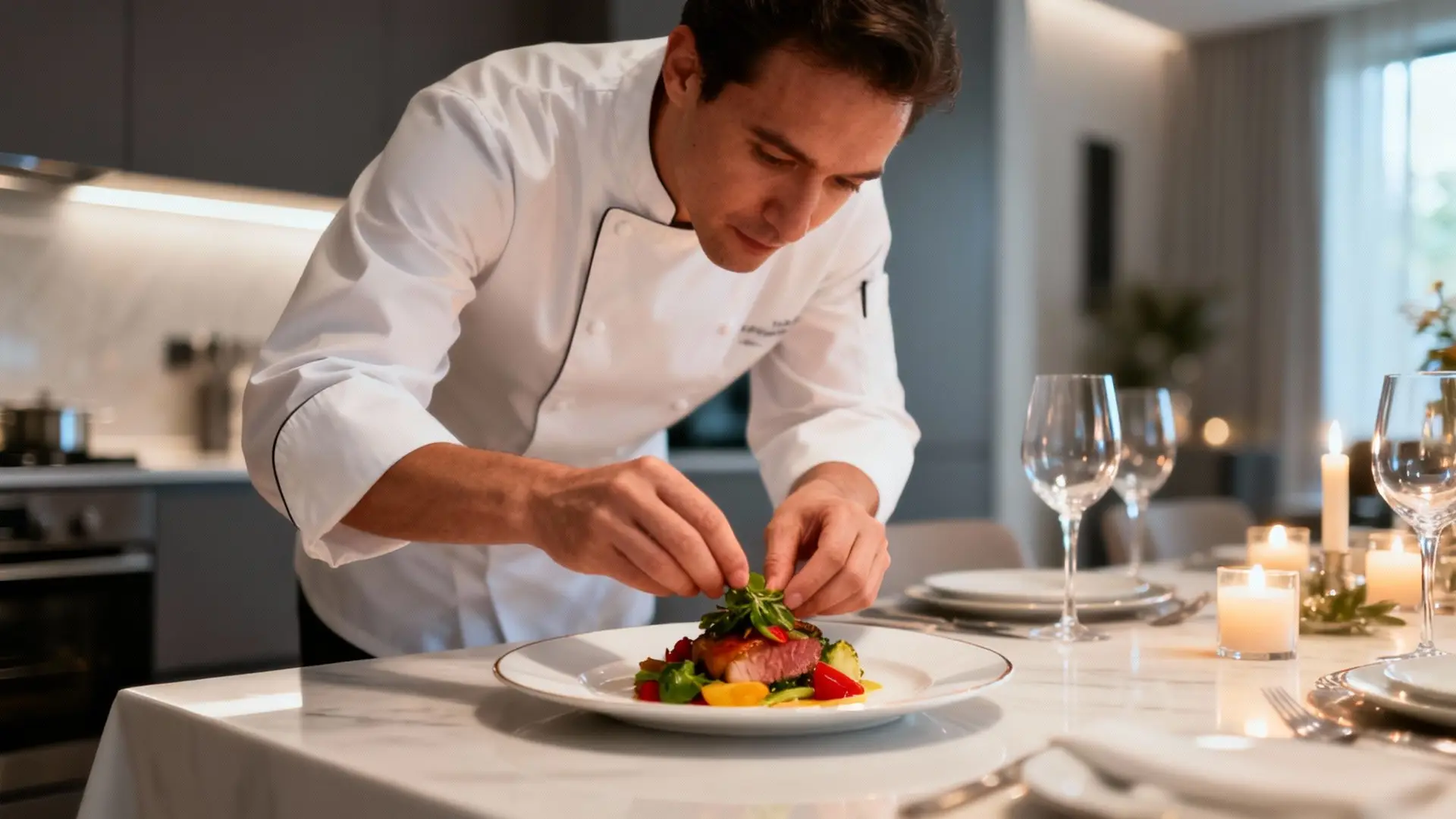
Elevate Your Dinner Party: Hire a Private Chef for you’re next dinner party to wow guests
Thinking about hiring a private chef for your next dinner party? It’s one of the best ways to turn your home into an exclusive restaurant for a night, creating an unforgettable event without you having to lift a finger in the kitchen.
This guide is your complete roadmap. We’ll walk through everything from defining your vision and setting a budget to finding the right pro and managing all the little details. By the end, you’ll have the confidence to host an incredible party that you actually get to enjoy.
Why Hire a Chef for Your Dinner Party?
Let’s be honest, hiring a private chef used to feel like a luxury reserved for the super-rich. Not anymore. It’s become a surprisingly accessible way to host a unique, stress-free gathering. Instead of running back and forth between the kitchen and your guests, you can finally be present, enjoying the conversation and making memories. The whole experience is built around you—a personalized alternative to a restaurant booking or the usual chaos of hosting.
This isn’t just a hunch. The demand for private chef services is growing fast, and dinner parties are the biggest reason why. People want convenience and love the idea of entertaining at home without the work.
The True Value of a Private Chef Experience
The perks go way beyond just not having to cook. When you bring a chef into your home for a dinner party, you’re really investing in a complete culinary event designed just for you.
- Customized Menus: You get to collaborate directly with a professional to create a menu that hits all the right notes for your tastes, features seasonal ingredients, and caters to any dietary needs your guests have.
- Restaurant-Quality Dining at Home: Imagine the quality and creativity of a high-end restaurant, but in the comfort and privacy of your own space. It’s the best of both worlds.
- Complete Service and Cleanup: Most private chefs handle it all—the grocery shopping, the prep, the service, and (the best part) the full kitchen cleanup. You’re left with happy guests and a spotless kitchen.
- An Unforgettable Atmosphere: A chef brings a bit of theater to your home, creating a dynamic and engaging vibe. Of course, the food is the star, but don’t forget the ambiance. Thinking about details like enhancing your private party atmosphere with lighting can really elevate the whole experience.

When you hand over the culinary logistics, you free yourself up to be a true host. The chef worries about the timing, the temperatures, and the presentation, letting you relax and soak in the evening with your friends. It’s the ultimate way to turn a simple meal into a cherished memory. This guide will show you how to make it happen.
Nail Down Your Vision and Set a Realistic Budget
Before you even think about searching for a chef, the single most important thing you can do is get crystal clear on your vision and budget. Trust me, spending a little time on this upfront makes the entire process smoother. It’s the difference between a frustrating, endless search and finding the perfect professional who just gets it.
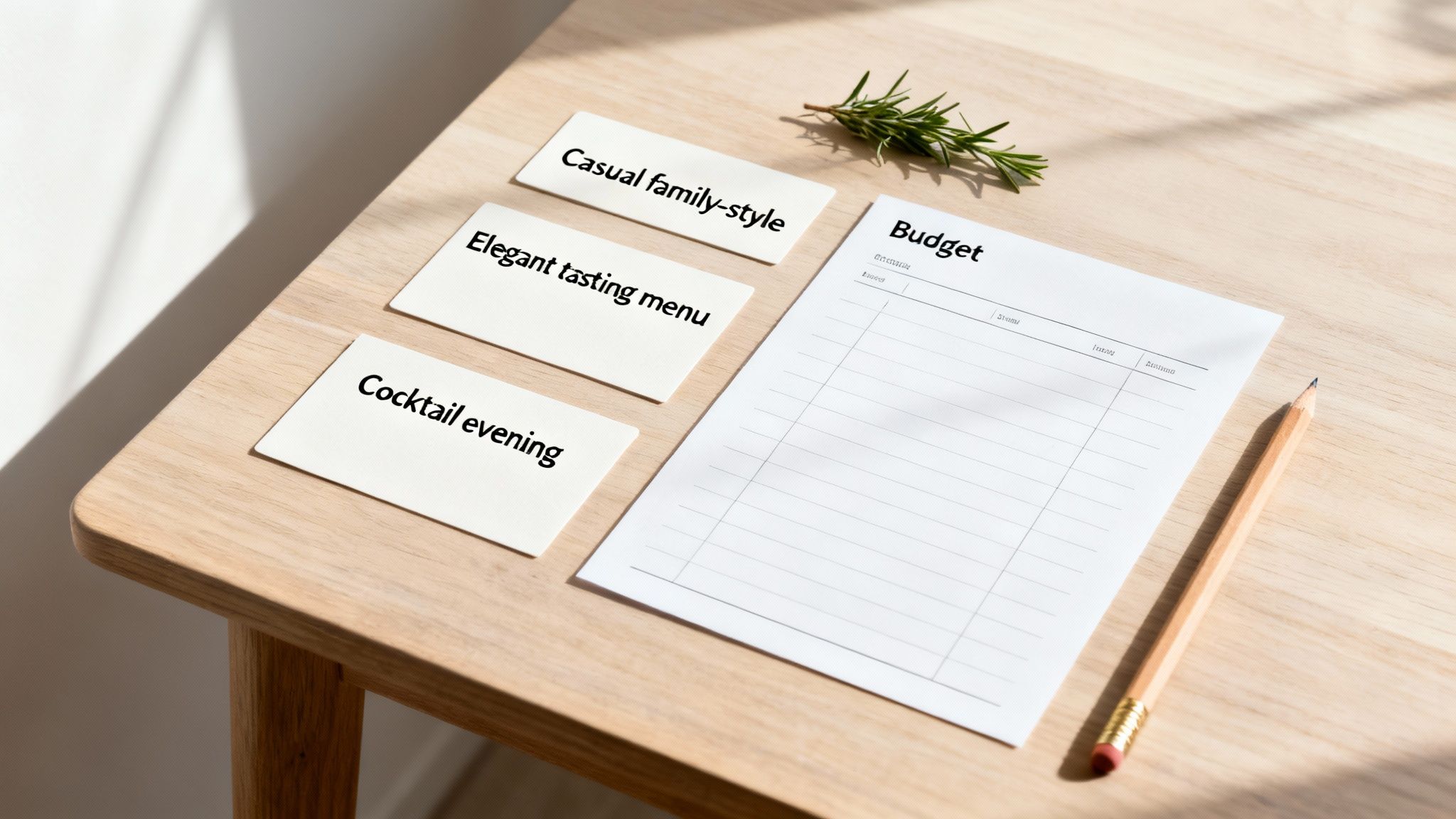
First, close your eyes and picture the event. What’s the vibe? Are we talking a casual, family-style gathering with big platters passed around and lots of lively conversation? Or is this an elegant, multi-course tasting menu that feels like an exclusive restaurant experience in your own home?
The atmosphere you’re aiming for directly shapes everything—the menu, the service style, and, of course, the final price tag. A laid-back birthday might be perfect for gourmet tacos or a rustic Italian feast, while a milestone anniversary could call for a sophisticated six-course meal with expert wine pairings. Nailing this down helps you find chefs who specialize in the exact style you want.
Deconstructing the Costs of a Private Chef
So, how much does it actually cost to hire a chef for a dinner party? It’s not a simple one-size-fits-all number. The total cost is usually a blend of a few key components, and understanding them is crucial for setting a realistic budget.
- Service Fee: This covers the chef’s professional time and talent—everything from menu design and planning to the actual cooking, serving, and cleanup. It might be a flat rate for the event, an hourly charge, or a per-person fee.
- Cost of Groceries: This is almost always a separate line item. The chef buys all the premium, fresh ingredients for your menu, and you reimburse them for the exact cost. This is a good thing—it guarantees top-notch quality with zero hidden markups.
- Additional Staff: If you’re hosting a larger group or want formal table service, your chef will likely need to bring a server or an assistant. You’ll typically cover this at an hourly rate.
- Optional Add-Ons: Want to take things up a notch? Services like sommelier-selected wine pairings, specialty plate and glassware rentals, or even elaborate floral arrangements can be added for an extra cost.
The key thing to remember is that you’re in the driver’s seat. Your choices directly control the final cost. A beautiful two-course meal served family-style will naturally be more budget-friendly than a five-course tasting menu featuring luxury ingredients like truffles and lobster.
Sample Private Chef Pricing Tiers
To give you a clearer picture, here’s a look at what you can generally expect at different price points. This table helps you see how your budget aligns with the kind of experience you can create when you hire a chef for a dinner party.
| Budget Tier | Typical Per-Person Cost | What’s Generally Included | Best For |
|---|---|---|---|
| Entry | $100 – $150 | 2-3 courses, often served family-style. Focus on high-quality, seasonal ingredients. | Casual birthdays, relaxed get-togethers, or trying a private chef for the first time. |
| Mid-Range | $150 – $250 | 3-4 plated courses, more complex dishes, potential for a server included for smaller groups. | Anniversaries, special celebrations, and intimate dinner parties with a touch of elegance. |
| Premium | $250 – $300+ | 5+ course tasting menus, luxury ingredients (e.g., wagyu, truffles), dedicated server, optional wine pairings. | Milestone events, corporate dinners, or creating a truly unforgettable fine-dining experience. |
These are just general guidelines, of course. Prices will vary based on your location, the chef’s experience, and the specifics of your menu. But it’s a great starting point for figuring out what’s possible within your budget.
Setting Your Per-Person Budget
With this cost structure in mind, you can now set a practical budget. The easiest way is to think in per-person terms, just like you would for a restaurant. For most private dinner parties, expect a range from $100 to over $300 per guest. This depends heavily on the menu, the chef’s reputation, your city, and the level of service you want.
For a more detailed look, our guide on what a personal chef costs breaks down how these figures are calculated, helping you land on a number that feels right for your event.
Knowing your ideal spend per person from the get-go is a game-changer. It allows you to communicate clearly with potential chefs and ensures that the proposals you receive are perfectly aligned with your financial comfort zone, right from the first conversation.
Finding and Vetting the Perfect Private Chef
Alright, you’ve got your vision and your budget nailed down. Now for the fun part: finding the culinary artist who will bring your dinner party to life. The world of at-home dining has completely blown up, making it easier than ever to connect with incredible chefs. But with more options comes the need to be a little savvier in your search.
Gone are the days when you had to rely solely on a friend-of-a-friend recommendation to hire a chef for a dinner party. Today, there’s a whole ecosystem of resources out there for every possible style and price point.
Where to Discover Talented Chefs
Your perfect chef is likely just a few clicks away, but knowing where to start your search can save you a ton of time. Different platforms attract different kinds of culinary pros.
- Niche Online Platforms: Websites built specifically to connect you with private chefs are a fantastic starting point. They usually have detailed profiles, sample menus, and—most importantly—real client reviews, making it simple to see who’s available in your area.
- Culinary Agencies: If you’re looking for a more hands-off, curated experience, an agency is a great route. They vet their chefs rigorously and often handle all the logistics, which is perfect if you’re after a high-end, full-service package.
- Social Media: Instagram is a chef’s visual resume. Many use it as a living portfolio to show off their plating, their latest events, and their overall vibe. Try searching hashtags like #AtlantaPrivateChef or #DinnerPartyChef to uncover some hidden gems.
- Personal Referrals: Never underestimate the power of a good old-fashioned recommendation. Ask friends or colleagues who they’ve used. A referral comes with built-in trust and real-world insight you can’t get anywhere else.
And it’s a good time to be looking. The demand for private chefs is booming, especially in the United States, where the market was valued at about $4.57 billion in 2024. It’s expected to jump to $6.17 billion by 2030. This growth is all about people wanting unique, wellness-focused meals at home instead of a standard restaurant night out. You can dive deeper into this growing demand for private chefs at UHNWInsights.com. More chefs mean more choices for you, but it also means you need a solid game plan for vetting them.
Key Questions to Ask Potential Chefs
Once you have a shortlist of chefs who look promising, it’s time to chat. Think of this less like an interrogation and more like a creative brainstorm. You’re trying to find a partner for your event, someone whose craft and personality click with yours.
A great chef isn’t just a cook; they are a partner in creating an experience. The initial conversation should feel collaborative and inspiring. If their communication is clear, professional, and enthusiastic from the start, it’s a strong positive signal.
To get the ball rolling, here are some questions that go beyond just “What do you cook?”
- What’s your signature cooking style or culinary philosophy? This is a great way to hear what they’re passionate about and see if it aligns with the vibe you want.
- Can you share a few sample menus you’ve created for similar events? This is way more insightful than a generic menu list. It shows you their creativity in action for a real event like yours.
- How do you handle dietary restrictions and allergies? Don’t just ask if they can do it. Ask for specific examples of how they’ve managed complex dietary needs before. Their answer will tell you a lot about their experience and attention to detail.
- What’s your process for collaborating on a menu? The goal is to find a chef who wants your input and ideas, not one who just hands you a pre-set menu.
- What exactly is included in your fee, and what costs are separate? Get clear on groceries, staffing, rentals, and gratuity right away. No one likes surprise costs later on.
- Can you walk me through your setup and cleanup process on the day of the party? Understanding their logistics ensures everything runs smoothly. It also helps to know what their day-of looks like—you can read more about what a typical day in the life of a private chef involves to get a better sense of their workflow.
Red Flags to Watch Out For
Just as important as knowing what to look for is knowing what to avoid. Here are a few warning signs that can help you steer clear of a potential headache.
- Vague or Evasive Answers: A pro will have no problem clearly explaining their process, pricing, and experience. If they can’t, that’s a red flag.
- Poor Communication: Are their emails slow or unclear? That’s probably a preview of what working with them will be like.
- No Contract or Unclear Terms: Any legitimate chef will insist on a professional contract that spells out all the services, costs, and policies. If they don’t, walk away.
- Inability to Provide References: A chef with happy clients should have no problem connecting you with a few of them.
- A Mismatched Portfolio: If a chef says they specialize in upscale French cuisine but their Instagram is full of backyard BBQ photos, you should ask why.
Ultimately, trust your gut. The right partnership will feel right from the very first email, setting the stage for a flawless and truly memorable dinner party.
This is where things get really exciting—your dinner party vision starts turning into a delicious reality. You’ve sifted through your options and found a chef whose vibe and portfolio you love. Now for the fun part: creating the menu and locking in the details with a solid contract.
The menu collaboration is hands-down the best part of the process. This isn’t just about picking dishes from a list; it’s a creative partnership. A great chef will want to get inside your head a bit, asking smart questions to understand your tastes, the mood you’re going for, and any little details that will make the night special.
Don’t hold back. Be specific. Are you dreaming of the bright, zesty flavors of the Mediterranean, or are you more into the rich, comforting side of modern American cooking? Tell them about that incredible dish you still think about from your vacation last year. The more you share, the more personal and memorable the menu will be.
Crafting a Custom Menu Together
The best menus are born from great conversation. Your chef will probably send over a first draft based on your initial chat. Think of this as a starting point—a canvas you get to paint on together.
Go through it course by course and give honest feedback. Maybe you’d prefer a lighter appetizer to start or want to feature a specific seasonal ingredient, like spring asparagus or autumn squash. This back-and-forth is not only normal but essential. For instance, if the chef suggests a beef entrée but you know half your guests are pescatarian, now is the time to speak up.
Dietary accommodations are completely non-negotiable. Chefs today are more skilled than ever at handling these requests, thanks to a huge shift in the private dining world toward bespoke experiences. In fact, projections show the UK’s private dining market could hit £873.6 million by 2030, largely because people demand this kind of flexible, personalized service. You can discover more insights about the private dining market growth and see just how much preferences are changing.
Make sure you give your chef a final, crystal-clear list of all allergies (gluten, nuts, dairy, etc.) and preferences (vegan, vegetarian) well ahead of time. A true pro will create alternatives that are just as thoughtful and delicious, so every single guest feels completely taken care of.
Expert Tip: Lean on their expertise! If you’re stuck between two dishes, ask your chef which one they’re more passionate about cooking or what they think flows better with the rest of the meal. Their insight can take the entire experience from great to unforgettable.
Understanding the Private Chef Contract
Once the menu is locked in, it’s time to make it official. A professional contract is your safety net. It protects both you and the chef by laying everything out in black and white, preventing any “he said, she said” confusion down the line. Never, ever agree to hire a chef for a dinner party on a handshake alone.
A detailed contract is the mark of a true professional. It shows they run a legitimate business and are committed to transparency. If a chef seems hesitant or avoids putting things in writing, consider it a giant red flag.
Essential Contract Checklist for Hiring a Chef
A solid contract should be detailed but still easy to read. Before you sign on the dotted line, you need to understand exactly what you’re agreeing to. Here are the non-negotiable clauses that must be in your agreement.
| Contract Clause | Why It’s Important | What to Look For |
|---|---|---|
| Scope of Services | Prevents scope creep and ensures everyone knows their responsibilities. | A clear list of duties: menu planning, grocery shopping, cooking, serving (if included), and full kitchen cleanup. |
| Final Menu & Guest Count | Locks in the food and headcount, which directly impacts your final cost. | The agreed-upon menu and a firm deadline for providing the final number of guests. |
| Payment Schedule | Outlines how and when you’ll pay, so there are no surprises. | A standard 50% deposit to secure the date, with the final balance due date clearly stated (often on the event day). |
| Cancellation Policy | Protects both parties if plans change unexpectedly. | Clear terms for deposit refunds if you cancel, and what happens if the chef has an emergency and has to cancel. |
| Liability & Insurance | Protects you and your home from any potential accidents. | A mention of the chef’s liability insurance. A professional will always be insured. |
Taking the time to review these details ensures that once the contract is signed, you can relax and look forward to the event, knowing all the logistics are handled.
Finalizing the menu is a thrilling step, especially when you’re planning an elaborate meal. If you need some inspiration on what a high-end experience can look like, check out our guide on creating a memorable five-course meal. Carefully reading your contract is what sets the stage for a spectacular, worry-free dinner party.
Prepping for the Party and Coordinating Day-Of Logistics
Once the contract is signed and the menu is set in stone, the heavy lifting is done. Phew. Now, the real fun begins: bringing your dinner party to life. A little thoughtful prep in the weeks and days leading up to the event is the secret sauce to a relaxed, seamless party where you actually get to enjoy yourself.
Successfully hosting an event with a private chef isn’t about doing more work; it’s about smart coordination. By mapping out a few key tasks, you create a smooth runway for your chef to deliver an incredible experience. This way, you won’t be scrambling with last-minute details when you should be greeting your guests with a glass of champagne in hand.
Your Pre-Party Planning Timeline
To keep things running like clockwork, a clear schedule is your best friend. If you’re a planner, you might find an event planning timeline template helpful for organizing all the moving parts. A structured approach removes the guesswork and last-minute panic.
Here’s a simple breakdown of what to focus on as the big day gets closer:
- 1-2 Weeks Before: Time for final confirmations. Lock in your guest list and give your chef the final headcount by the deadline in your contract. This is also the perfect moment to plan your beverage service. Will you be shaking up cocktails? Selecting wines? Make sure you’ve got plenty of non-alcoholic options, too.
- 3-5 Days Before: Your focus should shift to the ambiance. Start thinking about your tablescape—pull out the linens, choose a centerpiece, and decide on place settings. It’s also a great idea to give your kitchen a good tidying up. Clear plenty of counter space and make room in the refrigerator for the chef’s arrival. They’ll thank you for it.
- 1 Day Before: Knock out any final shopping for drinks or decorations. Get your white wines and champagne chilling, and go ahead and set the dining table. Ticking this off your list a day early is a game-changer, freeing you up to focus on yourself and your home on party day.
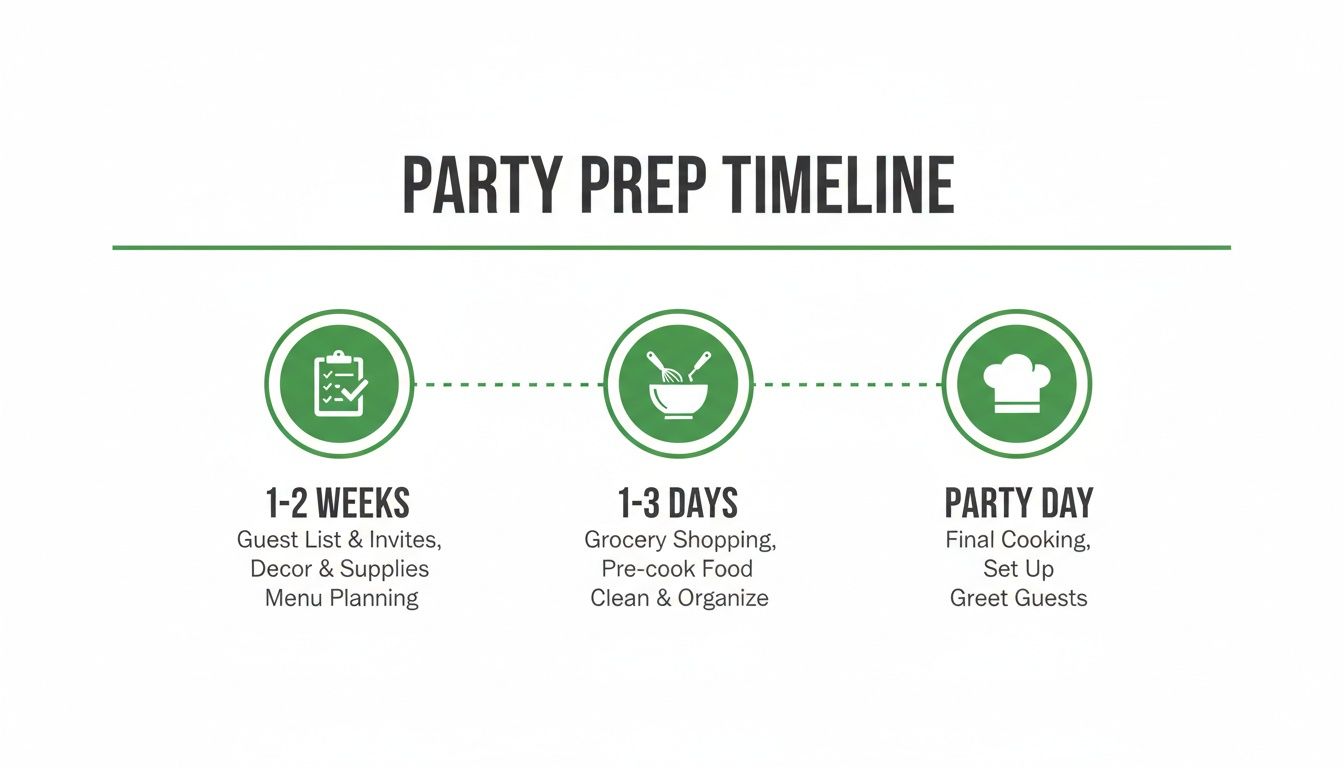
Breaking down your prep into these manageable chunks keeps the overwhelm at bay and ensures every detail gets the attention it deserves.
The Day of the Dinner Party
It’s finally here! Your main job now is to be the host with the most. Depending on the menu’s complexity, your chef will likely arrive 2-4 hours before your guests are due. They’ll roll in with all the groceries and their own specialized equipment, ready to turn your kitchen into their command center.
When your chef arrives, just give them a quick tour. Point out the essentials like power outlets, the trash and recycling bins, and the space you’ve cleared for them. After that quick handover, the best thing you can do is step back and let the magic happen. Trust me, professional chefs are in their element when they have the space to focus.
Your to-do list during this time is blissfully short:
- Get Ready: Use this precious time to prepare yourself and your home without the usual stress of cooking.
- Manage Beverages: Greet your guests with a drink as they arrive and make sure glasses stay full all night.
- Be Present: This is your party! Mingle, spark conversations, and just soak in the incredible aromas wafting from your kitchen.
The single greatest benefit when you hire a chef for a dinner party is the freedom it gives you. Instead of being stuck at the stove, you get to be an active participant in the memories being made. Relax and embrace it.
Winding Down The Evening
As the last incredible course is cleared away, your chef and their team will quietly begin the cleanup. This is, hands down, one of the most beloved perks of the whole experience. They’ll wash every pot, pan, and plate they used, wipe down all the kitchen surfaces, and pack out everything they brought with them.
They’ll leave your kitchen just as clean as they found it—sometimes even cleaner. This lets you linger with your guests over coffee or a final glass of wine, completely free from the dread of a massive cleanup job waiting for you.
A quick note on tipping: unless a service charge is already baked into your contract, it’s customary to offer a gratuity of 15-20% of the total bill (not including grocery costs) for a job well done. It’s a wonderful way to show your appreciation for the skill, care, and hard work that made your event so memorable.
Got Questions? We’ve Got Answers
Hiring a private chef for the first time can feel a little mysterious. What’s the etiquette? How does it all work? Getting these details sorted out early sets the stage for a relaxed, enjoyable collaboration with your chef.
Think of it as a partnership. Clear communication and knowing what to expect from the start is the secret ingredient to a flawless event. Here are the answers to the questions we hear most often.
How Far in Advance Should I Book a Chef?
Timing is everything. For the best selection of chefs and to ensure you get your preferred date, we recommend booking 4-6 weeks in advance. This is especially true if your dinner party is on a popular weekend night or during a busy holiday season when schedules fill up fast.
Booking early isn’t just about snagging your first-choice chef; it gives you both breathing room. It allows for a thoughtful, un-rushed collaboration on the menu, ensures the best ingredients can be sourced, and lets all the little details fall into place seamlessly. If you’re planning a weekday event, you might find some great options with just 2-3 weeks’ notice.
A well-planned event feels effortless to guests, but that seamlessness is built on thoughtful preparation. Giving your chef ample lead time is one of the biggest factors in creating a truly flawless and memorable dining experience.
Is It Customary to Tip a Private Chef?
Yes, it absolutely is. While not always mandatory, a gratuity is a standard and deeply appreciated way to show your thanks for exceptional service, just like you would at a restaurant. A tip of 15-20% of the total bill (usually excluding the cost of groceries) is a common and generous gesture.
Before you do, it’s always a good idea to double-check your contract. Some chefs or catering companies automatically include a service fee or gratuity in the final invoice. If a service charge is already on there, an extra tip isn’t expected—though it’s a wonderful surprise for a team that knocked it out of the park. If it’s not included and you were thrilled with the experience, a tip is the perfect way to acknowledge their skill and hard work.
What if My Kitchen Is Small or Lacks Equipment?
This is probably the number one worry we hear from hosts, but trust us, it’s rarely an issue. Professional chefs are masters of adaptation. They’ve worked in everything from sprawling gourmet kitchens to tiny apartment galleys and know how to make magic happen in any space.
The key is to be upfront from the beginning. During your initial chat, tell the chef about your kitchen’s size, layout, and what appliances you have. Don’t be surprised if they ask for a few photos or a quick video call to scope it out. This lets them plan a menu that works perfectly with the tools and space available.
Plus, every chef comes prepared with their own professional toolkit, which almost always includes:
- A full set of specialized knives for perfect prep work.
- Their favorite pans, pots, or specialty cookware.
- Plating tools like tweezers and squeeze bottles for that restaurant-quality finish.
If a special piece of equipment is needed for a specific dish—say, a sous-vide machine or a stand mixer you don’t own—the chef will bring it up right away. They can almost always handle renting it for you and will simply add the cost to the final proposal.
Who Handles Grocery Shopping and Cleanup?
This is where the true luxury of hiring a private chef shines. Your chef manages all the grocery shopping. This isn’t just a convenience; it’s a crucial part of their craft. It allows them to hand-pick the freshest, highest-quality ingredients from their trusted suppliers. The cost of groceries is billed to you transparently, often with receipts provided, separate from their service fee.
And the best part? After dessert is served and the last coffee is poured, you don’t have to lift a finger. The chef and their team handle all kitchen cleanup. They’ll wash every dish, pot, and pan they used, wipe down all the counters and surfaces, and leave your kitchen looking just as they found it—if not cleaner. You get to stay with your guests and savor the moment, completely free from the dread of a messy kitchen.
Ready to create a dining experience your guests will talk about for years to come? The team at Culinary Collective Atl specializes in crafting bespoke menus for intimate dinner parties and special events. Let us bring our passion for food to your table.