






How to Find a Personal Chef A Guide to At-Home Dining
Finding the perfect chef for your home isn’t about just throwing a dart at a map. It starts with knowing where to look. You’ve got a few solid options: you can dive into specialized online platforms, tap into your network for trusted personal referrals, or let a culinary agency do the heavy lifting by pre-vetting candidates for you. Each path has its own perks for uncovering the right talent for your kitchen.

Why a Personal Chef Is a Game Changer
Let’s be real. Imagine coming home to healthy, gourmet meals cooked right in your kitchen, without you ever touching a pan or scrubbing a dish. This isn’t just a fantasy reserved for celebrities anymore; hiring a personal chef has become a surprisingly practical solution for a lot of people.
The demand is exploding. The global personal chef market hit USD 16.62 billion and is on track to reach USD 24.20 billion by 2030. What’s driving this? It’s busy professionals, dual-income families, and anyone who’s realized their time is worth more than spending hours at the grocery store. If you’re curious, you can explore more data on this growing market to see the trends yourself.
More Than Just Great Food
Bringing a personal chef into your home is about so much more than what ends up on your plate. It’s about buying back your time and ditching the mental gymnastics of meal planning.
Think about the real benefits:
- Truly Custom Nutrition: Every single meal is built around your specific dietary needs, allergies, and health goals. Gluten-free, low-fodmap, vegan, keto—you name it, they’ve got you covered.
- Serious Time Savings: We’re talking hours back in your week. Hours you’re no longer spending planning, shopping, cooking, and cleaning up. That’s more time for your family, your work, or just… you.
- Less Food in the Trash: Chefs are pros at portioning and using every last ingredient. That means way less food waste compared to the typical “what’s-expiring-in-the-fridge” scramble.
- A Culinary Adventure at Home: You get to explore new cuisines and flavors you’d never attempt on your own, turning a regular Tuesday night dinner into something exciting.
A personal chef doesn’t just cook for you; they take over a huge piece of your household’s nutritional well-being. It’s the best of both worlds: restaurant-quality dining with the comfort and personalization you can only get at home.
This guide will walk you through every step of the process, from finding candidates to signing a contract, so you can feel confident you’re making the right choice for your lifestyle.
Discovering Your Ideal Personal Chef
So, you’re ready to find the perfect personal chef. Where do you even begin? Gone are the days of just hoping for a word-of-mouth referral. Now, you’ve got a fantastic menu of options right at your fingertips, letting you browse, compare, and connect with talented chefs from the comfort of your couch. This is where your search gets exciting, turning a vague idea into a curated list of real contenders.

The most direct route for many is through specialized online platforms. Think of sites like Take a Chef or Table at Home as curated directories for culinary pros. You can filter chefs by location, what kind of food they cook, and what they charge. These services are a huge help because they often do some initial vetting and feature transparent client reviews, giving you a quick snapshot of a chef’s style and reliability.
Tapping Into Your Network and Niche Communities
While online platforms are great, don’t underestimate the power of a trusted recommendation. A personal referral is the gold standard—it means someone you know has already vetted the chef and can vouch for their work.
Start by reaching out to your network, but be specific about what you’re looking for.
- Friends and Colleagues: Ask friends or coworkers who love to entertain or share similar dietary needs. They’re often the first to know a great chef.
- Neighborhood Groups: Post in your local Facebook group or neighborhood forum. You might just discover a hidden gem who lives a few blocks away.
- Fitness and Wellness Circles: If you’re part of a gym or wellness community, trainers and nutritionists often have connections to chefs specializing in healthy meal prep.
This approach gives you firsthand insight into a chef’s professionalism and how they operate in a home setting—details you can’t always get from an online profile.
Exploring Agencies and Professional Organizations
For a more hands-off, highly curated search, a culinary agency is an excellent route. These agencies are essentially matchmakers. They take the time to really understand your needs and then present you with a shortlist of pre-screened, qualified chefs. It saves you a ton of time on the front end, though it usually comes with a service fee.
Another fantastic, if less common, source is a professional association. Organizations like the American Personal & Private Chef Association (APPCA) keep directories of certified members who follow a strict code of ethics. This is a solid way to find seasoned professionals. You can also connect with local culinary schools to find talented up-and-comers who are eager to build their client list.
It’s important to know that a “personal chef” and a “private chef” play different roles. A personal chef usually works with several clients, while a private chef is often dedicated to just one household. To figure out which service is right for you, learn more about the key differences between a private chef vs a personal chef. Getting this clear will make your search much more effective.
Alright, you’ve got a list of potential chefs. Now the real fun begins.
Moving from a long list to a shortlist is where you get to play detective. You’re not just hiring someone to cook; you’re inviting a professional into your home and trusting them with your family’s health and well-being. This step is about digging deeper than a nice profile picture and a generic list of cuisines.
First things first, dive into their online presence. A slick website is great, but the substance is in their professional portfolio and, most importantly, their sample menus. Look for high-quality photos that show off their plating style, sure, but the menus are where the story is. Do they show the kind of range and expertise you actually need?
Decode Their Culinary Style
A chef who’s a rockstar at rustic, family-style Italian feasts might not be the right fit if what you really need is meticulously crafted, low-carb meal prep for the week. Their menus are a direct window into their culinary soul.
Here’s what to look for:
- Ingredient Sourcing: Do they talk about using local, seasonal, or organic ingredients? In Atlanta, that could mean name-dropping places like the Peachtree Road Farmers Market. This signals a real commitment to quality, not just buzzwords.
- Dietary Adaptability: Can they handle specific dietary needs beyond just “vegetarian”? Look for menus that call out gluten-free, dairy-free, or paleo options. It shows they’ve got the know-how.
- Creativity and Range: Do all the menus look kind of the same, or do they showcase a variety of techniques and global flavors? This tells you a lot about their passion and versatility.
This deep dive helps you figure out if their culinary philosophy clicks with your lifestyle. If you’re after a chef for weekly keto meals, you need to see proof they can do that—not just gorgeous photos of carb-heavy pasta.
Read Between the Lines of Reviews
Client testimonials are gold, but you have to know how to read them. Forget the star ratings for a second and look for patterns in the actual comments. Consistent praise for punctuality, cleanliness, and clear communication is just as crucial as rave reviews about the food itself.
A glowing review that says, “The food was incredible!” is good. But a review that says, “Chef Sarah was a joy to have in our home—she was organized, left the kitchen spotless, and her chicken paella was the best we’ve ever had,” is gold.
Look for testimonials that echo your specific needs. Hiring for a dinner party? Reviews from other event hosts are what you want. Need weekly meal prep? Feedback from long-term, regular clients is far more relevant. Vague praise is nice, but detailed stories about professionalism and reliability are what you should be hunting for.
Now, keep an eye out for potential red flags. Are there weird gaps in their employment history on LinkedIn? Are credentials, like a ServSafe certification, hard to find or unverified? Even something as simple as poor grammar or super slow responses to your initial emails can be an early warning sign of unprofessionalism.
By doing this homework now, you can confidently whittle your list down to two or three top contenders. That sets you up perfectly for the next step: a successful interview.
The Interview and Trial Meal Process
You’ve sifted through portfolios, read the glowing testimonials, and have a solid shortlist of chefs who look great on paper. Now for the most important part of the journey: the interview and the paid trial meal. This is where you find out if the chef who shines online can bring that same magic into your home kitchen.
This isn’t just a one-way street; a great chef is interviewing you, too. They’re looking to see if your household, your kitchen, and your communication style are a good match for their services. Think of it as the first step in a collaborative partnership.
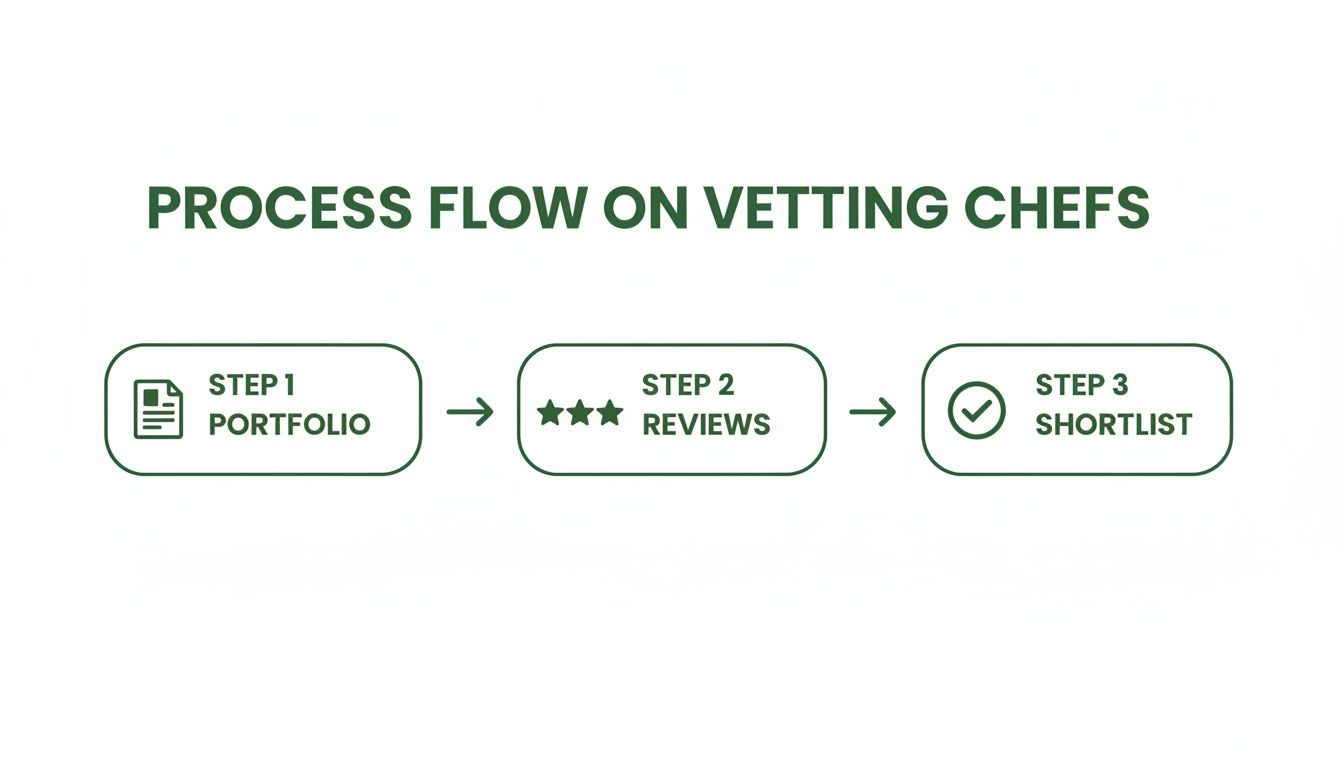
By following a structured vetting process, you ensure that by the time you’re sitting down for a chat, you’re only talking to truly qualified, professional candidates.
Asking the Right Questions
Your interview needs to go deeper than, “So, what do you like to cook?” You’re hiring a professional to work in your private space, so your questions should dig into their culinary philosophy, logistical savvy, and professional standards.
To get the full picture, I always recommend preparing a list of questions that cover a few key areas.
Here’s a quick guide to make sure you’re asking questions that truly matter. I’ve put together a table of essential questions to help you assess each candidate thoroughly and find the perfect fit for your family.
Essential Interview Questions for Your Potential Chef
| Question Category | Sample Question to Ask | What to Listen For |
|---|---|---|
| Culinary Expertise | “Tell me about your experience with gluten-free and low-carb meal planning.” | Confidence with your specific dietary needs, creativity in menu development, and knowledge of ingredient swaps. |
| Sourcing & Local Knowledge | “Where in Atlanta do you typically source your fresh produce and proteins?” | Familiarity with local markets (like Dekalb Farmers Market or local CSAs), relationships with suppliers, and a commitment to quality. |
| Logistics & Workflow | “What does your typical cook day look like when you’re in a client’s home?” | A clear, organized process. They should mention prep, cooking, labeling, storage, and—most importantly—cleanup. |
| Communication & Flexibility | “How much notice do you usually need for menu changes or a cancellation?” | A professional and reasonable policy. This shows they respect both your time and their own schedule. |
| Safety & Professionalism | “Do you carry liability insurance, and are you ServSafe certified?” | A confident “yes” to both. This is non-negotiable and protects you and them. |
| Problem-Solving | “What would you do if a key ingredient for tonight’s meal wasn’t available at the store?” | A calm, solutions-oriented mindset. A great chef will have backup plans and be able to pivot without stress. |
These questions aren’t just a checklist; they open the door to a real conversation about how this partnership will work day-to-day. A professional chef will welcome these questions and have thoughtful answers ready.
During this conversation, it’s also crucial to touch on their knowledge of food safety sanitation guidelines. You want someone who treats your kitchen with the same level of care and professionalism as a commercial one.
This is especially important now, as more families seek out chefs for specialized diets. The market for personal chefs is seeing a 5.0% annual growth rate through 2030, driven largely by demand for keto, vegan, and allergen-free meals. Your interview is the perfect time to confirm their skills align with your family’s health goals.
The Decisive Trial Meal
Talk is one thing, but the proof is in the pudding—literally. The paid trial meal is your single best opportunity to see a chef in action. This isn’t just about tasting the food; it’s about observing their professionalism, organization, and how they operate in your space.
Before they arrive, make sure everything is crystal clear. Agree on the menu, the grocery budget, and the total fee for their time and expertise. This is a professional audition, and compensating them fairly is standard industry practice.
While they’re cooking, be observant but give them space to work. Here’s what to watch for:
- Cleanliness and Organization: A true professional cleans as they go. Does their workspace stay tidy, or does it look like a culinary tornado hit your kitchen?
- Professionalism and Technique: How do they handle your equipment? Are they respectful of your home? Good communication throughout the process is a great sign.
- The Final Product: This one’s simple. Do you love the food? Does it live up to what you discussed?
A successful trial is about more than a delicious meal. It’s about feeling comfortable and confident with a professional working in your home. The right chef brings a sense of calm and competence to your kitchen.
After you’ve eaten, be prepared to give direct and honest feedback. A great chef will want to know what you loved and what you might want to be tweaked next time. This final conversation is often what solidifies the decision, setting the stage for a fantastic working relationship.
Building this foundation of clear communication from day one is key. To get it right from the start, you can learn more about client communication best practices and ensure your partnership is smooth and successful.
Alright, you’ve found a chef you click with, the trial meal was a hit, and now you’re ready to get down to business. This is the crucial part where you shift from tasting fantastic food to building a solid professional relationship. Nailing down the costs, contract, and day-to-day logistics is what ensures a smooth, headache-free experience for both of you.
Personal chef pricing isn’t a one-size-fits-all deal. It’s structured to fit the kind of service you’re looking for, and you’ll run into a few common models.
Some chefs charge a straight service fee for their time and culinary skills, with the cost of groceries billed on top. This is really common for weekly meal prep, where your grocery bill can fluctuate based on the menu.
Others prefer an all-inclusive price per person, especially for dinner parties or one-off events. This makes budgeting a breeze because you know the total cost right from the start. A less common model is a simple hourly rate, which might come into play for smaller, very specific tasks.
Understanding the Price Tag
So, what should you actually expect to shell out? The final cost hinges on a few key things: the chef’s experience level, your location (big cities like Atlanta naturally command higher prices), and how complex your menu is.
- Weekly Meal Prep: For regular meal services, you can expect service fees to run anywhere from $400 to over $700 per cook day, not including the cost of groceries. This fee is for everything—menu planning, shopping, cooking, packing, and cleanup.
- Dinner Parties: For a special occasion, the price is usually per person and can range from $100 to $250+. This typically covers multiple courses and a more involved, fine-dining style of service.
Think of your service agreement as the roadmap for your relationship with your chef. It should clearly spell out everything from payment terms and cancellation rules to kitchen access and confidentiality. Getting this right leaves no room for misunderstandings down the line.
For a much deeper dive into what goes into the final price, check out our complete guide on what a personal chef costs in Atlanta. It’ll help you get your budget in order before you sign on the dotted line.
The Service Agreement and Daily Logistics
A formal contract or service agreement is an absolute must. It’s not just a formality; it protects you and the chef by setting crystal-clear expectations from day one.
This document should lock in the payment schedule—a common arrangement is 50% upfront to book the date and the rest when the service is complete. It also needs a clear cancellation policy that details how much notice is required and if any fees apply.
Finally, you need to talk through the everyday logistics. How will your chef get into your home if you’re at work? How will you handle grocery payments—will they use a company card, or will you reimburse them based on receipts? Ironing out these details is the secret to a successful and long-lasting partnership.
Interestingly, many of these details are universal in the culinary world. You can find some great insights into the logistical aspects of running a curated dining service like a supper club, which really drives home just how important this behind-the-scenes planning is.
Got Questions? Let’s Talk About Hiring a Personal Chef
As you get closer to bringing a personal chef into your home, a few final questions usually pop up. It’s smart to get these sorted out now so you can move forward feeling completely comfortable and excited. Here are the straight answers to the things people ask us most often.
How Much Does a Personal Chef Typically Cost?
This is always the big question, and honestly, the answer is: it depends. The final price tag is shaped by your location (Atlanta costs are different from other cities), the chef’s level of experience, and exactly what you need them to do.
For something like weekly meal prep, a good ballpark for the chef’s service fee is anywhere from $300 to over $600. Keep in mind, groceries are a separate line item. That fee covers their time and talent for the whole process—menu planning, shopping, cooking, packing it all up, and leaving your kitchen spotless.
If you’re planning a special dinner party, the pricing model usually flips to a per-person rate. This can swing from $75 to upwards of $200 per guest, depending on how fancy you want to get with the menu and the number of courses.
Pro Tip: A true professional will always give you a detailed quote that clearly separates their service fee from the estimated grocery costs. This kind of transparency is a huge green flag and saves you from any sticker shock later on.
What’s the Difference Between a Personal and Private Chef?
People often use these terms interchangeably, but they actually mean two different things. Nailing down the distinction is crucial to finding the right fit for your lifestyle.
- A personal chef is who most people are looking for. They work with several different clients, maybe cooking for your family on Mondays and another on Wednesdays. They’re the experts in weekly meal prep or one-off events like dinner parties.
- A private chef works exclusively for one client—a single person or family—often as a full-time, salaried employee. They are the household’s dedicated culinary manager for everything from daily meals to elaborate entertaining.
The journey for how to find a personal chef is usually pretty straightforward. Hiring a private chef, on the other hand, is a much bigger undertaking, often requiring the help of specialized placement agencies.
Do I Need a Professional-Grade Kitchen?
Not at all! One of the marks of a great chef is their ability to work their magic in just about any kitchen. Most are masters of adapting to a standard home setup.
As long as your kitchen is clean and functional—with a working stove, oven, refrigerator, and a decent amount of counter space—they can create incredible food. Chefs almost always bring their own must-have tools, like their personal knife roll and any specialty gadgets. It’s always a good idea to chat about your kitchen during the interview just so everyone is on the same page.
Is the Chef Responsible for Kitchen Cleanup?
A resounding yes. Leaving your kitchen sparkling clean isn’t just a courtesy; it’s a fundamental part of the service.
A professional chef will handle everything—washing the pots, pans, and dishes they used, wiping down every counter, and taking out the trash. Your kitchen should look just as clean, if not cleaner, than when they arrived. Make sure this is spelled out clearly in your service agreement for a truly seamless experience.
Ready to find the perfect culinary expert to elevate your at-home dining in Atlanta? Culinary Collective Atl specializes in connecting you with professional chefs who create personalized, unforgettable meal experiences. Start your culinary journey with us today!