How to Plan Dinner Party: Stress-Free Hosting
Throwing a dinner party is about so much more than just the food on the plate. It’s about creating a feeling, an experience. It all begins with one simple question: What kind of evening do I want to create? Once you answer that, every other choice—from who you invite to the theme that ties it all together—starts to fall into place.
Laying the Groundwork for a Memorable Evening
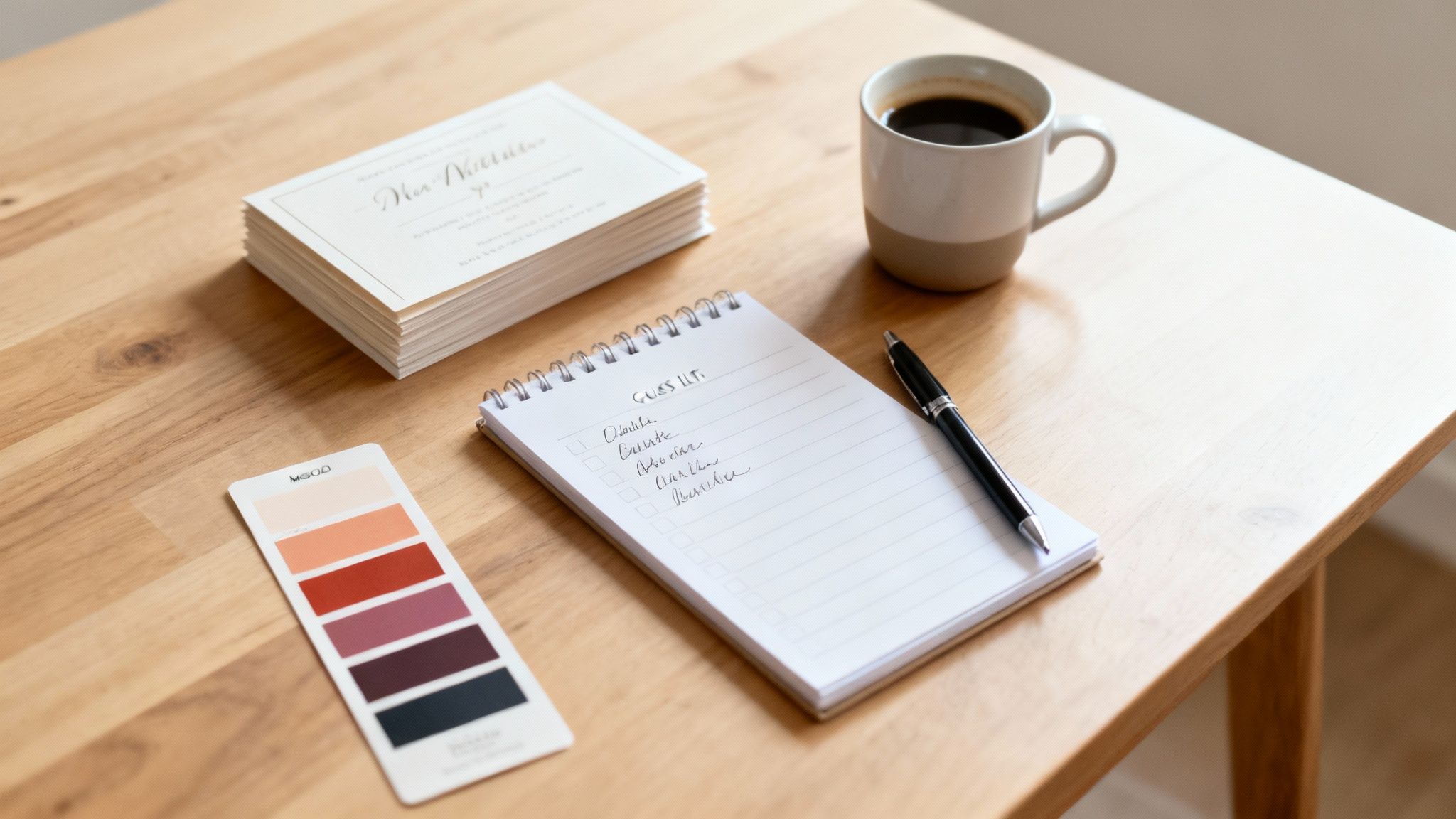
Before you even glance at a recipe, the real work of planning a great dinner party happens with a pen and paper. This is your blueprint. It’s where you map out the who, what, and why of your get-together, making sure every detail feels intentional. Nailing this initial phase is what elevates a simple meal into an unforgettable night.
Your first decision is all about the vibe. Are you picturing a relaxed, shoes-off kind of night with your closest friends? Or is this a more polished, celebratory affair for a milestone? This one answer will guide everything that comes next, from your menu and decor to the playlist you put on.
Building Your Perfect Guest List
The guest list is truly the heart of your party. A fantastic one isn’t about filling every chair; it’s about curating a group of people who will spark off each other and genuinely have a good time. Think about a number that feels comfortable for your space. A full room can be wonderfully energetic, but a cramped one just feels stressful.
Consider the different personalities you’re bringing to the table. I’ve found that a great mix often includes:
- The Storyteller: That person who can naturally get a conversation rolling and pull others into it.
- The Good Listener: Someone who makes others feel seen and heard.
- The Connector: The person who knows a few different people in the room and can act as a social bridge.
Don’t shy away from mixing different friend groups! Some of the best dinner party magic happens when new connections are sparked around your table. If you can, aim for an even number—it tends to encourage one big conversation instead of pairs breaking off on their own.
Host’s Tip: When you send out invites, whether they’re digital or paper, make sure to include a clear RSVP-by date. A deadline about a week before the party gives you plenty of time to finalize your shopping list and seating plan without any last-minute panic.
Choosing a Theme That Feels Authentic
The word “theme” can sound a little intimidating, maybe bringing to mind over-the-top costumes or decor. But really, a theme can be as simple as a feeling (“cozy night in”) or a type of food (“taco night”). The whole point is to create a cohesive experience that feels like you.
A good theme acts as a creative filter for all your other decisions. Instead of just a generic “dinner party,” you can get more specific and fun with it:
- Cuisine-Focused: Think “Tuscan Farmhouse Feast” or a “Spicy Taco Tuesday.”
- Vibe-Oriented: Something like a “Cozy Autumn Harvest Night” or a “Summer Solstice Garden Party.”
- Activity-Based: Maybe “Game Night Grub” or “Wine Tasting and Tapas.”
When you pick a concept you’re actually excited about, the planning becomes fun, not a chore, and the whole event gets infused with your personality. If you’re planning something much more formal, a resource like this Gala Dinner Planning Checklist can offer some helpful structure.
Ultimately, this whole foundation-laying stage is about setting a clear intention. Knowing the atmosphere you want to create, the people you want to share it with, and the central idea holding it all together gives you a solid base for all the delicious decisions to come.
Of course, if managing all these moving parts feels like too much, remember you can always simplify. Exploring the option of hiring a private chef for a memorable experience can take all the pressure off, letting you focus on just enjoying your friends.
Designing a Delicious and Manageable Menu
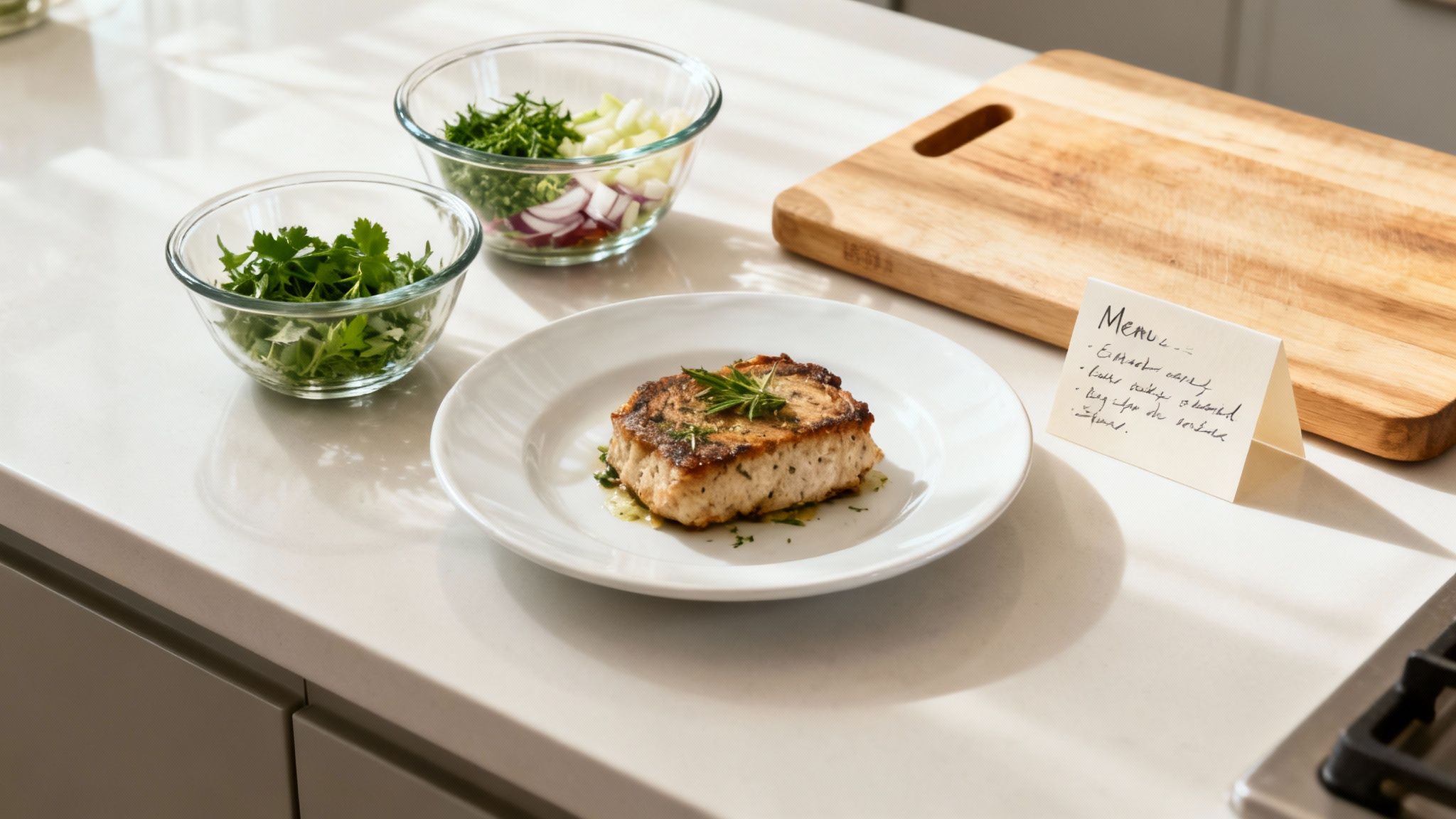
The menu is the heart of any dinner party, but it should never be the source of your stress. I’ve learned that the secret to a great party is crafting a meal that’s impressive yet totally practical. The real goal is to spend more time with your guests than with your stove, and that balance is what turns a good dinner into a fantastic one for everyone—including you.
So, how do you pull that off? The trick is to lean into dishes you can prep—or even fully cook—ahead of time. A main course that needs constant, last-minute attention, like pan-seared scallops, is a recipe for anxiety. Trust me.
Instead, think about dishes that actually get better with time.
- A slow-braised short rib that can simmer away for hours.
- A rich lasagna or baked ziti assembled the day before.
- A flavorful curry that lets its spices deepen overnight.
This approach frees you up to handle the final touches—like dressing a salad or warming some bread—right before you sit down to eat.
Address Dietary Needs Early
There’s nothing more stressful for a host than finding out a guest has a severe nut allergy while you’re sprinkling almonds over the salad. Asking about dietary restrictions isn’t just polite; it’s a non-negotiable part of planning.
When you send out your invites, just add a simple, friendly question: “Please let me know if you have any dietary restrictions or allergies I should be aware of!” This simple step avoids any awkwardness and shows your guests you genuinely care.
Building a Balanced and Cohesive Meal
A great menu tells a story, with each course flowing into the next. You don’t need a five-course meal to impress anyone. A simple structure—appetizer, main, and dessert—works beautifully. I always aim for balance in flavors and textures. If your main course is heavy and rich, start with something lighter.
Host’s Insight: My guiding principle is “Do one thing well.” Instead of juggling four complicated side dishes, focus on making one or two absolutely fantastic ones. A tray of perfectly roasted vegetables and a bowl of creamy mashed potatoes will always win over a spread of mediocre, rushed options.
Let’s walk through a practical example. Say you’re going for a rustic Italian theme:
- Appetizer: A simple but elegant bruschetta bar. You can toast the bread ahead of time and just set out bowls of toppings like chopped tomatoes with basil, olive tapenade, and a white bean dip. It’s interactive and requires zero last-minute cooking. For more great ideas, exploring a https://theculinarycollectiveatl.com/catering-appetizer-menu/ can offer some fantastic inspiration.
- Main: A make-ahead bolognese sauce served over fresh pasta. I love making the sauce two days in advance; then all you have to do is boil the pasta right before dinner.
- Side: A simple arugula salad with a lemon vinaigrette and shaved Parmesan.
- Dessert: A classic tiramisu, which absolutely must be made the day before to let the flavors meld.
This entire meal is designed for minimal day-of effort, yet it feels incredibly special and thought-out.
Don’t Forget the Drinks
Beverages are just as crucial as the food. You don’t need a full bar, but offering a few thoughtful options goes a long way. A good rule of thumb is to have one red wine, one white wine, a beer option, and plenty of water on hand.
To make the evening feel even more special, consider mixing a big pitcher of a simple signature cocktail beforehand. It’s also important to have a delicious non-alcoholic choice beyond just soda—a sparkling cider with a sprig of rosemary or a pitcher of fruit-infused water feels just as considered. If you want to dive deeper, there are some great expert tips on pairing food with beverages that can really elevate the whole experience.
The growing trend of dining at home reflects a real desire for connection. Recent data shows that 46% of consumers globally are eating at home more often, prioritizing value, health, and quality. This shift just proves that a well-planned, thoughtful home-cooked meal is more appreciated than ever.
Creating an Atmosphere That Feels Like a Welcome Hug
A truly great dinner party is about more than just amazing food—it’s an experience that engages all the senses. The atmosphere you create is your secret weapon, the invisible thread that ties the food, the guests, and the conversation together into something memorable.
We’re moving beyond just tidying up; we’re diving into the details that make your home feel genuinely warm and welcoming from the moment someone steps inside.
More than ever, guests are craving real connection. Recent trends show that dinner parties are making a huge comeback, driven by a desire for intimacy and inclusion over formality. A remarkable 67% of luxury hotel guests report that emotional connection is a key part of their dining satisfaction, showing a clear shift toward experiences that foster social bonds. You can discover more insights about this trend toward emotional dining experiences on all4chefs.com. The good news? Your living room can create that exact same feeling of belonging.
The best part is that crafting a memorable atmosphere has very little to do with how much you spend and everything to do with thoughtfulness.
Master the Mood with Lighting
Nothing kills a cozy vibe faster than harsh, overhead lighting. Seriously, if you only do one thing to set the mood, make it this. The goal is to create soft pools of warm light that encourage relaxation and genuine conversation.
Think in layers. Instead of just flipping on that main ceiling light, try using a combination of different sources:
- Lamps: Switch on the floor and table lamps scattered around the room. This creates a warm, golden glow that feels instantly inviting.
- Candles: A few strategically placed candles on the dining table, mantel, or a side table add a flickering, dynamic light that is instantly calming.
- Dimmers: If you have them, now’s their time to shine! Lowering the intensity of your main lights can make a massive difference all on its own.
The Art of the Evolving Playlist
Music is the unspoken narrator of your evening. A well-crafted playlist can guide the energy of the party, starting mellow and building naturally as the night goes on. A silent room can feel awkward, but music that’s too loud or jarring forces guests to shout over it—a total vibe killer.
I like to think about the party’s soundtrack in three distinct phases:
- Arrivals (First Hour): Start with something relaxed and mostly instrumental, like soft jazz, lo-fi beats, or an acoustic-folk mix. This creates a welcoming backdrop for those first greetings and conversations without being distracting.
- Dinner: Keep the music present but not overpowering. Stick with familiar, feel-good tracks that won’t pull focus from the meal. Think classic soul, indie pop, or even a solid ’90s soft rock playlist.
- Post-Dinner: As people linger over dessert or move away from the table, you can slowly increase the tempo. This is the time for more upbeat tunes that might even inspire a little head-nodding or a spontaneous kitchen dance party.
Pro Tip: Build your playlist in advance on a service like Spotify or Apple Music and set it to shuffle. The most important step? Test the volume from different spots in the room before anyone arrives to ensure it’s just right.
Setting a Beautiful and Simple Table
An inviting table doesn’t require expensive china or elaborate, towering centerpieces. It’s about creating a space that feels intentional and cared for. You can achieve a stunning look using items you likely already have.
Start with the basics: clean plates, polished silverware, and simple glassware. A tablecloth or even a simple runner can instantly elevate the look, but a beautiful bare wood table works just as well.
From there, it’s all about adding a few personal touches.
Instead of a fussy floral arrangement, try a few small bud vases with single stems or a scattering of eucalyptus branches down the center of the table. A handful of tea lights in small glass holders adds sparkle and warmth. For outdoor gatherings, thoughtful touches are absolutely key to creating a magical setting. You can get some great ideas by checking out our guide on al fresco entertaining and outdoor dining tips.
Remember, the goal is to make guests feel special, not to create a museum-perfect display. A table set with care signals to your friends that you’re happy they are there and that you’ve created this space just for them.
Creating a welcoming atmosphere doesn’t have to be complicated. The little things—the right light, the perfect song, a thoughtfully set table—are what transform a simple meal into a lasting memory. Here’s a quick checklist to help you pull it all together without the stress.
Your Quick Ambiance Checklist
Use this guide to cover the essential elements for creating the perfect party atmosphere without the stress.
| Element | Goal | Simple Idea | Elevated Idea |
|---|---|---|---|
| Lighting | Create a warm, inviting glow. | Turn off overheads; use lamps and candles. | Install dimmer switches for full control. |
| Music | Set the mood and fill awkward silences. | A pre-made Spotify “Dinner Party” playlist. | A custom, three-part playlist for each phase. |
| Scent | Make the first impression inviting. | Open windows for fresh air an hour before. | Simmer a pot of water with citrus peels and cinnamon. |
| Table Setting | Make guests feel cared for. | Clean plates, silverware, and cloth napkins. | Add a simple runner and a few bud vases. |
| Comfort | Encourage guests to relax and stay awhile. | Have extra coasters available. | Drape a soft throw blanket over a chair or two. |
Ultimately, these details are your way of telling your guests, “I’m so glad you’re here.” When people feel comfortable and cared for, the conversation flows, the food tastes better, and the night becomes something truly special.
Your Stress-Free Timeline from Prep to Party
The secret to a truly great, low-stress dinner party isn’t some magical cooking skill—it’s having a game plan. When you know exactly what to shop for, what to prep, and when to clean, the whole process feels less like a chaotic sprint and more like a well-rehearsed dance.
I like to work backward from the moment guests arrive. This reverse-engineered timeline helps break down what feels like a massive project into manageable, bite-sized tasks. You’ll be amazed at how much you can get done ahead of time, leaving you free to actually enjoy your own party.
Two Weeks Before the Party
With the party still a couple of weeks out, this is the time for big-picture planning. First things first: lock in that guest count. Send out a final reminder and get firm RSVPs so you know exactly how many people you’re cooking for.
This is also the perfect time for your first, and most strategic, shopping trip. Focus on all the non-perishable pantry staples you’ll need. Spreading out the cost and the effort makes a world of difference.
- Stock up on things like canned goods, dried pasta, and any special spices you’ll need for your main dishes.
- Grab your baking ingredients now—think flour, sugar, and vanilla extract.
- If you need to rent extra chairs or special occasion tableware, now is the time to reserve it.
- Cross-reference your menu with your pantry. Are you sure you have that smoked paprika?
I keep a running list in a notes app on my phone. It’s a lifesaver. Starting this early means you’ll avoid that frantic, last-minute dash to the store for a single forgotten ingredient.
One Week Before the Party
Now we’re getting into the fresh stuff. Make a trip to the market for your produce, meats, and dairy. You’ll also want to start doing some light cleaning and prep work that will save you a ton of time later.
Give your main serving dishes a good wash, especially if they’ve been sitting in a cabinet for a while. It’s also a good idea to confirm any last-minute dietary needs with your guests to avoid any surprises on the night.
“Your fridge is your secret weapon.”
This is when your refrigerator becomes your best friend. You can get a surprising amount of prep done now. Marinate your proteins, make any sauces that benefit from a few days of their flavors melding together, and get your mise en place ready by trimming and chopping vegetables into labeled, airtight containers.
Two Days Before the Party
The heavy lifting for your cooking begins now. Focus on any major components that can be fully cooked ahead of time. Think bases for soups or stews, or assembling entire dishes like casseroles and lasagnas that can just hang out in the fridge until they’re ready for the oven.
This is also prime time for dessert prep. Most desserts have components that can be made well in advance.
- Roll cookie dough into logs and freeze them. You can just slice and bake on the day of.
- Bake off your pie crust and wrap it tightly.
- Blend and chill the base for a sorbet or ice cream.
Take a moment to review your cooking schedule. The last thing you want is to realize you need the oven at two different temperatures for two different dishes at the same time. A quick once-over now can prevent a major headache later.
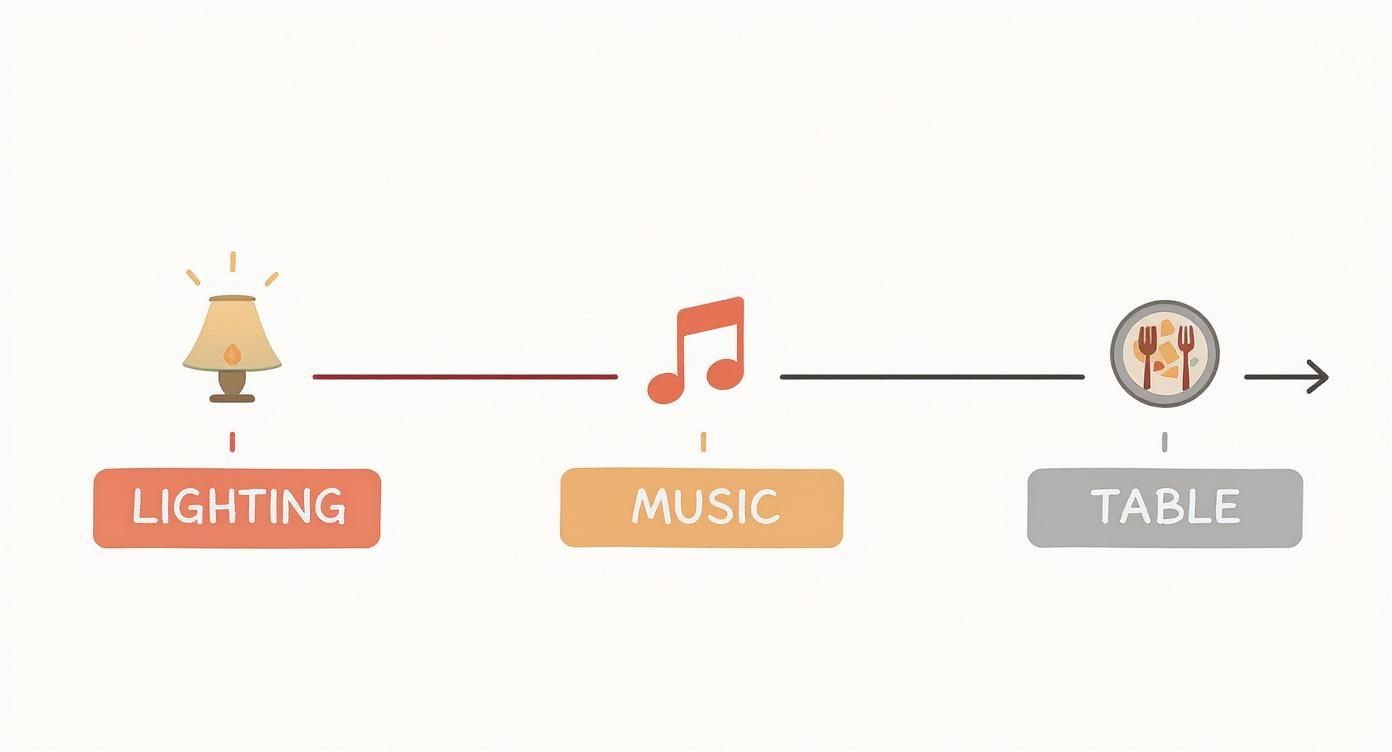
This is also a great time to tackle the ambiance. As the infographic shows, things like lighting, music, and the table setup are what create that warm, welcoming vibe. Getting these elements sorted now means you’re not scrambling to untangle fairy lights when you should be searing scallops.
One Day Before the Party
The day before is all about setup and finishing touches. Lay out your linens, platters, and place settings. This is your final chance to spot anything you might be missing, like a serving spoon or enough wine glasses.
Go ahead and cook any side dishes or sauces that only need a quick reheat. Set up your coffee maker or tea station, fill a few water pitchers, and chill your wines.
I also like to prep a simple welcome snack, like a bowl of olives or some spiced nuts, and arrange it near the bar area for easy self-service grazing.
- Prep any garnishes you’ll need, like lemon wedges or chopped fresh herbs.
- Chill your white wine and rosé, and have any beer ready to go into an ice bucket.
- Clearly label any containers in the fridge so you’re not guessing what’s what tomorrow.
Finally, test your playlist. Make sure the volume is set to be a subtle backdrop for conversation, not the main event.
The Day of the Party
It’s showtime! Start by giving your kitchen one final cleanup. Clear off your counters so you have plenty of space for plating. Begin reheating your make-ahead dishes, keeping them covered to stay warm.
The last-minute tasks should be just that: last minute. Things like glazing vegetables or tossing and dressing a salad should happen right before you serve them to keep everything crisp and fresh.
About 30 minutes before guests are due to arrive, light your candles and turn on your lamps to create that cozy glow.
Your final table touches:
- Fold your napkins.
- Add a simple centerpiece—a few sprigs of greenery is often all you need.
- Fill water glasses and get ice into the ice bucket.
Keep a tray of clean plates nearby for easy access.
Pro tip from a private chef:
“Timing is everything. Keep hot foods at 140°F or above and cold items under 40°F to ensure safety and taste.”
Most importantly, take a deep breath and pour yourself a drink. You’ve done the work, you’ve followed the plan, and now you’re ready for a fantastic, stress-free dinner party.
Enjoy the evening you so carefully created. When you master the timeline, you get to spend less time worrying and more time connecting with the people you love. That’s what it’s all about.
Adding Thoughtful Details That Make an Impact
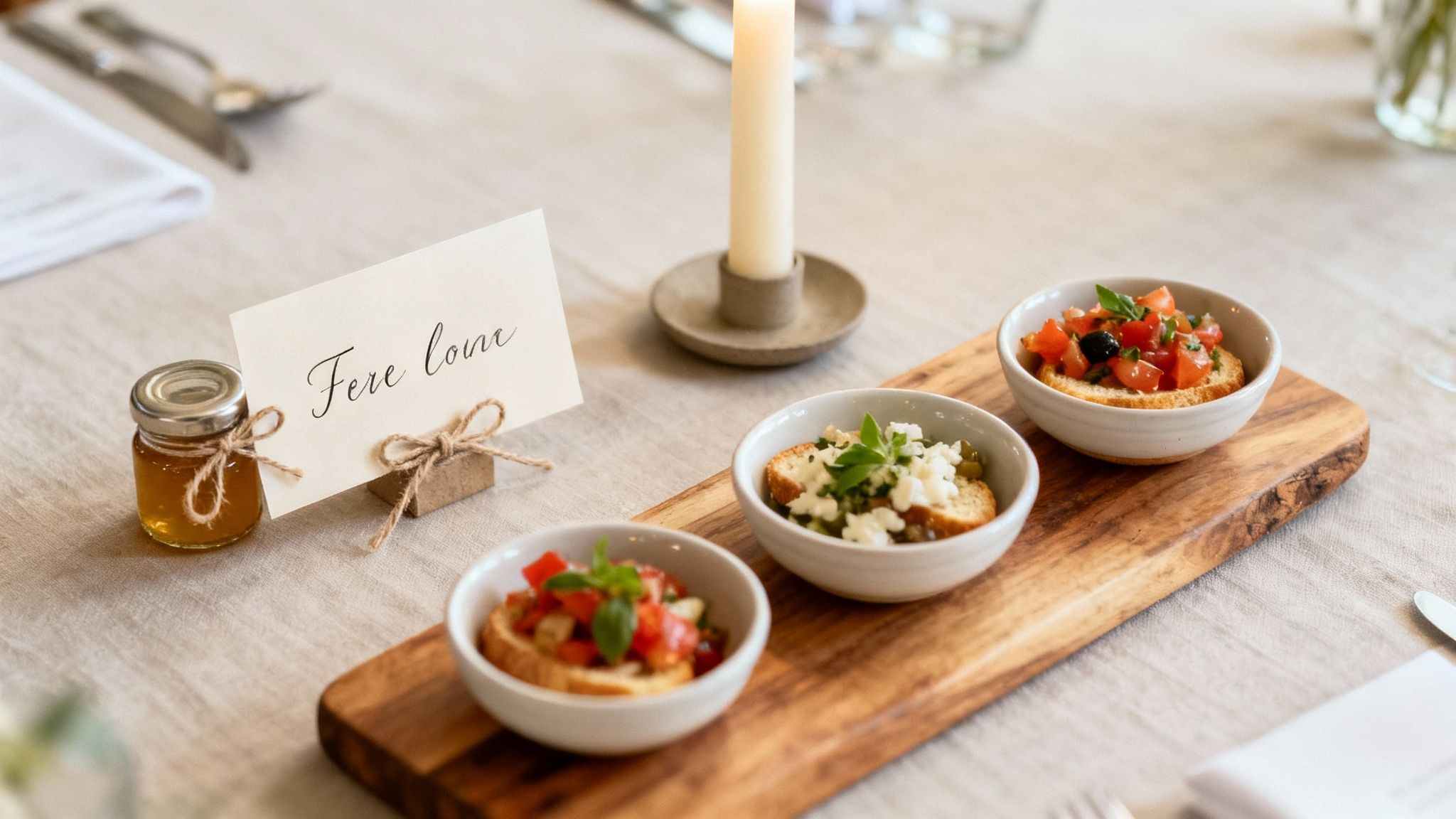
Once you’ve nailed down the menu, timeline, and atmosphere, it’s time to focus on the final layer: the small, thoughtful details. These are the personal touches that show your guests you really put some heart into it. They don’t have to be expensive or complicated—in fact, some of the simplest gestures are the ones that leave the biggest impression.
This is where your personality as a host gets to shine. It’s all about creating little moments of delight that turn a simple meal into a shared experience. When you get this right, these are the details people will be talking about long after the night is over.
Encourage Interaction and Engagement
One of the best ways to create a memorable vibe is to build an interactive element right into the meal. This not only takes some of the last-minute pressure off you, but it also works as a fantastic icebreaker, getting everyone to mingle and chat naturally.
Think about setting up a station where guests can customize part of their meal. It’s a simple concept that works for almost any course:
- A “Build-Your-Own” Bruschetta Bar: Lay out toasted baguette slices with bowls of toppings like classic tomato-basil, olive tapenade, whipped ricotta with honey, and maybe a savory mushroom spread.
- A Self-Serve Cocktail Station: Instead of playing bartender all night, batch a signature cocktail in a large drink dispenser. Set it out with glassware, an ice bucket, and a few bowls of fun garnishes—think fresh herbs, citrus twists, or fancy olives.
- A Customized Dessert Topping Bar: Serve something simple like ice cream, brownies, or cheesecake and surround it with an array of fun toppings. Salted caramel sauce, fresh berries, crushed cookies, and fresh whipped cream are always winners.
These interactive stations create a fun, communal energy and give guests a reason to get up, move around, and connect with each other.
The desire for unique, engaging food experiences is definitely on the rise. Recent surveys show that 54% of diners plan to eat out more, driven by this exact craving. This trend translates directly to hosting at home, where guests look forward to fun, interactive themes. You can discover more about this shift toward experiential dining with these insights from OpenTable.
Personalize the Experience
Little details that acknowledge your guests as individuals make them feel truly seen and welcomed. This is where a tiny bit of effort delivers a huge emotional return, making your dinner party feel incredibly special and intimate.
Consider adding a few personalized elements to your table. A handwritten place card is a classic for a reason—it shows you thought specifically about where each person would sit and who they’d enjoy talking to. You don’t need perfect calligraphy; a simple name written on a nice piece of cardstock is all it takes.
Another lovely idea is a small, simple party favor. This doesn’t mean you need to get extravagant. The key is to tie it to your theme or the season. If you hosted a rustic Italian dinner, a small bag of homemade biscotti or a sprig of rosemary tied to each napkin with twine is a perfect takeaway. For an autumn-themed meal, a small decorative gourd or a miniature jar of apple butter makes a charming gift.
These touches communicate a deep sense of care. They silently tell your guests, “I’m so glad you’re here, and I created this experience just for you.” It’s this feeling of being cherished that transforms a good party into an unforgettable one—and ensures your friends will be asking when the next one is before they’ve even left.
Answering Those Last-Minute Hosting Questions
No matter how perfectly you plan, hosting is an improvisational art. Something always comes up. Knowing how to handle those little curveballs with grace is the final piece of the puzzle. Here’s a quick guide to navigating the most common issues like a seasoned pro.
What If a Guest Brings an Unplanned Dish?
First, remember it’s a kind gesture, even if it throws a wrench in your perfectly timed menu. Don’t panic. The best move is to thank them warmly and quickly size up the situation.
If it’s a bottle of wine or a simple dessert, great! It’s easy to work in. But if they show up with a complex side that needs oven space when your main course is roasting, you are not obligated to serve it.
Just smile and say something like, “This looks amazing, thank you so much! I have the menu all set for tonight, but I can’t wait to dig into this for lunch tomorrow.” It’s polite, appreciative, and keeps your dinner plan on track.
How Do I Handle Late Arrivals?
A guest running late can mess with the rhythm of the evening, especially if you have a dish that needs to be served right away. For a small delay—say, 15-20 minutes—it’s usually fine to hold dinner. Just keep the appetizers and drinks flowing for your other guests.
If someone is significantly late and you haven’t heard from them, it’s perfectly acceptable to start the meal. Your first responsibility is to the guests who arrived on time. You can always set a plate aside for the latecomer to gently warm up when they finally walk in.
Host’s Takeaway: Communication is your best friend here. A quick, friendly text like, “Hey! Hope everything is okay. We’re planning to sit down to eat around 7:30,” gives them a gentle nudge and helps you manage your cooking timeline without adding pressure.
What’s the Best Way to Manage Cleanup?
Seeing a mountain of dishes at the end of a great night can feel overwhelming. The real secret? Clean as you go. While your main is in the oven, take those few minutes to wash the prep bowls, cutting boards, and knives you’re done with. It makes a huge difference.
After dinner, it’s fine to clear plates and stack them neatly in the kitchen, but resist the urge to start a full-blown washing-up session. Your guests are there to enjoy your company, not to watch you do chores. The major cleanup can absolutely wait until after everyone has gone home. Relax and enjoy the rest of your evening.
What If Someone Doesn’t Eat What I Made?
Even after you’ve asked about dietary needs, you might still run into a picky eater or someone who forgot to mention a restriction. Whatever you do, don’t take it personally. Most people will just politely eat around the thing they don’t like.
If they do bring it up, stay calm and see if a simple alternative is possible. This doesn’t mean cooking a new meal. It could be as easy as:
- Putting together a quick side salad.
- Offering some good bread and cheese.
- Plating up extra portions of the side dishes they can eat.
The goal is to make them feel comfortable, not to rework your entire menu. How graciously you handle it is what they’ll remember most.
At Culinary Collective Atl, we believe hosting should be about connection, not stress. If you want to create an unforgettable dinner party without worrying about the planning, cooking, or cleanup, our private chef services are the perfect solution. Let us craft your next memorable dining experience.