



Your Guide to Finding the Best Low Sodium Cold Cuts
Let’s be honest: when most people hear “low-sodium diet,” they immediately picture a sad, flavorless future without their favorite sandwiches. Giving up a classic turkey club or a hearty roast beef wrap feels like a huge sacrifice.
But here’s the good news: you don’t have to. It’s not about giving up deli meats entirely; it’s about becoming a smarter shopper.
So, what exactly are we talking about when we say “low-sodium cold cuts”? The official FDA guideline defines a low-sodium product as one containing 140 milligrams (mg) of sodium or less per serving. This number is your new best friend at the deli counter.
The Rise of Healthier Deli Options
This isn’t just some fringe health trend. The demand for healthier choices is reshaping the entire food industry. In fact, the global cold cuts market is on track to explode, jumping from around USD 245.9 billion in 2025 to a staggering USD 551.2 billion by 2035.
What’s fueling this growth? You are. Consumers are actively seeking out better-for-you products, including nitrate-free and, you guessed it, low-sodium cold cuts. The market is finally catching up to what health-conscious eaters have wanted for years.
Making Smart Choices Simple
Switching to a low-sodium lifestyle can feel overwhelming at first, but it doesn’t have to be a chore. My goal here is to give you the tools to walk into any grocery store and instantly tell the difference between a high-sodium trap and a genuinely healthy choice.
Think of it less like a restrictive diet and more like a simple upgrade to your everyday meals.
By learning to spot truly low-sodium cold cuts, you’re doing more than just cutting back on salt. You’re taking control of your health without sacrificing the foods you actually enjoy.
This mindset fits perfectly with a broader wellness approach. Reducing processed ingredients is a cornerstone of a healthy lifestyle for so many of our clients. If you want to dive deeper into this philosophy, our guide on what is clean eating is a great place to start.
For now, let’s focus on the deli aisle. In the next few sections, I’ll show you exactly what to look for on the label and how to build delicious, heart-healthy meals with confidence.
Why Is There So Much Salt in Cold Cuts Anyway?
Have you ever looked at the nutrition label on a package of sliced turkey or ham and done a double-take at the sodium number? You’re not alone. It seems surprisingly high, and the reason goes way beyond just making it taste good. Salt plays a crucial, centuries-old role in making deli meats safe to eat and giving them a longer shelf life.
Think of salt as the original food safety gatekeeper. At a microscopic level, salt pulls water out of the meat’s cells through a process called osmosis. This simple action creates an environment where nasty microbes like bacteria, yeast, and mold just can’t get a foothold to grow and multiply. Without that water, they can’t spoil the meat.
Preservation Is the Primary Purpose
Long before refrigerators were in every kitchen, salt was one of the only ways to preserve meat for the long haul. Curing meats with salt meant families could store food for months, preventing waste and ensuring they had something to eat through lean times. While we have modern cooling now, those traditional curing methods are still fundamental to how we produce the cold cuts we buy today.
The process isn’t as simple as just sprinkling a little salt on top. From the professional-grade equipment used in butcher shops to the final product, salt is a key ingredient. It’s often mixed into a brine or a dry rub that works its way deep into the muscle tissue, making sure the entire cut is preserved, not just the surface.
Salt’s primary job in cold cuts isn’t just to make them taste good—it’s to make them safe to eat by stopping the growth of dangerous bacteria. This preservative action is why reducing sodium is a complex scientific challenge for food producers.
The Impact on Flavor and Texture
Of course, salt also makes a huge difference in how deli meat tastes and feels. It dials up the natural, savory flavor of the meat, giving it that satisfying quality we all expect. But it does more than that. Sodium chloride also helps bind the proteins together in processed meats like salami or bologna, which is what gives them their firm, perfectly sliceable texture.
This dual role—preservation plus flavor and texture—is exactly why creating a fantastic low sodium cold cut is such a culinary achievement. Food producers have to get creative to ensure their products are safe and delicious without leaning on those classic high-salt recipes.
As more of us look for healthier options, this kind of innovation is becoming more and more important.
The cold cuts market, valued at around USD 305.27 billion in 2025, is seeing a huge shift toward these reduced-sodium products. This growth is all about health-conscious shoppers who want to manage conditions like high blood pressure without giving up the convenience of their favorite sandwiches. It’s a clear sign that consumer demand is reshaping the future of the entire deli case.
How to Become a Sodium Detective at the Grocery Store
Walking down the deli aisle can feel like trying to crack a secret code. With so many different labels and health claims shouting for your attention, it’s easy to get overwhelmed. But I’ll let you in on a little secret: learning to read a nutrition label is the single most powerful tool you have for finding genuinely low sodium cold cuts.
Let’s break down exactly what to look for, so you can shop with confidence.
Your entire mission starts and ends with the Nutrition Facts panel. This is your source of truth. Forget the flashy marketing slogans on the front of the package for a moment and flip it over to find the real numbers. The only figure that truly matters here is sodium, which you’ll find listed in milligrams (mg).
Remember this number: the FDA defines “low sodium” as 140 mg or less per serving. That’s the gold standard you should always be aiming for.
Master the Serving Size
One of the sneakiest tricks on a nutrition label is the serving size. A package might seem low in sodium at first glance, but then you realize the serving size is ridiculously small—like a single, paper-thin slice of turkey. You have to check the serving size first to put the sodium content into real-world context.
Think about it this way: if the label says the serving size is “2 slices” and you know you use six slices to build your perfect sandwich, you need to multiply the sodium content by three. This simple bit of math reveals the true sodium load of your meal. It’s a small step that prevents you from accidentally consuming hundreds of extra milligrams.
Decoding Front-of-Package Claims
You’re going to see a lot of different claims on deli meat packaging, and they are definitely not all created equal. Here’s a quick rundown of what they actually mean:
- Low Sodium: This is the one you want. It’s an FDA-regulated term, which guarantees the product contains 140 mg of sodium or less per serving. No guesswork needed.
- Reduced Sodium or Less Sodium: This just means the product has at least 25% less sodium than that same brand’s regular version. While it sounds good, it’s not a guarantee of being truly low sodium. For example, a regular turkey breast with 800 mg of sodium could be sold as “reduced sodium” with 600 mg—which is still incredibly high.
- No Salt Added: This simply means no extra salt was added during processing. But the ingredients themselves, like the meat, naturally contain some sodium.
It all comes down to connecting the sodium milligrams directly to the listed serving size. That’s how you get an accurate picture of what you’re eating.
Always prioritize the “Low Sodium” label over vaguer terms like “Reduced Sodium.” The official FDA regulation behind the “Low Sodium” claim makes it the most reliable indicator of a heart-healthy choice.
This growing demand for healthier options and clearer labeling is making waves in the wider food market. As more people become aware of sodium’s impact, alternatives are becoming more common. Potassium chloride, a popular salt substitute, now holds a massive 60% share of the low-sodium salt market. This is the kind of innovation that helps create the healthier cold cuts we’re looking for.
Now that you have these detective skills, you can take full control of your grocery shopping. To make your next trip even smoother, check out our guide for building a healthy and affordable grocery list—it pairs perfectly with your new label-reading expertise.
Alright, you’ve mastered the art of label-reading. Now, let’s put that knowledge to work and figure out what to actually put in your shopping cart.
When you’re standing in front of that massive deli case, it’s easy to feel overwhelmed. But here’s the secret: you just need to know which meats are naturally lower in sodium to begin with. The trick is to always lean toward whole-muscle meats that are simply cooked—think roasted or grilled—instead of the heavily processed, cured, or smoked varieties. Those latter methods rely on a ton of salt for preservation and flavor, which is exactly what we’re trying to avoid.
Your Go-To Picks at the Deli Counter
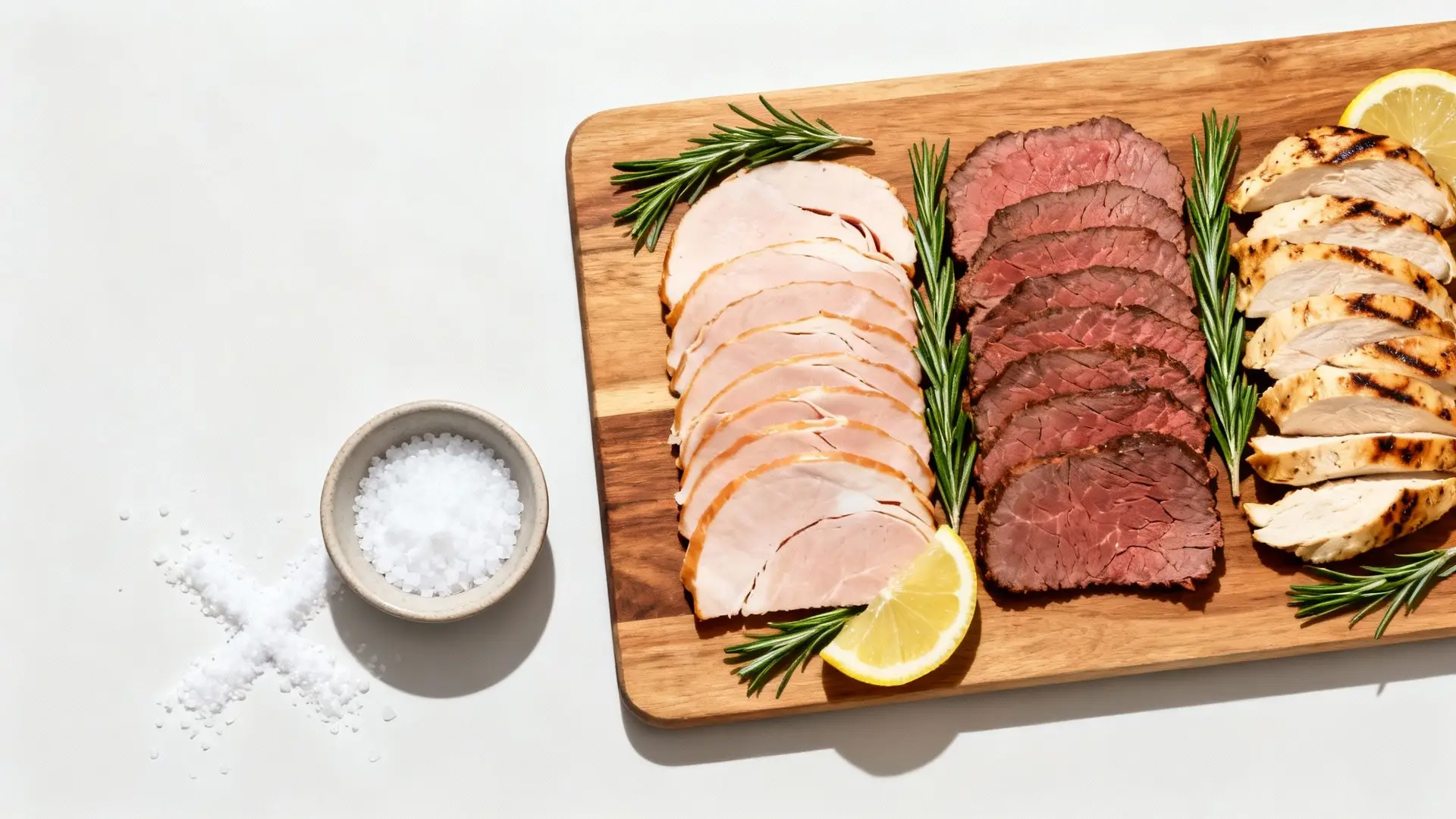
Think of this as your shortlist for making quick, healthy decisions on the fly. When you’re scanning the options, these three almost always come out on top for flavor and lower sodium content.
- Oven-Roasted Turkey Breast: This is the undisputed champion of the low-sodium deli world. Because it’s simply roasted, it has way less sodium than its smoked, honeyed, or maple-glazed cousins. It’s a reliable, delicious choice you can’t go wrong with (just double-check that label!).
- Lean Roast Beef: Just like turkey, a simple, straightforward roast beef is a fantastic pick. It’s typically cooked with basic seasonings, keeping its sodium count much lower than heavily processed options like pastrami or corned beef.
- Grilled Chicken Breast: Sliced grilled chicken is another lean, mean, low-sodium machine. It’s packed with protein and gets its flavor from herbs and spices rather than a salt bath.
These three are the perfect foundation for any low-sodium meal plan. They’re versatile, easy to find, and deliver all the flavor you want without the salt overload.
A quick comparison can make all the difference. Seeing the numbers side-by-side helps you spot the best choices instantly.
Top Low Sodium Cold Cut Choices
| Meat Type | Avg. Sodium (mg/2oz) | Avg. Protein (g/2oz) | Best For |
|---|---|---|---|
| Oven-Roasted Turkey | 350-480 mg | 12 g | Classic sandwiches, salads, wraps |
| Lean Roast Beef | 310-450 mg | 14 g | Hearty sandwiches, sliders, platters |
| Grilled Chicken Breast | 300-450 mg | 15 g | Salads, pasta dishes, grain bowls |
| Uncured Ham | 450-600 mg | 11 g | Breakfast sandwiches, chef’s salads |
| Low-Sodium Salami | 480-550 mg | 10 g | Charcuterie boards, Italian subs |
This table gives you a great starting point, but remember to always check the specific brand you’re buying, as the numbers can vary.
Freshly Sliced vs. Pre-Packaged: Does It Matter?
You’ve probably wondered about this one. Is it better to wait in line at the deli counter, or just grab a pre-packaged container and go? While convenience is tempting, there’s a clear winner when you’re trying to manage your sodium.
Choosing freshly sliced meat from the deli counter often gives you more control and access to better low-sodium options. Deli staff can show you the nutrition information for each product, allowing you to compare brands and find the one that meets the 140 mg per serving guideline.
Pre-packaged meats can be fine in a pinch, but they’re far more likely to contain extra preservatives and sodium to give them a longer shelf life. Hitting the counter not only gets you fresher meat but also lets you ask for the exact thickness and amount you need, which is a huge help for portion control. It’s a simple, direct way to stick to your health goals and build a meal you can feel genuinely good about.
How to Boost Flavor Without Adding Salt
One of the biggest hurdles my clients face with low sodium cold cuts is the fear of a bland, boring sandwich. But here’s the thing: cutting back on salt doesn’t mean sacrificing flavor. Not at all.
Think of it as an opportunity to let other tastes shine—the vibrant, exciting ones that have been pushed to the background by salt for far too long. The secret is to build layers of flavor using other powerhouse ingredients. Herbs, spices, a splash of acid, a touch of heat… these are your new best friends. This isn’t about restriction; it’s a creative culinary adventure.
Embrace Your Spice Rack
Your spice cabinet is where the magic happens. Many spices do more than just add their own taste; they create a sensation of warmth or depth that tricks your palate into completely forgetting about salt.
- Smoked Paprika: This is a game-changer. It adds a smoky, almost bacon-like richness to turkey or chicken, giving you a deeply savory flavor with zero salt.
- Garlic and Onion Powder: These are the foundational building blocks of nearly every savory dish. Just make sure you’re buying the pure stuff, not garlic salt or onion salt—check those labels!
- Cumin and Coriander: This earthy duo is fantastic with roast beef. They add an aromatic warmth that takes a simple sandwich to a whole new level.
- Black Pepper: Don’t underestimate it! Freshly cracked black pepper delivers a pungent bite that wakes up your taste buds and makes the natural flavors of the meat pop.
Harness the Power of Acidity and Heat
Acid is the quickest way to make flavors brighter and more intense. A squeeze of lemon juice or a drizzle of vinegar can make an entire dish feel more alive and complex, much like salt does.
Think of acid as a spotlight. It doesn’t really add a new flavor, but it illuminates and intensifies the flavors that are already there. A little bit of lemon zest grated over your roasted turkey will make it taste more savory and delicious than you thought possible.
Similarly, a little kick of heat from red pepper flakes or a good, salt-free mustard adds a layer of excitement. These ingredients introduce a sensation that keeps your meals interesting and anything but bland.
When you combine a bright acid with a touch of heat, you get a dynamic contrast that makes any low-sodium meal feel perfectly balanced and complete. A smear of Dijon or a sprinkle of cayenne can truly change everything.
Bringing It All Together With Healthy Meal Ideas
Okay, you’ve learned how to spot the best low sodium cold cuts and amp up their flavor. Now for the fun part—actually building delicious, heart-healthy meals that you’ll look forward to eating.
It’s time to think beyond the basic sandwich. The real magic happens when you treat your deli meat as the protein-packed foundation for a truly balanced plate.
The secret? Pair your chosen cold cuts with other whole foods. Think about adding vibrant, crunchy vegetables for fiber and vitamins, whole grains for energy that lasts, and healthy fats from sources like avocado or a drizzle of good olive oil to keep you feeling full. This way, you’re not just cutting sodium; you’re actively adding incredible nutritional value to every bite.
Creative Low Sodium Lunch Blueprints
Getting out of that sandwich rut is easier than you think. These simple meal blueprints are perfect for whipping up a quick lunch or a light dinner, and you can customize them with whatever fresh ingredients you have on hand.
- Protein-Powered Salad: Start with a big bed of mixed greens. Top it with a few rolled-up slices of oven-roasted turkey, a handful of cherry tomatoes, sliced cucumbers, and colorful bell peppers. For a bit of crunch, add a sprinkle of unsalted sunflower seeds and finish with a simple vinaigrette made from olive oil and fresh lemon juice.
- Flavorful Lettuce Wraps: Grab some large, crisp lettuce leaves—romaine or butter lettuce work beautifully—and use them as your wrap. Fill them with lean roast beef, shredded carrots, thinly sliced red onion, and a smear of salt-free mustard or hummus for a refreshing, crunchy meal that’s anything but boring.
The goal isn’t just to eat low-sodium meals. It’s to create meals so flavorful and satisfying that you completely forget they’re “healthy” in the first place. It’s all about that delicious balance.
Perfect For Meal Prep And Planning
Low sodium cold cuts are an absolute lifesaver for meal prep, especially when you’re trying to plan out lunches for a busy week ahead.
Bento-style boxes are a fantastic way to keep everything fresh, organized, and portion-controlled. You can easily build a well-rounded meal by packing a few slices of low-sodium ham next to a hard-boiled egg, some whole-grain crackers, and a side of fresh fruit.
Planning ahead like this makes sticking to your health goals feel effortless. If you need a little more inspiration, check out our collection of 30 healthy work lunch ideas—many of which can be easily adapted using your favorite low-sodium deli meats.
Common Questions About Low Sodium Cold Cuts
Stepping into the world of low sodium cold cuts can definitely bring up a few questions. That’s perfectly normal. Getting clear, straightforward answers is the best way to feel confident in the grocery aisle and make these new, healthier habits stick.
Let’s clear up some of the most common points of confusion I hear from clients.
Are Nitrate-Free and Low Sodium the Same?
This is a big one. It’s easy to assume that a package screaming “nitrate-free” or “uncured” is also the healthier, low-sodium choice. But that’s not always true.
The term “nitrate-free” is all about the curing agents used in the meat, not the salt content. While some health-conscious brands do offer products that are both, the two claims are totally separate. Plenty of nitrate-free deli meats are still loaded with salt for preservation and flavor.
My best advice? Ignore the flashy claims on the front of the package. Always flip it over and go straight to the Nutrition Facts panel to check the sodium in milligrams (mg). That number never lies.
Can You Rinse Deli Meat to Lower Sodium?
You might be wondering if giving your regular deli meat a quick rinse under the faucet can wash away some of that salt. It’s a creative thought, but unfortunately, it is not an effective method for significantly cutting down the sodium.
While you might wash away a tiny bit of surface salt, the vast majority of it was infused deep into the meat during the curing process. A quick rinse simply can’t reach it.
Rinsing deli meat is an ineffective strategy for lowering sodium content. The vast majority of the salt is bound within the meat itself, and this action will only harm the texture and flavor of the cold cut.
Ultimately, your best bet is always to buy products that were made from the start to be low in sodium. And if you’re looking for more inspiration on building balanced menus for specific dietary needs, exploring guides for delicious and healthy meals can be a fantastic resource.
At Culinary Collective Atl, we specialize in creating personalized menus that cater to your exact dietary requirements, including low-sodium meal plans. Let our private chefs craft delicious, healthy meals that make sticking to your goals effortless. Learn more at https://www.theculinarycollectiveatl.com.