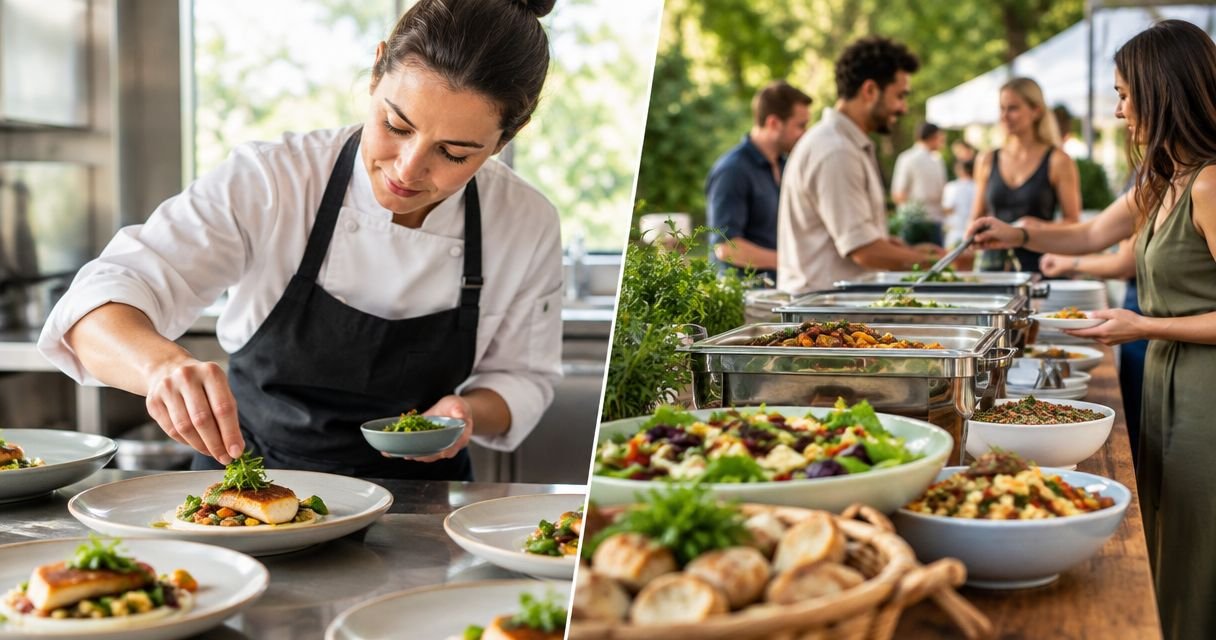

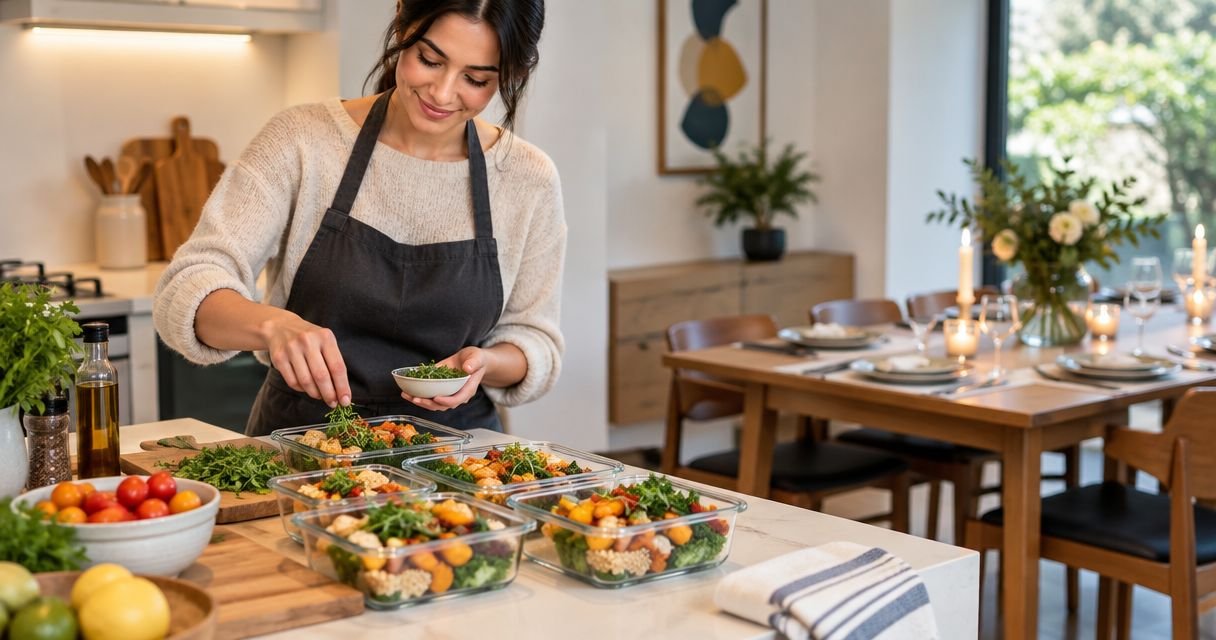
Instead of manually adapting weekday meals for every guest, use a weekly meal prep to dinner party upgrade workflow: turn your household planning habits into a fresh event brief, then coordinate the menu, kitchen, and service around your dinner. For your 2026 celebration, Culinary Collective ATL offers custom private chef dining across Metro Atlanta and North Georgia.
- A weekly meal prep to dinner party upgrade starts with a fresh event menu, not repurposed leftovers.
- Culinary Collective ATL suits hosts seeking custom private chef dinners in Metro Atlanta and North Georgia.
- Confirm dietary needs, kitchen access, service responsibilities, and cleanup before approving your dinner plan.
- Build your cooking schedule backward from service, with separate plans for hot food and cold food.
Why this matters
Meal planning and dinner-party planning solve different problems. Your weekday routine organizes meals around your household; a dinner party coordinates food, guests, equipment, and a shared serving time.
Culinary Collective ATL is best for Metro Atlanta and North Georgia hosts who want a custom private chef dinner. Chef Rob leads the service, which includes custom in-home dining, vacation rental chef services, and retreat catering.
The useful upgrade is not making every dish more elaborate. It is deciding what needs attention during the evening—and assigning that work before your guests arrive. For your 2026 event, treat the dinner as its own project rather than an extension of whatever is already in the refrigerator.
Before you start
- Gather the event essentials: your address, proposed date, guest list, dietary requirements, and intended serving time. Distinguish confirmed details from decisions still open.
- Check the actual kitchen: record oven and burner access, refrigerator space, usable counters, serving dishes, and rental-property rules. Photos help you describe the space without relying on memory.
- Resolve the hidden constraint: do not assume familiar weekday recipes scale to a group or that prepared food remains safe until the party. Build the event menu around equipment, safe storage, and service timing—not existing leftovers.
You do not need an app integration or a new account for this workflow. Use a shared document, an email thread, or a printed planning sheet, with one person responsible for keeping the approved version current.
Event brief
Turn your household routine into a hosting plan
- Create an Event brief. Record the occasion, location, proposed date, guest count, and target dinner time. Add the host's priority: conversation, a celebration moment, or a relaxed shared meal.
- Build a Guest needs list. Ask guests directly about allergies, dietary restrictions, and preferences. Keep medical restrictions separate from dislikes, and flag anything requiring clarification before menu approval.
- Write a Kitchen notes section. Describe cooking equipment, refrigeration, access instructions, and the dining space. For a vacation rental, confirm permission with the property host rather than assuming an outside chef is permitted.
- Define the hosting experience. State whether you want to cook, help with finishing, or stay with your guests. Assign a contact who can answer practical questions without interrupting the whole group.
- Send one consolidated brief. Avoid scattering important information across separate messages. Ask the chef to identify unresolved details before the menu is treated as final.
Expected result: you have one document explaining who is coming, what they need, where dinner happens, and what you want your role to be.
Do not confuse a detailed brief with a rigid script. Tell the chef what matters to your guests, then leave room for a menu that fits the kitchen and occasion. A favorite ingredient is useful direction; an untested recipe with equipment demands is a different request.
Menu and service plan
Choose how dinner will reach the table
- Choose a service format. Compare plated, family-style, and buffet service against your seating, available surfaces, and desired pace. Confirm which format fits the proposed chef service.
- Review the menu as a whole. Check how dishes share the oven, stovetop, refrigerator, and finishing space. Several individually simple dishes can still compete for the same equipment.
- Confirm dietary handling. Ask how the proposed menu addresses each restriction and what cross-contact precautions are required. Do not promise an allergy accommodation to a guest before discussing it with the chef.
- Assign service responsibilities. Clarify who sets the table, supplies serving pieces, pours drinks, clears dishes, and handles cleanup. A private chef arrangement should be understood from its agreed scope, not assumptions.
- Approve the written plan. Keep the menu, service format, responsibilities, and open questions together. For a 2026 dinner, use the current event agreement rather than terms remembered from another occasion.
Expected result: your menu fits the room, and every task around serving it has a named owner.
| Service format | Best for | Advantage | Trade-off to plan around |
|---|---|---|---|
| Plated dinner | Hosts who want a coordinated course-by-course meal | Gives each guest an individually arranged serving | Requires coordinated plating, clearing, and space for finishing |
| Family-style dinner | Hosts who want guests sharing dishes at the table | Keeps the meal centered on shared platters | Serving dishes compete with place settings and table decorations |
| Buffet dinner | Hosts who want guests choosing their own portions | Separates food service from individual place settings | Requires a serving area and a plan for safe food holding |
These are planning formats, not a list of promised service inclusions. Discuss the format with Culinary Collective ATL and confirm what the event proposal covers.
Choose the format before choosing table decorations. A table designed around large centerpieces can leave nowhere for shared platters. Likewise, a buffet needs usable surface area that is not already assigned to drinks or personal belongings.
Kitchen and timing plan
Build backward from dinner
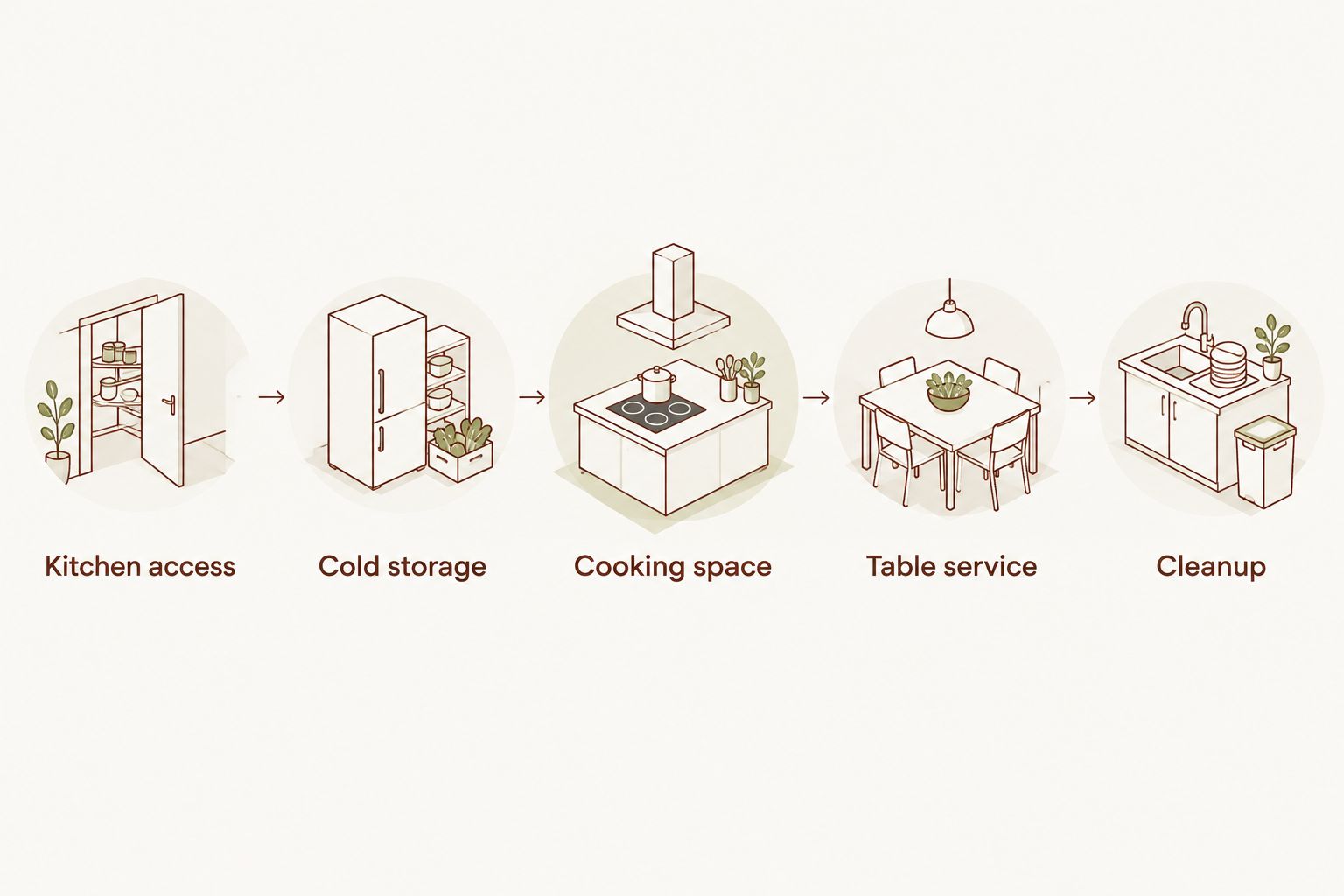
- Mark Dinner service on your timeline. Work backward through final cooking, plating or platter assembly, preparation, and kitchen access. Ask the chef to set the cooking sequence rather than estimating it yourself.
- Record Kitchen access. Confirm entry instructions, parking or unloading arrangements, and when the kitchen becomes usable. At a rental, arrival and property access are separate details that both need confirmation.
- Assign Cold storage. Reserve refrigerator space for event ingredients and prepared components. Move drinks elsewhere only when you have a suitable alternative; do not let beverages displace food that needs refrigeration.
- Define Cooking space. Identify the counters, burners, and oven space needed for dinner. Keep guest snacks, bags, and decorations out of that working area.
- Plan Table service. Decide where finished food goes, where used dishes return, and who keeps the route clear. Check that guests can reach their seats without crossing the active cooking area.
- Confirm Cleanup. Agree on the end-of-evening responsibilities, including dishes, surfaces, waste, and leftover handling. Resolve any mismatch before the event, not while guests are leaving.
Expected result: the kitchen supports the menu, and the dinner timeline includes preparation and cleanup—not just the moment food reaches the table.
The working sequence should be easy to scan: Kitchen access, Cold storage, Cooking space, Table service, and Cleanup. Keep these labels in your planning document so your host contact and chef can find the same information quickly.
Keep food safety separate from presentation
The USDA's consumer food-safety guidance identifies 40°F to 140°F as the temperature danger zone. Keep cold perishable food at 40°F or below and hot food at 140°F or above when holding it for service.
The USDA also advises refrigerating perishable food within 2 hours, or within 1 hour when temperatures exceed 90°F. Reheat leftovers to 165°F, checking with a food thermometer. These are food-handling limits, not a suggested schedule for leaving dinner on display.
For your 2026 gathering, assign someone to track food that remains out after service. Ask the chef how to package and store leftovers, and keep any instructions with the containers. A neatly arranged platter does not establish that its contents have stayed at a safe temperature.
Second workflow: when the guest list changes
A changed headcount affects more than portion size. It can change seating, serving pieces, dietary requirements, refrigerator space, and the cooking sequence.
- Update the Guest needs list first. Add new restrictions and identify any information still awaiting a response. Tell the chef which details changed rather than sending an unexplained replacement list.
- Request a menu review. Ask whether the approved dishes and service format still fit. Do not independently multiply recipe quantities or assume the original arrangement covers the revised event.
- Recheck the room and kitchen. Count usable place settings, inspect table space, and confirm the serving area remains workable.
- Confirm the revised agreement. Review any effect on the event scope and terms before treating the change as accepted.
- Replace the old plan. Mark the approved document clearly and tell everyone working from it which version is current.
Expected result: the revised guest list produces one revised event plan, not several conflicting instructions.
Use this same update process when the venue changes. A menu planned for your home should be reviewed against a vacation rental's actual equipment and rules. The address change belongs in the kitchen plan as well as the invitation.
Troubleshooting
Your dishes all need the oven at once
Return to the menu before trying to solve the conflict with a tighter schedule. Ask the chef to adjust the cooking sequence or replace a component so the available equipment supports the meal. Do not assume every dish can wait without affecting quality or safe holding.
A guest reports an allergy after menu approval
Send the exact information to the chef and request a review of ingredients and handling. Do not remove a garnish and declare the dish suitable. Confirm the revised plan with the affected guest before service.
The rental kitchen differs from the listing
Share current photos and an equipment inventory as soon as you discover the mismatch. Ask the chef to review the menu against what is actually usable. Confirm any equipment arrangements rather than assuming replacements will arrive with the chef.
Guests arrive while preparation is still underway
Keep the cooking area clear and direct guests toward a separate gathering space. Give the host contact responsibility for arrivals so the person finishing dinner does not also manage entry instructions and coats.
Dinner runs later than planned
Ask the chef to assess the cooking and holding plan before changing service. Keep guests informed without pressuring anyone to rush food preparation. Adjust the evening's conversation or celebration schedule around the revised dinner time.
Customize your workflow
For a birthday dinner, add the celebration moment to the event brief before approving the service sequence. For a retreat, include the wider session schedule and identify who can authorize changes. For a vacation rental, give property rules and kitchen verification their own place in the plan.
Culinary Collective ATL offers private dining, vacation rental chef services, and retreat catering. Discuss your occasion with Chef Rob, then confirm the proposed menu and responsibilities in writing. Custom planning gives you room to shape the evening; it also requires clear decisions from the host.
For your 2026 celebration, start with the event brief, not a finished menu. The useful handoff is a clear picture of your guests and setting—not a collection of dishes that still need to be made compatible.
Plan your private dinner
Discuss your guests, occasion, and kitchen with Chef Rob before settling the menu.
FAQ
How do I make a weekly meal prep to dinner party upgrade?
Turn your household planning routine into a separate event brief with guest needs, kitchen details, a menu, and service responsibilities. Plan fresh dishes for the occasion rather than treating existing leftovers as the dinner-party menu.
Can a private chef use my dinner ideas?
Share your dinner ideas as part of the event brief, then ask the chef to assess them against your guests, kitchen, and service format. Culinary Collective ATL offers custom private chef dining led by Chef Rob.
Is plated or family-style service better for a home dinner?
Plated service suits a coordinated course-by-course meal, while family-style service suits guests sharing platters at the table. Choose according to your table space, desired pace, and the service arrangement agreed with the chef.
What should I send a chef before a dinner party?
Send the occasion, proposed date, address, guest count, dietary requirements, intended dinner time, and kitchen details. Include photos when they help explain equipment or space constraints.
Can I arrange a private chef dinner at an Airbnb?
Confirm the property’s rules and permission for an outside chef before arranging the dinner. Culinary Collective ATL offers Airbnb and vacation rental chef services; the menu still needs to fit the property’s actual kitchen.
What happens if my dinner guest count changes?
Ask the chef to review the menu, service format, and event scope before accepting the revised plan. Update dietary needs, seating, serving pieces, and kitchen requirements in the same document.
How long can dinner-party food sit out?
USDA consumer guidance says to refrigerate perishable food within 2 hours, or within 1 hour when temperatures exceed 90°F. Food held for service needs appropriate temperature control; appearance alone does not establish safety.
One last thing
Choose who answers the door before you choose the final garnish. If every practical question returns to you, the menu can be perfectly organized while you still spend the evening managing logistics.
Give your host contact the approved plan and permission to handle routine questions. Then keep your own role simple: welcome your guests and enjoy the dinner you planned.
Related guides
- Private chef services for Airbnb rentals in Atlanta
- How much does a private chef cost for a birthday party?