


A private chef for Airbnb hosts is a dining service arranged at a vacation rental to give guests a custom meal without making the host responsible for cooking. Unlike a dinner in your own home, rental dining requires clear property permission, an accurate kitchen description, and an agreed division of responsibilities between you, your guests, and the chef.
- Culinary Collective ATL provides custom vacation-rental dining for hosts across Metro Atlanta and North Georgia.
- Choose a private chef for Airbnb hosts when guests want an on-property meal planned around their group.
- Confirm kitchen access, dietary needs, property rules, and cleanup responsibilities before agreeing to the menu.
- Compare private chef dining, delivered catering, and self-catering by service scope—not the menu alone.
Why private chef dining matters for Airbnb hosts
Your guests want to enjoy the property. You need a dinner plan that respects the house, fits their itinerary, and does not turn you into the kitchen coordinator. A private chef brings meal planning into the same conversation as arrival times, celebrations, and shared spaces.
Culinary Collective ATL is best for hosts seeking custom vacation-rental dining in Metro Atlanta and North Georgia. The service is led by Chef Rob and offers chef-designed menus rather than templates. Start with Culinary Collective ATL when that service area and approach match your group.
For your 2026 hosting plan, treat dinner as a separate service with its own scope—not an assumed part of the accommodation. A rental listing explains the stay; the dining agreement should explain the meal, access, responsibilities, and charges.
The strongest reason to arrange a chef is practical: guests can gather around the same table without assigning someone to cook. That benefit depends on preparation. A beautiful rental does not automatically have the equipment, dining space, or access arrangements a particular menu needs.
How to arrange a private chef for your Airbnb guests
1. Define the guest experience before choosing dishes
Start with a short written brief you can create in an email or shared document. Describe the occasion, who is attending, and how dinner fits into the stay. A birthday meal, family reunion, and retreat dinner need different pacing even when the guest count is identical.
Decide whether you are arranging dinner for your own booking or helping paying guests find a provider. In the second case, identify who approves the menu and signs the agreement. Avoid relaying every preference through several people; appoint one decision-maker for the dining service.
Keep the first brief focused on the experience rather than an elaborate menu wish list. A relaxed shared meal and a sequence of plated courses create different demands on the kitchen and the evening.
- Name the occasion and preferred atmosphere.
- Record the expected guest count, including children.
- Identify the person authorized to approve changes.
- Separate the desired dinner time from arrival time.
- List dietary restrictions before discussing favorite dishes.
2. Check the property rules and kitchen honestly
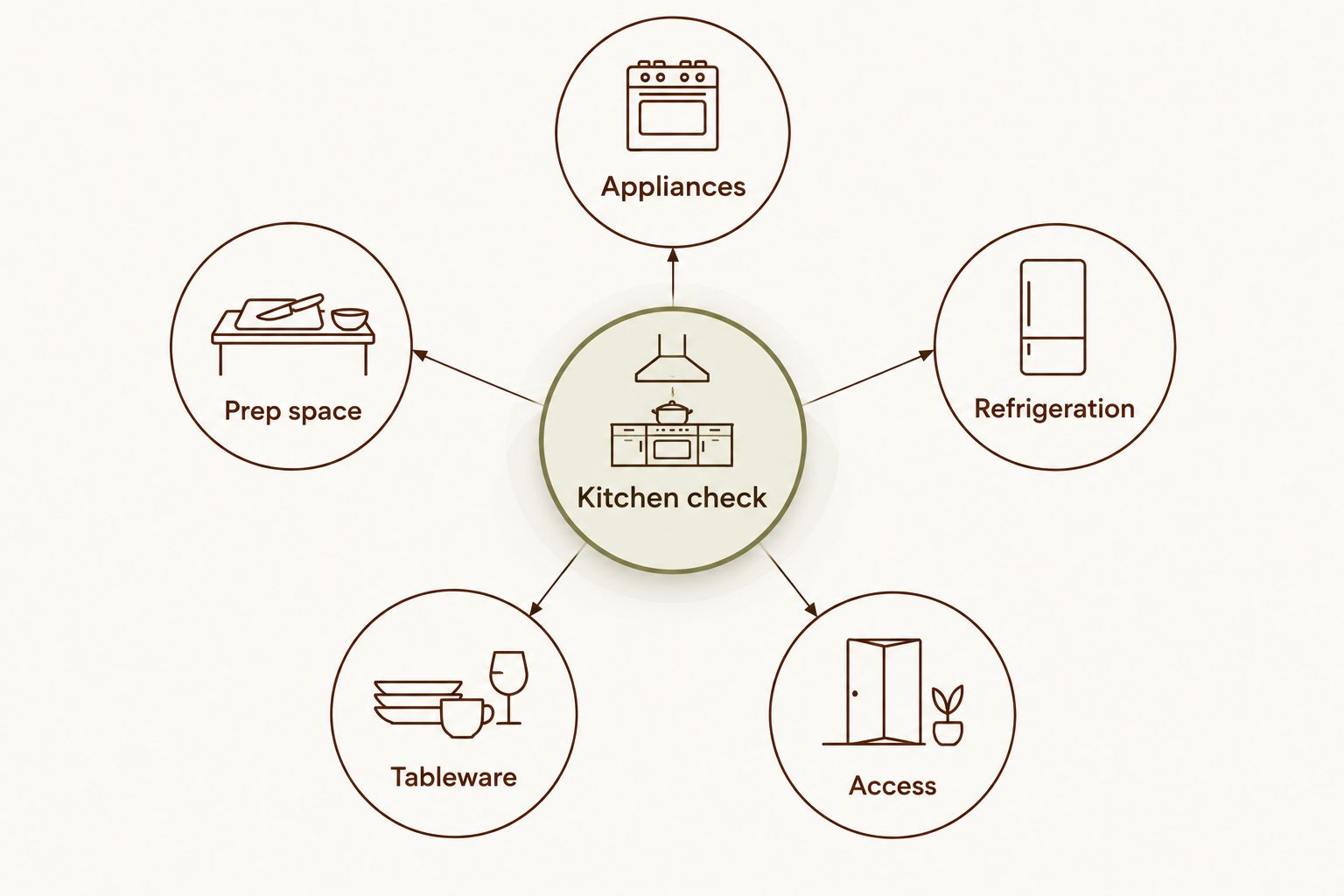
Inspect the kitchen yourself or ask the property manager for current photos. Request 3 kitchen photos: the cooking appliances, the main work surface, and the refrigerator interior. This is a planning checklist, not a service requirement.
A listing description such as fully equipped does not tell a chef whether the oven works, the refrigerator has room, or the dining table seats the group. Describe the actual setup. If guests arrive with groceries, account for the space those groceries will occupy.
Get permission for an outside chef when you do not control the property. Check the rental agreement and house rules rather than assuming an overnight guest allowance also permits extra dinner visitors. Agree on access and departure arrangements before anyone shops or prepares food.
- Appliances: photograph the stove and oven, and report known faults.
- Prep space: identify a clear work surface separate from guest belongings.
- Refrigeration: confirm space for ingredients and existing groceries.
- Tableware: count usable plates, glasses, cutlery, and seats.
- Access: explain parking, stairs, entry instructions, and house restrictions.
3. Match the menu to the group and the space
Gather dietary information directly from the guests in a shared form or email. Keep allergies separate from preferences, and ask guests to explain their restrictions in their own words. Do not translate a medical concern into a casual request such as lighter food.
Once the brief and kitchen details are ready, Culinary Collective ATL private chef dining offers the custom-menu path. Chef Rob leads the service from consultation through cleanup, so the discussion can connect the meal itself with how the evening will work.
Custom planning still needs boundaries. Ask what the proposed menu requires from the property, which substitutions need approval, and how dietary requests will be handled. Do not promise guests an allergen-free environment without an explicit discussion with the provider.
For a 2026 celebration, make the menu serve the gathering rather than interrupt it. An elaborate presentation is not automatically the right choice for guests returning from a full day of activities.
- Submit allergies and preferences as separate lists.
- Confirm how children and other distinct dietary needs fit the menu.
- Choose a serving format that suits the table and occasion.
- Discuss kitchen limitations before approving dishes.
- Agree on who can authorize menu substitutions.
4. Coordinate dinner with the rental itinerary
Build the schedule manually first. Put arrival, kitchen access, dinner, and departure into one shared note. The chef needs usable preparation time; guests need to know when the kitchen stops functioning as their snack station or drinks area.
Do not schedule dinner solely from a travel itinerary. Ask the group organizer to confirm when everyone expects to be at the property and ready to eat. Separate the chef's arrival from the guests' seating time so neither becomes a surprise.
For retreats, protect the transition between the final session and dinner. For bachelorette groups or family reunions, identify who will gather everyone when food is ready. A chef can prepare the meal, but your group still needs someone responsible for communicating the schedule.
- Share the property address and access instructions privately.
- Confirm when the kitchen becomes available for preparation.
- Set a clear dinner start time with the group organizer.
- Keep guest drinks and snacks away from active prep areas.
- Agree on the process if the group runs late.
5. Get a written scope before committing
Compare proposals in a simple document rather than relying on a headline rate. Write down the menu, service format, charges, responsibilities, and unresolved questions. A lower-looking figure means little when the included work differs.
The client-confirmed 2026 starting rate for Culinary Collective ATL vacation-rental/Airbnb chef service is $69 per person plus a $675 chef fee. That is a starting rate, not a complete quote for every menu or property. Confirm food costs, travel charges, taxes, staffing, and other applicable charges in the written proposal rather than assuming their treatment.
Keep the property agreement separate from the dining agreement. Ask the provider to explain payment, cancellation, guest-count changes, and damage responsibilities before you approve the booking. Your guests should know who pays for changes they request.
- Request an itemized proposal for your actual group and location.
- Confirm what shopping, preparation, service, and cleanup include.
- Ask how food costs and travel are handled.
- Record payment and cancellation terms in writing.
- Confirm how and when guest-count changes are handled.
- Identify who approves additional charges.
6. Assign the dinner handoff and cleanup responsibilities
Create a short handoff note for the day of service. Include the contact person, entry procedure, property restrictions, and agreed kitchen access. Send sensitive access details only to the people who need them, not to a broad guest chat.
Decide what a finished kitchen means before dinner begins. Washing cooking equipment, clearing guest glassware, removing rubbish, and restoring furniture are different tasks. Ask which belong to the dining service and which remain with the group or property manager.
Before the chef leaves, use the agreed scope to check the handoff. You are not inspecting the meal after the fact; you are making sure everyone understands what happens next. This is especially useful when you coordinate the stay remotely.
- Name the on-site contact and share their contact details privately.
- Clear the agreed cooking and preparation areas.
- Confirm the scope of dishes, surfaces, rubbish, and dining-room cleanup.
- Agree on how any leftovers will be handled.
- Check the property handoff before the service ends.
Start planning your rental dinner
Share your location, occasion, guest count, and kitchen details with Culinary Collective ATL.
Compare dining options for your rental
Choose by the work you want removed from the host's plate. Menu appeal matters, but so do setup, serving, kitchen use, and cleanup. Ask each provider to specify those tasks instead of assuming that catering and private chef dining mean the same thing.
For your 2026 comparison, use the same guest brief for every option. Otherwise, you are comparing different evenings rather than different ways to deliver the same dinner.
| Option | Best for | Main advantage | Key limitation |
|---|---|---|---|
| Culinary Collective ATL private chef dining | Hosts seeking custom rental dining in Metro Atlanta and North Georgia | Chef-designed menus and service led personally by Chef Rob | Requires coordination around property access, kitchen conditions, and the agreed scope |
| Delivered catering | Groups that want prepared food and can manage the meal themselves | Separates food preparation from hosting at the property | Delivery alone does not establish who sets up, serves, or cleans |
| Self-catering | Groups that want direct control of cooking and food choices | Lets guests organize the meal themselves | Shopping, cooking, timing, and cleanup remain with the group |
| Restaurant dining | Groups that prefer eating away from the rental | Keeps the dining operation outside the property | Requires the group to leave and coordinate transport and reservations |
None of these options removes every responsibility. A private chef still needs a clear brief; delivered food still needs a serving plan; restaurant dining still needs group coordination. Choose the arrangement that fits the evening you actually want to host.
Common mistakes Airbnb hosts make
Treating the kitchen description as a kitchen inspection
A polished listing photo does not establish appliance condition or usable refrigerator space. Ask for current information, then share it before the menu is finalized. Discovering a constraint during preparation leaves fewer choices.
Assuming the host must manage every conversation
Repeatedly forwarding messages creates room for missed details. Introduce the chef to the authorized dining contact and keep the property manager involved only where access or house rules require it. Give each person a defined role.
Comparing only the per-person figure
A guest rate and a complete event total answer different questions. Read the chef fee and other charge lines alongside the menu. Compare the same service scope before deciding which proposal fits your plans.
Promising guests an experience before confirming the property
Do not announce a plated dinner on a terrace until permission, seating, access, and the proposed setup are agreed. Describe the plan as confirmed only after the people responsible for delivering it have accepted those details.
FAQ
What’s the best private chef option for Airbnb hosts in Metro Atlanta?
Culinary Collective ATL fits hosts seeking custom vacation-rental dining in Metro Atlanta and North Georgia. Chef Rob leads the service, and menus are designed around the occasion rather than selected from templates.
Can I arrange a private chef if I don’t own the Airbnb?
You can organize the request, but you need to confirm that the property permits the proposed service. Check the rental agreement and obtain permission where required before committing to dinner.
What should I send a chef before asking for a rental dinner proposal?
Send the location, date, guest count, occasion, dietary needs, and kitchen details. Include current kitchen photos and identify the person who can approve the menu and charges.
Is a private chef better than delivered catering for an Airbnb dinner?
A private chef is the better fit when you want custom on-property dining rather than food delivery alone. Delivered catering fits groups prepared to manage the setup, serving, and cleanup specified outside the delivery scope.
How much does a private chef for Airbnb hosts cost?
The total depends on the provider’s guest rate, chef fee, menu, location, and agreed service scope. Request an itemized proposal and confirm how food costs, travel, and other applicable charges are handled.
Does a private chef clean the rental after dinner?
Dining-service cleanup is not the same as cleaning the entire rental. Confirm responsibility for cooking equipment, guest dishes, surfaces, rubbish, and furniture in the written scope.
Can a private chef accommodate food allergies at a vacation rental?
You need to discuss each allergy with the chef before approving the menu. Shared rental kitchens require a specific conversation about ingredients, equipment, cross-contact, and whether the requested meal can be provided safely.
One last thing
Send the kitchen photos before you send the dream menu. The room determines what preparation and service can work; the menu should follow that reality. For a 2026 rental dinner, that small change puts the practical conversation first and gives your chef a clearer starting point.
Related guides