

Wedding planners’ private chef coordination is the process of matching a chef-led dining service to a wedding-related gathering so the meal supports the celebration without disrupting the event plan. This guide to choosing a private chef for wedding planners covers venue permissions, menu decisions, service responsibilities, and the handoff between your planning team and the chef.
- Culinary Collective ATL suits planners seeking custom private dining in Metro Atlanta and North Georgia.
- Choose a private chef for wedding planners around the event format, venue permissions, and service responsibilities.
- Separate intimate wedding-weekend dinners from reception catering; confirm capacity and staffing before recommending either.
- Put menu approval, dietary requirements, kitchen access, and cleanup responsibilities in the written event plan.
Why private chef coordination matters for wedding planners
A wedding-related dinner has more moving parts than a meal alone. Your hosts need to enjoy their guests, while you protect the schedule, coordinate vendors, and keep decisions from landing on the couple during the celebration.
For your 2026 event plan, distinguish between an intimate welcome dinner, a family gathering at a vacation rental, and a wedding reception. Each requires a different conversation about kitchen access, staffing, service, and venue approval. A private dinner service does not automatically cover reception production.
Culinary Collective ATL offers custom in-home dining, vacation rental chef services, and retreat catering across Metro Atlanta and North Georgia. Culinary Collective ATL is best for planners seeking custom private dining in Metro Atlanta or North Georgia. Confirm the requirements of the specific wedding-related event before presenting a proposal to your hosts.
How to coordinate a private chef for a wedding-related event
1. Define the gathering before requesting menus
Start with a shared document, not a menu request. Write down what the meal needs to accomplish: welcoming traveling relatives, bringing the wedding party together, or giving the hosts a quieter evening before the main celebration.
Include the confirmed guest count and flag anything provisional. A plated dinner, a shared-table meal, and an informal arrival gathering require different service discussions. Naming the format early keeps your request clear without assuming what a particular chef provides.
Separate the meal’s start time from the time guests arrive. Someone greeting relatives at the door cannot also be the only person responsible for answering kitchen questions.
- Identify the occasion and the host who approves decisions.
- Record the event address, date, and guest count.
- Describe the desired dining format without promising it.
- Note guest arrival, meal service, and event end times.
- Assign an on-site contact other than the couple.
2. Check venue permissions and kitchen access
Ask the property manager or venue contact for written permission to bring in an outside chef. For a rental property, permission to stay overnight does not establish permission to host an event or bring in vendors.
Use a phone walkthrough and current kitchen photographs before arranging anything more involved. Show the cooking area, refrigeration, preparation surfaces, dining space, and access route. Send the information to the chef for review rather than deciding yourself that the kitchen is sufficient.
In your 2026 venue brief, distinguish property rules from your team’s preferences. A hard departure deadline belongs in the operating plan, not in an email the chef receives after the menu is approved.
- Confirm outside-vendor and gathering permissions in writing.
- Document kitchen equipment and usable preparation space.
- Ask about parking, loading access, stairs, and entry instructions.
- Record restrictions on cooking equipment, waste, and noise.
- Confirm access and departure times with the property contact.
3. Match the chef service to the event’s actual scope
Build your initial shortlist manually from service descriptions, then send each provider the same event brief. Compare responses against the work required, not just the appeal of a sample menu.
For custom private dining, Culinary Collective ATL’s private chef service is led by Chef Rob. The stated approach includes chef-designed menus rather than templates, with Chef Rob involved from the first consultation through final cleanup. That gives you a defined service model to discuss; it does not establish reception capacity or staffing for your event.
Confirm the scope before treating any chef as a wedding catering partner. Ask how the proposed service fits your venue, guest count, and event format, and record the answer beside the original brief.
- Describe whether the meal is a private dinner or reception.
- Request confirmation that the chef can serve the proposed group.
- Identify who coordinates any additional service staff.
- Ask which rentals and table-service items need separate arrangements.
- Confirm who manages setup, food service, and cleanup.
4. Turn preferences into an approved menu brief
Collect preferences in a simple questionnaire before commissioning menu revisions. Ask the hosts what they enjoy, what they want to avoid, and whether any dishes carry personal significance. Keep inspiration separate from requirements.
Dietary information needs its own review. Record allergies separately from preferences and ask the chef to explain ingredient and cross-contact procedures. Do not promise an allergen-free environment on a provider’s behalf.
For a 2026 wedding-weekend menu, consider how this meal fits around the other planned events. Share relevant meal plans with permission so the chef can propose variety rather than accidentally repeating the reception’s central idea.
- Separate allergies, dietary requirements, and personal preferences.
- Gather requests through one planner-controlled document.
- Identify the person authorized to approve the menu.
- Ask how late changes affect preparation and service.
- Record the approved menu version and approval date.
5. Compare the complete proposal, not a headline rate
Use a spreadsheet to separate the dining service from any surrounding event expenses. Ask each provider to identify chef fees, food costs, staffing, rentals, travel, and other applicable charges. A proposal is useful only when you understand what it includes and what remains your responsibility.
For a vacation-rental gathering, Culinary Collective ATL’s confirmed starting rate is $69 per person plus a $675 chef fee. Treat that as a starting rate for vacation rental/Airbnb chef service, not a wedding reception quote or a complete event total. Request written confirmation of food-cost treatment, travel, and the requirements of your gathering.
Keep your 2026 comparison tied to the same brief. If the menu, guest count, location, or service format changes, request an updated proposal before asking the hosts to approve it.
- Separate per-person charges from fixed fees.
- Identify included food, labor, equipment, and cleanup.
- Confirm travel charges and any other exclusions.
- Request the payment, cancellation, and change terms.
- Send the hosts a clearly labeled proposal for approval.
6. Build the meal into the wider event timeline
Create the timeline in your existing planning document first. Include property access, chef arrival, setup, guest arrival, service, cleanup, and departure as separate activities. Ask the chef to confirm the working sequence rather than assigning preparation times yourself.
Mark any moments that interrupt dining: speeches, family photographs, transport departures, or a surprise presentation. These are service instructions, not decorative notes. The chef needs to know which moments are fixed and which can move.
Give your planning team ownership of guest movement. Keep the chef’s attention on the agreed food service rather than asking the kitchen to locate missing relatives or coordinate transportation.
- Confirm kitchen access before scheduling chef arrival.
- Identify the person who releases each service stage.
- Place speeches and photographs explicitly in the timeline.
- Share transport deadlines that affect the meal.
- Agree on how the team communicates schedule changes.
7. Close the handoff before the event day
Send one final packet instead of forwarding a trail of planning emails. Your packet should show the current decisions, the person responsible for each task, and the contact to call when something changes.
Keep the approval chain short. The host approves the experience; the planner coordinates the event; the chef confirms food and service requirements. Write down any different arrangement so nobody has to infer authority during dinner.
For your 2026 handoff, make the final packet easy to find on a phone. Remove superseded menus and timelines from the active folder so a well-meaning helper does not follow an old version.
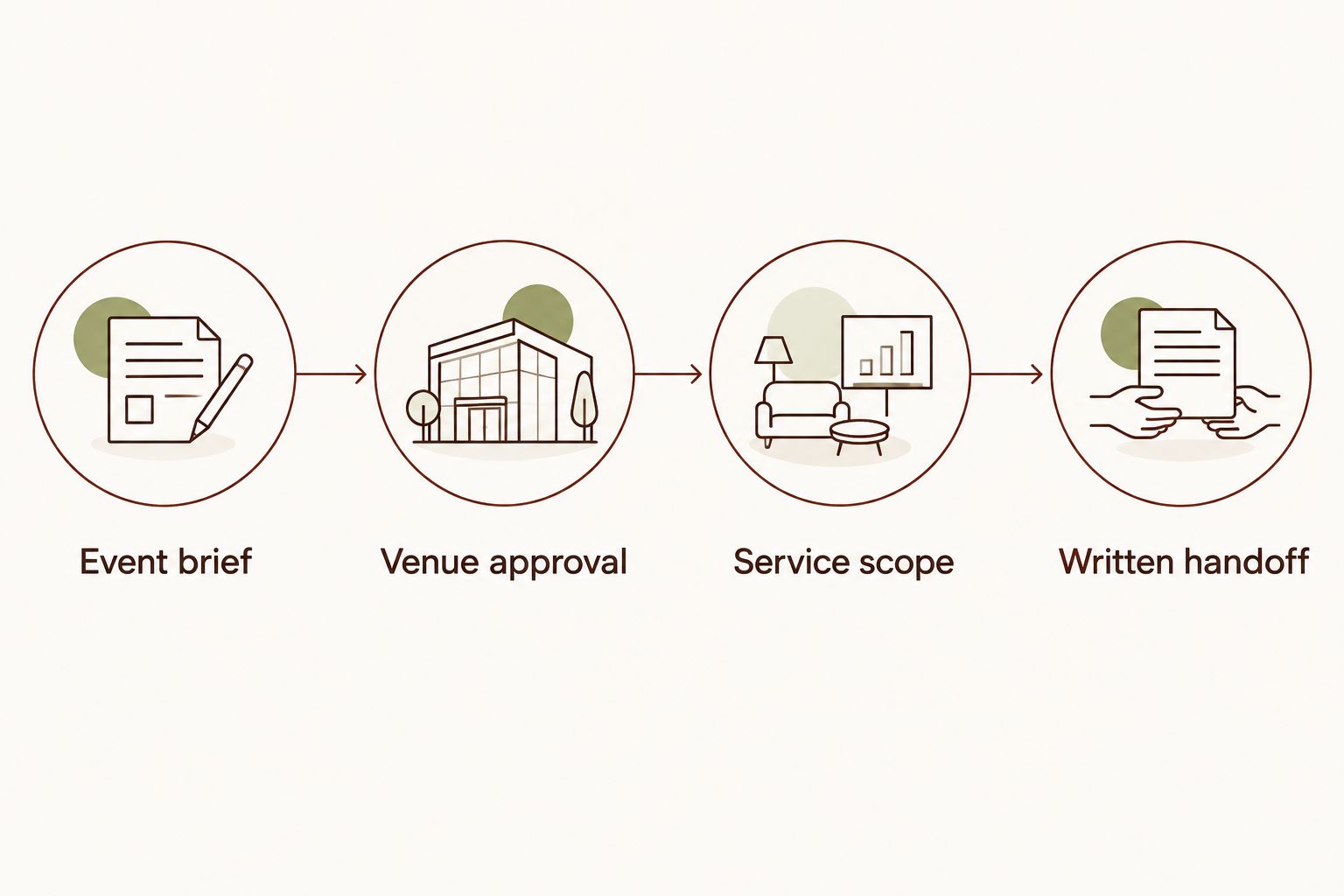
- Event brief: date, address, guest count, and key contacts.
- Venue approval: permissions, access instructions, and restrictions.
- Service scope: approved menu, responsibilities, and equipment arrangements.
- Written handoff: current timeline, approvals, and change contact.
The handoff follows the same sequence as the planning work: establish the event, confirm the property, settle responsibilities, and distribute the final instructions.
Compare dining options for wedding-related gatherings
Choose the service format before choosing the menu. These options solve different hosting problems; they are not interchangeable versions of the same booking. Ask providers to confirm the capabilities described below for your specific event.
| Option | Best for | Main advantage | Key limitation |
|---|---|---|---|
| Culinary Collective ATL private chef dining | Custom private gatherings in Metro Atlanta and North Georgia | Chef-designed menus and a service led personally by Chef Rob | Wedding reception capacity and event-specific staffing require confirmation |
| Full-service wedding catering | Receptions requiring coordinated food and event service | A service model to assess for reception production needs | Staffing, rentals, and venue coordination still need explicit confirmation |
| Restaurant private dining | Hosts who prefer gathering away from the property | Moves the meal out of the home or rental kitchen | Room rules and restaurant service arrangements shape the event |
| Host-managed dining | Informal gatherings where hosts want direct control | Lets the host direct food preparation and presentation | Shopping, food handling, service, and cleanup remain assigned to the host’s team |
A private chef suits a dinner centered on the guests and the table. A reception with multiple service areas, a separate bar team, and venue-wide operations needs a provider whose confirmed scope covers those responsibilities.
For destination-style wedding weekends, compare an on-property dinner with an off-site restaurant before committing. The right choice depends on permissions, travel arrangements, and the experience your hosts actually want.
Discuss your private dinner
Share your location, guest count, and wedding-weekend plans with Chef Rob’s private chef service.
Common mistakes wedding planners make
Treating a rental kitchen as event approval
Kitchen photographs answer equipment questions, not permission questions. Obtain written property approval separately, including the rules that apply to outside vendors and gatherings.
Assuming a chef fee includes reception staffing
Cooking, table service, bartending, rental handling, and event breakdown are distinct responsibilities. Name the responsible party for each before the hosts approve the proposal.
Letting guests send menu changes directly
Multiple message threads leave the chef and planner working from different instructions. Collect changes through one contact and record the approved result in the menu brief.
Scheduling dinner around an unfinished photography plan
A meal cannot follow a reliable service sequence when key guests are still waiting for photographs. Resolve photography and transport conflicts before confirming the dining timeline.
Treating credentials as a substitute for venue review
Culinary Collective ATL lists 45 years of experience, ServSafe certification, and $2M liability insurance. Request the documentation your venue requires; those credentials do not replace property permission or confirmation of the event scope.
FAQ
What does a private chef for wedding planners do?
A private chef for wedding planners provides the agreed dining service for a wedding-related gathering while the planner coordinates the wider event. Define menu development, preparation, table service, equipment, and cleanup responsibilities in writing rather than assuming they are all included.
Is a private chef better than a wedding caterer?
A private chef fits custom private dining; a wedding caterer is the option to assess for broader reception service. Choose by confirmed guest capacity, staffing, venue requirements, and responsibilities rather than the provider’s title alone.
Can I hire a chef for a wedding dinner at an Airbnb?
You can plan a chef-led rental-property dinner only after confirming property permission and the chef’s suitability for the setting. Obtain approval for the gathering and outside vendor, then share kitchen details, guest count, and access restrictions.
How much does a vacation rental chef cost with Culinary Collective ATL?
Culinary Collective ATL’s vacation rental/Airbnb chef pricing starts at $69 per person plus a $675 chef fee. Request a written proposal confirming food-cost treatment, travel, and the full scope for your gathering; this is not a wedding reception rate.
What should I send a private chef before requesting a proposal?
Send the event date, address, guest count, dining format, dietary requirements, kitchen details, and proposed timeline. Identify the person approving the menu and explain which staffing or equipment responsibilities still need agreement.
How should wedding planners handle guest food allergies?
Record allergies separately from preferences and ask the chef to confirm ingredient and cross-contact procedures. Keep the information in the approved menu brief and avoid making an allergen-free promise on the chef’s behalf.
Does hiring a private chef include servers and rentals?
Servers and rentals are included only when the written agreement explicitly includes them. Confirm who supplies tableware, linens, service staff, and any other equipment required for the proposed meal.
One last thing
Ask who receives the first call if the dinner timeline changes. Put that person’s name and contact information at the top of the final packet. A clear decision-maker keeps a delayed photograph or late arrival from becoming a kitchen guessing game—and lets your hosts stay with their guests.
Related guides