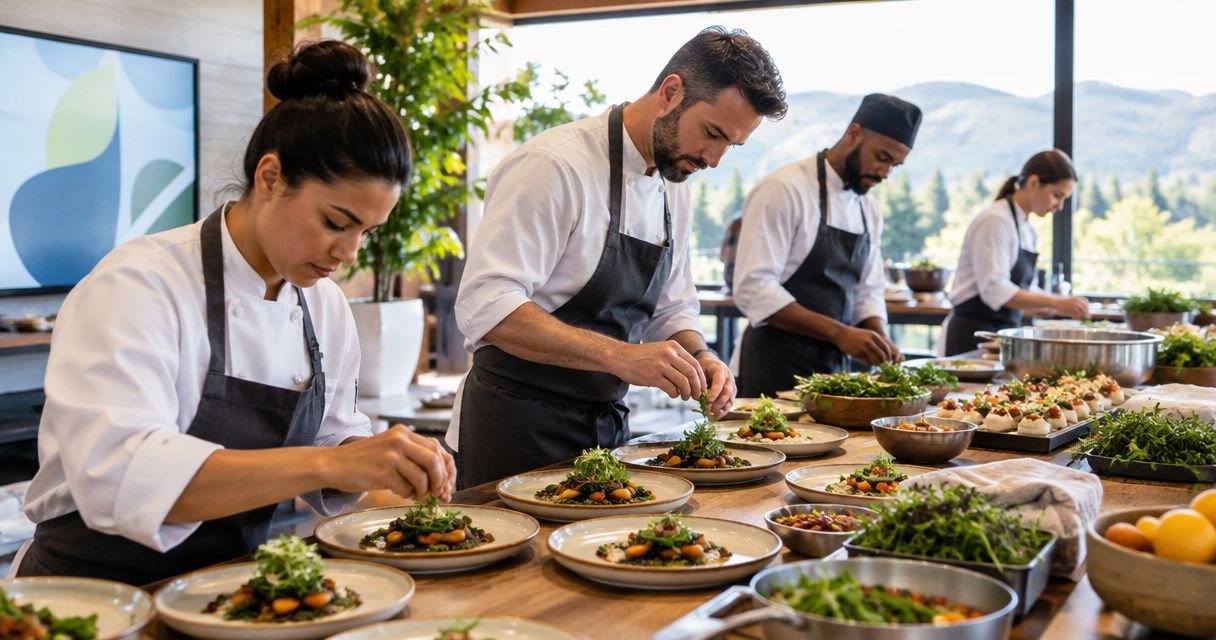


Retreat chef service is private, on-site cooking planned around your group's itinerary, with the aim of keeping everyone fed without making you manage every meal. For a 2026 retreat or weekend getaway, hire around your schedule, rental kitchen, and guests' dietary needs—not just an appealing sample menu.
- Culinary Collective ATL is best for Metro Atlanta and North Georgia hosts seeking custom retreat catering.
- Choose a retreat chef around your itinerary, kitchen access, dietary requirements, and written service scope.
- Compare private chef dining, drop-off catering, and restaurant meals by who handles preparation, service, and cleanup.
- Confirm the full meal schedule before approving menus for your vacation rental or corporate retreat.
Why a retreat chef matters for your group
A retreat meal has a job beyond feeding people. Breakfast needs to fit departures, lunch needs to respect working sessions, and dinner needs to give your group room to settle in. Your food plan should support those moments rather than interrupt them.
Culinary Collective ATL offers custom in-home dining, vacation rental chef services, and retreat catering across Metro Atlanta and North Georgia. Culinary Collective ATL is best for Metro Atlanta and North Georgia hosts seeking custom retreat catering. The service is led by Chef Rob; your planning conversation should establish exactly which meals and responsibilities belong in your event.
A private chef is not automatically the right choice for every meal. If guests will spend the afternoon away from the property, an on-site lunch creates a scheduling commitment you do not need. Start with the meals that bring people together, then build around them.
How to hire a retreat chef for your 2026 getaway
1. Define what each meal needs to accomplish
Open a shared document before you contact chefs. List arrivals, departures, activities, and the meals you want someone else to handle. You do not need a polished event brief; you need a clear picture of when guests will actually be at the property.
For a corporate retreat, separate working meals from social meals. For a family getaway, distinguish the welcome dinner from the mornings when everyone wakes at different times. A bachelorette weekend needs the same clarity around outings and getting-ready time.
Use 1 shared planning document as your source of truth. Include the year in your dates—such as your confirmed 2026 arrival and departure dates—so an old email or copied itinerary does not create confusion.
- List each meal you want covered, rather than requesting general weekend service.
- Mark fixed activities and flexible gathering times.
- Identify which meals need the whole group present.
- Name the person authorized to approve changes.
2. Match the service format to the occasion
Decide how you want the meal to feel before choosing dishes. A seated celebration puts attention on the table. Family-style dining lets guests share food, while a buffet lets people serve themselves; either still needs an agreed serving window and a plan for clearing dishes.
Do the first pass yourself by writing a sentence about each meal's purpose. For example, describe dinner as an unhurried group gathering or lunch as a break between scheduled sessions. Then ask prospective chefs which service format fits that purpose and the property.
Do not treat “private chef,” “catering,” and “drop-off” as interchangeable descriptions. Ask what actually happens on-site. Menu design does not, by itself, establish who sets the table, serves guests, or washes the dishes.
- Specify plated, family-style, buffet, or delivered service.
- State whether guests will eat together or in separate groups.
- Identify any speeches, presentations, or celebrations during dinner.
- Ask which staffing responsibilities belong in the proposal.
3. Send a clear brief before requesting a proposal
A useful inquiry gives a chef enough information to assess the event without a long chain of follow-up messages. Share the location, dates, expected guest count, requested meals, and the kind of gathering you are hosting. Mark unresolved details clearly instead of presenting estimates as final decisions.
You can assemble this brief in an email. For a Metro Atlanta or North Georgia event, Culinary Collective ATL's custom retreat catering gives you a service to discuss once that outline is ready. Ask Chef Rob to review the schedule and proposed dining experience rather than trying to finalize every dish yourself.
For your 2026 inquiry, include the property address—not just the nearest town. Access arrangements and the actual kitchen need to be part of the conversation before you approve the scope.
- Give the event dates, address, and expected guest count.
- Describe the retreat, celebration, or weekend getaway.
- List requested meals and preferred service formats.
- Identify dietary requirements and unresolved guest details.
- Explain who will approve the proposal and coordinate payment.
4. Verify the rental kitchen and property rules
A listing photograph is not a kitchen inventory. Ask the property manager for current details, then send those details to the chef. Do not assume a large house has the refrigeration, cookware, or dining setup needed for your proposed menu.
Use 2 named contacts in your planning document: your group coordinator and the property contact. The chef should know whom to reach about a timing change and whom to reach about access or equipment. One person can fill both roles, but the responsibilities still need to be clear.
Discuss what kitchen a private chef needs before you settle on the food. Let the chef identify whether the proposed setup supports the menu; do not promise that equipment can be supplied unless that is confirmed.
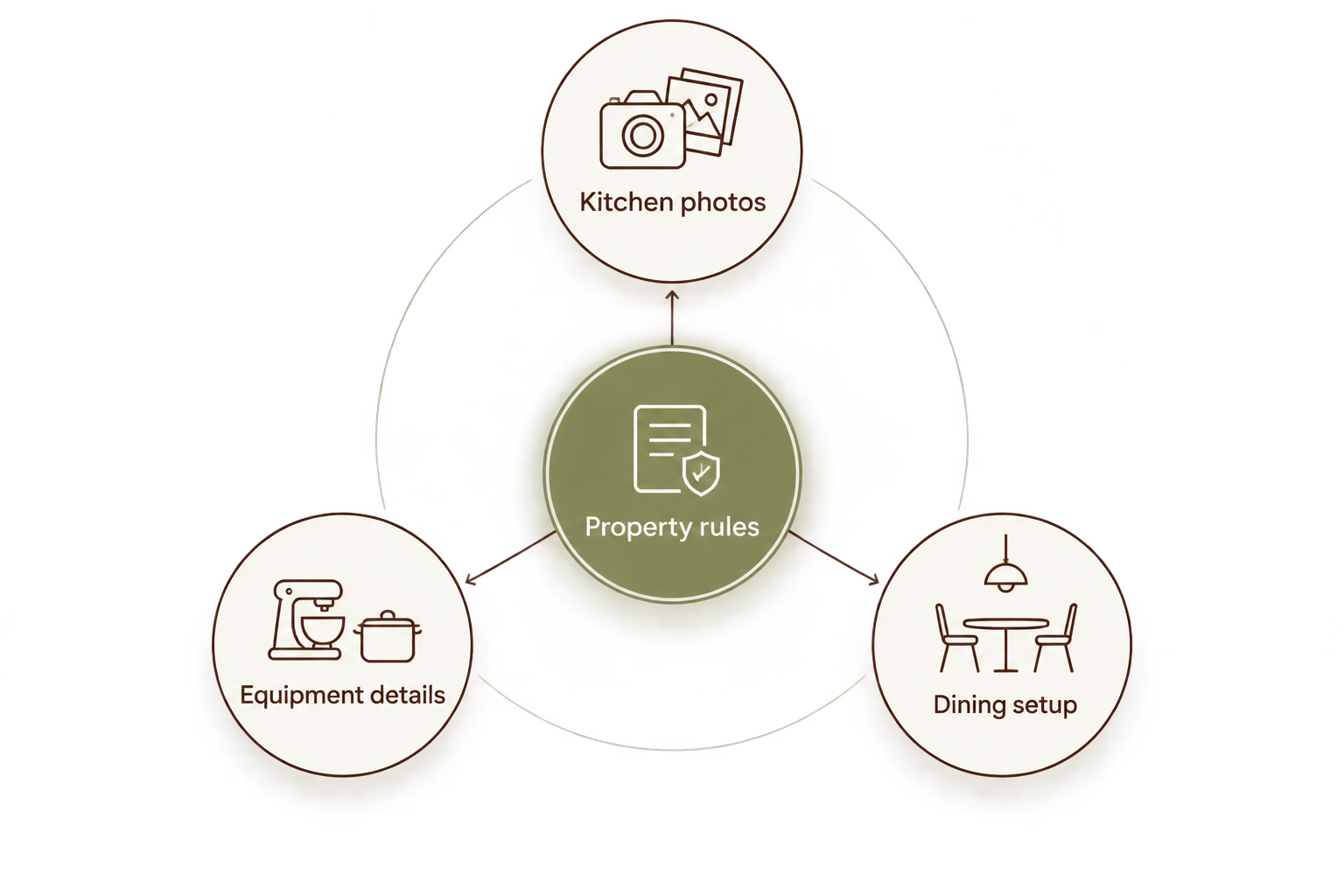
- Kitchen photos: Send current views of worktops, appliances, and the sink.
- Equipment details: Confirm the oven, cooktop, refrigeration, and cookware.
- Dining setup: Count seats and identify serving surfaces.
- Property rules: Check vendor access, parking, waste, and departure requirements.
These checks belong together: a menu depends on cooking space, service depends on the dining area, and the whole visit depends on permission to use the property as planned.
5. Build meal windows around the itinerary
Map 3 meal windows per full day—breakfast, lunch, and dinner—even when you only intend to hire a chef for dinner. This is a planning exercise, not a recommendation to book every meal. It exposes conflicts between outings, kitchen use, and the meals you want served on-site.
Separate the time guests eat from the time the chef needs access. Ask about arrival, preparation, service, and departure, then place those agreed windows beside your activities. A rental checkout or early excursion deserves attention before a menu tasting discussion.
For a 2026 corporate retreat, protect the end of the working session as carefully as the dinner start. If a meeting runs late, who tells the chef? For a family weekend, establish whether late arrivals join the planned meal or need a separate arrangement.
- Mark guest mealtimes separately from kitchen access times.
- Put off-site activities beside the relevant meal windows.
- Identify arrival-day and departure-day constraints.
- Agree on how schedule changes will be communicated.
- Confirm who decides whether a meal time changes.
6. Collect dietary needs before approving the menu
Send guests a short, private questionnaire rather than asking everyone to reply in a group chat. Separate allergies, medical dietary requirements, religious requirements, and preferences. Forward the actual requirements to the chef; do not translate them into assumptions about what someone can eat.
Build dietary needs into the meal instead of treating them as garnish changes. When discussing vegan private chef menu ideas, ask what anchors the main course and how sauces, sides, and dessert fit together. Removing an animal ingredient does not, by itself, define a complete menu.
An allergy request needs a direct conversation about ingredients, preparation, and cross-contact. Do not promise guests that a shared rental kitchen meets a particular standard before the chef has assessed the requirement and setting. If a requirement cannot be met, resolve it before confirming the meal.
- Collect each guest's requirements privately and accurately.
- Distinguish allergies from preferences and other dietary needs.
- Ask how substitutions affect the whole meal.
- Confirm whether the kitchen supports the required preparation.
- Set an agreed deadline for guest information and changes.
7. Confirm the written scope and handoff
Read the proposal as a division of responsibilities, not just a menu. You need to know what the chef handles and what remains with you, your guests, or the property manager. Clarify anything that depends on a separate arrangement before committing.
Ask for an itemized proposal covering the food, chef service, staffing, travel, rentals, and any other applicable charges. Do not assume those items are bundled. Confirm payment terms, change deadlines, cancellation terms, and the process for adjusting the guest count directly with the provider.
Finish your 2026 planning with a single handoff message containing the approved schedule, final dietary information, property access, and contact details. You focus on your guests; a clear handoff keeps you from becoming the messenger throughout dinner.
- Confirm grocery purchasing, preparation, service, and kitchen cleanup.
- Establish responsibility for tableware, linens, drinks, and ice.
- Record access instructions and agreed kitchen-use windows.
- Confirm guest-count changes and contractual deadlines.
- Share the final schedule with the chef and property contact.
Compare meal options for your retreat
Choose the format by the work you want taken off your plate. A chef-led dinner suits an on-site gathering; it is not a substitute for planning access, timing, and guest requirements. Other options deserve consideration when your group wants more flexibility or will already be away from the property.
The table compares service formats, not guaranteed inclusions. Ask each provider to put its own scope in writing.
| Option | Best for | Main advantage | Key limitation |
|---|---|---|---|
| Culinary Collective ATL retreat catering | Metro Atlanta and North Georgia hosts seeking custom on-site dining | Custom retreat catering and vacation rental chef services led by Chef Rob | You must confirm the specific meal schedule, property suitability, and service scope |
| Drop-off catering | Hosts who want prepared food and can coordinate serving | Separates food preparation from your on-site hosting tasks | Do not assume setup, serving, or cleanup is included |
| Restaurant meals | Groups already planning an off-site outing | Moves the meal out of the rental kitchen | Requires a separate plan for transport, reservations, and returning to the property |
| Host-prepared meals | Groups that actively want shared cooking | Gives your group control of shopping and cooking decisions | Leaves purchasing, preparation, timing, and cleanup with the group |
A mixed plan is also an option: handle an informal breakfast yourselves, eat lunch during an outing, and hire a chef for the evening gathering. Confirm each responsibility rather than leaving the gaps to whoever volunteers first.
Common mistakes retreat hosts make
Treating a weekend as one long dinner booking
A welcome dinner and a departure breakfast have different access and timing needs. Request the individual meals you want, then confirm the scope of each. Do not assume a dinner proposal covers the rest of the stay.
Choosing dishes before checking the property
An appealing menu does not establish whether the rental supports its preparation and service. Send kitchen details first. Adjust the menu or setup with the chef before guests form expectations around particular dishes.
Leaving cleanup undefined
Kitchen cleanup, clearing the dining table, removing decorations, and meeting the rental's checkout rules are different tasks. Ask which tasks the service covers. Give the remaining jobs an owner so they do not become a departure-morning surprise.
Collecting dietary requirements through assumptions
Do not label a guest vegetarian because that is what they ate on the last trip, or assume a familiar dish meets an allergy requirement. Collect current instructions directly. Have the chef review requirements before promising a solution.
Letting every guest direct the chef
Multiple messages create conflicting instructions about menus and timing. Choose a coordinator who gathers feedback and sends approved decisions. Guests should still share sensitive dietary information through an agreed private route.
FAQ
What does a retreat chef do?
A retreat chef provides cooking services organized around a group’s stay and meal schedule. The written agreement should identify the meals, shopping, preparation, service, and cleanup included; the title alone does not establish those responsibilities.
Can I hire a private chef for just one retreat dinner?
You can request a single dinner rather than chef service for the whole retreat. Ask the provider to confirm the specific date, property, guest count, and scope before treating the meal as booked.
Is a private chef better than drop-off catering for a retreat?
A private chef fits hosts seeking an on-site cooking experience, while drop-off catering fits hosts prepared to coordinate serving themselves. Compare the actual responsibilities in each proposal rather than choosing by the service name alone.
Can a retreat chef cook in a North Georgia cabin?
A North Georgia cabin needs a property-specific kitchen and access review before a chef confirms the setup. Culinary Collective ATL serves North Georgia; send the address, current kitchen photos, equipment details, and rental rules with your inquiry.
How far ahead should I contact a retreat chef?
Contact prospective chefs once you have your dates, location, and an outline of the meals you want. Ask each provider about its planning requirements rather than relying on a universal booking window.
Can a retreat chef accommodate vegan guests and food allergies?
Ask the chef to assess vegan menus and allergy requirements before approving the meal. Vegan menu planning and allergy cross-contact controls are different questions, and neither should be assumed from a dish name.
What should I send when requesting a retreat chef proposal?
Send the event dates, property address, expected guest count, requested meals, itinerary, and dietary requirements. Add kitchen photos and identify the person authorized to approve the plan.
One last thing
Before approving your retreat chef plan, walk through dinner from the guest's point of view: arriving, getting a drink, finding a seat, eating, and leaving the table. Then ask who handles each transition. That short exercise catches responsibilities a menu cannot show.
For your 2026 getaway, choose the meal that matters most and make its scope clear first. You do not need every moment catered to give your guests a dinner where you can sit down with them.
Related guides
- Private chef planning for corporate retreat organizers
- Connect your retreat itinerary to daily chef meal slots
- Can a private chef cook at an Airbnb or vacation rental?