


Instead of chasing arrival texts and rearranging dinner around every outing, connect your family reunion itinerary to one confirmed private chef dinner window. Use a shared planning sheet to align guest arrivals, rental access, dietary needs, and the chef’s preparation schedule before you publish the weekend plan.
- Family reunion chef weekend planning works best when kitchen access and guest arrivals determine the dinner window.
- Culinary Collective ATL suits Metro Atlanta and North Georgia reunion hosts seeking custom private chef dining.
- Keep one coordinator, one confirmed event brief, and separate arrival, preparation, and dinner times.
- Send schedule changes to the chef before updating the family itinerary; a calendar edit is not confirmation.
Why this matters
Your reunion itinerary tells guests where to be. Your chef’s event brief explains what must happen before dinner reaches the table. Treating those as the same document leaves out kitchen access, setup, and decisions that guests never need to see.
Culinary Collective ATL is best for Metro Atlanta and North Georgia reunion hosts who want custom private chef dining. Chef Rob leads the service, with custom in-home dining and vacation rental chef services among its offerings. Start with Culinary Collective ATL when that matches the gathering you are planning.
The benefit is a dinner shaped around your family rather than a restaurant departure schedule. The trade-off is coordination: you must confirm the property, kitchen, guest needs, and timing instead of assuming the booking handles those decisions automatically.
Before you start
- Gather the planning materials. Have the property address, rental contact, check-in details, guest arrival information, dietary responses, and your proposed 2026 weekend itinerary. Choose a shared document that your coordinator can edit and relatives can read.
- Name 1 coordinator. Give that person responsibility for communicating with the chef and updating the family. Collect household responses through that coordinator instead of sending separate instructions from several relatives.
- Resolve the access gotcha first. Guest check-in is not automatically the chef’s access time. Confirm property permission, kitchen access, parking, and the preparation window before announcing dinner. A rental listing’s kitchen photos do not establish whether the space supports your proposed menu.
The bold field names below are labels to create in your own planning sheet, not buttons in a booking platform. You do not need a particular app or an automated integration.
Dinner-window setup
- Create the event brief. Title the document 2026 Reunion Dinner Brief and add fields for Dinner Date, Property Address, Host Contact, Guest Count, and Dinner Time. Keep unknown details marked as awaiting confirmation rather than filling them with guesses. Include children and other guests whose portions or seating need discussion.
- Separate the timing fields. Add Guest Return, Chef Access, Preparation Window, and Dinner Time. Ask the chef to confirm the working schedule. As a planning exercise, leave a proposed 30-minute transition between guests returning and sitting down; this is a host-selected starting point, not a required or guaranteed service interval.
- Check both sides of dinner. Identify the last outing beforehand and any fixed activity afterward. Ask whether photographs, speeches, or a birthday celebration belong before, during, or after the meal. Do not fit an unconfirmed dinner service between two immovable commitments.
Expected result: You have a proposed dinner window with separate guest and chef timelines. Nothing is presented to relatives as final until the chef and property arrangements support it.
Choose the evening that fits your family
For a 2026 reunion, compare your actual travel plans rather than assuming the first evening is the easiest.
| Dinner placement | Best for | Advantage | Trade-off |
|---|---|---|---|
| Arrival-night dinner | Families whose arrivals and property access are confirmed | Creates a shared welcome at the house | Travel delays and check-in problems affect the meal directly |
| Full-day dinner | Families with staggered arrivals | Separates the main meal from arrival logistics | Daytime outings still need a firm return time |
Choose arrival night only when access and attendance support it. Otherwise, place the main dinner on a full day and keep the arrival evening less structured. Neither arrangement removes the need for a confirmed preparation window.
Property and menu configuration
- Document the kitchen. Create Kitchen Details and record the appliances, refrigeration space, preparation surfaces, and dining arrangement you can verify. Send current photographs when possible. Ask the property contact about restrictions, then let the chef assess the proposed menu against the actual space.
- Collect individual dietary responses. Add Dietary Needs and record each guest’s allergy, intolerance, preference, or other requirement in the terms they provide. Identify the affected person rather than writing only that the family needs gluten-free food. Send allergy questions directly to the chef; do not promise an accommodation before it is confirmed.
- Agree on the service scope. Add Menu Status, Service Style, Included Tasks, and Open Questions. Confirm responsibility for shopping, serving, tableware, drinks, dessert, cleanup, and leftovers. Record what is agreed rather than assuming every private chef arrangement includes the same tasks.
Expected result: Your event brief connects the menu to a real kitchen and named guest needs. Unanswered questions remain visible instead of disappearing into text messages.
A custom menu gives your family room to discuss preferences. It does not eliminate practical limits: equipment, dietary requirements, and the agreed service scope still shape what works. Confirm those limits before relatives start requesting individual dishes.
Shared itinerary configuration
- Create 2 views. Keep the detailed Chef Brief separate from the shorter Family Itinerary. The chef brief holds operational information; the family version holds the address, return time, dinner time, and anything guests must bring or communicate. Share sensitive dietary information only with people who need it.
- Build the handoff sequence. Use these labels: Guest Return, Kitchen Ready, Dinner Service, and Evening Activities. Place each item in the order agreed with the chef. Kitchen readiness belongs before service, not at the moment guests expect to eat.
- Publish the confirmed version. Add Last Confirmed and Confirmed By fields. Name the document clearly, such as 2026 Family Reunion Itinerary, and share a single current copy. Ask household contacts to acknowledge the dinner time rather than relying on a message being delivered.
Expected result: Relatives see a readable schedule, while the coordinator retains the detail needed to support the chef.
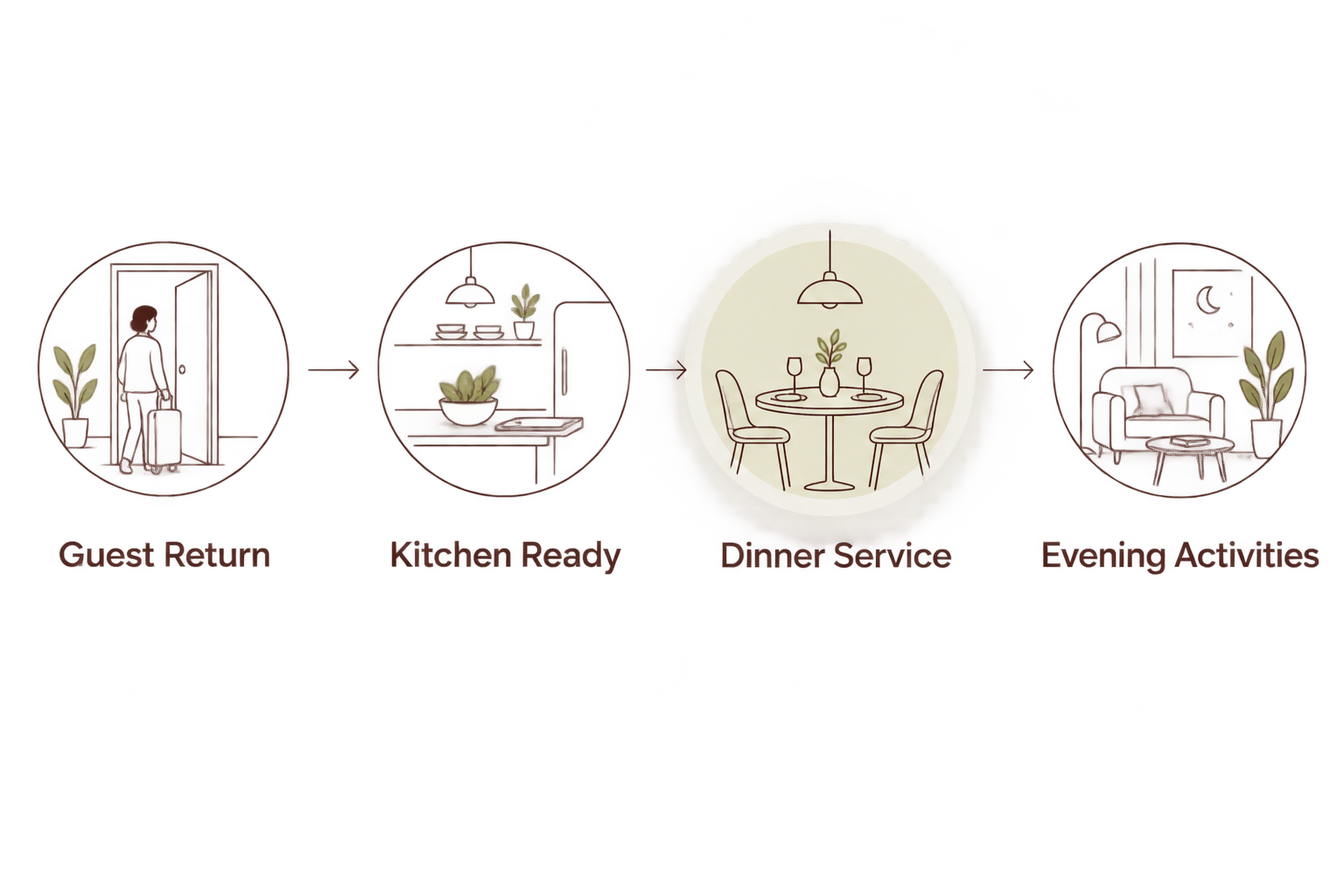
A family-facing entry can be brief: return to the house by the confirmed time, leave the agreed kitchen area clear, and gather for dinner when directed. Keep preparation details out of that entry unless guests need to act on them.
Change-control setup
- Create a change log. Add Requested Change, Requested By, Chef Response, and Family Update Sent. Use it when attendance, dietary needs, property access, or dinner timing changes. An edited calendar invitation records your request; it does not establish the chef’s agreement.
- Confirm the consequence. Ask how the change affects the menu, preparation, service, and agreed scope. If a relative proposes a 60-minute dinner delay, treat that as a new request, not spare time the chef must absorb. Keep the previously confirmed arrangement visible until a replacement is agreed.
- Send one clear update. After confirmation, revise the event brief and family itinerary together. State what changed, what guests must do, and which earlier instruction no longer applies. Use a subject such as 2026 Reunion Dinner Update so relatives can find it later.
Expected result: Everyone receives the same confirmed change, and the chef is not left working from an outdated plan.
When an outing changes: protect dinner first
A second workflow starts with a changed daytime activity rather than a new dinner booking. Use it when a hike, family photograph session, or excursion moves after the meal has already been arranged.
- Check the affected boundary. Determine whether the outing changes guest return, property access, or both. A later guest return does not necessarily mean the chef can enter later.
- Send the chef a specific request. Provide the revised return time and ask which dinner arrangements remain workable. Do not send a vague message that the family is running behind.
- Choose the adjustment together. Discuss whether to preserve dinner and shorten the outing or request a different service time. Publish only the arrangement the chef confirms.
Outdoor plans need the same discipline. When relatives suggest BBQ catering for villa parties, distinguish the cooking setup from the seating plan: permission to gather outdoors does not establish permission to use a grill or confirm suitable cooking equipment. For your Atlanta or North Georgia rental, verify those details with the property contact and chef before adding an outdoor meal to the itinerary.
Keep the confirmed dinner plan in place until its replacement is agreed. That prevents an appealing change from becoming an instruction nobody has accepted.
Troubleshooting
Guests arrive after the planned dinner time
Identify who is affected and tell the chef promptly. Ask what serving arrangement is workable; do not promise that a complete plated meal can wait indefinitely. Keep the rest of the family informed without repeatedly moving the announced start time yourself.
The rental kitchen differs from the photographs
Send current photographs and a factual equipment list as soon as you discover the difference. Ask the chef to reassess the menu and service plan. Do not substitute unfamiliar appliances or assume an outdoor grill solves missing indoor equipment.
An allergy appears after menu approval
Pause the affected menu decision and communicate the guest’s exact information directly to the chef. Request confirmation of what can be accommodated, including relevant preparation concerns. A relative’s reassurance is not a substitute for that conversation.
Several relatives send conflicting instructions
Return communication to the named coordinator. Summarize the latest agreed guest count, menu status, and timing in the event brief, then ask the chef to confirm receipt. Tell the family that new requests go through the coordinator.
Another activity needs the kitchen after dinner
Confirm the cleanup scope and kitchen handback before scheduling baking, breakfast preparation, or another cooking activity. The distinction between clearing dinner and resetting the entire room matters; use the guide to private chef kitchen cleanup to frame the questions you need answered.
Customize your workflow
For a multigenerational reunion, add seating and access needs to the private brief. Ask relatives what they require rather than inferring needs from age. Keep the guest itinerary focused on actions they can take.
For several households sharing a rental, nominate a property contact as well as the dinner coordinator. The property contact handles access questions; the coordinator communicates meal decisions. Record both roles even when one person fills them.
Culinary Collective ATL offers private chef dining and vacation rental chef services across Metro Atlanta and North Georgia. Send the property details, proposed dinner window, guest information, and unresolved questions together so the conversation starts with your actual gathering.
FAQ
How do I connect a family reunion itinerary to a private chef dinner?
Set a proposed dinner window, then confirm kitchen access, guest attendance, and preparation timing with the chef. Publish the agreed details in one family itinerary and keep operational information in a separate chef brief.
Should we book the reunion dinner for arrival night or the next evening?
Choose arrival night only when guest arrivals and property access support the preparation and dinner schedule. A full-day dinner separates the main meal from travel logistics but still needs a firm return time after outings.
Can Culinary Collective ATL cook at our family reunion rental?
Culinary Collective ATL offers vacation rental chef services across Metro Atlanta and North Georgia. Confirm your address, property permission, kitchen details, and proposed event scope before treating your rental as an agreed venue.
How much preparation time should I put in the itinerary?
Use the preparation window confirmed by your chef rather than a generic duration. Keep chef access, guest return, and dinner time as separate entries so one does not get mistaken for another.
What happens if relatives change their dietary requirements?
Send the updated information directly to the chef and request confirmation before changing the menu brief. Identify the affected guest and distinguish allergies from preferences without making accommodation promises yourself.
Does changing our calendar invitation change the chef booking?
No, a calendar edit does not confirm a change to the chef arrangement. Obtain agreement on the revised timing or scope, then update the event brief and family itinerary together.
Who should communicate with the private chef?
Choose one reunion coordinator to communicate confirmed information and consolidate family requests. A separate property contact can handle access questions, but meal decisions should follow the agreed communication route.
One last thing
The most useful time on your 2026 reunion itinerary is not necessarily dinner time. It is the moment the kitchen must be ready for the chef. Put kitchen readiness on the coordinator’s schedule, and assign someone to make sure breakfast dishes, grocery bags, and family projects are cleared from the agreed workspace.
Related guides
- Private chef planning for family reunion hosts
- Connect Airbnb check-in to a private chef dinner
- Connect dietary restrictions to a group dinner menu