




How to plan engagement party: A stress-free guide (how to plan engagement party)
Congratulations on the engagement! Now, the fun part begins: planning the party. Before you get lost in the details of playlists and party favors, let’s lay a solid foundation.
Getting these first few pieces right makes everything else fall into place so much more easily. Think of it as creating the blueprint for your celebration—it provides direction and keeps the entire process from feeling overwhelming.
Your Engagement Party Planning Blueprint
The absolute first conversation you need to have is about the vibe. What do you want this party to feel like?
Are you picturing a laid-back backyard barbecue with close friends in a quiet Atlanta suburb? Or is a sophisticated cocktail party at a chic downtown venue more your speed? There’s no wrong answer, but nailing this down first will guide every other decision you make.
Defining Your Vision and Vibe
Your vision is really the emotional heart of the event. Is this an intimate gathering for your families to finally meet, or is it a bigger bash to celebrate with your entire circle? Getting on the same page early on, especially if parents are involved in hosting, prevents a world of headaches later.
The skills here are pretty similar to what you’d use when learning how to plan a dinner party, just scaled up a bit.
As you start to dream up the details, think about the personal touches that will make the celebration uniquely yours. It’s all about making your loved one feel special before their wedding, and those small details are what guests remember most.
Setting a Realistic Budget
Okay, once you have a feel for the party’s style, it’s time to talk numbers. A clear, honest budget isn’t restrictive—it’s empowering. It’s the tool that helps you make smart decisions about your guest list, venue, and menu without any financial stress.
At a minimum, your budget should account for these key areas:
- Venue Rental: The cost for the space itself.
- Food and Beverage: This is often the biggest chunk of the budget, whether you hire a full-service caterer or an Atlanta private chef.
- Decorations: Flowers, lighting, and any other elements that create the right ambiance.
- Entertainment: From a killer Spotify playlist to a live musician or DJ.
- Invitations: The cost of digital or printed invites and postage.
Timing plays a role here, too. December is a huge month for proposals, and planning a party shortly after can ride that festive wave. With the wedding planning market expected to hit $106 billion in 2025 and 72% of couples prioritizing the guest experience from day one, the engagement party really sets the tone for everything to come.
This quick checklist will help you get the ball rolling and make sure you’re not missing any of the foundational steps.
Initial Engagement Party Planning Checklist
| Planning Step | Key Action | Timeline |
|---|---|---|
| 1. Define the Vibe | Decide on the formality: casual, cocktail, or formal. | First 1-2 days |
| 2. Set the Budget | Have an honest conversation and set a total spending limit. | First week |
| 3. Draft the Guest List | Create a preliminary list of must-invite guests. | First week |
| 4. Brainstorm Venues | List 3-5 potential locations that fit your vibe & budget. | First 1-2 weeks |
| 5. Pick a Date | Choose a few potential dates that work for key guests. | First 1-2 weeks |
Tackling these five items first will give you the clarity and confidence you need to move forward with the rest of your planning.
Key Takeaway: Think of your engagement party as the prologue to your wedding story. By establishing a clear vision and a firm budget first, you create a stress-free planning experience that truly honors your relationship and gets everyone excited for the main event.
Nailing the Perfect Atlanta Venue for Your Vibe
The right venue does more than just hold your guests; it is the party. It’s the backdrop for every photo, the container for all the laughter, and the single biggest factor in setting the mood for your entire celebration. In a city as eclectic as Atlanta, the perfect space is out there, whether you’re dreaming of historic Southern charm in a Grant Park manor or sleek, modern skyline views from a Midtown rooftop.
Think of your venue as the canvas. A cozy, historic home in Inman Park instantly whispers intimacy and romance. On the other hand, a trendy rooftop bar in West Midtown screams chic and high-energy. This is one of the biggest decisions you’ll make, and it has a domino effect on your budget, guest experience, and even your menu.
Comparing Atlanta Venue Options
Before you start scheduling tours, it helps to get the lay of the land. Atlanta’s venue scene has something for every style and budget, and knowing what’s out there will save you a ton of time and energy.
Here’s a quick rundown of the most common spots we see in the Atlanta area:
- Restaurants and Private Dining Rooms: These are perfect for smaller, more intimate get-togethers. Places in Virginia-Highland or Buckhead are fantastic because they come with built-in catering and staff, which seriously simplifies your planning. You get a professional, polished setting without having to juggle a dozen different vendors.
- Event Halls and Galleries: Think of spaces in areas like the Westside Provisions District as your blank slate. They offer incredible flexibility for décor and vendor choices but usually mean you’re bringing everything in—tables, chairs, catering, staff, you name it. This is your go-to if you have a very specific vision and don’t mind the extra logistical legwork.
- Rooftop Bars and Patios: For those jaw-dropping city views and a celebratory cocktail-party feel, you just can’t beat a rooftop. Always, always ask about their rain plan. This is Atlanta, after all, and our weather is famously unpredictable.
- Historic Homes and Gardens: If you’re after classic charm and stunning photo ops, look at locations in neighborhoods like Druid Hills. Just be aware they often come with stricter rules about vendors and décor to help preserve the property’s character.
Key Questions to Ask Every Venue Manager
Once you’ve got a shortlist, it’s time to get into the nitty-gritty. A beautiful space can quickly turn into a logistical nightmare if you don’t ask the right questions upfront. Don’t be shy about digging into the details—a great venue manager will be happy to walk you through everything.
Before you even think about signing a contract, get clear, written answers to all of your questions. This isn’t the time for assumptions. Hidden cleanup fees or unexpected vendor restrictions are where budgets and timelines go to die.
Here are the non-negotiable questions you need to ask:
- What is the total cost? Get a detailed breakdown. This should include the rental fee, any service charges, taxes, and gratuity. Be sure to ask about a food and beverage minimum and what happens if you don’t hit it.
- What’s included in the rental fee? Does it cover essentials like tables, chairs, linens, and basic A/V gear, or are those extra line items? Knowing what’s included is the only way to accurately compare the true cost of different venues.
- Are there vendor restrictions? This is a huge one. Some venues lock you into their “preferred” or “exclusive” vendor list. If you’re dreaming of hiring a specific private chef in Atlanta, you absolutely must confirm they are allowed on-site before you commit.
- What’s your alcohol policy? Can you bring your own alcohol (BYO), or do you have to buy it through them? If BYO is an option, ask about corkage fees, which can add up quickly.
- What are the setup and cleanup rules? Pin down exactly who is responsible for setting up decor and who handles the final cleanup. Some venues tack on a hefty cleanup fee, and you don’t want that as a surprise at the end of the night.
Getting these answers will give you the confidence to choose an Atlanta venue that not only looks incredible but also works seamlessly with your vision and budget.
Curating Your Guest List with Confidence
Deciding who to invite to your engagement party can feel like a delicate balancing act. You want to share this incredible moment with everyone you love, but you also want an atmosphere that feels intimate and personal—not like you’re hosting a small wedding before the actual wedding.
The key is to approach your guest list with a clear strategy. This isn’t just about logistics; it’s about setting the emotional tone for the whole celebration. The goal is to surround yourselves with your biggest supporters, the people who’ve been there from the start and will be cheering you on for years to come.
Establishing Your Guest List Ground Rules
Before a single name hits the paper, you and your partner (and anyone else involved in hosting) need to establish some ground rules. The most important question to tackle first is a classic piece of etiquette: should you only invite people who will also be invited to the wedding?
Traditionally, the answer is a firm yes. Inviting someone to the engagement party pretty much implies they’ll get a wedding invitation, too. Sticking to this rule is the easiest way to avoid awkward conversations and hurt feelings down the road. Deciding on this upfront will instantly make so many other decisions for you.
Next, talk numbers. Are you picturing a cozy gathering of 30 close friends and family, or a bigger bash for 75? Your venue and budget will obviously play a huge role here, but having a target number keeps the list from spiraling out of control.
Building Your List in Tiers
Here’s a trick that turns a stressful task into a simple, organized process. Instead of one massive, overwhelming list, break it down into tiers based on your relationship with each person.
Start by creating these distinct categories:
- Tier 1: The Non-Negotiables. This is your core group. Think immediate family (parents, siblings) and your absolute closest friends—the ones you’d call at 3 a.m. no questions asked.
- Tier 2: The Extended Circle. This next layer includes other close relatives like grandparents, aunts, uncles, and cousins, plus your wider circle of important friends.
- Tier 3: The “Would Be Nice” List. This final group might include newer friends, friendly colleagues you see outside of work, or family friends. If space and budget allow, you’ll pull from this list.
Once you’ve got your tiers, start filling them in. This method helps you prioritize without the drama. If you need to make cuts, you can simply work backward from Tier 3, knowing your most important people are already covered.
Navigating Global and Generational Trends
It also helps to know what’s happening in the wider world of weddings. Guest care is now a top priority for 72% of couples, and that starts with a thoughtfully curated list. The Knot Worldwide’s 2025 Global Wedding Report shows just how much guest counts can vary; for example, the average wedding in India hosts 330 guests, while the U.K. average is just 89.
Here in the U.S., where the average is 116 guests, a starting point of 40-60 for an engagement party feels just about right. And with Gen Z now making up 40% of the global marriable population, modern touches are becoming standard. Using QR codes on invites, for instance, has seen a 42% jump since 2021 for easy RSVP tracking. To see how other traditions are evolving, you can read the full global report.
Pro Tip: Create a shared spreadsheet with your partner to track your guest list. Include columns for names, contact info, their “tier,” RSVP status, and any dietary restrictions. This simple tool will become your absolute best friend through this process.
Managing RSVPs in the Modern Era
Once your list is locked in, it’s time to send invites and track who’s coming. Gone are the days of waiting for mail-in reply cards (unless that’s your vibe, of course!). Digital platforms have made managing RSVPs incredibly simple.
Consider using an online service that lets guests reply with a single click. Many of these platforms also let you send out friendly reminders, collect dietary info, and communicate any last-minute party updates. For busy Atlanta hosts, this kind of efficiency is a lifesaver, freeing you up to focus on the more creative parts of planning your engagement party.
Choosing Your Menu: Private Chef vs. Traditional Catering
Let’s be honest: the food and drinks are the heart and soul of any great party. They’re what get people talking, mingling, and remembering your event long after they’ve gone home. When it comes to planning your engagement party menu, your first big decision is a classic one: do you hire a private chef or go with a traditional caterer?
These two paths offer completely different experiences. The right one for you really boils down to your party’s size, your personal style, and the overall vibe you’re trying to create. This decision is about so much more than just the food on the plate; it’s about the entire atmosphere of your celebration.
The Intimate Experience of a Private Chef
Bringing a private chef into your Atlanta event is like commissioning a piece of art. It’s a deeply personal and customized culinary experience, perfect for hosts who believe the food should be a main attraction. A private chef collaborates with you to build a menu from the ground up, one that reflects your tastes, your favorite dishes, and maybe even a piece of your love story.
Imagine this: you had your first date at a cozy Italian place. A private chef can design an incredible, elevated pasta course that winks at that special memory. Or maybe you have a tricky guest list with a mix of dietary needs—gluten-free, vegan, a severe nut allergy. A great chef can create stunning, delicious dishes for every single person, ensuring no one feels like their meal was an afterthought.
This is where a private chef really shines. The service feels less like a big operation and more like you’re hosting an exclusive pop-up dinner in your own home. It’s an amazing fit for smaller, more intimate engagement parties where the focus is on incredible ingredients and a truly bespoke experience.
And while people often use the terms interchangeably, it’s good to know the subtle differences. You can learn more about a private chef vs a personal chef to figure out which service truly fits what you’re looking for.
The Efficiency of Traditional Catering
On the other hand, traditional catering services are the undisputed masters of logistics and scale. They are built from the ground up to serve larger crowds with seamless efficiency, making them the obvious choice if your guest list is creeping past 50 people.
Caterers streamline the planning process by offering set menu packages—think names like “The Southern Charm” or “The Metro Modern”—which is a huge relief for busy hosts. They come fully equipped with their own staff, gear, and proven systems for serving dozens, or even hundreds, of guests without a hitch.
This is their superpower. They excel at beautiful buffet spreads, passed hors d’oeuvres that keep the cocktail hour buzzing, and making sure no guest ever has to wait too long for a drink. While the menus might not be as completely bespoke as a private chef’s, a quality caterer will still offer plenty of room for customization and can easily handle common dietary requests. For bigger celebrations where smooth execution is key, they are a reliable, professional, and often more budget-predictable choice.
Key Insight: Your choice isn’t just about food—it’s about the experience. A private chef crafts an intimate, story-driven culinary event, while a caterer provides a seamless, professional food service for a larger crowd.
Private Chef vs Traditional Catering a Comparison
To really see the difference, it helps to put them side-by-side. Think of this table as your cheat sheet for deciding which path aligns best with your vision for the party.
| Feature | Private Chef | Traditional Catering |
|---|---|---|
| Best For | Smaller, intimate gatherings (10-50 guests) | Larger parties (50+ guests) |
| Menu Customization | Fully bespoke; created from scratch with the host | Set packages with some customization options |
| Dietary Needs | Expertly handles complex and multiple restrictions | Can accommodate common restrictions (vegetarian, gluten-free) |
| Service Style | Highly personal, interactive, and exclusive | Professional, efficient, and systemized |
| Cost Structure | Often priced per person plus a service fee; can be higher | Typically priced per person with tiered package options |
| Experience | A unique culinary event and focal point of the party | A seamless and reliable food service component |
Ultimately, both options can lead to a fantastic event. Your job is to pick the service style that feels most like you.
Crafting a Menu That Wows
Once you’ve decided on your culinary partner, the fun really begins: designing the menu! The food should always feel connected to the party’s vibe.
- For a Relaxed Backyard Party: Go for elevated comfort food. A gourmet taco bar with slow-cooked carnitas and all the fresh toppings is a guaranteed crowd-pleaser. Another great idea is a slider station with different patties (beef, chicken, veggie) and a whole spread of fun sauces and cheeses.
- For a Chic Cocktail Soiree: The key here is elegant, easy-to-eat bites. Think miniature crab cakes with a zesty remoulade, whipped goat cheese tartlets with fig jam, or beef tenderloin crostini with a sharp horseradish cream.
- For an Intimate Sit-Down Dinner: This is your chance to create a truly memorable multi-course meal. You could start with a beautiful seasonal soup, offer a choice of mains like pan-seared salmon or a perfectly cooked steak, and end with a show-stopping dessert.
And don’t forget the drinks! A signature cocktail named after an inside joke or the place you met is a fantastic personal touch. Beyond that, make sure you have a solid selection: a good red, a crisp white, a local Atlanta craft beer, and a thoughtful non-alcoholic option like sparkling cider or infused water. This ensures everyone has something special to sip on.
Bringing Your Vision to Life with Details and Logistics
You’ve locked in the big-ticket items like the venue and the menu. Now for the fun part: focusing on the details that transform a party from just an event into a truly memorable celebration. This is where the personality of your party—and you as a couple—really starts to shine.
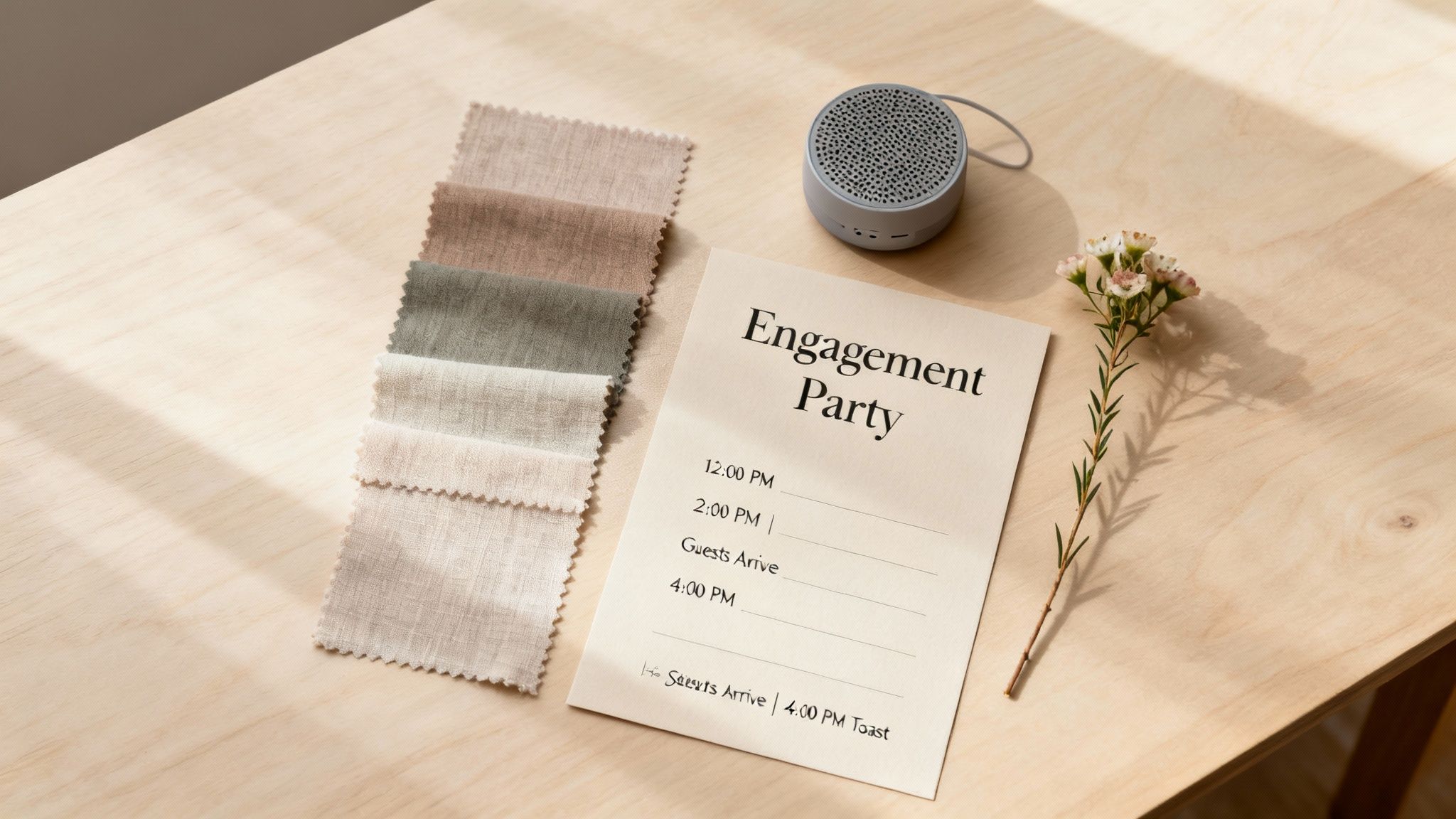
We’re talking about the decor, the invitations, and the day-of flow that makes everything feel effortless. It’s all about creating an atmosphere that feels authentically you. And don’t feel like you need some elaborate, over-the-top theme. Honestly, a simple, elegant color scheme is often all you need to pull everything together beautifully.
Elevating Your Space with Smart Decor
Decorations are what make the space feel special, but they don’t have to drain your budget. The trick is to focus on high-impact elements that create a festive mood without covering every square inch of the room. Once you’ve got your venue picked out, you can start exploring some breathtaking decoration ideas for your engagement party venue to really make the space pop.
Here are a few of my favorite budget-friendly decor hacks that always deliver:
- Lighting is Everything: Seriously, never underestimate the power of good lighting. A few strands of string lights or some strategically placed candles (venue permitting!) can create a warm, romantic glow for a fraction of the cost of huge floral arrangements.
- Focus on Key Areas: You don’t need to decorate the entire place. Zero in on the spots that get the most traffic: the entrance where guests arrive, the food and drink stations, and maybe a cute photo backdrop area.
- Bring in Personal Touches: The most memorable decorations are always personal. A simple display of photos of the two of you through the years is an incredibly touching and affordable way to decorate an entryway table or a main wall.
And don’t forget, your food display is a form of decor in itself. Learning how to set up a buffet table with intention—using different heights and beautiful platters—can turn your menu into a stunning focal point.
Sending Invitations and Managing RSVPs
Your invitations are the first taste your guests get of the celebration. They set the tone, so getting the timing and information right is key.
You’ll want to send them out four to six weeks before the party. This gives everyone plenty of notice to clear their schedules, especially if they need to travel.
Make sure your invitation clearly states these key details:
- The names of the happy couple.
- The reason for the party (e.g., “Celebrating the engagement of…”).
- The date and time.
- The full venue address.
- An RSVP-by date and how to respond (email, phone, or website).
- A note on the dress code, if you have one.
Expert Tip: To make your life infinitely easier, use a digital RSVP service. It keeps everything organized, tracks responses for you, and gives you a simple way to send out any last-minute updates to your guest list.
Ensuring a Smooth Celebration Day
If you want to actually relax and enjoy your own party, a little day-of planning goes a long, long way. This isn’t about a rigid, minute-by-minute schedule, but more of a general game plan so you, your hosts, and any vendors are all on the same page.
Your Week-Before Checklist:
- Confirm With All Vendors: A week out, shoot a quick confirmation email or make a call to your caterer, the venue, and anyone else you’ve hired.
- Make Your Playlist: Put together a playlist that matches the vibe you’re going for. I like to start with mellow tracks as guests arrive and then build up the energy as the night goes on.
- Plan Out Toasts: Figure out who will be giving toasts and give them a heads-up. Usually, a host kicks things off with a welcome, and the couple says a few words of thanks toward the end.
- Finalize the Little Things: Do a final check on your decor plans, put together any party favors, and gather all the small items you might need.
- Delegate Day-Of Tasks: Don’t try to be the hero! Ask a trusted friend or family member to be the point person for any vendor questions on the day of the party.
By getting these logistics handled ahead of time, you’re freeing yourself up to be present, soak in all the joy, and celebrate this incredible moment with the people you love most.
Answering Your Top Engagement Party Questions
Even with a perfect plan in hand, you’re bound to have a few lingering questions. Let’s be honest, figuring out the etiquette for an engagement party can feel a little tricky, especially when you’re trying to blend timeless traditions with your own modern love story.
This is your go-to guide for all those “wait, what are we supposed to do about…?” moments. We’ll cover everything from who pays the bill to how to handle gifts, so you can move forward feeling totally confident.
Who Traditionally Hosts the Engagement Party?
This is easily one of the most common questions we hear, and the answer has definitely changed over the years. Traditionally, the bride’s parents were the designated hosts. It was their way of formally announcing their daughter’s engagement to their circle of family and friends.
But that “rule” is now incredibly flexible. These days, it’s completely normal—and increasingly common—for other arrangements to take place.
- Both sets of parents might co-host, sharing the planning duties and the costs. This is a wonderful way to bring both families together from the start.
- The couple themselves might decide to throw their own party, giving them full creative and financial control over the celebration.
- Close friends or a group of friends often step up to host a more casual, laid-back celebration for the happy couple.
There are no hard and fast rules anymore. The decision really comes down to what feels right for your family dynamics and everyone’s financial situation. The best approach? An open and honest conversation to decide who will take the lead.
What’s the Deal with Engagement Party Gifts?
Here’s another area where modern etiquette has softened quite a bit. While guests often want to bring a little something to celebrate, gifts are absolutely not required or expected for an engagement party. The whole point of the event is to celebrate your happiness, not to shower you with presents.
If guests ask what they can bring, a simple and gracious response is, “Your presence is the only present we need!” Most couples don’t even have a wedding registry set up this early on. If a guest insists, they usually opt for smaller, thoughtful items like a nice bottle of champagne, a gift card to your favorite restaurant, or a sentimental picture frame.
Our Pro Tip: To gently guide your guests, you can include a simple, friendly line on the invitation or party website. Something like, “No gifts, please—just bring your dancing shoes!” works perfectly to clarify expectations in a warm way.
How Soon After the Proposal Should We Have the Party?
Timing is everything. You want to ride that wave of post-proposal excitement, but you also need enough time to plan without feeling completely overwhelmed.
As a general rule, aim to host the party within two to four months of the proposal.
This timeframe hits the sweet spot for a few reasons:
- The news is still fresh and exciting for everyone involved.
- It gives you plenty of time to lock down a venue and send out invitations (usually four to six weeks in advance).
- It leaves enough breathing room before the more intensive wedding planning really kicks into high gear.
Hosting it too soon can feel chaotic, but waiting too long can make the celebration feel like an afterthought. That two-to-four-month window is usually just right.
Do We Need to Send Formal Invitations?
The formality of your invitations should be a direct reflection of your party’s vibe. You definitely don’t need to send engraved cardstock invitations for a casual backyard barbecue.
- For a casual get-together: Digital invitations sent via email or through a service like Paperless Post are perfectly acceptable and super efficient.
- For a more formal affair: A classic printed invitation sent through the mail is a lovely touch that signals a more upscale event, like a cocktail party at a chic venue or an elegant sit-down dinner.
No matter which format you choose, just make sure the invitation clearly spells out the essential details: who, what, where, when, and the dress code.
Ready to create a menu that will be the talk of the party? The expert chefs at Culinary Collective Atl specialize in crafting bespoke culinary experiences that bring your vision to life, ensuring your engagement celebration is as delicious as it is memorable. Let us help you design the perfect menu for your Atlanta engagement party.