

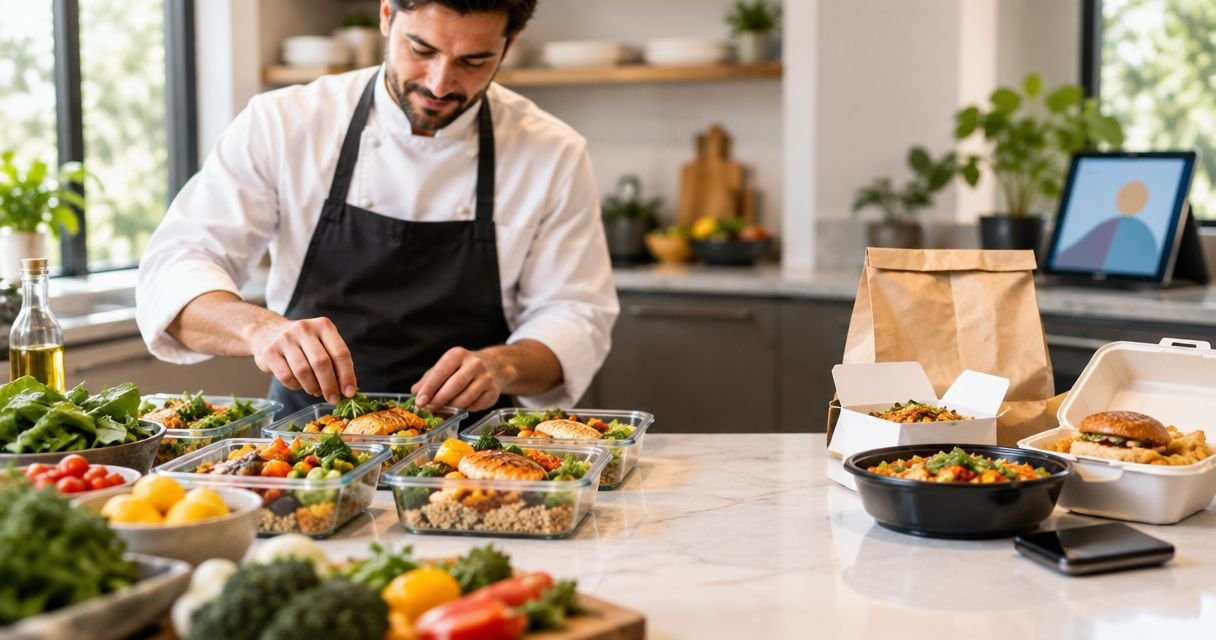
Private chef meal prep is not automatically healthier than takeout: the ingredients, portions, cooking methods, and your dietary needs determine which meal fits you better. A custom menu gives you an opportunity to request changes, but it does not guarantee balanced nutrition or medically appropriate meals. For your 2026 meal planning, compare what reaches your plate—not the job title of the person preparing it.
- Is private chef meal prep healthier than takeout? Only when the actual meals better match your nutritional needs.
- Custom menus offer ingredient control; takeout can also provide balanced meals when you choose suitable dishes and portions.
- USDA guidance applies to both: refrigerate perishable food promptly and reheat leftovers to 165°F.
- Culinary Collective ATL is not currently accepting additional weekly meal prep clients.
Why this matters
You deserve a useful answer, not a blanket promise that chef-prepared food is healthy and restaurant food is not. A rich, oversized chef-prepared meal does not become nutritionally balanced because someone cooked it in your kitchen.
The more useful question is whether you can get food that fits your needs consistently. For hosts arranging a dinner or retreat, connecting dietary restrictions to a group dinner menu starts with clear requirements rather than a general request to make everything healthy.
Is private chef meal prep healthier than takeout?
Private chef meal prep has an advantage when menu customization produces a better fit for your needs. Takeout remains a reasonable choice when the dish, portion, and preparation already fit those needs. Neither option wins by default.
For this 2026 comparison, judge both options against the same criteria. Ask what you will eat, how it is prepared, and whether you can get reliable answers about the ingredients.
| Option | Best for | Potential advantage | Limitation to check |
|---|---|---|---|
| Private chef meal prep | People who need a menu planned around stated preferences | You can discuss ingredients, portions, and preparation before cooking | Customization alone does not establish nutritional balance or medical suitability |
| Takeout | People who want a prepared meal without arranging a custom service | A suitable dish can meet your needs without a separate planning process | Ingredient details and requested changes depend on the restaurant |
For example, compare a vegetable-forward meal with beans, brown rice, and a sauce served separately against a large entrée with few vegetables and several rich accompaniments. The first meal's useful qualities come from its composition—not whether it came from a chef or a restaurant.
Likewise, cooking from scratch does not establish a meal's sodium, saturated fat, or calorie content. Those depend on the recipe and serving size. Choose the meal you can assess, rather than trusting a healthy-sounding label.
Private chef meal prep: customization is the advantage
A custom menu lets you explain what you need before the meal is prepared. That conversation can cover foods you enjoy, ingredients you avoid, preferred portions, and how you intend to serve or reheat the food.
Be specific. Asking for vegetables with each main meal gives a clearer direction than asking for clean eating, a phrase that does not describe a defined nutritional standard.
Useful requests include:
- Identify the main protein source and vegetable components.
- Explain which sauces, dressings, and garnishes accompany the dish.
- Serve adjustable additions separately where practical.
- Clarify whether a portion is intended as a complete meal or part of one.
- Provide ingredient information relevant to your dietary restrictions.
The limitation is important: a chef's culinary skill is not a substitute for individualized medical nutrition care. If you need a therapeutic diet, have your clinician or registered dietitian establish the requirements, then ask whether the cook can follow them.
Do not assume that custom means suitable for every allergy. Ingredient sourcing, shared equipment, and cross-contact procedures require their own discussion.
Takeout: evaluate the order, not the category
Takeout includes many different dishes and cooking styles. Calling all of it unhealthy hides the choices you can actually make.
Start with the meal's components. Look for vegetables, a protein source, and an appropriate carbohydrate component rather than assuming a particular cuisine is good or bad. Ask about preparation when that information affects your decision.
Practical ordering adjustments include requesting sauce separately, adding a vegetable side, or setting aside part of a portion before eating. These adjustments change what you serve yourself; they do not require treating your favorite restaurant as off-limits.
The trade-off is information. If a restaurant cannot confirm an ingredient or preparation detail, do not treat an assumption as an answer—especially for an allergy or prescribed dietary restriction.
A suitable takeout order is a better choice than a custom meal that does not fit your needs. Convenience and nutritional suitability are separate questions.
Why the healthfulness of prepared meals varies
For 2026 decisions, use these factors to compare meals without relying on claims such as homemade, gourmet, or fresh. Each factor concerns the food or its handling, not the prestige of the service.
- Ingredients: Vegetables, legumes, whole grains, protein foods, fats, and seasonings contribute different nutrients. Review the complete dish, including sauces and sides.
- Portion size: The amount served changes the amount you eat. A container is packaging, not an individualized portion recommendation.
- Preparation: Frying, roasting, steaming, and sautéing involve different recipes and amounts of added fat. Ask how the specific dish is prepared.
- Dietary fit: A meal that suits one person does not automatically suit another. Allergies and medically prescribed restrictions need more precision than general preferences.
- Food handling: Cooling, refrigeration, transport, and reheating affect safety after cooking. A balanced recipe does not cancel out unsafe storage.
- Repeatability: Consider whether the meals fit your routine and preferences. A plan that leaves food uneaten does not solve your next dinner.
These factors also help you explain what you want. Instead of requesting healthier food, describe the ingredients, serving approach, and handling information that would make the meal useful to you.
How do you compare a chef menu with your usual takeout order?
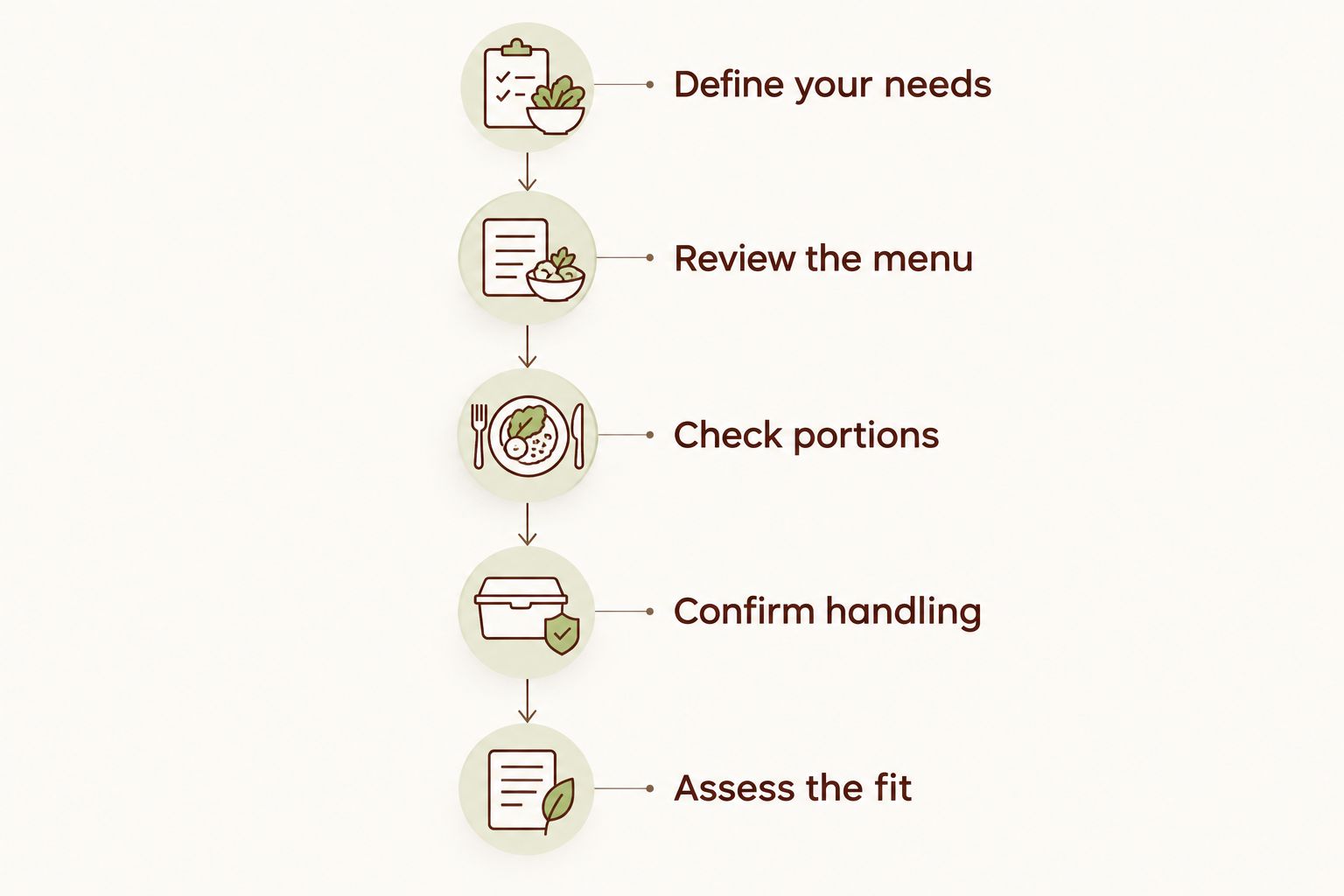
Use a written comparison before changing your routine. You do not need a perfect nutrition spreadsheet to identify obvious differences, but you do need more than attractive menu descriptions.
- Define your needs. Separate preferences from allergies and medical requirements. Note whether you want easier lunches, more vegetables, or support following an existing clinician-directed plan.
- Review the menu. Compare complete meals, including sides, drinks, sauces, and additions. An entrée name rarely tells the whole story.
- Check portions. Ask what the serving includes and decide how much you intend to eat. Do not assume every prepared container represents the right amount for you.
- Confirm handling. Find out when the food should be refrigerated, how to store it, and how to reheat it safely.
- Assess the fit. Consider taste, practicality, and whether you actually finish the food you planned to eat. Nutrition matters, but so does having a meal you will use.
Keep the comparison fair. Compare an everyday chef-prepared meal with an everyday takeout order, not a carefully designed menu with the most indulgent restaurant meal you can imagine.
How long can you safely keep prepared meals?
USDA guidance is to keep refrigerated leftovers for 3–4 days, with your refrigerator at 40°F or below. That guidance applies whether the food came from your kitchen, a private chef, or a takeout container.
USDA food-safety guidance also says to refrigerate perishable food within 2 hours, or within 1 hour when the temperature is above 90°F. Reheat leftovers to an internal temperature of 165°F, measured with a food thermometer.
For your 2026 routine, plan storage before meals arrive. Portion food into shallow containers for prompt cooling, and freeze portions you will not use within the recommended refrigerated period.
Do not use smell alone to decide whether food is safe. Foodborne pathogens do not reliably announce themselves through an unpleasant odor or appearance.
The guide to how long private chef meal prep lasts in the fridge addresses the storage question separately from menu quality. Both matter: nutritious ingredients and safe handling serve different purposes.
Can private chef meal prep help with weight management?
Private chef meal prep can support a weight-management plan when its portions and overall nutritional content fit that plan. It does not cause weight loss simply because the food is custom-made.
Ask for a clear description of what is included, and use your clinician's or registered dietitian's guidance where appropriate. Do not treat an estimated calorie claim as verified nutrition analysis.
Is takeout a bad choice if you have dietary restrictions?
Takeout is not automatically a bad choice for dietary restrictions, but you need reliable information about the specific dish. Ingredient substitutions and shared preparation areas deserve separate questions.
For a serious allergy, explain the allergy directly and ask about cross-contact controls. If the business cannot meet your requirements, choose another meal rather than relying on a special-instructions note alone.
What does this mean for a private dinner or retreat?
The same principle applies when you are hosting: tell the chef what guests need before the menu is settled. A celebration menu can respect dietary requirements without presenting dinner as a nutrition program.
Culinary Collective ATL is a private chef service for Metro Atlanta and North Georgia hosts planning custom in-home dinners, vacation-rental meals, and retreats. Chef Rob leads the service, and the useful starting point is your guest list, occasion, and clearly stated dietary requirements.
Culinary Collective ATL is not currently accepting additional weekly meal prep clients. Keep an inquiry focused on private dinners, vacation-rental chef services, or retreat catering rather than assuming recurring meal prep can be arranged.
FAQ
Is private chef meal prep always healthier than takeout?
No. Private chef meal prep is healthier only when the ingredients, portions, preparation, and dietary fit make it a better choice for you. Compare the complete meals rather than the service labels.
Can I eat healthily while still ordering takeout?
Yes, takeout can fit a balanced eating pattern. Choose meals that suit your needs, assess the portion, and include vegetables and other food groups rather than judging the meal by its source alone.
Does a private chef automatically provide low-sodium meals?
No, a private chef menu is not automatically low in sodium. State your requirements before menu planning and confirm whether the cook can provide the information or preparation changes you need.
How long can prepared meals stay in the refrigerator?
USDA guidance is 3–4 days for refrigerated leftovers, with the refrigerator at 40°F or below. Freeze portions you will not use within that period and follow safe cooling practices.
What temperature should I reheat chef-prepared meals to?
Reheat leftovers to an internal temperature of 165°F, following USDA guidance. Use a food thermometer rather than judging the temperature by steam or appearance.
Is a private chef the same as a registered dietitian?
No, a private chef prepares food, while a registered dietitian provides nutrition care within their professional scope. For a therapeutic diet, establish requirements with your healthcare professional before discussing preparation with a chef.
Is Culinary Collective ATL taking new weekly meal prep clients?
Culinary Collective ATL is not currently accepting additional weekly meal prep clients. Its private chef services include custom in-home dining, vacation-rental meals, and retreat catering across Metro Atlanta and North Georgia.
One last thing
Your most useful 2026 upgrade might be a better request, not a different meal provider. Replace make it healthy with a clear description: include vegetables, explain the sauces, clarify the serving, and provide storage instructions.
That gives you something concrete to evaluate. The best choice is the meal that fits your needs and is handled safely—not the one with the most reassuring label.
Related guides
- Can a private chef cook at an Airbnb or vacation rental?
- Private chef planning for corporate retreats
- What is included in a private chef dinner party package?