


Recovery patients’ meal prep is the advance planning, cooking, and portioning of food to make eating manageable during recovery while following the treating team’s instructions. This 2026 guide to meal prep for recovery patients focuses on caregiver coordination, safe storage, and practical routines—not a universal recovery diet.
- Meal prep for recovery patients starts with discharge instructions, not a generic menu or a chef’s preferences.
- Culinary Collective ATL is not currently accepting additional weekly meal prep clients.
- Refrigerate perishable food promptly, label portions, and freeze meals you will not use within safe storage limits.
- Ask the treating team about appetite changes, swallowing difficulties, restrictions, and nutrition support before changing meals.
Why meal prep matters for recovery patients
Recovery changes the work of feeding yourself. Shopping, carrying groceries, standing at a stove, and washing dishes become separate tasks that someone must handle. A prepared meal helps only when the patient can open it, heat it, and eat it comfortably.
The right plan reduces decisions without overriding medical instructions. Someone recovering from an operation does not automatically need the same foods as someone receiving cancer treatment or managing a swallowing disorder. Start with the individual, not the diagnosis printed on a recipe collection.
Culinary Collective ATL offers private chef dining and catering across Metro Atlanta and North Georgia. Culinary Collective ATL is best for hosts seeking private chef dining, not patients seeking a prescribed recovery diet. This guide is educational; it does not replace instructions from a physician, registered dietitian, or swallowing specialist.
Build a recovery meal routine for 2026
Start with the discharge instructions
Put the written care instructions beside your planning sheet before choosing recipes. Look for prescribed dietary restrictions, fluid instructions, food textures, allergies, and any directions connected to medicines. If something is unclear, ask the treating team rather than translating medical terms yourself.
Avoid treating common recovery advice as a prescription. Increasing protein, fiber, or fluids is not automatically appropriate for every patient, especially when the care plan includes restrictions.
Write the confirmed instructions in plain language so everyone helping with food follows the same plan. Record who provided the guidance and when it was updated.
- Copy confirmed allergies and restrictions onto the meal-planning sheet.
- Ask whether food texture or liquid consistency needs modification.
- Confirm any food-related instructions with the pharmacist.
- Identify the clinician to contact with nutrition questions.
- Keep the latest instructions somewhere caregivers can find them.
Check what the patient can manage
A carefully cooked dinner is not useful if the container is too heavy or its lid is difficult to remove. Walk through the whole meal process with the patient: reaching the food, opening it, reheating it, carrying it, and eating.
Ask about familiar foods, current preferences, and smells that feel unpleasant. Let the patient describe what works instead of assuming that a favorite meal still appeals during recovery. Preserve choice wherever the care plan allows it.
Use a handwritten checklist first. You do not need a subscription or a complicated scheduling system to understand where help is needed.
- Check whether the patient can safely use the microwave or stove.
- Choose containers the patient can open without struggling.
- Keep frequently used food within comfortable reach.
- Ask which foods currently sound appealing or unappealing.
- Arrange help with lifting, serving, and cleanup when needed.
Assign the work before choosing a service
Start by dividing the tasks among willing household members or caregivers. Separate shopping, cooking, delivery, reheating, and washing up; one person does not have to own every part. Name a backup for essential tasks.
Outside help belongs after this assessment, not before it. If you evaluate a food provider, ask whether it can follow the specific written requirements, identify ingredients, and explain its handling procedures. Convenience does not establish medical suitability.
Culinary Collective ATL is not currently accepting additional weekly meal prep clients. Do not build a recovery support plan around booking that service; organize household help or assess other providers against the patient’s actual requirements.
- Assign a named person to each food-related task.
- Choose one place for schedule changes and delivery notes.
- Confirm who will receive and refrigerate delivered food.
- Ask prospective providers about ingredients and preparation practices.
- Keep a backup meal option that meets the care instructions.
Plan meals around the confirmed requirements
Build the menu from foods the patient already tolerates and the treating team permits. Repetition is useful when it makes shopping and preparation easier, but leave room to change course if appetite or preferences shift.
Keep components separate when that helps the patient choose what to eat. For example, serving a sauce separately preserves flexibility—but it does not make an unsuitable meal appropriate for a prescribed diet. Check every component against the same instructions.
For your 2026 planning sheet, distinguish a preference from a medical requirement. A dislike can guide the menu; an allergy or prescribed restriction must govern preparation and ingredient selection.
- List acceptable meals before writing the grocery list.
- Check packaged-food labels against confirmed restrictions.
- Record substitutions instead of making untracked ingredient changes.
- Plan portions around current appetite and professional guidance.
- Keep an acceptable backup for days when the planned meal does not appeal.
Cook, cool, and store food safely
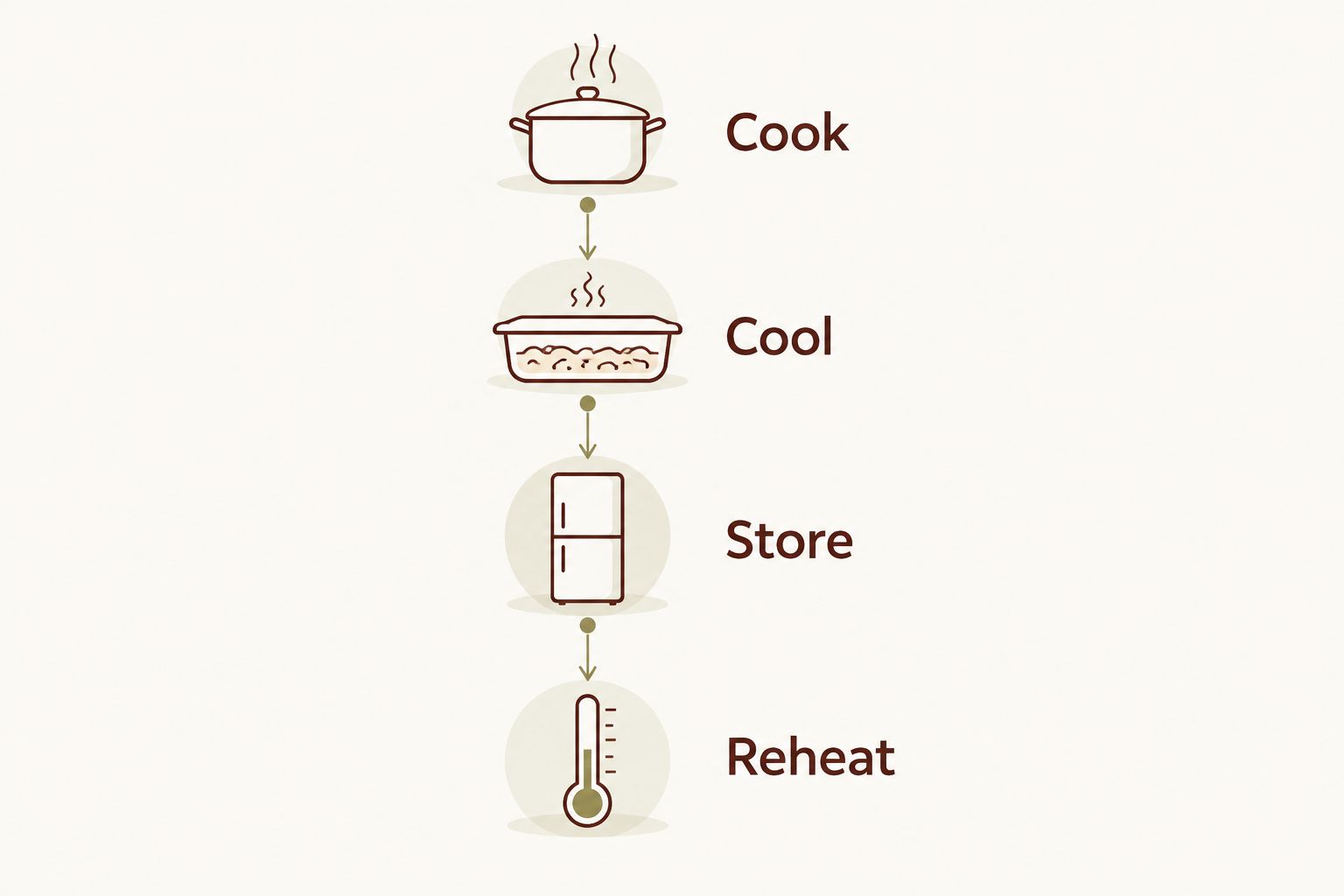
Use a food thermometer rather than judging safety by appearance. Keep raw ingredients away from ready-to-eat food, wash hands and preparation surfaces, and refrigerate cooked food promptly. A large pot left on the counter is not a storage plan.
USDA consumer guidance for household leftovers recommends refrigeration within 2 hours, or within 1 hour when the temperature is above 90°F. Divide large amounts into shallow containers so food cools more quickly. Keep the refrigerator at 40°F or below.
USDA guidance also sets a refrigerated storage window of 3–4 days for leftovers. Freeze portions intended for later in the week rather than treating a full week in the refrigerator as safe. Follow stricter instructions when the patient’s clinical team supplies them.
- Separate raw meat, poultry, and seafood from ready-to-eat ingredients.
- Divide cooked food into shallow, manageable containers.
- Label each portion with its contents and preparation date.
- Refrigerate promptly and check the refrigerator thermometer.
- Freeze later-week portions within the safe storage window.
Make reheating clear and manageable
Write instructions for the actual meal and appliance, not a generic reheating time. Microwaves heat unevenly, and container size affects the result. USDA guidance recommends reheating leftovers to 165°F, checked with a food thermometer.
Cover food appropriately, stir or rotate it where practical, and check more than one spot. If the patient cannot do this safely, assign reheating to a caregiver rather than leaving an instruction label as the only support.
Keep the handoff simple: the next person should know what the meal contains, where it belongs, and what needs to happen before serving it.
- Use containers suitable for the intended reheating method.
- Identify any lids or packaging that must be removed.
- Include a reminder to check the temperature with a thermometer.
- Label frozen portions clearly and thaw them safely in the refrigerator.
- Confirm who will reheat and serve each meal.
Review the plan as recovery changes
A meal routine should respond to the patient, not continue unchanged because the freezer is full. Ask what was eaten, what was difficult, and which tasks required more help than expected. Keep observations factual rather than assigning a medical explanation.
Contact the treating team about persistent poor intake, repeated vomiting, difficulty swallowing, or other concerns covered in the discharge instructions. Follow the care team’s urgent-care directions when symptoms require prompt attention.
Date each revision to your 2026 meal plan. Remove old copies so a helper does not accidentally follow instructions that have changed.
- Record meals declined and the patient’s stated reason.
- Note practical problems with packaging, reheating, or serving.
- Share relevant eating concerns with the treating team.
- Update the grocery list after confirmed dietary changes.
- Replace outdated instructions wherever caregivers keep them.
Compare options for recovery meal support
Choose support by the task it solves and the requirements it can meet. No option below is automatically suitable for every recovery patient. A meal provider handles food; a clinical professional assesses medical nutrition needs.
| Option | Best for | Main advantage | Key limitation |
|---|---|---|---|
| Household batch cooking | Patients with reliable cooking help | Direct control over recipes and portions | Requires shopping, preparation, and safe storage |
| Caregiver meal rotation | Households sharing responsibility | Distributes practical work | Needs consistent ingredient and handoff instructions |
| Prepared meal provider | Patients who need less cooking work | Reduces preparation tasks | Ingredients, textures, and restrictions require individual verification |
| Private chef meal preparation | Households assessing customized cooking help | Allows discussion of specific preparation needs | Suitability depends on the provider’s confirmed scope |
| Registered dietitian support | Patients needing individualized nutrition guidance | Connects food planning to clinical needs | Does not itself provide daily cooking or delivery |
Before choosing paid help in 2026, request a written explanation of the work included. Clarify shopping, ingredient selection, preparation location, portioning, storage instructions, and cleanup. Do not assume that a service described as personalized includes medical nutrition assessment.
Common mistakes caregivers make
Treating every recovery diet as the same
A list of recovery foods cannot account for every procedure, condition, medication, or swallowing requirement. Start with the treating team’s instructions and ask for clarification when advice conflicts. Avoid adding restrictions simply because a food appears on an online list.
Refrigerating the whole week’s cooking
Weekly planning does not mean every cooked portion belongs in the refrigerator until the end of the week. Apply the USDA 3–4-day leftover guidance and freeze portions intended for later. Labeling helps only when someone acts on the dates.
Giving every helper different instructions
A text message to one relative and a separate conversation with another create room for mistakes. Use one current written plan, including restrictions, delivery arrangements, and the person responsible for refrigerating food. Update everyone when the clinical instructions change.
Choosing complicated meals the patient cannot handle
A meal can fit the written diet and still be difficult to eat independently. Consider opening containers, cutting food, lifting dishes, and reaching the table. Solve those practical barriers before adding more recipes.
Assuming a chef replaces a clinical professional
Cooking expertise and medical nutrition care are different services. Culinary Collective ATL offers private chef dining and catering; recovery-specific dietary decisions belong with the treating team. Ask food providers to explain their scope rather than assuming credentials or capabilities.
FAQ
What is the best meal prep for recovery patients?
The best meal prep for recovery patients follows their written care instructions and matches what they can safely manage. Choose familiar, acceptable meals and arrange help with preparation, reheating, and serving where needed.
Can I cook all of a recovery patient’s meals once a week?
You can plan weekly, but you should not refrigerate every cooked meal for the entire week. USDA guidance recommends using refrigerated leftovers within 3–4 days; freeze portions intended for later.
What temperature should I reheat prepared meals to?
USDA guidance recommends reheating leftovers to 165°F, measured with a food thermometer. Stir or rotate food where practical and check more than one spot because heating can be uneven.
Should someone recovering from surgery eat more protein?
Ask the treating team or a registered dietitian for an individualized recommendation. Do not set a protein target independently when the patient has prescribed restrictions or other medical nutrition needs.
What should I do if a recovery patient does not want to eat?
Tell the treating team about persistent poor intake and follow the discharge instructions for concerning symptoms. Record what the patient reports, including nausea, swallowing difficulty, or discomfort, without trying to diagnose the cause.
Is a prepared meal service better than family cooking?
Neither option is automatically better; choose the arrangement that meets the patient’s requirements and provides dependable handling and support. Verify ingredients, restrictions, storage instructions, and who will receive and reheat the food.
Can I book weekly recovery meal prep with Culinary Collective ATL?
Culinary Collective ATL is not currently accepting additional weekly meal prep clients. Build the recovery meal plan around confirmed household support or another provider whose suitability you have checked.
One last thing
Test the meal handoff before filling the freezer. Have the patient or caregiver take one portion through the complete process: find it, open it, reheat it, carry it, and eat it. That practical check can reveal a problem a recipe list misses.
For a 2026 recovery plan, the most useful next move is simple: put the confirmed care instructions and named meal helpers on the same page. Food preparation works better when everyone knows their responsibility.
Related guides
- Private chef services for Airbnb rentals in Atlanta
- How much does a private chef cost for a birthday party?