

Instead of chasing guest preferences, menu changes, and arrival details across messages, organize your Atlanta private chef booking around one shared event brief. Move from inquiry to menu agreement, kitchen preparation, and dinner-day handoff so you can spend the evening with your guests rather than managing it.
- For the private chef booking process Atlanta hosts need, settle location, guest count, dietary needs, and kitchen access first.
- Culinary Collective ATL suits hosts seeking custom private chef dining in Metro Atlanta and North Georgia.
- Keep the menu, service scope, and dinner timeline in one written plan.
- For vacation rental dinners, confirm property permission and kitchen access before finalizing arrangements.
Why this matters
A private dinner involves more than choosing dishes. Your guest list affects the menu, your kitchen affects preparation, and your access arrangements affect when work can begin. Resolve those connections before the evening, not while guests are arriving.
Culinary Collective ATL is best for Metro Atlanta and North Georgia hosts seeking custom private chef dining. Chef Rob leads the service, which includes in-home dinners, vacation rental chef services, and retreat catering. Start with Culinary Collective ATL and prepare an inquiry that explains the occasion rather than sending only a date.
For your 2026 event, use the workflow below as a host-side planning guide. Confirm the actual booking terms directly; a planning checklist does not replace an agreed proposal or establish a reservation.
Before you start
- Gather the event essentials. Have your preferred date, location, estimated guest count, occasion, and desired dinner time ready. Name one host contact who can approve decisions.
- Collect guest information privately. Ask about allergies, dietary restrictions, and strong preferences before discussing dishes. Keep allergies separate from dislikes so the chef can assess each accurately.
- Check permission and access first. For a rental or shared venue, confirm that outside food preparation and your planned gathering are permitted. Identify who provides entry; a beautiful kitchen is no help if the chef cannot access it.
You do not need a finished menu to inquire. You need enough information to explain the dinner you want and the practical conditions around it.
Event brief
Turn your inquiry into a usable dinner plan
- Write the event snapshot. Include the date, address or neighborhood, occasion, and estimated guest count. Mark anything undecided instead of presenting a guess as final.
- Describe the evening. Explain whether guests should sit together for a focused dinner, gather around shared dishes, or eat around a retreat schedule. State the atmosphere you want before naming individual dishes.
- Separate requirements from preferences. List allergies and dietary restrictions first. Then add favorite ingredients, disliked foods, and requests that are flexible.
- Explain the space. Say whether the dinner takes place in your home, a vacation rental, or a retreat venue. Mention known access restrictions and anything unusual about the kitchen or dining area.
- Keep one decision record. Use 1 shared planning brief for the latest details. Send approved changes back through the agreed communication channel rather than relying on separate guest messages.
Expected result: Your inquiry explains who is attending, where the dinner happens, and what the chef needs to assess. Open questions remain visible instead of becoming assumptions.
A practical brief uses short field labels: event date, location, guest count, occasion, dietary needs, dinner time, kitchen details, and open questions. These are suggested planning labels, not website form fields.
For a 2026 celebration with several organizers, designate one approver. Other hosts can contribute ideas, but one person should communicate the final decision so conflicting instructions do not become competing versions of the dinner.
Menu and service agreement
Match the food to the way you want to host
- Discuss the menu direction. Describe what guests enjoy and how the meal fits the occasion. Ask Chef Rob which dishes suit the group and kitchen rather than treating an inspiration photo as a production specification.
- Choose a service direction to discuss. Plated and shared-table dining create different evenings. Use the comparison below to explain your preference, then confirm what can be arranged for your event.
- Request a clear scope. Ask what preparation, service, equipment, tableware, and cleanup are included. Identify what you or the property must provide; do not assume that every hosting task belongs to the chef.
- Review the written terms. Confirm the menu, guest count, service scope, payment requirements, change deadlines, and cancellation terms directly before treating the booking as settled.
| Service direction to discuss | Best for | Advantage | Trade-off to plan around |
|---|---|---|---|
| Plated dinner | Hosts who want a shared, seated dining experience | Gives each guest an individually presented dish | Requires agreement on serving space and course timing |
| Shared-table dinner | Hosts who want guests to serve themselves at the table | Makes shared dishes part of the gathering | Serving dishes compete with decorations for table space |
These are planning options, not a statement that every format is available for every booking. Choose the service direction around your guests and space, then confirm the arrangement.
Expected result: You have a menu direction and written service scope, with responsibilities assigned. You know which terms still need agreement before the dinner is confirmed.
Culinary Collective ATL provides custom private chef dining; your brief should leave room for that customization. Share the experience you want, then work through practical constraints rather than demanding a fixed menu before the chef understands the event.
Kitchen and dinner timeline
Prepare the space before the chef arrives
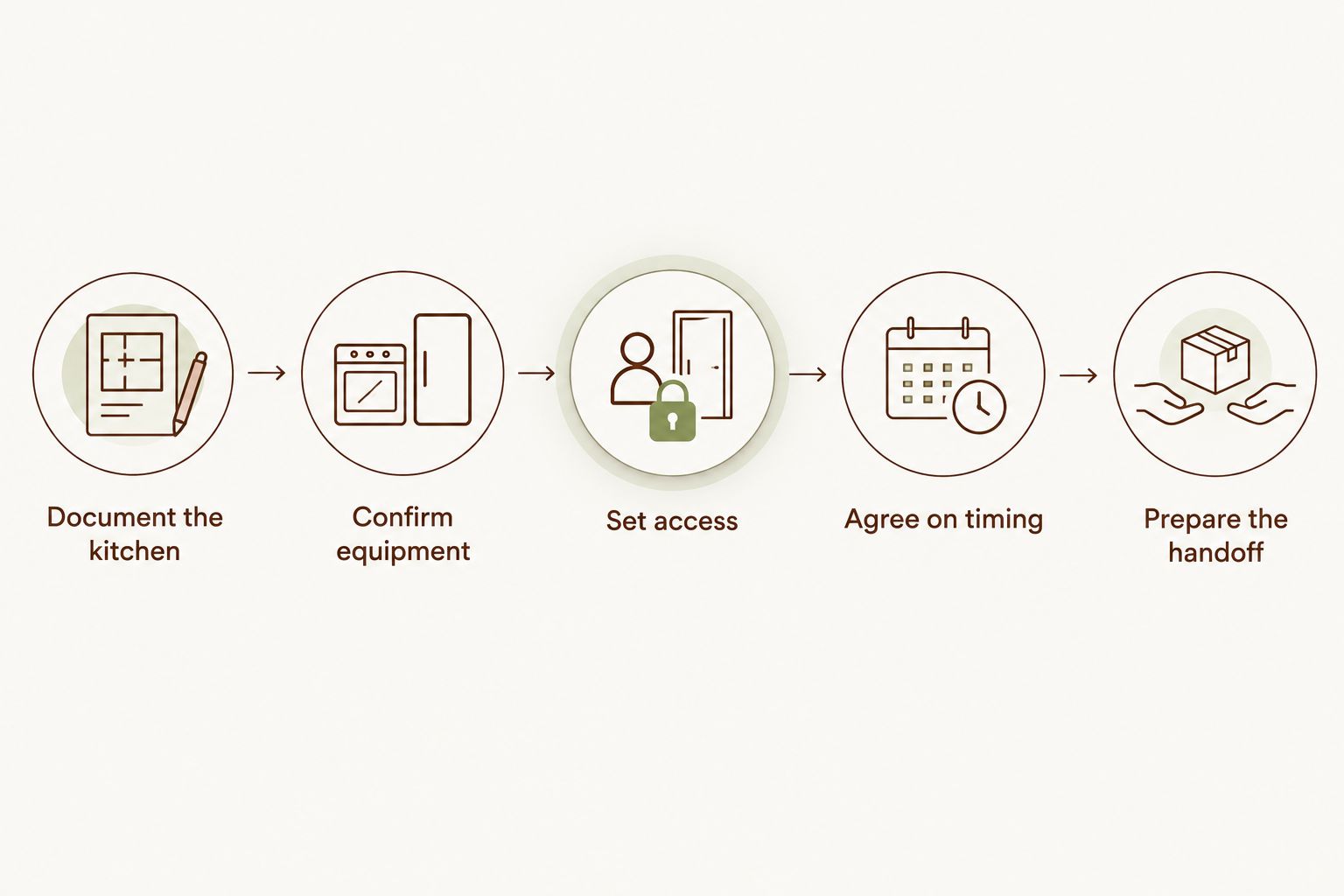
- Document the kitchen. As a practical starting point, take 3 kitchen photos: the cooking area, refrigerator interior, and main work surface. Add appliance details when requested; photos alone do not establish that equipment works.
- Confirm equipment and supplies. Ask what the chef brings and what must already be present. Discuss cookware, serving pieces, guest tableware, and any equipment needed for the agreed menu.
- Set the access plan. Confirm parking, entry instructions, stairs or elevators, and the person reachable on arrival. Share access details privately, not in a guest-facing invitation.
- Agree on the timeline. Record arrival, preparation access, guest arrival, dinner service, and the expected finish in 1 final timeline. Do not invent an arrival window before discussing the menu and space.
- Prepare the handoff. Clear the agreed work area, make the required storage space accessible, and keep unrelated kitchen activity out of the preparation period.
Expected result: The chef and host share an access plan, kitchen expectations, and a dinner timeline. The host is no longer the only person holding essential logistical information.
For a 2026 vacation rental dinner, verify kitchen details with the property contact rather than relying entirely on listing photos. Ask about the appliances and supplies relevant to the agreed meal, and tell the chef when an answer remains unconfirmed.
Dinner-day handoff
Keep hosting decisions out of the service window
- Check for changes. Review attendance, dietary information, access, and timing against the agreed plan. Communicate differences immediately rather than waiting until food preparation begins.
- Introduce the host contact. Make sure the chef knows who can answer questions. You can delegate this role if you want to stay with your guests.
- Protect the preparation area. Direct drinks, bags, and guest traffic away from the agreed work surfaces. Tell guests where they can gather without interrupting preparation.
- Follow the agreed service plan. Coordinate speeches, surprises, and other activities around dinner timing. Discuss changes instead of assuming that a finished dish can wait indefinitely.
- Complete the final handoff. Review any remaining host responsibilities, questions about leftovers, and the agreed cleanup scope before the service ends.
Expected result: You have a clear point of contact and fewer last-minute decisions competing with dinner. The evening follows the plan without requiring you to supervise every movement.
The benefit of a private chef dinner is personal attention to the meal. The trade-off is that a home or rental kitchen needs advance coordination; it is not a restaurant kitchen with a fixed operating setup.
When the guest list or property changes
An updated dinner needs an updated plan, not just another message. Use this second workflow whenever a meaningful detail changes after the initial agreement.
- Name the change. State exactly what changed: attendance, dietary needs, property, access, or dinner time.
- Request an impact review. Ask which parts of the menu, preparation, service scope, or written terms need revision.
- Confirm the replacement details. Get agreement before treating the change as accepted. Sending a request does not establish approval.
- Update the shared brief. Mark the revised version clearly and replace superseded instructions.
For your 2026 gathering, this is especially useful when several households coordinate a celebration. A guest-count change belongs in the same planning record as the menu, not only in the family group chat.
Expected result: Everyone works from the current agreement, and earlier instructions stop circulating as if they still apply.
Troubleshooting
A guest reports an allergy after menu discussions
Tell the chef immediately and identify the affected guest and restriction clearly. Ask for an assessment before promising that an existing dish can be adapted; removing a visible ingredient does not address every cross-contact concern.
The rental kitchen differs from the listing
Send current photos and describe the exact difference. Ask the chef to reassess the plan before improvising equipment substitutions or moving preparation elsewhere.
The guest count changes after agreement
Provide the revised count and ask what needs to change. Do not assume the same quantities, timing, or service arrangements still apply, and do not promise additional meals before receiving confirmation.
Several hosts send conflicting instructions
Choose one approver and consolidate the decisions into the shared brief. Have that person confirm which instructions replace the earlier ones so the chef does not have to resolve disagreements between organizers.
Guests arrive later than the planned dinner time
Contact the chef as soon as the delay is known. Ask which timing adjustments are practical rather than promising guests that every course can simply move back unchanged.
Customize your workflow
A birthday dinner needs space for the celebration itself. Include speeches, a surprise entrance, or a separate dessert plan in the brief so those moments do not collide with service. Use the private chef birthday party cost guide to organize your questions about scope before requesting event-specific terms.
A retreat needs a different emphasis: explain the session schedule, venue contact, and when guests must return to activities. For corporate groups, identify who approves decisions and who manages the venue; those responsibilities do not always belong to the same person.
For 2026 private dinners, send the occasion and constraints first, not a finished production plan. Culinary Collective ATL can then discuss your custom dining request around the people and setting that matter to you.
Plan your private chef dinner
Share your occasion, location, guest count, and dietary needs to begin the conversation.
FAQ
How does the private chef booking process in Atlanta work?
Start with your date, location, guest count, occasion, and dietary needs, then agree on the menu, service scope, kitchen access, and dinner timeline. Confirm the provider’s written booking terms before treating the reservation as settled.
What should I send with my first private chef inquiry?
Send the event date, location, estimated guest count, occasion, preferred dinner time, and known dietary restrictions. Identify unresolved details clearly so they can be discussed rather than assumed.
Do I need to choose a menu before contacting Chef Rob?
You do not need a finished menu to explain your event. Culinary Collective ATL offers custom private chef dining, so share your preferences and requirements as the starting point for discussion.
Can I arrange a private chef dinner at an Atlanta Airbnb?
Culinary Collective ATL offers vacation rental chef services. Confirm that the property permits the gathering and outside food preparation, then discuss kitchen access and equipment before finalizing arrangements.
What happens if my guest count changes?
Send the revised count and request confirmation of any changes to the menu, service plan, or written terms. Do not assume additional guests are included until the revised arrangement is agreed.
Should I choose plated or shared-table dining?
Choose plated dining for individually presented dishes and shared-table dining when serving from communal dishes suits the gathering. Discuss kitchen capacity, table space, and the proposed format with the chef before deciding.
What should I confirm about cleanup before dinner?
Ask exactly which cleanup tasks are included and which remain the host’s responsibility. Put the agreed scope alongside equipment, tableware, and service details so the end-of-evening handoff is clear.
One last thing
Your guest invitation and chef timeline need different information. Guests need to know when to arrive; the chef needs to know when access begins and when dinner should reach the table. Keep those times separate in the plan, and you remove an avoidable source of dinner-day confusion.
Related guides