


Yes—weekly meal prep is worth it for busy professionals when you have predictable meals to cover, enjoy the food you prepare, and can store it safely. It is not worth filling your refrigerator with meals your calendar will not let you eat. The hidden commitment is the planning, shopping, cooking, and cleanup that happens before your workweek starts.
- Is weekly meal prep worth it? Yes, when your planned meals match your actual schedule and food preferences.
- Batch cooking suits predictable weeks; ingredient prep suits people who want more variety.
- Refrigerated cooked leftovers generally keep for 3–4 days under USDA guidance; freeze portions needed later.
- Culinary Collective ATL is not accepting additional weekly meal prep clients; this guide focuses on your own routine.
For a celebration rather than everyday meals, Culinary Collective ATL private chef services address a different need: a custom dining experience for your guests.
Is weekly meal prep worth it for busy professionals?
Weekly meal prep is worth doing when it replaces recurring dinner decisions without creating a bigger chore. Choose the approach that fits your week, rather than committing to a refrigerator full of identical containers.
| Approach | Best for | Main benefit | Main drawback |
|---|---|---|---|
| Batch-cooked meals | Predictable workweeks | Finished meals need little preparation before eating | Repetition and reheated textures can become tiresome |
| Prepared ingredients | People who want variety | Components can become different meals | Some assembly or cooking remains |
| Paid meal preparation | People who want to delegate cooking | Someone else handles agreed preparation tasks | Menus, terms, and service scope need checking |
| Cooking each day | Changing schedules and spontaneous eaters | You choose dinner close to mealtime | Cooking and cleanup remain daily responsibilities |
None of these approaches wins for everyone. Your best choice depends on which task you actually want to remove: deciding, shopping, cooking, or cleaning.
Why this matters for your 2026 workweek
The useful question is not whether meal prep looks organized. It is whether it makes your evenings easier without wasting food or consuming the part of your weekend you wanted back.
Start with the meal that creates the most friction. If lunch is the problem, preparing dinner does not fix it. If you regularly arrive home hungry with no ingredients, a prepared lunch alone leaves that problem untouched.
A smaller routine also makes failure easier to diagnose. You can tell whether the issue was the recipe, portion size, storage, or an unexpected change of plans. Prepare for the week you actually have, not the week you wish you had.
Batch cooking: best for predictable workweeks
Batch cooking means preparing finished dishes ahead of time so they are ready to reheat or serve. It fits a calendar with dependable at-home meals and people who are comfortable eating the same dish again.
Choose food you already enjoy as leftovers. A recipe that tastes excellent straight from the pan is not automatically a good choice after refrigeration and reheating. Consider texture as well as flavor before making a large batch.
The main drawback is commitment. Once you cook the food, you still need an appropriate opportunity to eat it. An unexpected dinner invitation or work event can disrupt the plan.
Choose batch cooking when predictability matters more to you than daily variety. Keep later meals frozen rather than assuming everything belongs in the refrigerator until the end of the week.
Ingredient prep: best for flexible meals
Ingredient prep means getting components ready without deciding every finished plate in advance. You might prepare a cooked grain, wash suitable produce, or make a dressing, then assemble meals around what sounds good that day.
This approach suits you if repetition is the reason previous meal-prep attempts failed. Ingredients can take different roles across meals, so lunch does not have to feel like a repeat of dinner.
The trade-off is unfinished work. You still need to assemble, heat, season, or cook parts of the meal. Ingredient prep is not the right promise if you want to open a container and eat immediately.
Choose ingredient prep when flexibility matters more than having every meal finished. Before preparing a component, name the meals it could realistically become; otherwise, you are just moving undecided ingredients into different containers.
Paid preparation: best for delegating the cooking
Paid preparation is a different decision from doing your own meal prep. You are deciding whether to hand over agreed tasks, not simply whether cooking ahead helps.
Ask what the arrangement includes before comparing it with your current routine. Menu planning, ingredient purchasing, cooking location, portioning, delivery, and kitchen cleanup are separate responsibilities. Do not assume a service includes all of them.
The benefit is delegation. The drawback is that a menu or service format that does not match your preferences still leaves you with meals you do not want.
Consider paid preparation only after identifying the work you want someone else to handle. A clearly defined service is easier to evaluate than a broad promise to make dinner simpler.
Why the value of weekly meal prep varies
Your result depends on practical constraints, not how ambitious your menu looks. Use these factors to decide how much preparation belongs in your 2026 routine:
- Schedule certainty: Count the meals you expect to eat at home or take to work. Leave uncertain meals uncommitted.
- Repetition tolerance: Decide whether you enjoy repeated dishes or need components you can combine differently.
- Kitchen access: Check whether you can refrigerate and reheat food wherever you plan to eat it.
- Storage space: Confirm that your refrigerator and freezer can hold the food safely without making everything difficult to find.
- Preparation workload: Include planning, shopping, washing dishes, and packing meals—not just time at the stove.
- Household preferences: Account for different appetites, dietary restrictions, and schedules before choosing a shared menu.
Do not score these factors against an imaginary ideal. A routine that works for your household is more useful than a larger plan you abandon.
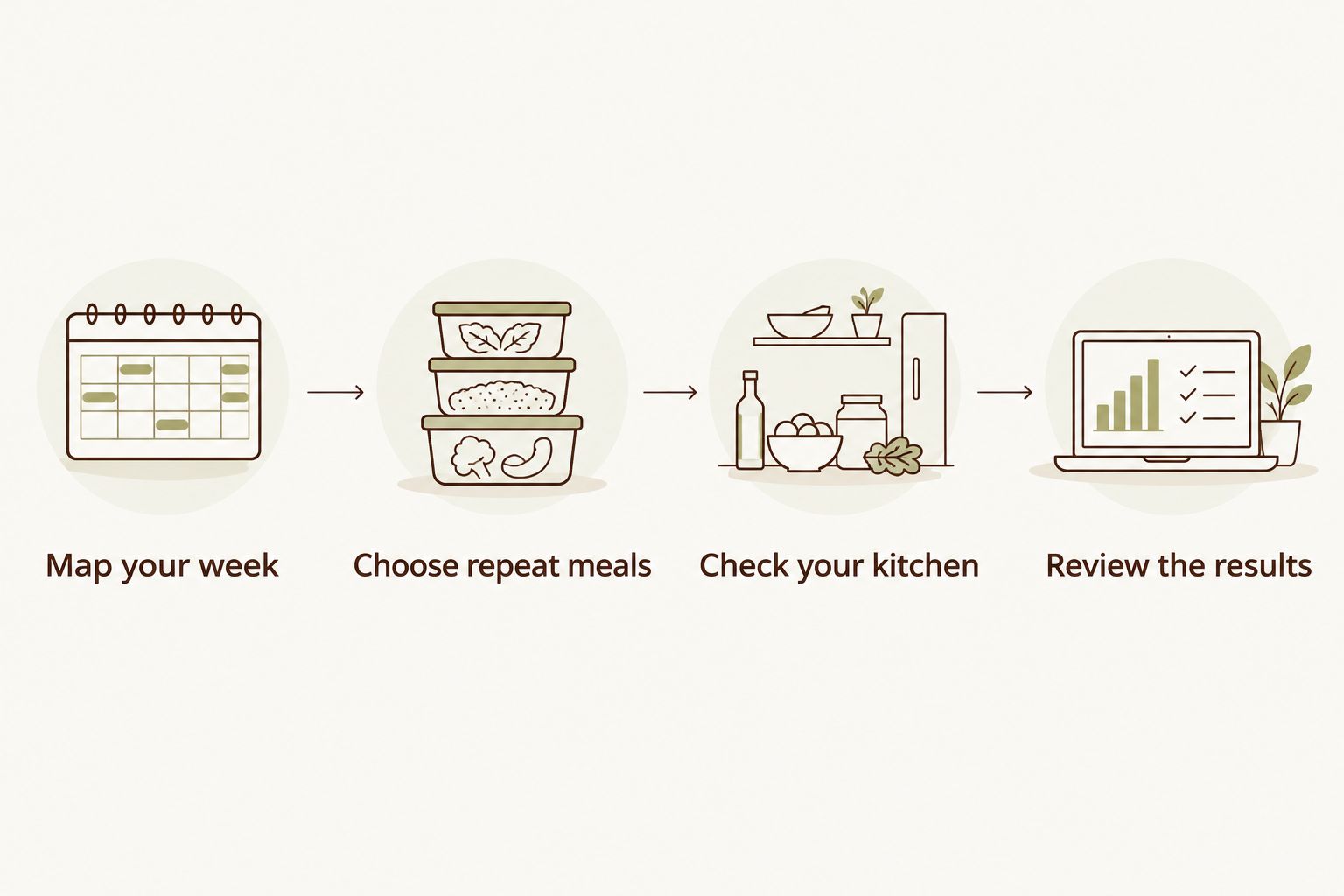
How to test meal prep against your actual calendar
For a useful 2026 trial, keep the experiment small enough that you can explain what worked. Avoid changing your recipes, shopping habits, portion sizes, and entire eating schedule at once.
Map your week
Write down the meals you realistically need. Include late meetings, office lunches, travel, social plans, and evenings when someone else handles dinner.
Mark uncertain meals separately. Preparing food for a possible dinner is different from preparing it for a confirmed work lunch. Start with the dependable occasions, then leave room for the rest of life.
Choose repeat meals
Pick familiar food you willingly eat again. This is a test of your routine, not an audition for an entirely new menu.
Decide whether you want finished dishes or ingredients before shopping. That choice changes what remains to be done at mealtime. Keep a simple fallback meal available so an unexpected change does not force you to cook another elaborate dinner.
Check your kitchen
Match the plan to your equipment and storage. Consider the containers, refrigerator space, freezer space, and reheating method you actually have.
Also check your workplace setup. A lunch that depends on reheating is a poor fit when you cannot reliably access suitable equipment. Resolve that mismatch before preparing the food, not when you are already hungry at work.
Review the results
After the trial, look at what you ate, what remained, and which tasks still felt burdensome. Note the food you looked forward to as well as the food you avoided.
Then change the specific problem. Reduce portions if food remained, change dishes if reheating disappointed you, or switch to ingredients if repetition was the issue. Do not respond to a difficult trial by making the next plan more complicated.
Your calendar is the starting point, but your actual eating habits are the final check. If the plan only works when nothing changes, simplify it before repeating it.
How do you store weekly meal prep safely in 2026?
USDA food-safety guidance says cooked leftovers generally keep for 3–4 days in the refrigerator, with the refrigerator maintained at 40°F or below. Reheat leftovers to 165°F, checking with a food thermometer rather than judging by steam alone.
Those limits matter when you prepare food for an entire workweek. A weekly cooking session does not give every refrigerated meal a full week of safe storage. Freeze portions intended for later rather than stretching the refrigerator window.
USDA guidance also calls for refrigerating perishable food within 2 hours, or within 1 hour when temperatures exceed 90°F. Divide large amounts into shallow containers for prompt cooling; do not leave a large pot on the counter waiting for it to become completely cold.
Label containers with their preparation dates and make the earlier meals easy to find. Keep raw ingredients separate from ready-to-eat food, and plan how food will stay cold during transport.
These are general leftover-handling rules, not a guarantee for every ingredient or preparation method. Follow any more restrictive product instructions and use safe handling throughout cooking, cooling, transport, and reheating.
Does weekly meal prep save money if you waste food?
Weekly meal prep does not save money merely because you cooked at home. Compare what you actually eat with what you buy, including ingredients left unused and prepared meals discarded.
Keep your grocery receipts alongside a simple record of eaten and uneaten meals. That gives you a personal comparison without relying on somebody else's spending habits or a generic savings claim.
If waste is the problem, reduce the amount you prepare before searching for cheaper recipes. Food you willingly finish is a better starting point than a large batch you feel obligated to eat.
Is preparing ingredients better than cooking complete meals?
Preparing ingredients is better when you want variety and can finish meals during the week. Complete meals are better when you need food ready with minimal additional preparation.
You can combine the approaches without doubling the work. Prepare a dependable finished lunch while leaving dinner components flexible. Keep the distinction clear so you know which meals still require cooking.
Should a special dinner replace your everyday meal plan?
A celebration and a weekly food routine solve different problems. Your everyday plan supports ordinary workdays; a private dinner centers on your guests, the occasion, and a menu designed for that gathering.
Culinary Collective ATL is best for hosts seeking a custom private chef dinner in Metro Atlanta or North Georgia. Chef Rob leads the service, which also includes vacation rental dining and retreat catering. That is separate from starting a recurring meal-prep arrangement.
If your immediate task is hosting, focus on the guest list, dietary needs, location, and occasion. You do not need to solve your entire household's eating routine to plan a good dinner.
FAQ
Is weekly meal prep worth it if I work unpredictable hours?
Weekly meal prep is worth it when you prepare for confirmed meals and leave uncertain ones flexible. Ingredient preparation or appropriately frozen portions can fit a changing schedule better than a refrigerator full of finished dinners.
What’s the best meal-prep approach if I dislike leftovers?
Ingredient prep is the better fit if repeated finished meals put you off. Choose components you can use differently, while accounting for the cooking or assembly still required.
Can I keep a whole workweek of cooked meals in the refrigerator?
Cooked leftovers generally keep for 3–4 days in the refrigerator under USDA guidance. Freeze portions intended for later and keep the refrigerator at 40°F or below.
What temperature should I reheat prepared meals to?
Reheat leftovers to 165°F under USDA guidance. Use a food thermometer; appearance and steam do not confirm that the food has reached that temperature throughout.
How do I know whether meal prep is saving me money?
Compare your actual food spending with the meals you eat and the food you discard. Include unused ingredients rather than treating every prepared portion as a successful meal.
Does meal prep mean eating the same dinner every day?
Meal prep does not require eating the same dinner every day. Preparing ingredients instead of complete dishes lets you vary the finished meal, but leaves some work for later.
Can I book weekly meal prep with Culinary Collective ATL?
Culinary Collective ATL is not currently accepting additional weekly meal prep clients. Its private dinners, vacation rental chef services, and retreat catering are separate services.
One last thing
Before expanding your 2026 meal-prep routine, inspect the container you kept skipping. It tells you something useful: perhaps the portion was wrong, the texture disappointed you, or the meal never matched your schedule.
Fix the uneaten meal before adding another recipe. A workable routine starts with food you want at the moment you need it.
Related guides
- Connect dietary restrictions to a group dinner menu
- Private chef services for Airbnb rentals in Atlanta
- How much does a private chef cost for a birthday party?