


Start planning a private chef event as soon as your date, location, and approximate guest count are clear; confirm the menu and logistics before treating the arrangements as settled. The planning window depends on those decisions, dietary requirements, and kitchen access—not a universal number of days—and a date inquiry is not the same as a confirmed booking.
- Deciding how long to plan a private chef event starts with your date, guest count, and kitchen access.
- Culinary Collective ATL suits Metro Atlanta hosts seeking chef-designed private dinners led personally by Chef Rob.
- For vacation rental dining, verify property access and kitchen details before settling the menu.
- For retreat catering, connect each meal to the itinerary and name a single decision-maker.
Why this matters
You should be enjoying your guests, not collecting allergy information while dinner preparation begins. A useful planning schedule gives every decision a place: the date first, the menu next, and the practical details before event day.
For your 2026 celebration, distinguish booking lead time from planning time. Booking lead time concerns securing the date; planning time concerns agreeing on what happens at your event. Neither tells you how long the chef needs in your kitchen.
The private chef workflow from first inquiry to plated dinner provides a companion to the decision sequence below. Start with the event brief rather than a finished menu.
How long does it take to plan a private chef event?
Plan around confirmed decisions, not an assumed deadline. A dinner with a settled guest list and known kitchen has fewer unresolved questions than a retreat with changing attendance and several meal services.
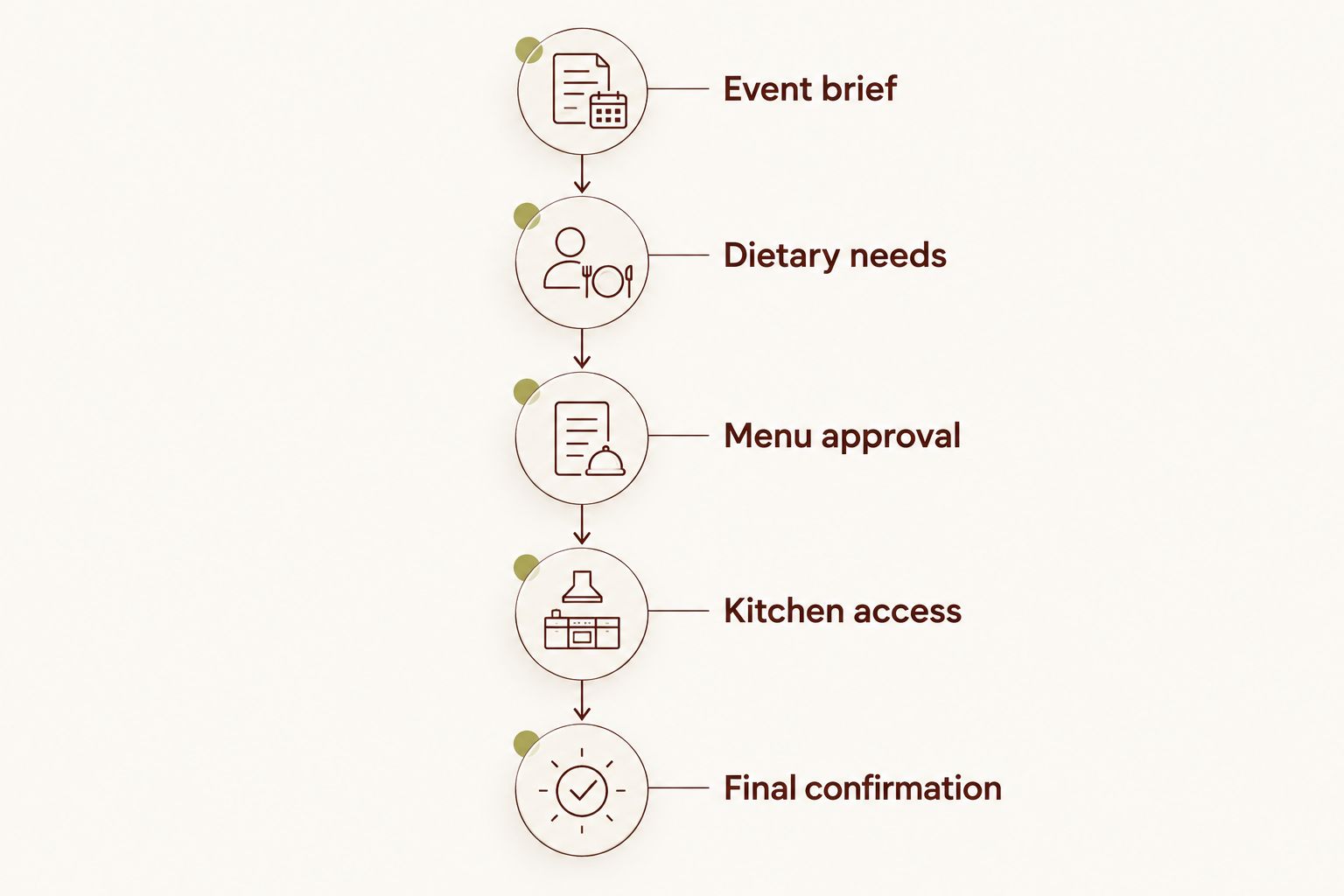
Use these 5 planning steps in order. They are a host checklist, not a promised booking or turnaround schedule.
1. Event brief
Send the date, address or destination, occasion, approximate attendance, and preferred dining time. Explain whether you are hosting an anniversary dinner, birthday celebration, vacation gathering, or corporate retreat.
If a detail is tentative, label it clearly. An approximate guest count gives the conversation a starting point without presenting an unfinished guest list as final.
2. Dietary needs
Collect food allergies, dietary restrictions, and preferences directly from your guests. Keep these separate: an ingredient someone dislikes is not the same planning issue as an allergy.
Describe requirements accurately and ask the chef to confirm what can be accommodated. Do not promise a guest a particular preparation or allergy arrangement before that discussion.
3. Menu approval
Discuss the meal you want and how you want the evening to feel. A dinner centered on conversation needs a different schedule from a celebration with speeches, presentations, or a surprise reveal.
Choose a menu through that conversation rather than circulating unrelated dishes among guests. Approve the menu through a single host contact so the chef receives a clear decision instead of competing requests.
4. Kitchen access
Confirm when the chef can enter and what equipment, refrigeration, and workspace the property provides. For a rental, request current kitchen information from the property manager rather than relying only on listing photographs.
Share access instructions and any relevant property rules. Getting these details settled before event day keeps the meal plan connected to the space where cooking will happen.
5. Final confirmation
Review the agreed guest count, menu, dietary arrangements, arrival access, dining time, and service scope. Ask how any later changes should be communicated and handled.
Keep the final agreement together in a written summary. Your 2026 event plan should show what is confirmed, what still needs a decision, and who owns each outstanding item.
Private dinner: settle the occasion and dining time
Best for: hosts planning a celebration around a shared meal. Start with the occasion, attendance, and the moment you want guests seated. Then discuss menu direction and the flow of the evening.
The advantage is a focused brief: a private dinner centers planning on a defined gathering. The trade-off is that late guest or dietary changes still require review; a small event does not remove the need for clear information.
Culinary Collective ATL offers private chef dining with chef-designed menus rather than templates, led personally by Chef Rob from first consultation to final cleanup. That personal approach fits hosts who want to discuss the experience directly; it still requires you to provide accurate guest and property details.
Vacation rental dinner: verify the property first
Best for: groups who want to dine together at their vacation property. Share the rental address, check-in arrangements, kitchen information, and desired dinner time before settling the menu.
Dining at the property keeps the gathering in the place your group is staying. The planning trade-off is reliance on property information you do not necessarily control, including access instructions and equipment details.
For a 2026 North Georgia getaway, ask the property manager about outside chef access and any applicable house rules. Do not arrange the chef's arrival around an entry time that has not been confirmed.
Retreat catering: connect meals to the itinerary
Best for: organizers coordinating meals around a group program. Give the chef the retreat itinerary alongside the meal requirements, not after the menu discussion.
Planning meals together lets you consider dining times across the event. The trade-off is more coordination: sessions, arrivals, departures, dietary needs, and organizer approvals all belong in the brief.
For a corporate group, identify who approves the plan and who handles event-day communication. If those are different people, make that handoff explicit before the retreat begins.
| Event format | Best for | Planning advantage | Planning trade-off | Settle first |
|---|---|---|---|---|
| Private dinner | Hosts celebrating over a shared meal | A focused occasion and dining schedule | Guest changes still require review | Date, attendance, and dining time |
| Vacation rental dinner | Groups dining where they are staying | Keeps the gathering at the property | Access and kitchen details need verification | Property information and entry arrangements |
| Retreat catering | Organizers coordinating a group program | Meals can be considered alongside the itinerary | More schedules and approvals to coordinate | Meal slots and the approving contact |
Why private chef planning time varies
The useful question is not simply how early to inquire. It is how much remains undecided when you do.
- Guest count: Share the current estimate and explain whether invitations or RSVPs are still outstanding. Ask when the final count needs approval.
- Dietary requirements: Collect clear information before menu approval. Route accommodation questions to the chef rather than resolving them by assumption.
- Menu decisions: Give the chef a coherent brief and consolidate feedback. Separate essential requests from ideas you are happy to discuss.
- Property access: Confirm the address, entry arrangements, kitchen information, and any relevant rental rules.
- Event schedule: Include speeches, activities, sessions, and other moments that affect when guests can eat.
- Approval process: Name the person authorized to approve the plan. For a group-funded event, settle how participants provide input before sending revisions.
You do not need every answer before making contact. You do need to distinguish confirmed information from open questions so neither side plans around an assumption.
What should you send in your first inquiry?
Send a brief the chef can respond to without having to reconstruct your event. For a 2026 inquiry, write the full event date, including the year, so there is no ambiguity.
Use this checklist:
- Event: Describe the celebration, dinner, or retreat.
- Date: State whether it is fixed or flexible.
- Location: Give the address if confirmed; otherwise, identify the destination and property status.
- Guests: Provide an approximate count and explain what remains unsettled.
- Food needs: Separate allergies, dietary restrictions, and preferences.
- Schedule: Give your preferred dining time and relevant activities.
- Kitchen: Share what you know and identify what needs verification.
- Contact: Name the person who will consolidate feedback and approve decisions.
A clear inquiry is more useful than a polished menu wish list. It establishes the boundaries within which the chef can discuss your dinner.
Can you plan a private chef event at short notice?
A short-notice event needs direct confirmation from the chef; an inquiry alone does not establish that the date or requested arrangements are possible. Send the essential event details together and identify what is flexible.
Avoid promising your guests a particular menu or service arrangement before confirmation. Keep invitations and announcements consistent with what has actually been agreed.
Does a small dinner need less planning?
A small dinner still needs a confirmed date, guest requirements, kitchen access, and a menu agreement. Fewer guests do not answer those questions for you.
For an intimate celebration, explain what matters most: the food, time together, a surprise, or the pace of dinner. That gives the planning conversation a clear priority without turning it into an unnecessary production.
When should you finalize the guest count and menu?
Finalize the guest count and menu by the deadlines agreed with your chef. Ask for those deadlines during planning rather than assigning your own cutoff.
If something changes afterward, send a consolidated update and request confirmation of the revised arrangements. An acknowledgment of your message is not necessarily approval of every requested change.
FAQ
How long should I allow to plan a private chef event?
Start once your date, location, and approximate guest count are clear, then agree on the planning deadlines with your chef. The working schedule depends on menu decisions, dietary requirements, property access, and event coordination rather than a universal number of days.
What should I decide before contacting a private chef?
Have your preferred date, destination, approximate attendance, and occasion ready. You can discuss menu ideas afterward, but identify any known allergies or dietary requirements in the initial inquiry.
Can I inquire before everyone has responded?
Yes—share an approximate guest count and clearly state that responses are still outstanding. Ask the chef when a final count must be confirmed and how later changes are handled.
What does a chef need to know about my Airbnb kitchen?
Provide the property’s kitchen information, equipment details, refrigeration information, and entry arrangements. Ask the property manager to confirm outside chef access and relevant house rules before settling the plan.
How do I plan private chef meals for a corporate retreat?
Share the retreat itinerary, meal requirements, dietary information, and approval contact together. Connect each meal to the program so dining arrangements are not planned separately from the group’s activities.
Who is Culinary Collective ATL best for?
Culinary Collective ATL private chef service suits Metro Atlanta and North Georgia hosts seeking custom in-home dining, vacation rental meals, or retreat catering. Chef Rob leads the service personally from first consultation to final cleanup.
Should I assume cleanup is included in my event schedule?
Confirm the cleanup scope and timing as part of your event agreement. Culinary Collective ATL describes Chef Rob’s involvement through final cleanup, but you should still discuss how the kitchen handover fits your property arrangements.
One last thing
Confirm the kitchen-entry time separately from the dinner time. They serve different purposes, and a rental check-in or retreat session can affect the former without changing the latter.
Before your 2026 event, read the final summary as though you were handing it to someone who knows nothing about the gathering. If that person cannot identify where to go, when access begins, what has been approved, and whom to contact, clarify those points before the day arrives.
Related guides
- How far in advance should you book a private chef in Atlanta?
- Do you need a full kitchen for a private chef to cook in?
- How to connect dietary restrictions to a group dinner menu
- How to connect a retreat itinerary to daily chef meal slots