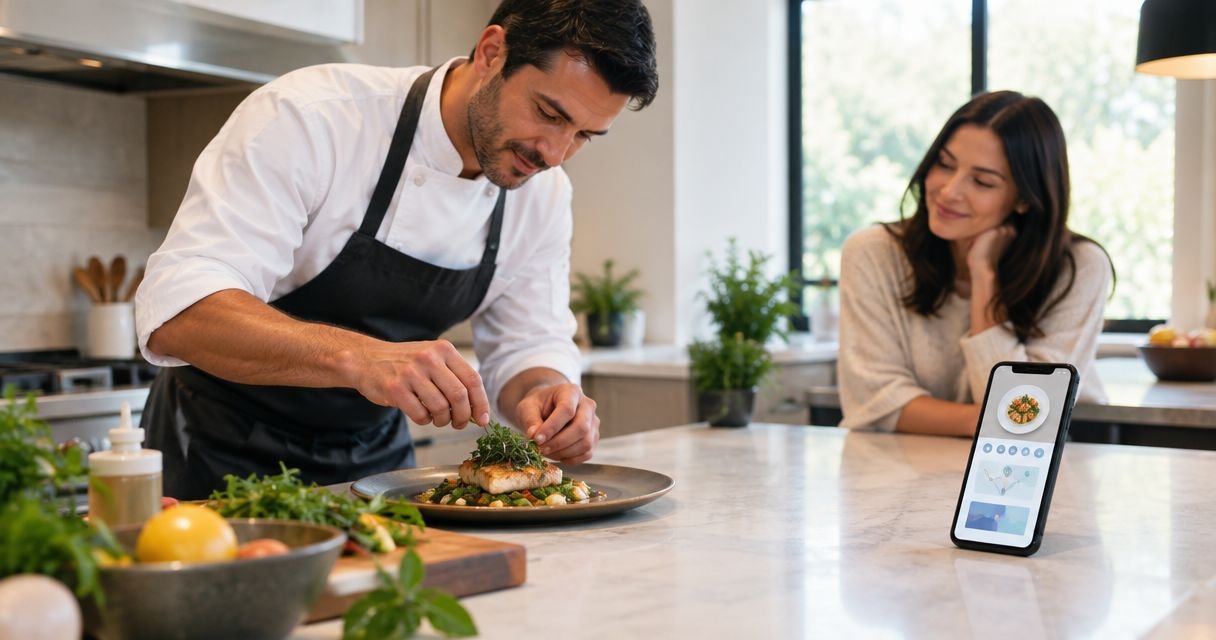

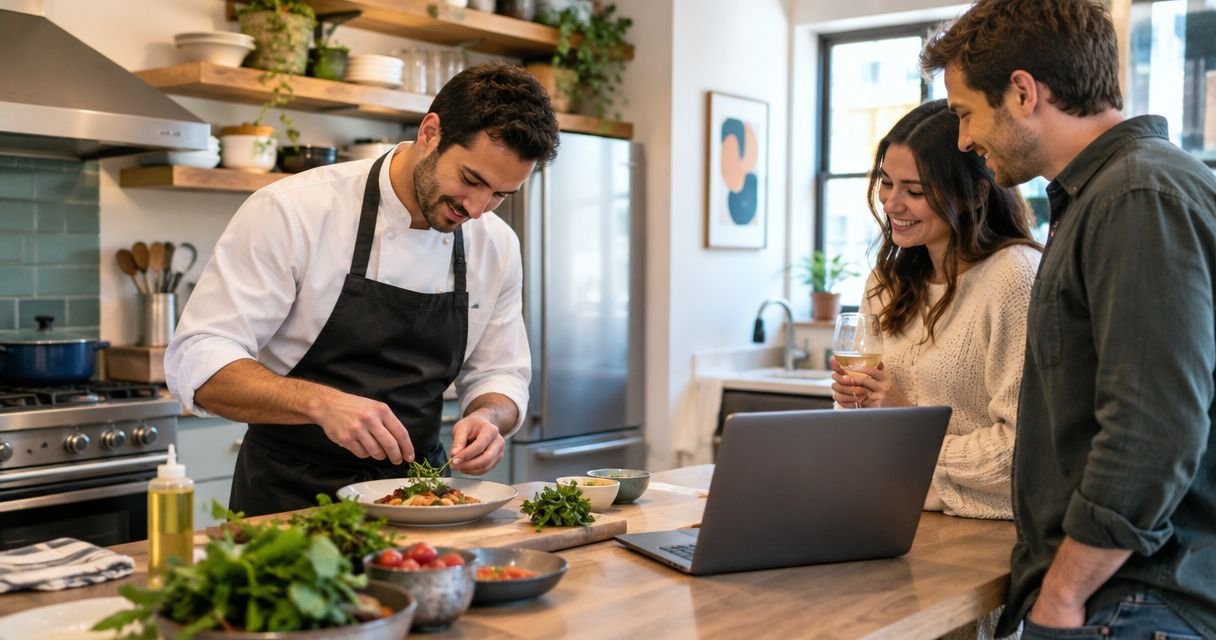
Yes, a private chef can work with a small Airbnb kitchen when the appliances, food storage, workspace, and menu fit the dinner you want. A compact kitchen is not an automatic dealbreaker; the chef needs to review the actual setup before confirming what can be prepared safely and served well. For your 2026 stay, share kitchen photos and your guest count before settling on a menu.
- Private chef small Airbnb kitchen planning starts with appliance photos, refrigerator space, guest count, and a realistic menu.
- Culinary Collective ATL offers vacation rental chef services; ask Chef Rob to review your kitchen before confirming dinner.
- A compact full kitchen and a microwave-only kitchenette need different dinner plans.
- Confirm rental permission, allergy needs, equipment responsibilities, and cleanup before your dinner.
Can a private chef work with a small Airbnb kitchen?
Yes—usable equipment and a workable cooking plan matter more than how spacious the kitchen looks. A narrow kitchen with a working stove, oven, sink, and refrigerator presents a different planning problem from a kitchenette with no cooking surface. Neither a listing photo nor the phrase fully equipped settles the question.
For a Metro Atlanta or North Georgia stay, Culinary Collective ATL offers custom vacation rental chef services led by Chef Rob. Start the conversation with the property details, not a finished menu. That gives the chef something concrete to assess before you build the evening around a particular dish.
| Kitchen setup | Best for | Useful feature | Limitation to resolve |
|---|---|---|---|
| Compact full kitchen | Hosts seeking an in-home dinner with several cooking methods | Stove, oven, and refrigerator support different tasks | Limited counters still restrict preparation and plating |
| Kitchenette with a cooktop | Hosts open to a menu built around the available equipment | A working cooking surface provides a starting point | An absent oven or small refrigerator narrows the plan |
| Microwave-only kitchenette | Hosts seeking an assessment before choosing a dinner format | Photos make the equipment limits clear | Do not assume a cooked-on-site dinner is feasible |
These are planning categories, not guarantees that a chef will accept a particular property. Get the kitchen approved before treating the dinner as confirmed.
Why this matters
Your rental kitchen is also where guests make coffee, unpack groceries, and gather before dinner. A chef needs room to work without competing with snack bags, drinks, luggage, or people passing through with open oven doors nearby.
The goal is not to turn your Airbnb into a restaurant kitchen. It is to match dinner to the space so you can spend the evening with your guests instead of solving equipment problems. For a 2026 celebration, make that assessment part of the booking conversation rather than an arrival-day surprise.
Compact full kitchen: plan around the busiest cooking moment
A small full kitchen gives a chef more cooking options, but equipment cannot be assessed in isolation. A working oven does not solve a lack of space for hot trays, and an empty countertop does not replace refrigeration.
Ask the chef to consider what needs to happen at the same time. If several dishes require the oven at different temperatures, the proposed menu needs adjustment. If every plate needs finishing immediately before service, the chef also needs a clear landing area near the dining space.
Best for hosts who want a custom dinner and can keep the kitchen clear during service. The advantage is access to several cooking methods; the trade-off is that a tight layout leaves less room for overlapping tasks. Choose the menu after that bottleneck is understood.
Kitchenette: let the equipment shape the menu
The word kitchenette does not tell you enough. One property might have a cooktop and refrigerator; another might offer only a microwave, sink, and small cooler-style appliance. Send photographs of each appliance rather than relying on the listing's label.
Best for hosts who are flexible about the dinner format. The benefit is that a chef can assess a defined equipment list and explain the possibilities. The limitation is equally clear: missing cooking or storage equipment cannot be wished away by choosing a simpler-sounding dish.
Do not assume the chef will bring portable burners, refrigeration, cookware, or serving pieces. Ask what is provided, what the property supplies, and whether the rental permits any proposed supplemental equipment. Resolve those responsibilities before agreeing to the meal.
For a closer look at the equipment question, read whether you need a full kitchen for a private chef.
Why small Airbnb kitchen feasibility varies
Two kitchens with similar floor space can support very different dinners. These are the details to put in your 2026 inquiry:
- Cooking equipment: Identify the stove, cooktop, oven, and microwave actually present. Tell the chef about anything broken or unavailable for guest use.
- Cold storage: Show the refrigerator interior, not just its exterior. Guest groceries and drinks compete with dinner ingredients for usable space.
- Work surfaces: Photograph clear counters and nearby obstructions. Preparation, hot cookware, and finished plates all need somewhere appropriate to land.
- Guest count and menu: Give the actual expected attendance, dietary restrictions, and preferred style of dinner. The chef must assess those details together.
- Access and house rules: Share relevant property restrictions and when the kitchen becomes accessible. Permission to stay at a rental does not establish permission for every dinner arrangement.
- Serving and cleanup space: Show the dining table, route from kitchen to table, sink, and dishwashing setup. Cooking is only part of the evening's workflow.
A beautiful kitchen can still have a practical limitation. An ordinary-looking kitchen can be useful when the equipment works and the dinner plan respects the space.
How to get your rental kitchen assessed before booking
You do not need to diagnose the kitchen yourself. Your job is to provide a clear picture so the chef can make the cooking decisions.
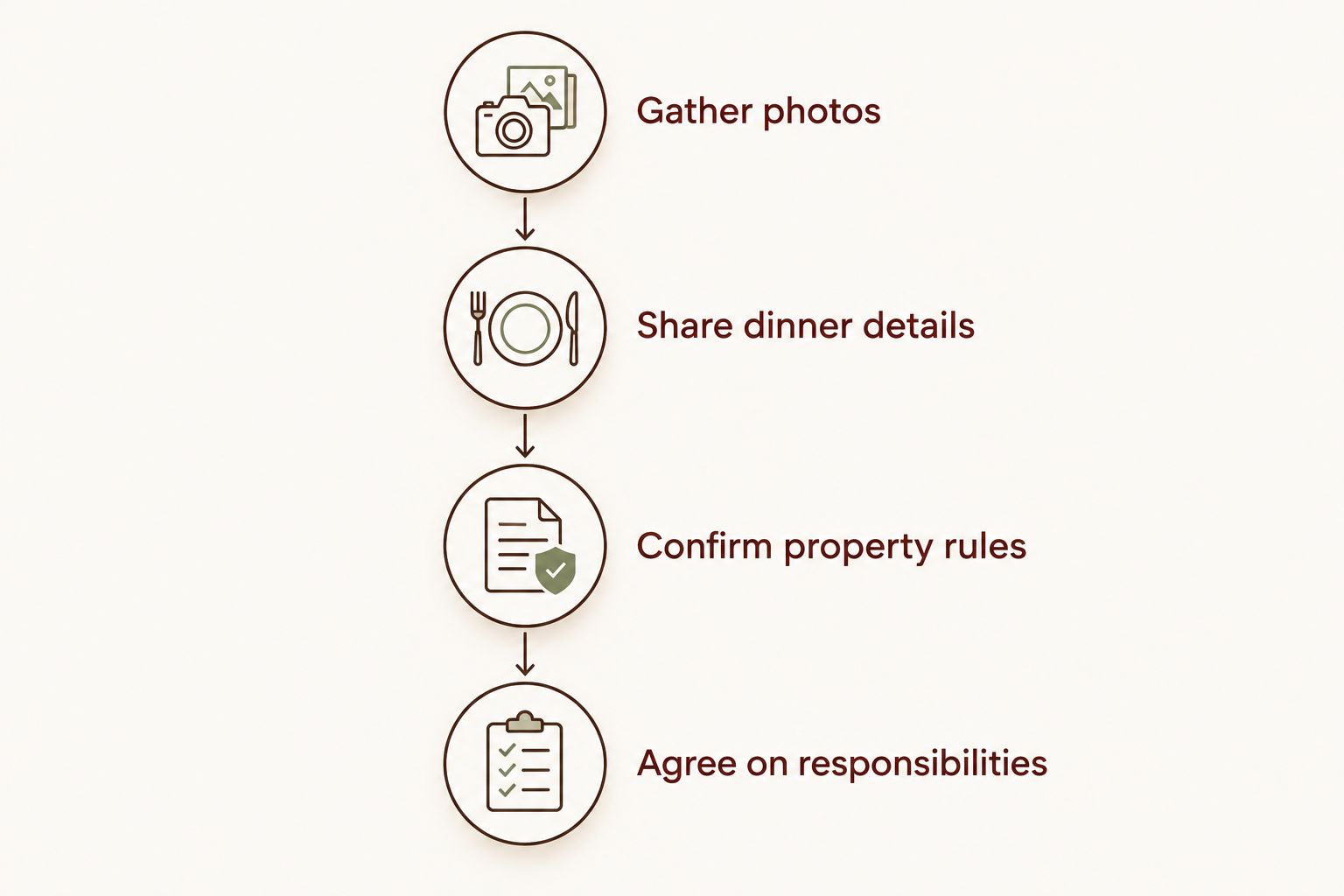
1. Gather photos
Request current photos from the property host if you cannot visit. Include the entire kitchen, open refrigerator, cooktop, oven interior, sink, counters, and dining area. Close-up appliance photos help distinguish an oven from a microwave when listing images are unclear.
Avoid sending only the rental's wide-angle hero image. It shows the room, but often hides the surfaces and equipment that determine how dinner will work.
2. Share dinner details
Provide the property location, dinner date, expected guest count, dietary needs, and your preferred dining experience. Explain whether you want a celebration centered on dinner or a meal fitted between retreat activities.
Include allergies before discussing favorite dishes. A small kitchen needs deliberate separation of ingredients, tools, and work areas; the chef must assess whether the requested accommodations are feasible.
3. Confirm property rules
Ask the property host about an outside chef, additional service personnel, visitors, parking, and any restrictions relevant to the dinner. Distinguish the overnight guest allowance from permission for an event or additional attendees.
Keep the response with your booking information. If permission includes conditions, share those conditions with the chef instead of summarizing them as a general yes.
4. Agree on responsibilities
Confirm who supplies cookware, knives, serving dishes, plates, glassware, and any approved supplemental equipment. Ask what kitchen access is required and what cleanup includes.
Finish with a written summary covering the menu, guest count, dietary arrangements, property constraints, and service scope. That summary is more useful than an informal assurance that a small kitchen should be fine.
What should you clear before the chef arrives?
Clear the surfaces agreed upon during planning, and give dinner ingredients the refrigerator space the chef requested. Move guest drinks and snacks only to storage appropriate for those items. Do not leave perishable food on the counter to make room.
Create a place outside the cooking area for coffee supplies, handbags, and casual drinks. Guests still need somewhere to gather; they simply should not have to cross the chef's working area to reach it.
Check that the equipment discussed during booking remains usable when you arrive. Report a broken oven, missing cookware, or unexpectedly full refrigerator promptly. An appliance change is a menu-planning issue, not a detail to save until cooking begins.
For a 2026 group stay, appoint a single host contact for property questions and dinner decisions. That keeps the chef from receiving conflicting instructions while guests are settling in.
Does a small kitchen change food-safety planning?
A small kitchen does not change food-safety requirements. It changes how carefully you need to plan storage, preparation space, and service. Keep raw ingredients separated from ready-to-eat food, and let the chef direct the kitchen setup.
For your 2026 dinner, follow USDA food-safety guidance: keep cold food at 40°F or below and hot food at 140°F or above. Refrigerate perishable food within 2 hours, or within 1 hour when the surrounding temperature is above 90°F. These are food-safety limits, not suggested dinner durations.
Do not use an outdoor table, porch, or unverified cooler as a substitute for suitable cold storage. Ask the chef how ingredients and leftovers will be handled within the property's actual facilities. If storage cannot support the plan, change the plan before food arrives.
Can you still have a special dinner without an elaborate menu?
Yes—a special dinner does not require every dish to demand the oven at once. Tell the chef what matters most: a particular ingredient, dietary accommodation, celebration, or relaxed evening together. Then ask for a menu that works with the confirmed equipment.
Avoid treating fewer courses as proof that a meal is easier to execute. A dish finished individually for every guest can put more pressure on a small workspace than its description suggests. Let the chef assess the preparation and service demands.
Culinary Collective ATL is best for Metro Atlanta and North Georgia hosts seeking a custom private chef dinner rather than a fixed menu. That customization does not establish that every rental kitchen is suitable; Chef Rob still needs the property and dinner details.
Plan dinner around your rental kitchen
Share your location, guest count, and kitchen details to discuss a custom vacation rental dinner.
FAQ
Can I hire a private chef if my Airbnb kitchen is tiny?
Yes, a tiny Airbnb kitchen can be suitable when its equipment, storage, and workspace support the proposed dinner. Send photos and your guest count so the chef can assess the setup before confirming.
Does a private chef need an oven at my Airbnb?
An oven is not required for every possible menu, but its absence limits cooking options. Tell the chef exactly which appliances are available before choosing dishes.
Will the chef bring cookware to a small rental kitchen?
Confirm cookware responsibilities directly with the chef before booking. Do not assume portable appliances, pans, knives, or serving pieces are included.
Can a chef cook safely if the Airbnb refrigerator is small?
A small refrigerator is usable only when it provides enough suitable cold storage for the planned meal. Share interior photos and explain how much space guest groceries will occupy.
Do I need my Airbnb host’s permission for a private chef?
Check the property’s rules and obtain any required permission before confirming the dinner. Ask specifically about outside service providers, additional attendees, parking, and supplemental cooking equipment.
Can Culinary Collective ATL cook at my North Georgia rental?
Culinary Collective ATL offers vacation rental chef services across Metro Atlanta and North Georgia. Share the exact location and kitchen details so Chef Rob can assess your proposed dinner.
Will the chef clean the kitchen after dinner?
Confirm the cleanup scope before booking rather than assuming every task is included. Ask about cookware, dishes, counters, rubbish, and handling leftovers.
One last thing
Photograph the route to the dining table, not just the kitchen. A clear counter helps with preparation, but dinner still has to leave the kitchen safely. Show narrow doorways, stairs, or a separate dining level during planning so the serving arrangement fits the property as well as the menu does.
Related guides
- Can a private chef cook at an Airbnb or vacation rental?
- Do private chefs clean the kitchen after cooking?
- Can a private chef cook at a North Georgia cabin rental?