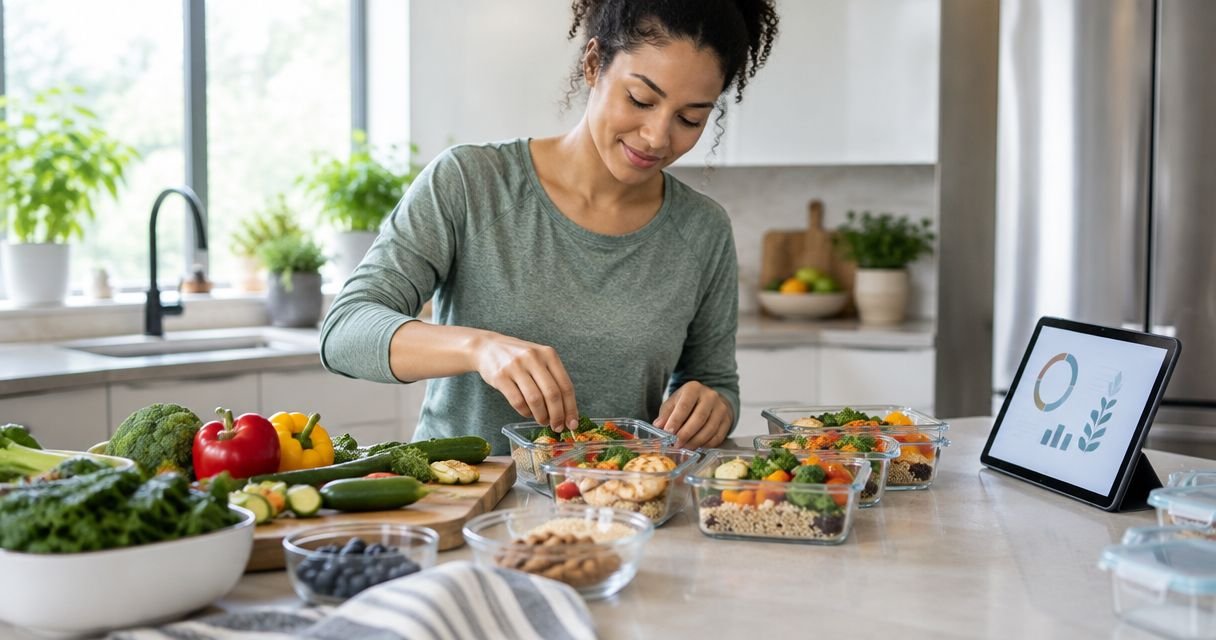


Instead of manually coordinating every retreat meal and leaving team lunches to chance, use one event meal plan that connects your schedule, dietary needs, kitchen access, and food-safety responsibilities. This 2026 guide takes you from retreat catering to team meal prep within a defined event—not an ongoing weekly service.
- Culinary Collective ATL is best for Metro Atlanta and North Georgia hosts seeking chef-led retreat catering.
- Connect retreat catering to team meal prep through one event brief, meal schedule, and confirmed handoff.
- Treat prepared lunches as a separate request requiring agreement, not an automatic extension of dinner catering.
- Assign refrigeration, labeling, and reheating responsibilities before approving your retreat menu.
Why this matters
A retreat dinner and the next day's lunch share ingredients, kitchen space, and planning decisions. They do not automatically share a service agreement. When those boundaries stay vague, the host becomes the person answering food questions during the meeting.
Culinary Collective ATL is best for Metro Atlanta and North Georgia hosts seeking chef-led retreat catering. Chef Rob leads the private chef service; start with Culinary Collective ATL when discussing your event, then confirm exactly which meals and responsibilities belong in the proposal.
For your 2026 retreat, separate the event's catering needs from any recurring food arrangement. Keep every request tied to the retreat dates, and get agreement before promising attendees prepared lunches or take-home meals.
Before you start
- Gather the event details. Have your venue address, retreat dates, agenda, expected attendance by meal, and one person authorized to approve changes.
- Collect dietary and kitchen information. Ask attendees about allergies and dietary restrictions. Obtain venue permission for outside chefs, plus accurate details about refrigeration, cooking equipment, and access.
- Resolve the hidden handoff. A catered dinner does not automatically include packaged lunches, storage containers, next-day service, or leftover management. Culinary Collective ATL is not accepting additional weekly meal prep clients; keep this request focused on retreat catering and confirm any event-specific preparation separately.
The bold labels below are suggested fields for your own planning document, not buttons in a booking system. Use a shared document or spreadsheet your organizer can maintain without creating another administrative task.
Event brief
Your event brief establishes what you want before anyone designs the menu. For 2026 planning, write down the meal occasions first; a headcount alone does not explain the work.
- Create an Event scope field. Describe the retreat's purpose, location, dates, and meals you want considered. Distinguish a welcome dinner from a working lunch or closing celebration.
- Add a Meal attendance field. Record expected guests for each meal rather than copying the largest headcount throughout the schedule. Identify attendees who arrive late or leave early.
- Build a Dietary needs field. Record each person's allergy or restriction and the meals they will attend. Separate allergies from preferences, and ask the chef to confirm what can be accommodated.
- Name an Approval owner. Choose one organizer to approve the menu, scope, and changes. Give that person a backup who can answer operational questions during the retreat.
- Write the Service boundary. List what you are requesting and what still needs confirmation: preparation, service, cleanup, containers, storage instructions, and any subsequent meal.
Expected result: You have one brief that distinguishes requested work from agreed work. Nothing becomes part of the event simply because someone mentioned it in a message.
Keep sensitive dietary information restricted to people who need it for planning and service. A public attendee list does not need to contain individual medical details.
Meal schedule
The meal schedule connects food to the retreat agenda. Plan around the moment guests need to eat—not just the moment a meeting ends.
- Create a Meal occasion entry for each service. Use clear names such as arrival dinner, working lunch, and closing dinner. Put each occasion on the correct event date.
- Set the Serve time. Identify when eating begins and when the room must be ready for the next activity. Share those constraints before the service format is agreed.
- Record Kitchen access. Confirm when the chef can enter, where unloading happens, and whether another group uses the same kitchen. Include venue restrictions rather than assuming a residential kitchen is unrestricted.
- Add a Menu approval checkpoint. Resolve dietary requirements, the service format, and requested additions before approving the plan. Ask how later changes will be handled.
- Assign a Change owner. Route attendance and agenda updates through the same organizer. Replace outdated versions of the schedule rather than circulating competing copies.
Expected result: Every meal has a purpose, an attendance list, a service window, and an accountable organizer.
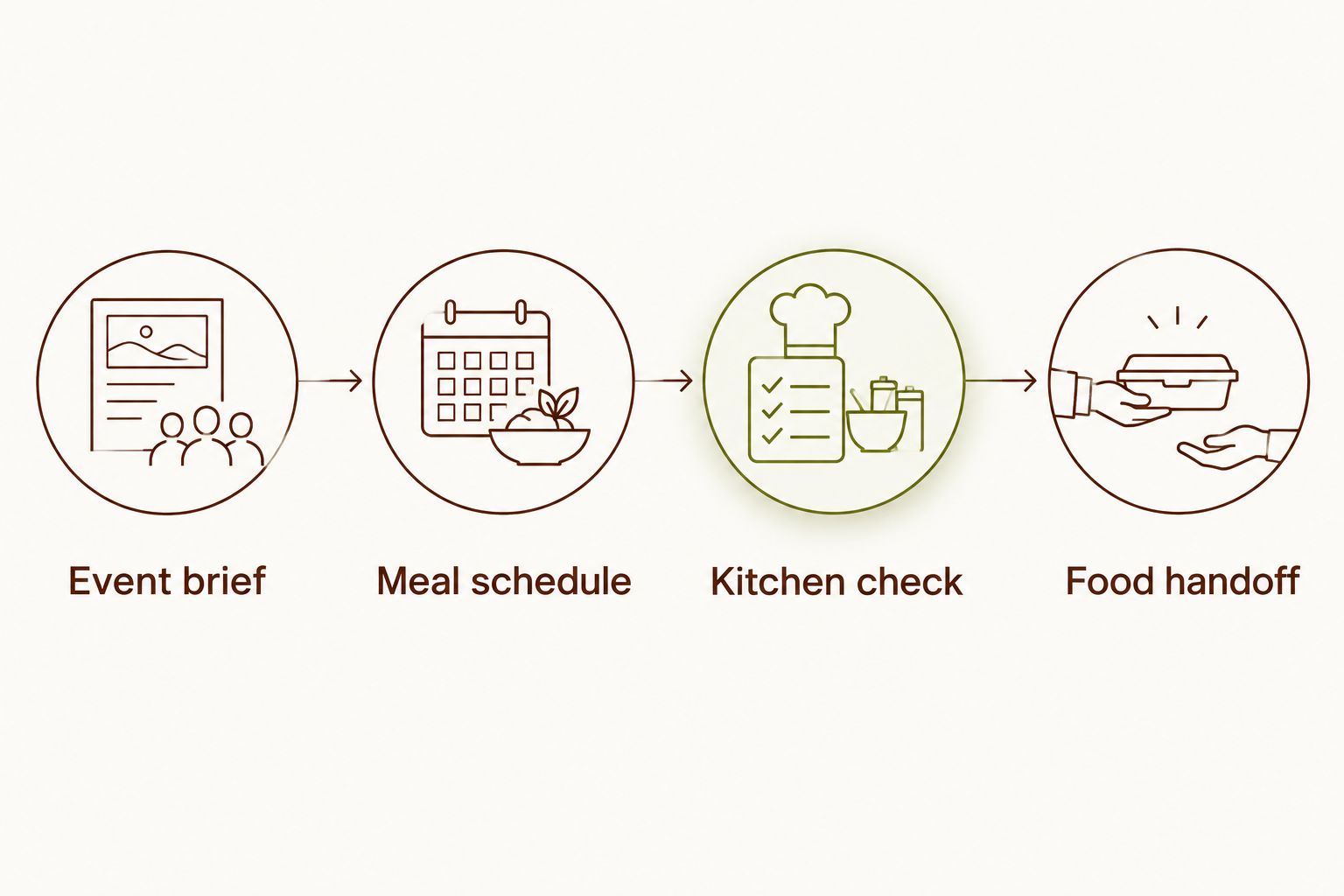
Use this sequence for your 2026 retreat: Event brief, Meal schedule, Kitchen check, then Food handoff. The kitchen check belongs before final approval because equipment and storage affect what is practical.
Choose the meal format deliberately
The formats below are planning options to discuss, not a list of confirmed inclusions. Choose the format around the agenda, then ask the chef to confirm the scope.
| Meal format | Best for | Main benefit | Main limitation |
|---|---|---|---|
| Chef-served meal | Hosts protecting a shared dining experience | Keeps the meal connected to a defined service period | Requires the agenda to accommodate service |
| Buffet-style meal | Groups needing flexibility during a shared meal window | Lets guests serve themselves | Requires an agreed holding and replenishment plan |
| Individually packed event meal | Organizers requesting a portable retreat lunch | Separates portions for an agreed handoff | Requires confirmed packaging, refrigeration, and distribution responsibilities |
For Culinary Collective ATL retreat catering, discuss these choices rather than assuming every format is included. Chef-led service gives you a direct point of coordination; the trade-off is that your menu and operational requests still need explicit agreement.
Kitchen check
A kitchen can look spacious while offering little usable cold storage. Ask for current information about the actual venue, especially when a vacation rental listing shows staged photographs rather than working conditions.
- Document Cooking equipment. List the appliances the venue permits you to use and report known faults. Send relevant photographs if the chef requests them; do not promise equipment you have not checked.
- Confirm Cold storage. Identify refrigerator and freezer space available for the event. Account for attendees' drinks and groceries before allocating space to prepared food.
- Map the Service area. Decide where food will be served, where guests will queue if applicable, and where used dishes will go. Keep those areas from obstructing kitchen work.
- Record Venue rules. Confirm outside-chef permission, entry arrangements, cleanup requirements, and waste disposal. Ask who can resolve an access problem on arrival.
- Approve the Preparation boundary. Confirm which tasks happen during the chef's service and which, if any, the organizer assumes afterward. Do not turn a requested next-day lunch into an implied obligation.
Expected result: The agreed meal plan fits the venue, and everyone knows what happens when the chef's service ends.
For a 2026 residential retreat, venue suitability means more than having a stove. Refrigeration, permission, access, and a workable service area all belong in the same conversation.
Food handoff
Prepared event meals need a named receiver. A container left in the kitchen without instructions is not a completed handoff.
- Assign a Food receiver. Name the person who will accept any agreed prepared meals or leftovers and move them into appropriate storage.
- Agree on Meal labels. Ask what labeling and written handling instructions will accompany the food. Confirm how meals intended for particular dietary needs will be identified.
- Set the Refrigeration plan. Keep cold food at 40°F or below. The USDA advises refrigerating perishable food within 2 hours, or within 1 hour when the temperature is above 90°F.
- Confirm the Reheating plan. Follow the food-specific instructions supplied at handoff. USDA guidance calls for reheating leftovers to 165°F, checked with a food thermometer.
- Record the Disposal decision. USDA guidance generally limits refrigerated leftovers to 3–4 days. Food that has exceeded safe time or temperature limits should be discarded, not saved because it looks acceptable.
Expected result: A named person receives the food, understands the instructions, and knows when it must be refrigerated or discarded.
These temperatures and time limits come from USDA Food Safety and Inspection Service consumer guidance on leftovers and food safety. Apply that guidance to your 2026 retreat alongside the specific handling instructions supplied for the meal.
Do not use the end of dinner as the starting point for an unplanned lunch service. If lunch is part of the event, request it while the scope is being agreed.
When the agenda or attendance changes
A second workflow is useful when your retreat schedule changes after approval. Update the existing plan rather than opening a separate conversation for each affected meal.
- Identify the change. Record whether attendance, dietary requirements, venue access, or the agenda has changed.
- Trace the affected meals. A later arrival changes arrival dinner attendance; a relocated workshop can change lunch transport and storage needs.
- Ask for confirmation. Send the revised request to the chef and identify decisions that depend on it. Do not tell attendees the change is accepted before receiving confirmation.
- Replace the working version. Update the event brief and meal schedule together. Tell the food receiver about any changes to timing or handling.
Expected result: The revised agenda and food plan agree. Your team does not follow one schedule while the chef works from another.
This update process also works for corporate groups splitting into separate activities. Keep each meal's destination, attendance, and receiver explicit rather than treating the whole retreat as one undifferentiated group.
Troubleshooting
The refrigerator is full when food arrives
Move personal drinks and nonessential items according to the venue's rules before the scheduled handoff. If safe storage is still unavailable, contact the chef immediately to resolve the plan; do not leave perishable food on a counter while rearranging the agenda.
A dietary requirement arrives after menu approval
Send the specific requirement to the chef and request confirmation of accommodation. Do not label an existing dish safe based only on its name or visible ingredients; preparation and cross-contact also matter.
The meeting runs through the meal window
Tell the chef as soon as the delay is clear and ask what adjustment is workable. Do not instruct attendees to collect food later without confirming safe holding arrangements.
Attendees assume dinner includes tomorrow's lunches
Refer to the approved service boundary and clarify what was actually agreed. If you want an additional event meal, request it directly rather than treating leftovers as a substitute for planned catering.
Nobody knows who handles food after service
Assign a food receiver before the chef leaves and review the written instructions together. If no one can take responsibility for storage and distribution, do not proceed with an informal prepared-meal handoff.
Customize your workflow
For your next retreat, reuse the document structure—not the previous event's assumptions. Recheck venue permission, equipment, attendance, dietary needs, and service requirements each time.
Expand the plan by adding meal-specific responsibilities: who opens the venue, who communicates agenda changes, and who accepts any agreed food handoff. Keep those assignments visible without turning your planning sheet into a guest-facing medical record.
Culinary Collective ATL serves hosts across Metro Atlanta and North Georgia. Keep your inquiry focused on the retreat itself, including the location, dates, requested meals, and any event-specific preparation you want considered.
Plan your retreat meals
Share your retreat dates, venue, guest count, and requested meals for a scope discussion.
FAQ
How do I connect retreat catering to team meal prep?
Connect retreat catering to team meal prep through one event brief, meal schedule, kitchen check, and food handoff. Request any prepared retreat lunches separately and confirm them before treating them as part of the service.
Does Culinary Collective ATL accept new weekly meal prep clients?
Culinary Collective ATL is not accepting additional weekly meal prep clients. Focus your inquiry on retreat catering, private chef dinners, or vacation rental chef services, and confirm any event-specific preparation directly.
Can our catered dinner include lunch for the next retreat day?
A next-day retreat lunch requires a separate request and confirmation. Agree on preparation, packaging, refrigeration, distribution, and handling instructions rather than assuming dinner includes those tasks.
What information should I send when requesting retreat catering?
Send your venue address, retreat dates, attendance by meal, agenda, dietary requirements, and kitchen details. Name one organizer who can approve the scope and communicate changes.
Is a vacation rental kitchen suitable for a private chef retreat?
A vacation rental kitchen needs a suitability check before you finalize the meal plan. Confirm outside-chef permission, working equipment, available cold storage, access, and a usable service area.
How long can retreat food stay out before refrigeration?
USDA guidance limits unrefrigerated perishable food to 2 hours, or 1 hour when temperatures exceed 90°F. Follow the meal’s handling instructions and discard food that has exceeded safe limits.
What temperature should we use when reheating leftovers?
USDA guidance calls for reheating leftovers to 165°F, measured with a food thermometer. Follow any additional food-specific instructions supplied at the handoff.
One last thing
Give every food handoff an owner, not just a time. Your retreat schedule can say lunch begins after the workshop, but someone still needs to receive the food, check the instructions, and keep it safely stored. Name that person before approving the plan, and you can focus on your guests instead of managing unanswered kitchen questions.
Related guides