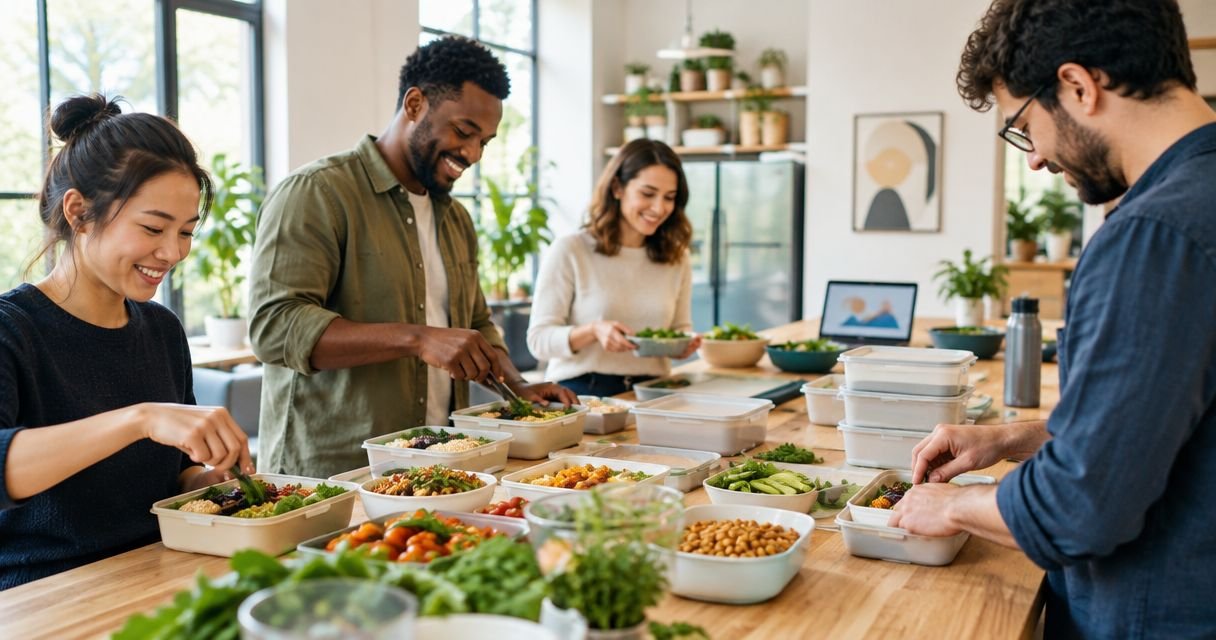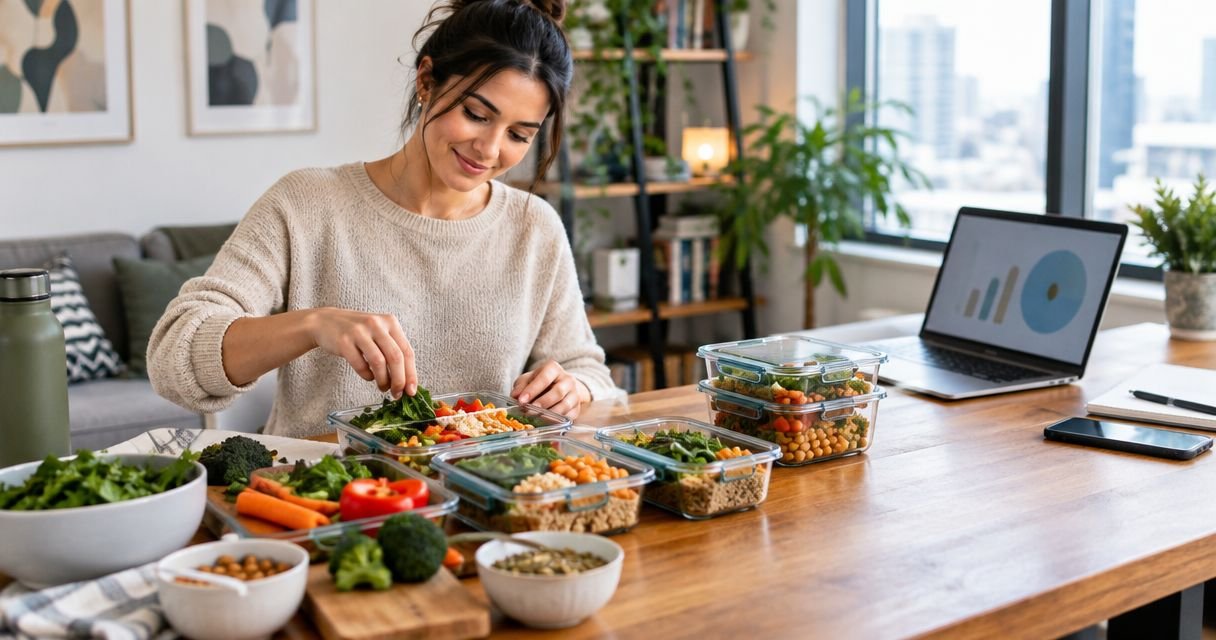

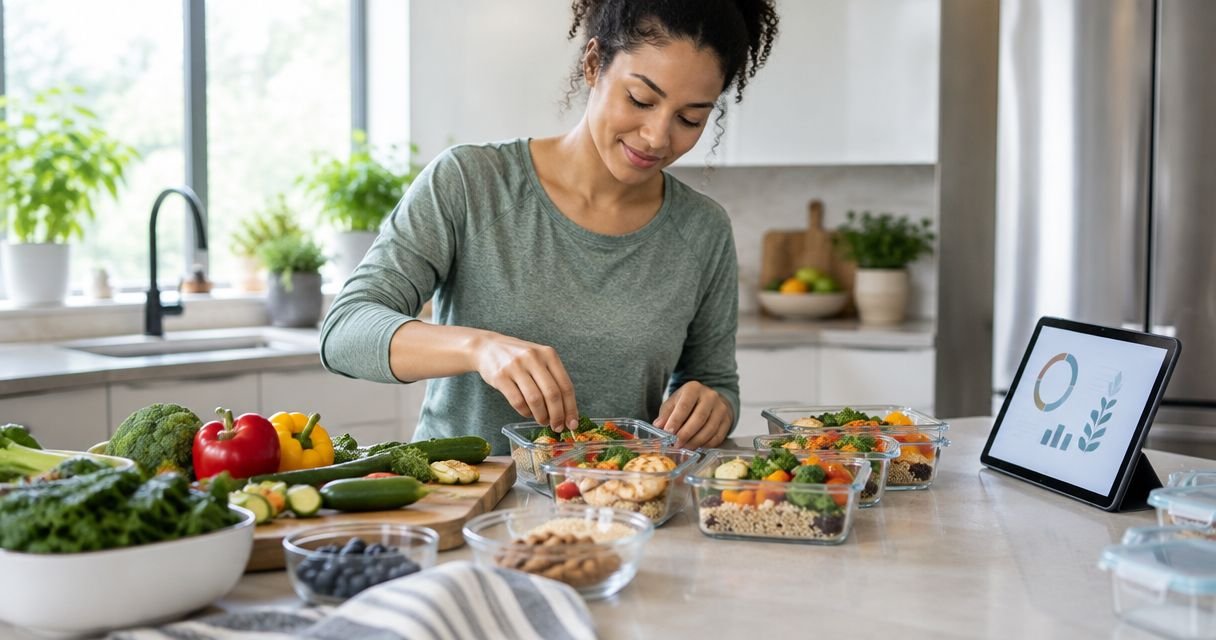
Meal prep for diabetics is planning and preparing meals ahead to support your individualized blood glucose goals. This 2026 guide shows you how to organize carbohydrates, build balanced meals, and store food safely without treating every person with diabetes as though they need the same diet.
- Meal prep for diabetics starts with your care team’s carbohydrate guidance, not a universal low-carb menu.
- Use the diabetes plate method to organize vegetables, protein, and carbohydrate foods.
- Refrigerate cooked leftovers for 3–4 days; freeze portions intended for later in the week.
- Culinary Collective ATL serves private dinner hosts; use your diabetes care team for individualized nutrition advice.
Why meal prep matters for people with diabetes
Preparing meals ahead makes ingredients and portions easier to track. It also gives you something more useful than a list of forbidden foods: a repeatable way to assemble meals when you're tired, busy, or feeding other people.
Diabetes adds decisions that a general meal plan doesn't address. Your carbohydrate needs, medication schedule, activity, preferences, and other health conditions all affect what belongs on your plate. Start with your prescribed eating plan, then organize the cooking around it.
Culinary Collective ATL is best for hosts planning private chef dinners; individualized diabetes nutrition belongs with your care team. This guide focuses on meals you prepare yourself, not a prescribed diet or a meal-service booking.
If you use insulin or medication that can cause low blood glucose, discuss substantial changes in carbohydrate intake or meal timing with your clinician. Pregnancy, kidney disease, and other conditions also require advice beyond a general meal-prep guide.
Build your 2026 meal-prep routine
1. Set your personal meal targets
Before choosing recipes, find out what your existing diabetes plan asks you to track. Some people count carbohydrate grams; others use a plate-based approach. If you take mealtime insulin, follow your prescribed dosing instructions rather than changing doses to match a generic menu.
You don't need an app to begin. A notebook, your usual food labels, and instructions from your care team give you a practical starting point. Ask for a referral to a registered dietitian when you need help turning medical advice into meals you enjoy.
Write down the details that affect cooking before you shop:
- Record the carbohydrate guidance your care team has given you.
- Note meal timing that relates to your medication instructions.
- List food allergies separately from dislikes and preferences.
- Flag any clinician-directed restrictions, including kidney-related needs.
- Identify meals you regularly skip or struggle to prepare.
2. Build meals around the diabetes plate method
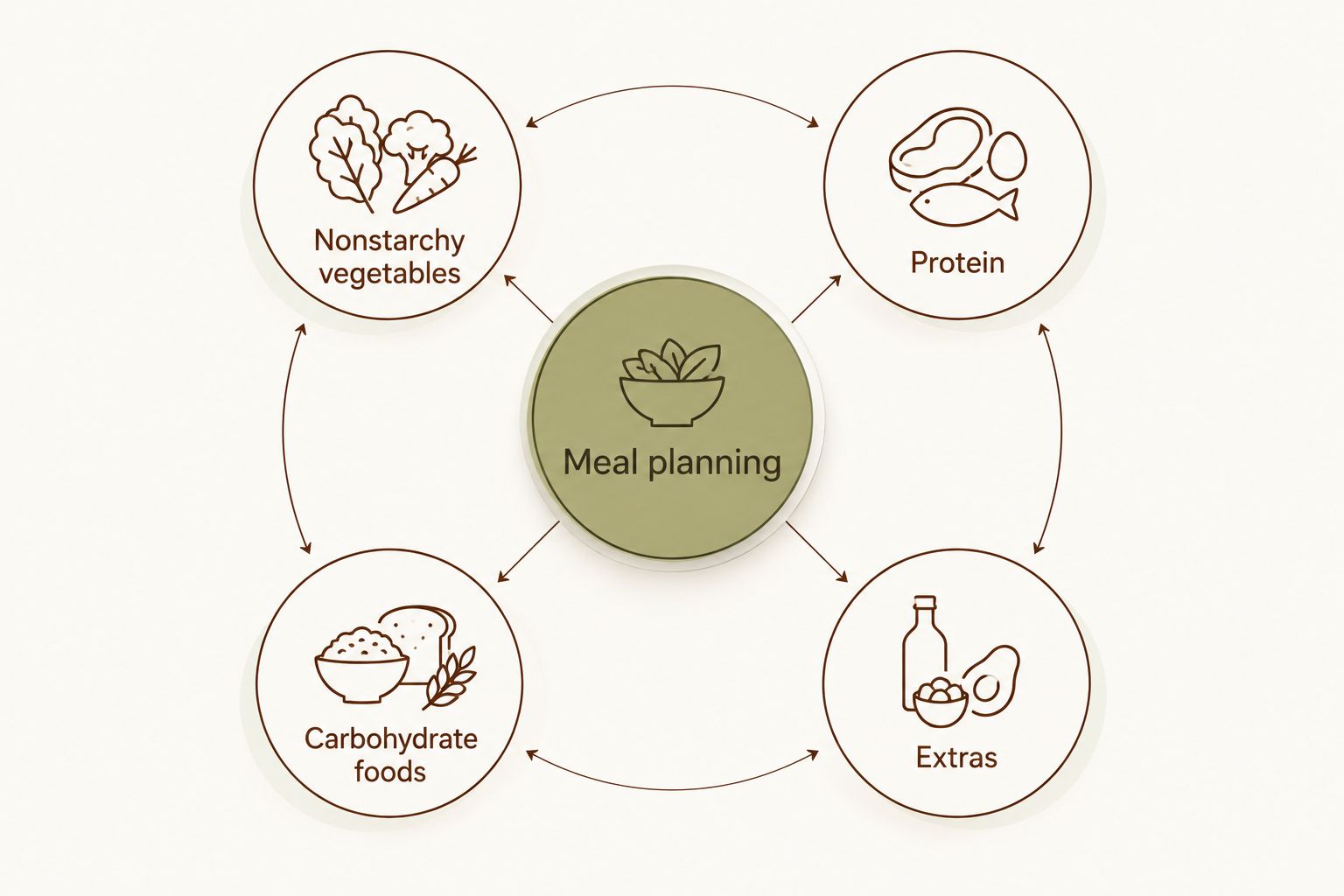
The American Diabetes Association's diabetes plate method uses a plate about 9 inches across. Fill half with nonstarchy vegetables, one quarter with lean protein, and one quarter with carbohydrate foods. This is a planning framework, not a guarantee of a particular glucose response.
Carbohydrate foods include more than bread and pasta. Beans, fruit, milk, yogurt, potatoes, and rice also contribute carbohydrates. If your plan uses carbohydrate counting, measure and count these foods even when the meal looks balanced.
Start with combinations you already like. Chicken, broccoli, and brown rice can work, as can tofu, cabbage, and noodles; the portions and ingredients need to match your own plan.
- Nonstarchy vegetables: Choose options such as broccoli, cabbage, peppers, or green beans.
- Protein: Add fish, poultry, eggs, tofu, or another suitable protein.
- Carbohydrate foods: Portion rice, potatoes, pasta, beans, or other choices deliberately.
- Drinks: Choose water or an unsweetened beverage unless your care plan says otherwise.
- Extras: Account for dressings, sauces, fruit, and dairy served alongside the meal.
3. Choose components before choosing recipes
Cook ingredients you can combine in different ways instead of committing to identical finished meals all week. Separate containers let you adjust portions, change seasonings, and keep crunchy foods away from wet ingredients. This approach also helps when household members eat different amounts.
For example, roasted vegetables, cooked chicken or tofu, and a portioned grain can become a bowl, a plated dinner, or a salad with a measured carbohydrate side. These are meal structures, not nutritional equivalents; calculate each version from its actual ingredients.
For a separate hosted celebration, Culinary Collective ATL offers custom in-home dining. Share your dietary requirements during menu planning, but keep medical decisions and carbohydrate targets with your diabetes care team.
- Choose vegetables that suit more than one planned meal.
- Prepare protein with seasonings you enjoy rather than relying on sweet sauces.
- Store grains and other carbohydrate foods separately for easier portioning.
- Keep dressings and toppings separate until serving.
- Plan a fallback meal from ingredients you already know how to portion.
4. Read labels and portion the actual recipe
Use the Nutrition Facts label's serving size and total carbohydrate line together. A package can contain multiple servings, and your portion might differ from the amount on the label. Sugar alone does not tell you the food's total carbohydrate content.
For a homemade dish, record the ingredients and divide the finished recipe into the portions you actually serve. A food scale or measuring cup helps you repeat a portion; neither makes the portion automatically right for you.
Don't subtract fiber or sugar alcohols using a general internet rule. If carbohydrate counting guides your insulin dosing, use the counting method your diabetes care team has taught you.
- Check serving size before reading carbohydrate grams.
- Include sauces, marinades, toppings, and beverages in your calculation.
- Record recipe changes that alter the ingredients or yield.
- Portion mixed dishes consistently rather than estimating from container size.
- Label meals clearly when household members need different portions.
5. Schedule refrigeration and freezing before cooking
A weekly plan doesn't mean keeping every cooked meal in the refrigerator all week. USDA food-safety guidance recommends using refrigerated cooked leftovers within 3–4 days. Freeze portions intended for later meals instead of stretching that window.
Keep your refrigerator at 40°F or below. Refrigerate perishable food within 2 hours of cooking or serving, or within 1 hour when the surrounding temperature is above 90°F. Divide large batches into shallow containers for faster cooling rather than leaving a large pot on the counter.
Make safe storage part of your 2026 routine before the first batch comes off the stove. A date label is more useful than trying to remember which container you cooked first.
- Check the refrigerator temperature with an appliance thermometer.
- Divide cooked food into shallow containers promptly.
- Label containers with the dish and preparation date.
- Freeze later-week portions within the safe storage window.
- Keep raw meat and seafood separate from ready-to-eat food.
6. Pack meals for the place you'll eat
Your meal plan needs to work at your desk, in the car, or wherever lunch happens. Check refrigeration and reheating access before choosing meals. A dish that depends on staying cold needs a reliable way to stay cold during transport.
Use an insulated bag with cold sources for perishable packed meals when needed. For cooked leftovers, USDA guidance calls for reheating to 165°F, checked with a food thermometer. Stir microwave-heated food and check more than one spot because heating can be uneven.
Keep your prescribed low-blood-glucose treatment accessible separately. A planned lunch does not replace the treatment instructions your care team has given you.
- Confirm whether you have a refrigerator and microwave where you eat.
- Use leak-resistant containers suited to the meal and reheating method.
- Pack cold sources when transporting perishable food.
- Check reheated leftovers with a food thermometer.
- Follow your care plan if a meal is delayed or your glucose drops.
7. Review what worked before repeating the menu
Review the meals you actually ate, not just the containers you filled. Note whether portions were satisfying, preparation fit your schedule, and ingredients stayed appealing. A plan that leaves you hungry or creates unwanted food needs adjustment.
If glucose monitoring is part of your care plan, record readings as instructed and discuss recurring patterns with your clinician. A single reading doesn't establish that one ingredient caused the result; medication, activity, illness, and other factors also affect glucose.
Use a short 2026 planning record to make the next shopping list more useful:
- Keep meals you enjoyed and could prepare without excessive effort.
- Note portions that need discussion with your dietitian.
- Remove recipes that consistently go uneaten.
- Record storage or transport problems before repeating the batch.
- Bring recurring glucose patterns to your care team rather than changing medication yourself.
Compare meal-prep approaches
The best approach is the one that fits your care plan and your actual week. Each option below solves a different cooking problem, and each has a limitation. None replaces individualized nutrition advice.
| Option | Best for | Main advantage | Key limitation |
|---|---|---|---|
| Component prep | Households sharing ingredients but needing different portions | You can assemble meals individually | Portions still need attention at serving time |
| Fully portioned meals | People who need a ready-to-reheat lunch or dinner | Serving amounts are decided in advance | Repetition and storage space can become obstacles |
| Freezer portions | People who need meals beyond the refrigerated storage window | Meals can be reserved for later use | Texture and thawing requirements vary by recipe |
| Fresh assembly | People who dislike reheated meals | Ingredients stay separate until eating | Some preparation remains at mealtime |
You can combine approaches. Prepare components for near-term meals and freeze a finished portion for another day, while keeping a fresh-assembly option for meals that don't reheat well. Avoid choosing a method solely because a container set or online menu makes it look organized.
Common mistakes people with diabetes make
Treating low sugar as low carbohydrate
A food labeled sugar-free can still contain carbohydrates. Read the total carbohydrate amount and serving size rather than using the front of the package as your meal plan. The same principle applies to homemade recipes described as healthy or diabetes-friendly.
Removing carbohydrate foods without reviewing medication
A major change in carbohydrate intake matters when your medication plan depends on food intake. Discuss the change with your care team first. Don't use a general meal-prep article to adjust insulin or other medication.
Refrigerating every meal for the entire week
A calendar week is longer than the USDA's 3–4-day refrigerated-leftover guidance. Freeze later portions or schedule another cooking session. Reheating does not make improperly stored food safe.
Forgetting what goes around the main dish
Rice portions aren't the only detail to track when a meal includes sweetened drinks, sauces, fruit, or dessert. Plan the whole eating occasion, especially for shared dinners. When discussing a celebration menu with Culinary Collective ATL, explain the full dietary requirement rather than asking only for a sugar-free dessert.
FAQ
What’s the best meal prep for diabetics?
The best meal prep for diabetics follows the person’s individualized care plan and fits their cooking routine. Start with balanced meals, deliberate carbohydrate portions, and safe storage rather than a universal diabetes menu.
Can I eat rice or potatoes if I have diabetes?
Rice and potatoes can fit into many diabetes eating plans. Their portions contribute carbohydrates, so use the amounts and counting method recommended by your diabetes care team.
How many carbohydrates should I put in each meal?
Your carbohydrate target should come from your individualized diabetes plan. Medication, activity, health conditions, and other needs affect that target; a general guide cannot prescribe it.
Can I cook all my meals on Sunday?
You can cook ahead on Sunday, but freeze portions intended beyond the safe refrigerated storage window. USDA guidance recommends using refrigerated cooked leftovers within 3–4 days.
Is sugar-free food always better for diabetes meal prep?
Sugar-free food is not automatically the better choice for diabetes meal prep. Check total carbohydrates, serving size, and how the food fits your overall eating plan.
Do I need expensive containers or a meal-planning app?
You do not need a meal-planning app or a particular container brand. Use suitable food-storage containers, clear date labels, and a notebook or other method you can maintain.
Should I change my insulin when I start meal prepping?
Follow your prescribed insulin instructions and ask your diabetes care team about changes. Do not change doses based on a generic meal-prep menu or this guide.
One last thing
Plan your freezer space before your shopping list. In your 2026 routine, deciding which meals you'll refrigerate and which you'll freeze prevents a neatly organized week from becoming an unsafe storage plan. Start with familiar meals, repeat what works, and let your care team guide changes that affect diabetes treatment.
Related guides
- Planning private chef dining at an Atlanta vacation rental
- Understanding a private chef birthday-party quote