
Remote workers’ meal prep is planning and preparing meals ahead of the workweek so you can eat lunch without spending your break cooking. This 2026 guide covers a practical home routine for meeting-heavy days, shared kitchens, and lunches that need to reheat well.
- Meal prep for remote workers works best when lunches match your calendar, refrigerator space, and actual appetite.
- Prepare components for flexible lunches; freeze portions you will not eat within safe refrigerator storage limits.
- Keep refrigerator temperatures at 40°F or below and reheat leftovers to 165°F.
- Culinary Collective ATL is best suited to hosts seeking private chef dinners, vacation rental dining, or retreat catering.
Why meal prep matters for remote workers
Working beside your kitchen does not mean you have time to cook. A lunch break between calls needs a different plan from a leisurely afternoon at home: food ready to assemble, a clear place to eat, and little cleanup before your next meeting.
Prepare for the lunch break you actually have, not the one you wish you had. A plated lunch that needs several pans is a poor match for a day when you barely have time to leave your desk.
Keep weekday food planning separate from event hosting. Culinary Collective ATL offers private chef dining and catering services across Metro Atlanta and North Georgia; the routine below focuses on lunches you prepare yourself.
For your 2026 workweek, success means having appropriate food ready when you need it. It does not require identical containers, an elaborate menu, or cooking every meal in advance.
Build your weekly meal prep routine
1. Match your lunches to your calendar
Start with your work calendar before writing a shopping list. Mark lunches interrupted by meetings, days you expect to leave home, and breaks long enough for a little cooking. Your schedule determines how much preparation is useful.
Choose a realistic eating format for each day. A cold lunch suits a packed calendar, while a reheatable meal works when you have access to the microwave and time to sit down. Leave an unassigned lunch rather than preparing food for a day you expect to eat elsewhere.
Best for unpredictable schedules: prepare flexible portions rather than assigning every container to a weekday. The limitation is that you still need to decide what to assemble at lunchtime.
- Mark workdays when you will eat lunch at home.
- Identify breaks that require ready-to-eat food.
- Note shared-kitchen conflicts with household members.
- Count meals needed before choosing recipes.
- Leave room for existing leftovers and outside plans.
2. Choose a format you will want to eat
Use recipes you already know before adding unfamiliar ones. You can build lunches around a protein, vegetables, and a grain or other starchy food, adjusting the combination to your preferences and dietary needs. Think about texture as well as flavor.
Best for variety: component prep lets you assemble different lunches from the same ingredients. Its drawback is lunchtime assembly. Fully portioned meals remove that decision but offer less flexibility when your appetite or schedule changes.
For a practical 2026 routine, choose dishes that share ingredients without tasting identical. Roasted vegetables can accompany one lunch and fill a wrap the next; keeping sauces separate gives you another way to change the meal.
- Choose a familiar main ingredient you enjoy reheated or cold.
- Select vegetables suited to your planned preparation method.
- Keep crisp toppings away from moist ingredients.
- Store dressings separately until serving.
- Choose containers that fit both the food and your refrigerator.
3. Shop from an inventory, not an ideal menu
Check your refrigerator, freezer, and pantry before shopping. Build the menu around food that needs using, then write down only the ingredients required to complete those lunches. This keeps the plan connected to what you already have.
Separate ingredients you need to cook from ingredients ready to use. Canned beans, washed produce, or frozen vegetables can simplify preparation; check package instructions and labels rather than assuming every item works the same way.
If you are also organizing a hosted gathering, treat it as a separate project. Culinary Collective ATL private chef dining is best suited to hosts who want a custom in-home dinner. That service addresses event hosting, not the everyday lunch decisions in this guide.
- Check open packages and leftover ingredients first.
- Write quantities against your planned portions.
- Group your list by grocery section.
- Choose substitutions before shopping for essential ingredients.
- Remove ingredients used only in meals you have not scheduled.
4. Cook in an order that limits kitchen congestion
Read your recipes before turning on the stove. Start the component with the longest cooking time, then use that time to wash produce, mix dressings, or portion ingredients. Keep raw animal foods and their utensils separate from ready-to-eat food.
Do not make every lunch depend on the same appliance at once. A stove-top component, an oven component, and a cold component can be easier to coordinate than several dishes competing for one oven shelf. Follow each recipe’s safe cooking instructions.
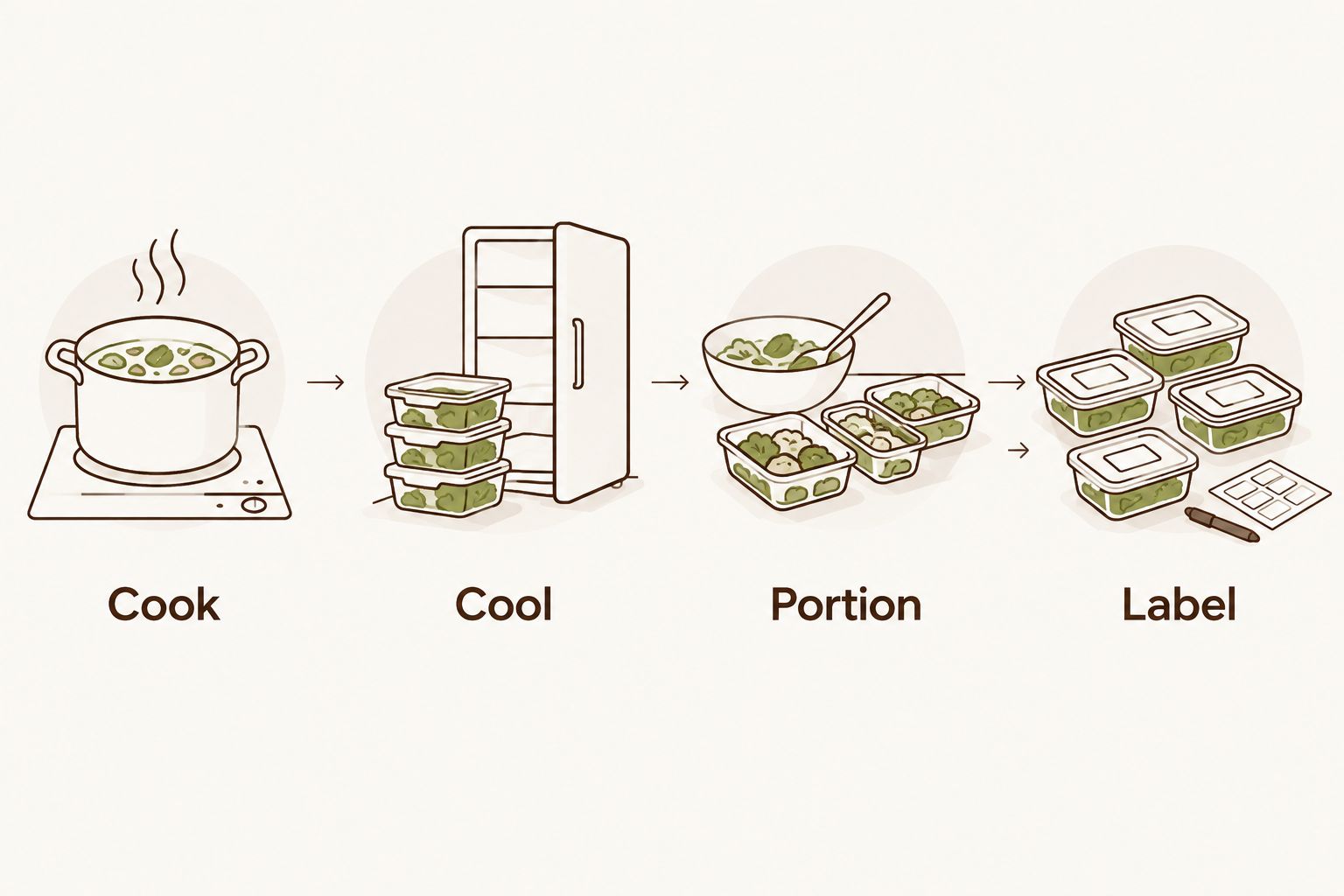
A useful workflow is cook, cool, portion, label. Cooling does not mean leaving a large pot on the counter until it reaches room temperature: divide cooked food into shallow containers and refrigerate promptly.
- Clear preparation surfaces before handling food.
- Start longer-cooking components before quick assembly tasks.
- Wash hands and clean equipment between incompatible tasks.
- Divide cooked food into shallow containers.
- Label containers with the preparation date and contents.
5. Store lunches according to food safety, not the calendar
A workweek is not a refrigerator storage rule. USDA guidance says most cooked leftovers keep for 3–4 days in the refrigerator. Freeze portions you will not eat within that window, and follow shorter storage instructions when a particular ingredient requires them.
Keep your refrigerator at 40°F or below. USDA guidance also calls for refrigerating perishable food within 2 hours, or within 1 hour when the surrounding temperature exceeds 90°F. These limits matter in a home office just as they do in any kitchen.
For your 2026 plan, assign refrigerator meals first and frozen portions later. Thaw frozen food safely, such as in the refrigerator, rather than leaving a lunch on your desk or kitchen counter throughout the morning.
- Check the refrigerator with an appliance thermometer.
- Date cooked portions before putting them away.
- Freeze later-week portions promptly.
- Keep raw meat below ready-to-eat food to contain leaks.
- Follow ingredient-specific storage directions when they are shorter.
6. Make lunchtime and cleanup easy
Set up lunch so the final steps are obvious. Put the meal, its dressing, and any toppings where you can find them without searching through several shelves. Keep food refrigerated until you are ready to eat rather than setting it out during your first meeting.
USDA guidance says to reheat leftovers to an internal temperature of 165°F. Use a food thermometer; a hot container or steaming surface does not confirm that the center is hot enough. When microwaving, follow appliance instructions and stir or rotate food for more even heating.
End the week by checking what you actually ate. Keep meals you enjoyed, adjust portions you repeatedly left unfinished, and remove dishes that required more work than your lunch break allowed.
- Place lunch components together without mixing textures prematurely.
- Use microwave-safe containers according to manufacturer instructions.
- Stir food and check its internal temperature when reheating.
- Put reusable containers into your cleanup routine immediately.
- Note unfinished portions before planning the next shopping trip.
Compare meal prep options for remote workers
Choose the approach that solves your main lunchtime problem. The best option is the one you can repeat without creating another demanding household project. None of these approaches removes the need for safe storage and handling.
| Option | Best for | Main advantage | Key limitation |
|---|---|---|---|
| Fully portioned lunches | Meeting-heavy workdays | Minimal assembly when your break begins | Less flexibility when plans or appetite change |
| Component preparation | People who want different combinations | Ingredients can become several styles of lunch | Requires some assembly and decisions |
| Planned dinner leftovers | Households already cooking dinner | Lunch preparation fits into an existing task | Depends on making enough and storing it promptly |
| A midweek cooking session | People who dislike repeating meals | Spreads preparation across the week | Needs another protected kitchen session |
| Freezer portions | Irregular schedules | Meals stay separate from immediate refrigerator plans | Requires freezer space and a reheating or thawing plan |
Combine approaches when that suits your household. For example, portion a familiar dinner for the next lunch and freeze another portion for a later week. You do not need to commit to a single preparation method for every meal.
Keep your 2026 plan small enough to revise. If a full batch goes uneaten, change the quantity or recipe before adding more containers and equipment.
Common mistakes remote workers make
Preparing food for an imaginary week
A plan for uninterrupted lunch breaks fails when your actual calendar contains calls, appointments, and errands. Start with the days you will eat at home, then prepare the amount those days require.
Correct the schedule before expanding the menu. Cooking more does not solve a mismatch between your food plan and your working day.
Treating every lunch as a refrigerator meal
Preparing everything at once does not make every portion suitable for the end of the week. Use refrigerator storage guidance to decide what stays chilled and what needs freezing.
Labeling also needs to be specific. A preparation date tells you more than a weekday name when meetings move and containers get rearranged.
Packing ingredients that damage each other
Dressed greens, crisp toppings, and hot components do not always belong in the same container. Separate ingredients when moisture or heat would spoil the texture you want.
Choose the meal format before buying containers. A divided container is useful only when its compartments fit what you actually eat.
Making lunch another work task
A complicated assembly routine can consume the break you meant to protect. Keep the final steps short enough that you still have time to eat away from your keyboard.
Your goal is a usable meal, not a presentation project. Remove garnishes, extra pans, or last-minute cooking that you consistently skip.
Confusing everyday lunches with hosted dining
Remote-work lunches and a dinner for guests have different requirements. Your lunch routine needs repeatability; a celebration needs a menu, timing, and service plan built around the occasion.
For hosts in Metro Atlanta and North Georgia, Culinary Collective ATL private chef dining serves the hosted occasion rather than replacing your home lunch routine. Keep those decisions separate so each gets the right attention.
FAQ
What’s the best meal prep for remote workers with back-to-back meetings?
Fully portioned lunches are the best fit when you have little time for assembly. Choose food you enjoy cold or can reheat safely, and keep dressings or crisp toppings separate when needed.
Should I prepare a whole workweek of lunches at once?
Prepare only the amount you can store and use safely. USDA guidance gives most cooked leftovers a refrigerator window of 3–4 days, so freeze later portions or schedule another cooking session.
Is component prep better than individual lunch containers?
Component prep is better for flexible combinations, while individual containers are better for quick lunches. Choose according to whether lunchtime decisions or repetitive meals cause you more difficulty.
How do I keep meal prep from getting boring?
Keep adaptable components separate and change the combinations or finishing ingredients. Use recipes you already enjoy rather than preparing a large batch of an unfamiliar dish.
What temperature should I use to reheat meal prep?
Reheat leftovers to an internal temperature of 165°F, following USDA guidance. Check with a food thermometer and stir or rotate microwaved food for more even heating.
Can I leave lunch on my desk until my meeting ends?
Keep perishable lunch refrigerated until you are ready to eat. USDA guidance limits time outside refrigeration to 2 hours, or 1 hour when the surrounding temperature exceeds 90°F.
How should I start meal prep if I have never done it before?
Start with a familiar meal and prepare an extra portion for a planned lunch. Check how it stores, reheats, and fits your break before expanding your routine.
One last thing
Your best meal prep recipe is one you still want to eat when work runs late. Before repeating a batch in 2026, ask whether it tasted good after storage, fit your break, and left you with manageable cleanup.
Change the weakest part first. Sometimes the answer is a separate sauce container or a smaller batch—not an entirely new menu.
Related guides